
Switzerland’s Mengele Files, Colonia Dignidad, and the Importance for William Branham Research
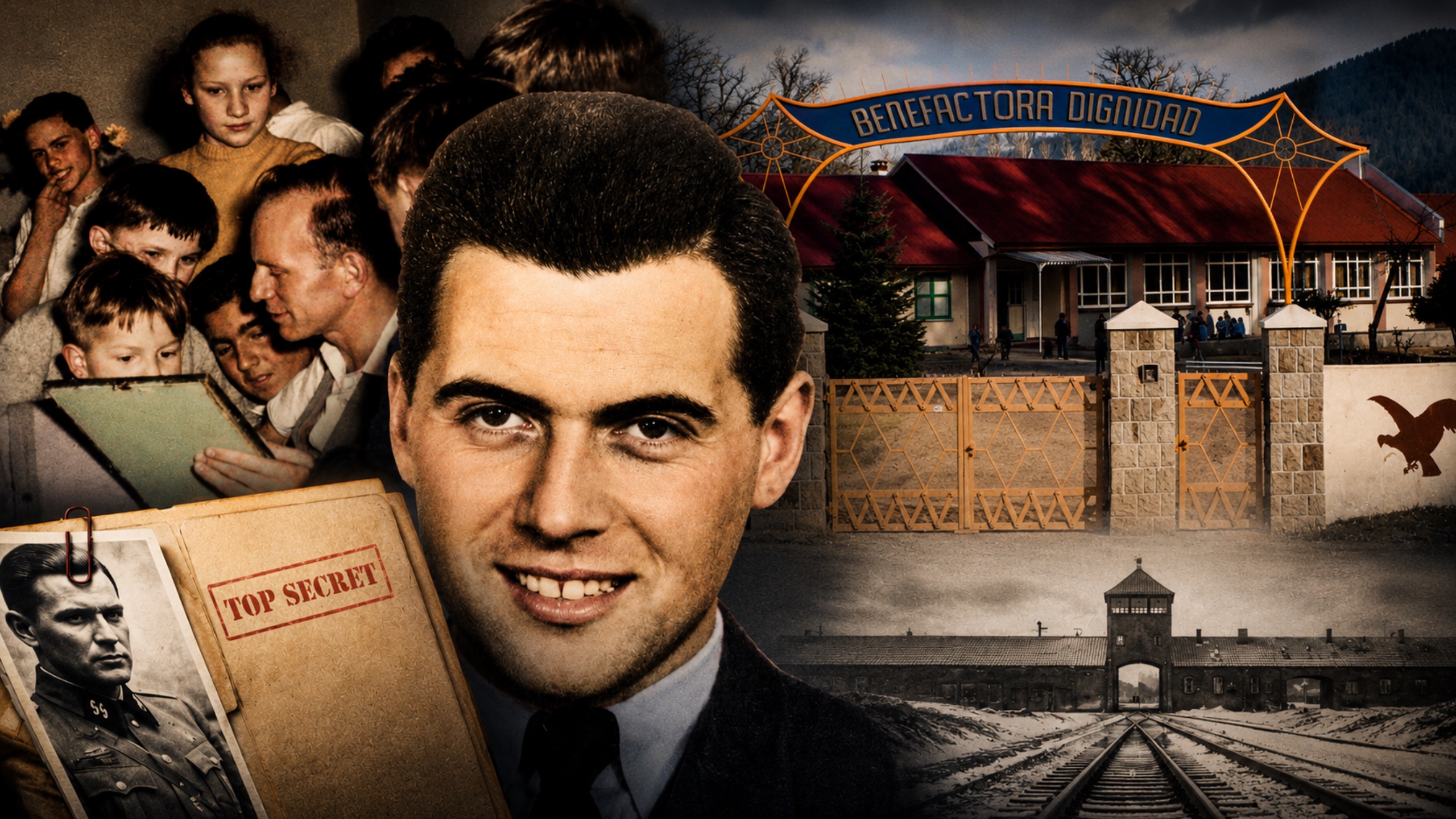
A recent BBC report says Switzerland will open long-sealed intelligence files on Josef Mengele, the Auschwitz “Angel of Death,” raising renewed questions about how Nazi fugitives moved through Europe and South America after World War II. For Colonia Dignidad research, the release matters because older sources have linked the Chilean compound to Nazi refuge networks, Operation Condor, intelligence activity, and claims that Mengele may have spent time there. For William Branham research, the significance is Paul Schäfer: a figure connected to Branham’s 1955 Karlsruhe meetings who later built Colonia Dignidad into an authoritarian religious compound tied to abuse, weapons, torture, and political repression. The Swiss files may not prove every claim, but they could help historians separate rumor from documentation and better understand the postwar networks that made places like Colonia Dignidad possible.
A recent BBC report by Imogen Foulkes explains that Switzerland's Federal Intelligence Service has agreed to open long-sealed files on Josef Mengele, the Auschwitz doctor known as the "Angel of Death." The files have drawn renewed attention because historians have questioned whether Mengele may have returned to Switzerland after an international warrant was issued for his arrest in 1959, and whether Swiss authorities may have known more than they previously disclosed. Independent reporting on the same development states that access has been granted after years of rejected requests, though no release date has been announced.
Mengele's name is infamous because of his role at Auschwitz, where he selected prisoners for death and conducted brutal medical experiments, especially on children and twins. After World War II, he escaped Europe under a false identity, obtained Red Cross travel documents through the Swiss consulate in Genoa, and fled to South America. He was never brought to trial. He died in Brazil in 1979, and his remains were later identified through DNA testing.
The Swiss files matter because they may clarify more than whether Mengele physically entered Switzerland. They may help historians better understand how postwar Nazi escape networks functioned, how wanted war criminals moved between Europe and South America, and why some governments kept sensitive files sealed long after the people involved had died. Even if the files do not prove Mengele was in Switzerland after 1959, the decision to open them is historically important because secrecy itself has shaped decades of rumor, suspicion, and unresolved questions.
For researchers studying Colonia Dignidad, the release is especially significant. Colonia Dignidad was not simply an isolated German settlement in Chile. In the book Weaponized Religion: From Latter Rain to Colonia Dignidad, research proves that the compound is described as a site connected to fleeing Nazis, Chilean intelligence, torture, weapons, and political repression. The book cites Glenn B. Infield's Secrets of the SS, which described Colonia Dignidad as "the Colony" and stated that both the CIA and Nazi hunter Simon Wiesenthal claimed to have evidence that fugitives such as Josef Mengele spent time there. Under Paul Schäfer, the compound blended German authoritarian religion, sexual abuse, forced labor, militarization, and collaboration with the Pinochet regime. In
Schäfer is connected to William Branham's 1955 meetings in Karlsruhe, Germany, where Schäfer and his followers reportedly participated in Branham's meetings and later adopted some of his doctrines. Schäfer became part of Branham's security detail and was deeply impressed by the healing meetings. Paul Schäfer's later compound existed at the intersection of several dangerous forces: postwar Nazi refuge networks, anti-communist politics, authoritarian religious control, intelligence activity, and apocalyptic theology. Branham research matters because Schäfer's religious development cannot be separated from the revival environment that helped shape his authority.
In other words, the Swiss Mengele files may not answer every question about Colonia Dignidad, but they may expose the world in which Colonia Dignidad became possible. If the records contain information about Swiss surveillance, foreign intelligence contact, Mengele's family movements, or postwar travel networks, historians may be able to compare those records with existing claims about South America, Chile, and Nazi fugitives.
Branham's influence did not remain confined to revival tents, healing campaigns, or sermon recordings. Some people who entered that world carried its authoritarian and apocalyptic ideas into far darker environments. Paul Schäfer's Colonia Dignidad demonstrates how religious authority, when fused with political extremism and secrecy, can become a weapon. The Swiss files may help clarify one part of that larger story: the hidden networks surrounding the Nazis who fled, the governments that watched them, and the religious compounds that gave some of those networks shelter.