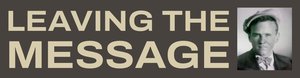
F. F. Bosworth and the Word of Faith
Available on Spotify, Google, and Apple Podcasts: https://william-branham.org/podcast Support the show: https://www.patreon.com/branham In this episode, Charles and John discuss one of the most influential people in t...
Available on Spotify, Google, and Apple Podcasts:
https://william-branham.org/podcast
Support the show:
https://www.patreon.com/branham
In this episode, Charles and John discuss one of the most influential people in the Post WWII Healing Revival. William Branham's mentor, fellow revivalist, and former director in John Alexander Dowie's cult of personality, F. F. Bosworth. We also discuss the many ways in which Bosworth was influenced and his influence on Branham and the overall healing revival -- from white supremacy to the Word of Faith Movement.
We discuss:
* John Alexander Dowie's Christian Catholic Church in Zion
* Bosworth's joining Zion and what that meant
* Bosworth's brutal beating in Texas
* Bosworth's founding of the Assemblies of God
* The mystery surrounding Bosworth's early connection to Branham
* Bosworth holding two months of revivals at Indiana's Klan headquarters
* Early foundation for the Word of Faith movement
Show transcript Hide transcript
Transcript
Hello, and welcome to another episode of the William Brannum Historical Research Podcast. I'm your host, John Collins, the author and founder of William Brannum Historical Research at William-Brannum.org, and with me I have my co-host, researcher, minister, and friend Charles Paisley, the founder of Christian Gospel Church.org. And together we're examining the history and the intersections in history between William Brannum and other key figures that either influenced or were influenced by the post-World War II healing revivals.
Charles, I'm so excited about this side story that we're about to do because, unlike some of the other side stories, this is also, if you really stop and think about it, it's a side story, yet also it is literally the foundation of what would become William Brannum's early theology, you know, from the early, from the late 1940s and early 1950s. So we're doing a side show that's not really a side show. You're right, John. This is a really an integral component to everything we're talking about, and it's really going to, especially set up well a couple more episodes that we're going to
talk about to add some depth to what's coming next. But today we're going to talk about a very important figure that William Brannum meets really towards the very early days of the healing revivals. In 1947, William Brannum had met Gordon Lindsay. He's not the figure we're talking about today, but he met Gordon Lindsay and he took, he came on and more or less became William Brannum's publicist and his campaign manager starting in late 1947. And he started opening up doors for William Brannum to branch out the healing revival to even more people. And before Gordon Lindsay,
William Brannum, he had been working with W.E. Kidston and Raymond Hoxtra, really they were the main part of his campaign team, Jack Moore, a little bit. And they had mainly been preaching in oneness Pentecostal and UPC churches up into 1947. But once Gordon Lindsay took over, he was able to open doors for William Brannum to start preaching in the assemblies of God churches and the Trinitarian sex of Pentecostalism. And he started doing that in Canada and across the United States.
And in the last couple months of 1947, that's when William Brannum was up in Canada and sparked the Laterane movement. And then in January 1948, So, while the people up in the Sharon orphanage are still fasting, you know, the, the laterane revival itself has not quite started yet, William Brannum goes to Miami for the Florida for the winter.
And while he's there, he holds some meetings, and he happens to meet a man named F.F. Bosworth at those meetings. And that's the man we're going to kind of talk about today. And John, like you mentioned, up until F.F. Bosworth had a really bad stroke in 1956, and finally he passed away 1958, he was one of the most important figures in William Brannum circle in those years.
Absolutely. And for the healing revival in general, Bosworth was so fundamentally important. I've written a book on the life and times and the interesting connivary of John Alexander Dauy, and in the Zion cult that John Dauy started, F.F. Bosworth was a key figure.
And, you know, before any of this had happened, Bosworth was deeply connected to Dauy. And Bosworth is so deeply important to the Revivalists themselves, the early Revivalists that predate William Brannum or more to the point predate William Brannum's fame, because there's a lot of William Brannum's history that has been erased.
We actually don't know where William Brannum was actually speaking in many of the cases, except for what hasn't been erased, which is quite interesting to me. But Bosworth was a key figure in John Alexander Dauy's Zion sect that was called the Christian Catholic Church.
And we'll get into that a bit deeper here later in the show. But Bosworth was a recognized name, and his recognition came mostly through Dauy. And once Dauy had died, and the Christian Catholic Church was scattered, there were a lot of people that would open their doors to Dauy because Dauy was a familiar face in the sect, and there were even non-Dauy cult members who would entertain the idea of Bosworth coming in because he was deeply connected to Pentecostalism.
Yeah, you know, Bosworth is just such a very important and very popular figure, even in the message, especially in the message. I know in my sect of the message, John, we kind of looked at Bosworth as the grandfather of the message, maybe, or as one of William Brannum's key predecessors.
William Brannum referred to him as daddy Bosworth. That's the title that he gave him and would refer to him during the healing revival. So, you can find William Brannum on tape calling him daddy Bosworth, so he was just a very important figure.
So in some sense, it was almost like William Brannum's adopted father. a little bit. The father maybe he wished he had. And in the message, FF Bosworth is an incredibly beloved figure. And so, you know, the mere act of kind of critically examining Bosworth is a little bit taboo for us, John. So I know I myself, I'm a little cautious in drawing conclusions about Bosworth, but I do think there's some things that we should look at that tended to be glossed over in the message that we just, we never looked about, we never looked at, we never talked about, we just kind of pretended it wasn't
there. And you know, we definitely should try to take into consideration now that we're out of the message. There are a lot of people who are interested in listening to our show because of the white supremacy and the criminal aspects of William Brannem's past, but this is a much more complicated and complex ball of string than anybody can fathom or realize.
It's not necessarily that Bosworth is connected to the criminal or the white supremacy, although we're probably going to get into some of the questionable white supremacy stuff with Bosworth. But Bosworth, if you take Roy E. Davis as the mentor for William Brannem's white supremacy and some of his doctrinal positions that he learned in Roy Davis's church, those were key elements of William Brannem's makeup of what would become, you know, his cult of personality. Well, Bosworth is the, literally the foundation for William Brannem's religious side. And Bosworth is really just a proxy for John Alexander Dauy's religious
stance. So a lot of the positions that we see John Alexander Dauy taking his ministry, we're going to see those replicated in William Brannem's ministry. And they were replicated using, you know, Bosworth is this conduit for taking Dauy, the doctrine of Dauy and putting the doctrine of Dauy into mainstream again through William Brannem.
So there's actually very, very little out there on the life of FF Bosworth, just very little writings. And most of what we know about him comes to us from stories that have been handed down to us, passed down to us. And then his own writings, really, there's not really any books or resources on Bosworth out there that I personally would consider scholarly. He's mentioned in passing here and there in a few scholarly books, but for the most part, everything out there on him was either wrote by himself or his friends or his family. So I kind of have to take a lot of what's in those books with a grain
of salt as, you know, it's pretty clear it's being a wrote by his, you know, closest friends and supporters, right? There is one book worth mentioning that I do recommend people read if they're interested in Bosworth. It advertises itself as a critical examination of the ministry of FF Bosworth.
It's entitled FF Bosworth, the man behind Christ, the healer, written by Roscoe Barnes III. And while it is advertised as a critical examination, it is critical from the standpoint of somebody who is deeply, deeply in favor of Bosworth.
Somebody who is more critical than that, they're going to think this is praise of Bosworth. From my perspective, as somebody on the outside looking in, it is a very highly favorable, but it is the closest that we have to a critical examination.
Yeah. So besides the story's handed down to us, like I said, most of what we know comes really from a book that he wrote. And there's a book here called Christ the Healer. I have a copy of it.
And Bosworth wrote this book in the 1920s. And a good bit of what we know about him and his beliefs come from this book. And that's probably actually the way that most Pentecostals are even familiar with Bosworth.
This book is very popular in Pentecostalism, actually. And most people who know FF Bosworth know him because of this book, actually. And so, since there is so little about his life, I know myself, I'm a little careful kind of making any too strong judgments on him, but I'm especially interested in how he ended up working with William Brandham and what was going on before that.
So just kind of dive it into his backstory. I know Bosworth, he became a Christian according to his testimony in 1893. He was attending a holiness church in Nebraska at the time. And he eventually gets married.
And after he gets married, something very interesting happens to me, John. This is, to me, this is perhaps more interesting than him meeting up with William Brandham. This is probably the most interesting part of his life to me.
He's reading a newspaper article. And it's advertising that John Alexander Dowey wants to build Zion. And Bosworth's really taken up with the idea that Dowey is gonna rebuild Zion. And so Bosworth moves to Zion.
And he joins Alexander Dowey's group about 1901, the same year that Dowey started to build Zion. So that's pretty interesting. He was in Dowey's group for about 10 years up until after Dowey died even.
And I think what's really interesting to me about this part, John, is that Bosworth joins Dowey's church really right at the time that he is going off the deep end. Really when it seems like Dowey's just really starting to really lose his marbles.
Yeah, that's interesting to me. It really is because there's a part of me that is highly skeptical whenever I see somebody in the lights, cameras, action, healing, revival, and making a lot of money, which we can see that Bosworth us worth, you know, at least for a period of time, he was in that arena. But to join Dauy's sect, at the time that Dauy was so insane, he really, Bosworth, I've truly believed that he was a, he was a convert to Dauy. He was not under any sort of, you know, ill intent to join John Alexander Dauy's sect because you had to forfeit a lot of your own
money to even join into the Zion sect. And what's really interesting as we continue with further episodes of this podcast, if you look at like the New Apostolic Reformation, there are many trails and paths of the New Apostolic Reformation that lead to its history. Well, most of those paths converge in Zion as John Alexander Dauy had just completely lost his mind. Yeah, and I think you're right, John. I'm of the opinion that FF Bosworth was a true believer in this stuff. Like I certainly at this point, I don't really see any indication that that he's anything but a true believer in what Dauy's doing and these things that
are happening here in Zion. And to me, the fact that he joins at this point, I mean, by 1901, I mean, there is just no question that what Dauy is doing at this point. Zion is a, this thing is a full fledged cult. It's probably the most powerful cult in the United States at the point in time. It's just crazy stuff that's going on there. Dauy is starting to introduce, he's talking about having seven wives at this point in time. Dauy has went totally, totally head over heels into British israelism at this point. And that's really his whole framework for
building Zion, right? They believe they're part of the 10 lost tribes of Israel. And they're re, they're building Zion and going to come up with plans to rebuild the temple. And everyone moving into Zion, and this is everyone moving into Zion has to sign thousand year leases to get into Zion. That that's something that just is, it's incredible. It kind of puts me in mind of the seorg today, John, where they signed, you know, a million year contracts to join the seorg.
Well, to get into Zion, you had to sign thousand year leases because they, they thought they were going to live, they basically thought they were going to live out the whole millennium in Zion.
And they, they believe the millennium was, was eminent. And this was almost phase one of the millennium. They're going to rebuild Zion and then Jerusalem itself was going to be restored shortly thereafter. The city of Zion itself is worthy of a whole podcast episode. Because this was not Christianity or even a cult, as most people would think of them today. This was very, very militant. And whenever, you know, you mentioned this was the biggest cult of the time. Well, This is quite honestly, this is probably the biggest and most powerful cult in the history of the United States.
We're talking about a group of people who wanted to forcibly convert the United States, and they were trying to recreate Zion, as you mentioned. They were literally trying to re-enact or enact all of the prophecies that are in, you know, the in-time prophecies that you find in the book of Revelation, et cetera.
They're trying to stage them in the United States forcibly convert the United States, and they send an entire army of people, and they actually had an army. They send an entire army of converts into New York City door to door with the intent to go to every single house in New York City and blanketly convert the entire city into this cult.
Yeah, it's really amazing stuff to look at, and it's super interesting to investigate. And again, they're operating within the framework of British Israelism is really how they're doing all this. They believe, again, they're the 10 lost tribes of Israel.
There is the concept within British Israelism that even the royal family of England is descended from King David, so the house of David's line is still on the throne. And they have plans to really recapture the Holy Land, somehow get a control of Jerusalem and even rebuild the temple and everything in Jerusalem.
And so they've built an entire end-time theology around restoring Israel that it's very interesting. And if you read a lot of those things, you'll find some interesting similarities, John, to things that kind of end up in the message in slightly different forms.
But anyway, that's going on. Bosworth is in that, and there's all kinds of stuff going on there. And the thing is, most likely, Bosworth suffered an incredible financial loss through all of this, John, because the whole thing in Zion, the whole thing is a religious Ponzi scheme.
These people, Bosworth's got people to put millions of dollars into Zion, right? He's open to bank in Zion. Everybody who lives in Zion has to put all their money in the bank, but it's a fake bank, ran by Dowie, and he's just taken all their money.
And eventually, the whole thing just completely collapses in. Everybody loses everything in the bank. The bank starts foreclosing and taking people's property because they leased it. They didn't own it. Yeah. The whole thing goes south pretty bad.
Well, you've been leading up to it. And again, this is, it's much bigger than this conversation today, but leading up to the building of Zion, Dowie is, he's actually just inches away from being bankrupt.
He'd invested so much money, and he... holds this big money making campaign. Give me, give me money, we need more money. We're going to forcibly convert New York City. And Dowie actually takes that money that could have paid off some of his debt, and he invests it into what he considers a business opportunity to go to forcibly convert New York City.
It doesn't work, and they invested millions of dollars. So, and Bosworth was a key figure in that attempt to take over New York City. Bosworth was one of Dowie's right-hand men, and he's there in New York City doing this.
So Bosworth invests literally everything he owns into this cult. That was a cult requirement. Give me all your money, and you can join us. Then he goes and tries to take over New York City.
It fails, and they lost back, and this again, this is back in what 1905, really early 1900s, I think the figure was like $7 million, and I'd have to look it up, but we're talking a lot of money that was lost.
Right, with inflation, I mean, we're probably talking billions, right, is what that would account to. It's a lot of money. It is a vast amount of money that Dowie has extorted from these people and has completely blown, and they lose everything.
Most of them lose most everything, if this thing happens. And as Dowie's cult, as Dowie dies, as the money all disappears, as all this happens, I can just imagine, and we don't really have any direct documentation on this, but I just can kind of imagine that Bosworth is probably sitting there trying to figure out what in the world just happened to me, like what this move, okay, the millennium, instead of the millennium starting, I just lost everything.
And so Bosworth is probably going through that as Dowie dies, and he's probably looking for answers, trying to make some sort of explanation, or answer to him for what he's been through. And I think John, you and I can even relate to that, just a little bit, right?
I was actually just fixing to say that. It's very much like, I see it with the cult today. I saw it, if you even take the history of the message cult, William Brannum died, and then you've got all these people that invested their entire lives into this thing.
And then to realize that with his death, there are prophecies that literally cannot be fulfilled because he's dead. And yet they've invested their entire lives, and a lot of them invested their entire life savings into this thing through donations, et cetera.
Well, there's this human attempt to reconcile what just happened by still holding on to key elements of whatever was learned in this very false thing. So what you find is people move forward by clinging to this false foundation.
And... And the same thing happened here with Bosworth towards the end. After Dauy's death, there was this swarm of quote-unquote prophets to Dauy to take over Dauy's empire. And one of those that came and gained a strong foothold for almost a year was Charles Fox Parham.
And Parham comes. He forms a strong division in Zion City. And literally, there's this growing faction that's collecting key figures from Dauy's sect. Bosworth is one of the key figures that joined the split in the faction that was an attempt to take over Zion City.
So Bosworth is trying to take this over and then run it with Charles Fox Parham. Right. Again, we don't have obviously any documentation about what's going through all these people's heads as it's happening.
But it seems to me pretty reasonable that Bosworth and other people in Zion are looking for answers. Parham comes and some of them think, OK, Parham has the answers to take us beyond this whatever terrible thing that's just happened to us.
And so Bosworth and quite a few others, they do like what they hear Charles Fox Parham saying. And they kind of jump on his bandwagon next. And so during those years that Bosworth was living in Zion, the Azusa Street revival happens in Los Angeles.
It starts. And this is really going to kick off the whole Pentecostal movement. And Bosworth and other people from Zion, they travel with Parham from Zion. So Parham leaves Zion in September 1906. And he goes in October over to Azusa Street.
And it seems that Bosworth and other figures from Zion travel over there with him. Bosworth actually was at Azusa Street, not the day the revival started, but shortly a few months after it started, he shows up there along with Charles Parham.
And so he becomes also a very popular and important figure in early Pentecostalism, too. And I think it's worth noting here that this is how the dowryites in one way come in and become a very important faction within early Pentecostalism.
Because obviously, Bosworth was not the only dowryite at Azusa Street at the beginning when these things were kicking off. Right. And I've got some of my Pentecostal historian friends will look at this picture and say, it's all fake.
This is all fake. You have to understand that when the Azusa Street revival broke out, it shook fundamentalist Pentecostalism, or fundamentalist religion in the United States. And there was this thing happening that everybody kind of at first was skeptical of and then everybody wanted to join into it.
And it went on for months and months, almost a year, if I remember correctly. And what happened was people who were there who were receiving the quote-unquote outpouring if what you called this thing was and outpouring of the Spirit.
And what happened was people who were there began to take precedence over people that weren't there. And so you had men who came after the fact, who wanted their picture to be taken at this place.
And I've had Pentecostal historians, as soon as I hold up that photo, they say, that's stage, that came way after the fact. And it did. We just don't know how long after the fact was it during the revival, etc.
Because we do have pretty strong indication that Bosworth could have been there as early as October 1906, which is again, which is at least six months after the revival started. So it's certainly not the very beginning. So he could have been there that early.
And I know that within Pentecostalism, a lot of people do point to him being there and kind of looked to him at in some sense as one of the... And one way, almost one of the founding fathers of Pentecostalism as a whole, maybe one of the junior founding fathers, I guess you might say that, of Pentecostalism.
And so, yeah, it's really important, though, just to acknowledge that there were dawiites there at the very beginning and very early days. By beginning, I mean, you know, the first year or two things happening.
There are the very early days of the Pentecostal movement blowing up and taking shape. And Bosworth is one of multiple conduits that John Alexander Dawee's ideas are able to enter into Pentecostalism. Not just his, you know, divine healing and views of miracles and things of that nature, but also especially his British Israel views.
Now Charles Parham also was a British Israelite. He believed in British Israelism, but these are the vehicles in which these ideas enter into early Pentecostalism. And also white supremacy, because the British Israelism doctrine was one of the key elements of the makeup of the KKK.
KKK, the Ku Klux Klan, a lot of people don't realize this, but it touted itself as a religious organization more than it did a political. And this was one of the fundamental tiers of the Klan.
It's not to say that all British Israelites were in the Klan, but the ideology of the British Israelites was very popular in appealing to the Klan. And a large chunk of the people in the Klan adopted British Israel views because it complemented the racial things they wanted to do.
And they wanted to do. And as it takes that turn, as it's adopted by these white supremacist figures that British-Israelism slowly and gradually ends up birthing the Christian identity theology, which I look for.
We'll do a full episode on that at some point of how all that happens. But yes, at the time there is a British-Israelism and the racist views of the Ku Klux Klan are cousin ideas at this point in time, and they haven't fully diverged.
They're still somewhat the same people in the same places. And I'll put the caveat into the conversation just because I can already tell you where people's minds are going with this. We don't have any strong indication whatsoever that Bosworth was in the Klan, but we're going to be talking about some very unusual white supremacy milestones in Bosworth's life that the listeners can gather their own opinion from it.
Sure. So Bosworth, he was at Azusa Street, and that fact alone makes him a little bit of a Pentecostal legend. And as Pentecostalism starts to take shape coming out of Azusa Street, Bosworth, he eventually leaves Zion.
He moves to Texas and he starts a church there. And from that church, he becomes one of the founding fathers of the assemblies of God in 1914. So very, very prominent man, as you come into these early years of Pentecostalism.
And the assemblies of God, if I'm correct in my understanding what I've read, it was really the first fully Pentecostal denomination that came together. And by that, I mean, they believed in tongues as the evidence of the Holy Spirit.
Exactly. And back to the white supremacy interesting facts right before the assemblies of God has formed. Bosworth is holding a revival in Texas, and it's a racially integrated revival. So he's got whites and blacks in the revival.
Bosworth was recognized because of this event. He's recognized as being a non-white supremacist. He is brutally beaten by the white supremacist in Texas. Texas had a strong clan faction, so it was likely the clan that he was beaten by.
And he did not get killed by the clan, which is, you know, we don't know what happened. We just know he was brutally beaten. We don't know what they said to him when they let him live.
But right after this, Bosworth becomes a founding father of the assemblies of God in 1914. And the assemblies of God is recognized for bringing an end to the interracial focus of the Pentecostal movement, because the A.O.G. became predominantly white, you know, at this time in this early years.
So here's Bosworth holding these very integrated revivals, gets beaten by the clan. and then suddenly he's in an all-white denomination, the founder of a all-white denomination. Right and you know after after the clan beat him and from the newspaper accounts Bosworth was severely beaten. This was a severe beating that he took in Texas in 1911. After he took that beating for holding the interracial revivals, I'm not aware of another interracial revival he held.
He seemed to have really transitioned to go and started preaching in the northern states you know in the predominantly white states there after. He continued to live in Texas but he seemed to he seems to have stopped preaching to black people more or less after being beat by the clan or the white supremacists in Texas and again you know we can certainly understand what intimidation would do to a person right after they probably threatened his life. They've totally told him you ever do this again you're gonna die so I'm sure he he somewhat maybe took that a little bit to heart and he has wife
he's got children right so. Yeah it's interesting because you don't see Bosworth emerge as this figure that is trying to bring the racists together. He remains a key figure in Texas he's got you know ties to the Dallas he's in the Dallas head of the Dallas Church. This recognized in Pentecostalism he has deep roots in Texas. We've got a 1910 I believe it is census reports saying that he was living in Waco Texas which is extremely interesting side conversation we could have but you don't see Bosworth emerge as being recognized for trying to bring the racists together instead what you see
after his beating is he just kind of discards the notion that blacks and whites could be together in the services. And so after after that happens 1914 he's involved in in starting the assemblies of God and my understanding is he was for a brief time at least the director of the entire assemblies of God denomination. So again very influential he held the highest position in the assemblies of God at the time and he stayed with the assemblies of God until 1918 but he left when they formalized their belief that speaking in tongues was the evidence of the Holy Spirit. That's that's really what caused
him to exit according to you know everything we can read and you know in that's really important to John the fact that Bosworth did not believe tongues was the evidence of the Spirit. It's very important for the message and in my sect for sure we Bosworth featured very importantly into our thinking and our mythos of what we believe. Bosworth is how a lot of people in the message trace the message all the way back to Azusa Street without bringing in tongues as the evidence.
Bosworth is the vehicle that we do that because in the message, no one believes tongues is the evidence least nobody I ever knew in the message believe that But the rest of Pentecostalism does right and Bosworth is the figure that the message uses to get ourselves all the way back into Azusa Street, but not believe tongues is the evidence, okay He's the he's the conduit through which we do that and you know the message honestly the message truly believes It is the true branch of Pentecostalism certainly where I came from we we're the true branch of Pentecostalism. We would believe
We we were at Pentecost in Bosworth, right? That's that's kind of how we would look at it We would even say it this way, you know in my sect of the message John. We were pretty straight up about this stuff And we were we were the true descendants of Azusa Street through Bosworth You know, it's interesting because I've speaking in tongues in William Brannum's cult of personality is somewhat taboo you don't see a lot of people doing it because there were versions of William Brannum's stage persona where he denounced this not as You know, he understood that it was a biblical thing, but he was so strongly against the Pentecostal notion that this was evidence that he would actually speak
unfavorably about tongues and We have a network of support groups and one of the people who left the cult of personality Had come to the point in his escape where he was starting to break free from the mind control that happens and these things And when you start to awaken you start to critically think about a lot of things and he had the gift of Interpretation and their church was one of the few message churches that actually had somebody who spoke in tongues in it and he said He was in a service and I think it was a female. She started speaking in tongues and he said I could hear what she was saying
But it was just it had no meaning. It was just praise God the service is good You know, whatever it was it wasn't in his now critical opinion of it. It really wasn't that important and he said I really stopped thinking about it And I started thinking about all of the really Really wrong things with this service and the doctrine and the teaching and I he said my mind just wandered and I kind of tuned it out and It when she stopped there was no interpretation and everybody stopped. Well, where's the interpretation?
He said I'm sorry people. I heard it, but I'll be honest. I didn't pay much attention to it And that was like that was one of his last sermons there, but Going back to the timeline William Brannem is working deeply with the United Pentecostal Church Leading in the early years, you know 19 Probably 1930s because we don't have that history and Davis was trying to join his church into this But definitely by five. He's working with UPC, leaders of the UPC. By 1947, he's writing in one of the newsletters, as we've found. And the UPC was very strongly adamant that speaking in tongues was the evidence
of the Holy Ghost, it's very clear that once William Brandham connects with FF Bosworth, that is the point in which he abandons this idea. So Bosworth is the one who literally built the framework of William Brandham's version of Pentecostalism that did not need the tongues.
You're quite right there. Bosworth is very important to ultimately defining some of the doctrines that will become the message. William Brandham does appear to take a change of theology when he comes into contact with Bosworth. And we actually have that from Brandham's own words in some of his books that we could reference to. And you're right, John. You know, it's the William Brandham, they did seem to be trying to integrate with broader Pentecostalism in the 20s and 30s. Obviously, the UPC itself didn't exist until 1945. But the predecessor organizations of the UPC, William Brandham and Roy Davis do seem to have been working in some degree with those groups. As ministers,
from those groups, we're interacting with them, preaching at their churches and so forth and vice versa. They were preaching it at some of their churches. So there was something going on there way back, but they never were able to really pull off the merger that they were looking for to merge the Pentecostal Baptist Church of God in with these organizations that would ultimately create the UPC. So Bosworth, you're right, he didn't believe in tongues as the evidence of the Holy Spirit. And after he left the assemblies of God over it, he joined another group called the
Christian Missionary Alliance. And that group is a group that actually predates Pentecostalism. I believe AB Simpson is the man who formed that group who was a very prominent healing evangelist in the later 1800s. And he and that group adopted a lot of views that were also accepted in Pentecostalism.
But they never embraced what happened at Azusa Street. So they're kind of a pre-azusa street Pentecostal group. And so Bosworth goes, he fits in pretty well there. And he ends up going as a touring evangelist sponsored by their group. And he starts holding these amazingly big revivals, doesn't he, John? I mean, just huge revivals. I got some pictures of some of them here. He's going all over the place. He's having, you know, blow out crowds of 10,000 plus people come to the revivals. And he starts doing that 1918, 1919 all the way up into the early 1930s. He's doing that.
And it's very big to consider this because a lot of people look at William Brannum as holding the biggest revivals and really sparking, you know, the post-World War Two Healing Revival. Well, where Brannum started his ministry holding two nights or even two weeks, we've got Bosworth holding two months of revivals.
We're talking, if you take one of these revivals and take all the number of the seats that can be filled and the people that would exchange in the seats, we're talking hundreds of thousands of people that he's speaking to, you know, during the early 20s.
Right. And Bosworth, so he's already got, before he meets William Brannum, he's already got a formula, a winning formula for holding these revivals. He knows how to format the performances, you might say format the event. He's got a whole framework, a whole long history of doing this that he can then impart his experience on this to William Brannum.
And so he's just bringing a whole lot with him when he ultimately comes into contact with William Brannum. And he holds a lot of really interesting revivals and a lot of interesting things go on at them, John. One thing, so this book, Christ the Healer, there's some other books by Bosworth too that kind of all end up integrated into this one book.
But this book is published really at the height of his popularity in the 1920s. I think this comes out first in 1924, and there's a second edition that comes out in 1948 after he meets Brannum.
But this book really summarizes Bosworth's views. And if you want to get a solid idea of what he's preaching, what he's teaching, how he looks at things, this book is a great place to start.
And this book here, for example, I ordered actually from Kenneth Copeland Ministries. So this gives you an idea of who still likes these views today or where these views have went. What he does here, John, is there's actually a whole chapter in this book, wrote by EW Kenyon. And Kenyon was at, he came to Zion, why Dowie was there, why Bosworth was there, Kenyon and Bosworth are actually connected to each other.
And he actually gets permission from Kenyon to reprint Kenyon's material as a chapter in this book. And so we know, we know exactly where Bosworth's ideas come from, they come from Kenyon, they come from Dowie, they're also influenced somewhat by parham.
And they find their way into this book. And just a quick summary, he is preaching in here, if you look through this book, you'll find that he's preaching a lot of what will eventually turn into what people call name it and claim it.
But in this book, he still calls it positive confession. That's actually the phrase they used to refer to the belief at this time, positive confession. And he actually starts to, he introduces, this is...
One of the first times I'm aware of it, he introduces the phrase word of faith to describe some of his views here, some of what he's teaching. And if you want to know how he's preaching it, just catch this book and you can read it, page 136 on down, he really explains his views on positive confession on word of faith, divine healing.
What was the year that was written? So the original one was 1924. There is a second edition in 1948. This is the 1948, the fully expanded edition, in which he has merged multiple books.
The 1924 edition is kind of slim. It's just got, it's basically a few tracks, but the 1948 he takes and he bundles most all of his prominent writings together into a single edition, Christ the Healer, and all of his teachings are in there is more or less a full compendium.
So while this is all going in the background of the story behind William Brannum in 1924, there's some other history that is going to converge and basically become a key element of William Brannum's personal makeup.
In 1924 you've got Bosworth who's touring in these healing revivals that are widely popular. In 1924 the clan in Indiana is growing to its supreme height of popularity. And in May of 1924 DC Stevenson at the Cadel Tabernacle where William Brannum and Jim Jones held their revivals, Cadel was the clan headquarters in 1924.
DC Stevenson says, God help the man who issues a proclamation of war against the clan in Indiana now. We are going to Klux Indiana as she has never been Kluxed before. I'll appeal to the ministers of Indiana and do the praying for the Ku Klux clan and I'll do the scrapping for it.
And the fiery cross is going to burn at every crossroads in Indiana as long as there's a white man left in the state. So this is 1924 DC Stevenson who's the most powerful clan figure in the nation in the largest clan organization in the nation.
In the home of GT Haywood who is a black Pentecostal minister well respected in Pentecostal circles as one of the key figures who led the charge for oneness Pentecostalism. And Haywood had published a tract called the victim of the flaming sword which somebody has sent us a copy of and I'll put the copy up in the video version of this podcast.
And 1924 the same time that book was published that you held up the nights of the fl- naming sword, which was formed by William Joseph Simmons, the head of the original Ku Klux clan.
Roy Davis was his second-in-command, Davis helps form this, and they joined together. And the reason this is important to the Bosworth story is that when they came into Jefferson ville, Indiana to hold their initial revivals that would literally create William Brannum's first church, they held it with Ralph Raider, who was a very close family member to Paul Raider, who was in the Christian Missionary Alliance that Bosworth was also preaching through.
So you've got all this web of connections from not only the white supremacy groups, to the religious foundations, to the organizations, to the clan and the clan headquarters, that's May of 1924 that DC Stevenson makes this announcement.
And then we have, you know, they had to have organized this and prepped for it. So the organization of Bosworth to come to clan headquarters would have been shortly after he makes this announcement that they're going to bring religion into helping the clan survive.
They had contracted with Bosworth to hold an entire two months of revivals at clan headquarters. And Bosworth comes to the Cato Tabernacle and he's preaching sermons with titles like How the Church may be avenged of her adversary right after DC Stevenson had made this announcement.
Now again, we can't say that Bosworth was in the clan, but he was a recognized member of one of the predominantly white denominations of faith, coming to the clan headquarters for an entire two months of revivals.
Yeah, you know, I kind of go back and forth because, you know, I, you know, if I put it on a scale, right? So, you know, he's, in some articles, he's been beaten by white supremacists, right, for having interracial revivals.
So obviously at a point in time, he is not in favor, you know, the clan doesn't like him. Obviously they took him out and beat him, silly, but then you come about 10 years down the road and he's, when he comes to Indiana, for example, you know, instead of having revivals with GT Haywood, right?
And the other prominent people like that, the people of color in that are in Pentecostalism in Indiana, he chooses to have his revival at Cato Tabernacle, which is the headquarters of the Ku Klux clan.
So, if nothing else, it kind of makes a statement that this is the side of the aisle I'm choosing to be on, right? So I think there is at least a statement in that that, that Bosworth is acknowledging.
I, I, I don't want to get beat again, maybe. You know, I don't know exactly... where you put it, but he's definitely, for whatever reason, citing with the white supremacist segregation opinions that he needs to be, stay away from, I guess, from more of the Black Pentecostals, unfortunately, that does seem to be the direction that he took.
And then, as far as the connection back, you're right, there is an interesting connection between Bosworth and Roy Davis, and that connection is through the Rader Brothers, John. The Rader Brothers did indeed tour with Bosworth during his healing revivals as part of the missionary lines.
We can find newspaper articles of them holding meetings together. And then when Roy Davis comes to Indiana, it is Ralph Rader, who does really help stir his initial popularity in Jeffersonville when he makes his entrance into Indiana.
So that's really interesting stuff. Another interesting side fact, Roy Davis's denomination of faith that he created was like this big magnet that attracted everything from nails to razor blades. And it was called the Pentecostal Baptist Church of God sect.
In other words, I'm going to try to attract the Pentecostals. I'm gonna try to attract the Baptist, the Church of God. William Brandham also calls this the missionary Baptist. And we've got the missionary alliance, and we have Davis clearly holding revivals with people involved in the missionary alliance church.
Well, it was called, at some point in time, it was called the missionary Baptist. We don't have much information because most of that history has been completely erased from time, but it appears as though there was some sort of attempt at least to try to bring the missionary mission alliance together with Roy Davis's Pentecostal sect.
Yeah, and I think for me, again, there's so much of this as subjective. My thought is if Bosworth was working with the white supremacist during the 20s, it was probably, seems to me, it would be as a result of coercion or intimidation more than anything, most likely.
That would be kind of, that's kind of my opinion at the moment on why Bosworth might be doing these things. In my opinion, I don't see Bosworth as a white supremacist by no means, and I don't even see him promoting white supremacy ideas other than some of the foundational elements such as British Israelism.
I see Bosworth as this somewhat innocent bystander, they got brutally beaten, and then something happens, and he's either using the protection of the white supremacist not to get beaten again, or he has became favorable to the idea that white supremacy can coexist in this Pentecostal world.
So it's way more complicated than we... can probably even explain in this episode. But I don't see Bosworth as being a racist either. It's just he is heavily influenced by racism, if I can say it like that.
Right, and so we have a pretty good idea overall though of Bosworth's views from his books and then from his history and his influences. He was influenced by Kenyan. He was influenced by Dawi.
He was influenced by Parham. And so he also actually spent some time working with John Lake as well, Bosworth did. You'll find that as you read through some different sources. So we really have a solid idea of where Bosworth's ideas and beliefs came from and who they were shaped by.
And so he is an important conduit through which all of these ideas flow into the healing revivals as time comes. And he's also an important conduit for British Israel ideas to flow in. And John, I don't know if you know this, but there's a minister named Russell Kelsokarder.
He was a holiness minister in the late 1800s who worked with AB Simpson and some other figures back then. He seems from my research, seems to be one of the very first people to actually preach positive confession.
So positive confession and these ideas even go back beyond Kenyan. And very interestingly, Russell Kelsokarder was also a British Israelite. And he also seems to be the figure that introduced what we would call serpent seed into British Israelism as well.
So there's a conduit through which all of these ideas can flow through Bosworth down to William Brannum. And some of these ideas, we have documentation that Bosworth did believe them, did adhere to them.
And then others, we can only just kind of speculate whether Bosworth believed them or not. But he was certainly around people who believe those things. There are a lot of people who try to disconnect William Brannum from the world of faith movement because Brannum literally put such a black eye in American religion that everybody who's built these ministries, they try to separate from William Brannum.
But if you really take a step back and you look at what was introduced through these revivals, and in this case, introduced two William Brannum through FF Bosworth from John Alexander Dowey. It's like you've got this hill of snow and you're just dropping all of these marbles on the hill.
And as they roll, they collect more snow, they grow, they become these massive, massive snowballs going down the hill. Well, these snowballs are these different movements within Christianity that emerge in the word of faith movement, the Kansas City prophets.
You've literally all of these connections to William Brannum's ministry would not exist without William Brannum. And you know, Kenneth Hagen, who was deeply involved with William Brannum's early ministry, he's part of the revival. He's in the voice of Healing Magazine. They emerge based on this platform that William Brannum has introduced into mainstream through the teachings of Bosworth that were the teachings of John Alexander Dowey. Yeah, and in our next episode, we're going to explore these divine healing beliefs and the word of faith, healing beliefs even more. And eventually, we'll do a full episode on Serpent Seed and Christian Identity Theology too. And you know,
something very interesting in my sect of the message, John, is we did not believe positive confession or divine healing in our sect of the message, the way that William Brannum and FF Bosworth taught it. Somewhere along the way, we abandoned their teachings. So that, to me, is incredibly interesting that we drop that from our beliefs. But you know, essentially, we took kind of a high view of God's sovereignty and healing, and we gradually had drifted back into a more Baptist way of looking at divine healing over the years in our sect of the message. But
I'm not really sure how true that is for the rest of the message. My take is that the rest of the message held pretty closely to the original divine healing and word of faith and positive confession beliefs of Bosworth. Yeah, so I'm really interested to look and explore that a little more in the next episode. Yeah, I would say if you look at word of faith, you see strong elements of the manifest sons of God doctrine. They are completely separate movements. Don't get me wrong, but they're elements of manifest sons of God in the word of faith movement. And I would say the
main sect went more towards the manifest sons of God, theology that William Brannum taught, and word of faith emerged from it using parts of it as a foundation. So you've got the two movements that are separate, but the main sect was definitely more in the manifest sons of God's side. That makes sense. And the same with us, we went more down the manifested sons of God route to rather than the word of faith route. And in our next episode, I look forward to kind of getting into the nuances of that. Yeah, so kind of coming back to Bosworth's story. You know, he
was a prominent touring evangelist up until 1934. And then in 1934, something unusual happens. Bosworth just kind of disappears. He just kind of drops off the face of the earth for about 10 years. And there's very little information about what happened for this 10-year period that he disappeared. But what we can tell the little hints in the sources are that the Christian missionary alliance started to reject British Israelism in that time frame. And AOG and other groups are also starting to reject British Israelism. So British Israelism had originally came into Pentecostalism.
From the early days, Parham himself was one, but there's this move to start moving away from British Israelism in this timeframe. And as that happens, Bosworth kind of falls, gets on the outs of these groups. And he's still very committed to British Israel ideas. And so the alliance kind of forces him out of their group because he wouldn't give up British Israelism. That seems to be from the best that I can tell, the catalyst behind his disappearance. And so there's just a little tiny bit we know about that period of time. But it seems like Bosworth is very committed to
his British Israel beliefs. And that's the main catalyst for his disappearance and whatever's going on in these 10 years that he's off the radar. And he would have to be right because his doctrinal foundation was the doctrinal foundation of John Dowey. And Dowey's entire premise at the point of time in which Bosworth joined into the Dowey sect was British Israelism.
So if you take away that, you've literally taken away Bosworth's entire foundation. So there's no way he's going to give it up. He's going to instead try to find a means to re-inject British Israelism into mainstream, which he apparently does through William Brannum.
Right. And today, I mean, there is very little, very few groups out there that embrace British Israelism. It is pretty well a dead ideology. But it's hard to understate how important this was back in these days. This was an early Pentecostalism. And not just Pentecostalism, this view was held in multiple denominations at the time. This was a quite important viewpoint, British Israelism, not so much that it changed the world or anything like that. But the ideas that formed around British Israelism, those ideas still exist today. There are ideas birthed out of British Israelism that are still here today. But the core British Israel ideas have more or less
died. And they start dying in the 1930s and 1940s. But traces of that still continue on into the message and into, you know, Pentecostalism and evangelical Christianity as a whole. Some of the ideas, especially a lot of the interest and focus on Israel and some of the views on end time prophecies related to Israel. Those of you points developed within British Israelism because of British Israelism. And they survived the death of the British Israel ideology and kind of got adopted into other belief sets carried down to the present day. So that's something very interesting to me. Because I'm, like I've mentioned, John, I am so interested. I have tried to figure
out where in the world did the stuff we believe... when the message came from, after I realized God hadn't sent it to William Brannum by an angel. And so I have dug and dug and dug and I have, I believe, very well traced a lot of some of our, definitely a lot of our focus on Israel ideas back to concepts that developed in British Israelism in the 1800s.
Yeah. The message cult's argument for this is, well, it was divinely inspired in William Brannum yes, he learned it from other men, but it was a movement by God to introduce it to the nation.
Well, that's okay if they're good ideas, right? But some of these are just so grossly incorrect that, you know, there's no way that God would by any means try to further white supremacy or the foundational platforms that are pseudo-archeology and completely incorrect.
Yeah, so there's definitely, to me, to me, British Israelism is very interesting subject and I've, there is actually precious little scholarly research into British Israelism. And I don't know, we still might do with full episode on British Israelism at some point, but there's, there is lots of very interesting things here that do, do become very impactful in later years after British Israel, British Israelism itself kind of fully dies.
But yeah, any whatever the case, Bosworth's flying under the radar, we don't really know exactly what he's doing during these years. There is a little bit of time we know he's doing a radio program in Chicago in the mid-30s, but that's really the only thing we know that he was really doing in this time for sure, was that he was doing a little radio preaching. And so whatever over the case, he kind of stays disappeared until about the same time that William Brannum starts to rise in popularity. And it's 1944, 1945 that Bosworth reappears on the scene.
And right at the same time, William Brannum's become a popular. And so how exactly that he comes into contact with William Brannum is to me, slightly mysterious, John. There's something about the story that don't quite ring true to me, I guess, when I read it. And when we read the official accounts in a man sent from God, there's actually elements in this story that we can prove are not true about the circumstances around William Brannum meeting FF Bosworth. So I really believe there's more to the story than we're told. I think that's a fair assessment.
I do too. You know, there's no way that William Brannum didn't know of Bosworth being holding revivals with Davis and Caleb Ridley, you know, the clan, the white supremacy. It's not that Bosworth was in the white supremacy, but they were revivalists at a time whenever Bosworth was the most famous revivalist in the nation.
And Upshall was quite honestly the second, most famous, Congressman William D. Upshall, who's working with Davis. 1944-45, whenever Bosworth re-emerges, is when you find Congressman Upshall and Roy Davis being involved in the scandal in California where they're starting to build the third wave of the Ku Klux Klan.
And then, you know, there's no way that William Brannum didn't know of Bosworth. When Bosworth is in Chicago and he's doing these radio broadcasts and he's deeply involved with Ralph Raider, we have William Brannum going to Chicago with, likely with Davis.
We don't know, but to Chicago to the World's Fair to see Raider. Right. Let me read the story in here, John, just a paragraph or so of William Brannum meets F.F. Bosworth. Let me read that to me, this is a, the whole, this is just really interestingly worded even.
So let me read this to you. It says January 1948, this is from a man sent from God. January 1948 found us leaving our frozen homeland for a southward pilgrimage to the winter paradise of Miami, Florida.
However, our motive was not a winter vacation as was that of the convulsive mobs who soaked their money in the horse races, dog races, beach extravagance, and general sinful revelry. So they had to hide you a Florida, he says, but we went to minister to the needy population, even in that beautiful nature of Eden.
And so he goes on here and say, not all of course were there for those sinful activities, but many of them went away whole. Here it was our privilege to meet Avoc Hugopian, a young Christian Armenian who had been anointed in his native country with a similar experience to that of brother Brannum.
Heaven smiled on us that night during the campaign when we were also privileged to meet F.F. Bosworth, a veteran of the healing ministry in the earlier days. So William Brannum, according to man sent from God, he meets F.F. Bosworth at this meeting in Florida at the exact same time he meets Avoc Hugopian in January 1948.
And what is kind of interesting there is, again, we know that's actually not true. William Brannum had met, certainly we know he had met Avoc Hugopian at least the year earlier, and it actually already had meetings with him then.
So it kind of, the way that it's all packaged together there, it kind of gives the hint that there's more to this story than they're telling us. Probably somebody has arranged all of this.
Someone has definitely arranged William Brannum coming into contact with with F.F. Bosworth and Avoc Hugopian. This wasn't a- chance meeting. Somebody has put this together. Yeah, and if you really think about it, these revivals were show business back before the movie industry today is this powerful freight train that until COVID crippled the movie theaters, it was literally unstoppable.
Well, back then the revivals were so unstoppable. And we have evidence that the Kardashian family are the ones who sponsored Avocado Pian and William Brannum mentions the same people that brought Avocado down. They asked me to go to a place.
So the Kardashian family are also working with William Brannum and Tatos Kardashians, nephew, I believe it was, was Dima Shakarian who worked with William Brannum for almost the rest of William Brannum's revival touring career. So all of these people are pulling the strings, so to speak, of Brannum and Avoc and possibly Bosworth.
And we have a photograph of William Brannum, who is meeting with Avocado Pian for the first time, allegedly for the first time, but they're all converging literally because the Kardashian family are setting this up.
And the question that forms for me was this being set up as a new business opportunity for entertainment, or was it really just religion? Were they just really focused on religion? I have to weigh the balance of the scales who we're talking about.
This is the Kardashian family. Right. And for me, just to keep it all in context, the Kardashian family, their elder members or their family, they were at the Azusa Street Revival too. Right. So they would have personally known Bosworth. Okay.
So you know, kind of connect those things together, they would have personally have met a known Bosworth. And they themselves were deeply involved in Pentecostalism from the very beginning. So so they have a religious aspect to be interested in it as well. And then the the other aspect of it is that take these men in the Kardashian family and connected to the Kardashian family, these are actually the same men who are going to form the full gospel businessmen a few years down the road from this. So it is it is the man who the men who
are going to become the main financiers of William Brannum's campaign in later years as the full gospel businessmen that are definitely sending Avocagopian down to this meeting in 1948. And they also knew FF Bosworth as well. So you know, it's entirely reasonable for us to conclude that they may possibly have also suggested that Bosworth, you know, come to the meeting as well or even paid him to go there. And a second thing that may have possibly brought it about, which I don't think we, you know, really directly mentioned this yet, but in a real clear way. But Gordon Lindsay
grew up in Zion, Illinois, too, with his family. And it's entirely likely that they were him and his family, who are also Britishers' relights, who'd also come out of Zion, had been acquainted with FF Bosworth, too.
And it's entirely possible that it's through Gordon Lindsay, that FF Bosworth gets invited into join. And you know, it's not exactly clear how it happens, but somehow or another, someone is bringing all of these people together.
And someone also has to be paying for all of this, right? Because these things don't happen for free. Yeah, there's definitely more to the story than we're getting from this. And Gordon Lindsay was a speaker who held conferences talking about British Israelism.
So he's definitely involved in spreading this notion. So he's also, again, deeply influenced by Dally. So these guys are literally trying to rebuild the empire that Dally himself had built, that had crumbled. And William Brannum is basically the new Dally, if you want to look at it this way.
And we even have a photograph. Charles is holding it up here of the men standing around the tomb of Dally. So these are definitely men who are proclaiming the Dally doctrine. And even in the voice of healing, they're going through the new religion as they're creating it, but they're advertising John Dally in this new religion that they're forming.
Right. Their Dally is treated as a hero by these men. Gordon Lindsay has very good write-ups on Dally in his magazine. They actually Gordon Lindsay and FF Bosworth end up taking William Brannum to Zion.
And he's kind of gets a hero's welcome almost when he comes back to Zion. The sons of Zion return, FF Bosworth and Gordon Lindsay. And they've brought a new Elijah with them. Yeah. It's the first that I've been able to identify the notion of passing the mantle.
Because William Brannum goes to Zion and he says, John Alexander Dally died on this one day and then I was born the next. And he's literally talking about the passing of the Elijah mantle.
And where Dally was advertised as Elijah back in his era, William Brannum is literally becoming the new Elijah. And he's forming this notion at the instruction of Bosworth. Bosworth is helping to create the next Elijah minister.
Right. And Bosworth and Lindsay, one or the other or both, share even some prophecies that Dally had given about a new coming Elijah. And he incorporated their stories into his sermon when he went to Zion to claim to be Dally's successor in different ways.
So, you know, it's very interesting. And Bosworth. Bozworth just plays a very important role as these healing revivals take off. And remember, this is one month before the latter reign revival kicks off that Bozworth starts touring with him.
And as I mentioned before, Bozworth is the one who would warm up the crowds at the start of these revival meetings. He would generally preach, he would probably preach more than William Brandham did at these meetings that were being held.
He would do the warm up performance of the crowd. He'd preach about faith. He would share the teachings in his books. He would tell people what they needed to do to be prepared for divine healing.
And he does this consistently and a lot all the way up into 1956, as this thing keeps getting bigger and bigger. And William Brandham himself didn't do a whole lot of any sort of doctrinal preaching during this time at all.
And really, Bozworth is the one who is shaping this movement's beliefs when it comes to divine healing, when it comes to word of faith, when it comes to positive confession. Bozworth is the main one shaping all of this.
And William Brandham is right there going along with it. And he, though, is the main draw. He's endorsing it. He's picking it up. He's sharing it. He's preaching it himself. And it really is something, how this grows.
And Bozworth actually even wrote a chapter of William Brandham's official biography. So there's Bozworth is very, very integral in many ways to what's going on here in the early days of the revival. And I think Bozworth, as you mentioned kind of at the beginning, is some of these elements of what we believe can go back to Roy Davis.
A lot of elements of what we believe in the message also go on the religious side go to Bozworth. He converts William Brandham in some way over to some different ideas than what he had before.
It's so complex, because in some aspects of what happened in the years following, I see William Brandham as sort of the mastermind of what was created. But it's complicated, because at the same time, he's a mastermind of some aspects of what happened.
He's also the sponge who's absorbing things from little David who did the preaching before his little David William Brandham tours. David is replaced by Bozworth. And then Bozworth does most of the speaking. And we see that William Brandham has absorbed these doctrines.
And he goes forward with literally squeezing the sponge and just letting it spread throughout the revivals. And it's not just little David and Bozworth, but we see him absorbing Charles Tase Russell, Dowley, Bozworth.
I mean, the list of names goes on and on. Brandham is this big sponge that's collecting notions from other cult leaders to form a later cult that would basically... create all sorts of movements within American Christianity.
Right, man. And so while we don't have a, you know, a lot of details about Bosworth's life, there's a lot of things missing that I would love to know. I would love to know more about his time in, in Zion.
I would love to know what he was doing. Those missing 10 years, you know, I would love to know, uh, honestly, a little bit more about, um, his healing revivals, uh, you know, there's, there's a lot of stuff I'd like to know more about FF Bosworth about.
And so I myself, I'm still kind of on the fence with Bosworth making any kind of a judgment on him or his ministry. And I, I think, personally, I think he might have been a nice guy with some misguided ideas, uh, and a man who had been intimidated by the clan and to maybe doing some things he otherwise would not have done.
Uh, so, and I'm also not really aware of any allegations of abuse or mistreatment concerning Bosworth over the years, uh, but he, he is definitely a huge, important influence into the message, uh, and, and into the word of faith movement and into all of the stuff that ends up spawning out of, uh, the healing revivals that happen in these years.
Yeah, I too see Bosworth in much the same way. I don't see him as having much militia, malicious intent. He's just very, very influenced by John Alexander Dowey. And probably influenced by his brutal beating and near death.
I mean, they, they nearly killed him, the white supremacists. So he's got Dowey on one side of the scale. He's got white supremacists on the other side of the scale. And this molds his character and that character heavily influences William Brannum.
So I too don't really cast judgment. I just see him as one of these interesting side stories. Charles, I have seen throughout the course of this one episode, I think I've counted seven different fascinating side stories that we could and probably should do.
Yeah. And in our next one, we're going to start going a little deeper into how this stuff starts to impact the creation of word of faith theology. And, uh, and, and William Brannum and FF Bosworth's relationship through the healing revival.
So again, I would say after Gordon Lindsay, FF Bosworth is probably the next most important figure in William Brannum's circle in the years of the healing revival. He's just a key figure in shaping and defining some of the core doctrines of the healing revival, which eventually become the central teachings of the message. Those are my takeaways.
Right. There's just so much here and I'm really excited to get into the word of faith because there are so many people that are interested in learning, how does William Brannum connect to the word of faith? Because again, all of these men have tried to, we're talking famous men.
respected in their various circles, have tried to erase their connection to William Brannum, but yet their deep connections and their theology is literally would not exist without William Brannum popularizing the doctrines of Dali. So there's so much we could get into, but we've gone way over, we're gonna have to cut it short here. If you've enjoyed our show and you want more information, check us out on the web. You can find us at William-Branum.org and ChristianGospelChurch.org.
For an overview of the historical research of William Brannum and the healing revivals, read preacher behind the white hoods, a critical examination of William Brannum and his message, available on Amazon, Kindle, and Audible. Join us again next week. We've got a great episode coming.