
John Collins Featured in London Free Press Investigation Into Abusive Street Preaching and William Branham's Message Movement
John Collins, founder of William Branham Historical Research and a former lifelong adherent of William Branham's Message movement, was featured in a long-form investigation by Jane Sims for The London Free Press examining abusive street preaching in London, Ontario, and its connection to the teachings of mid-twentieth-century evangelist William Marrion Branham.
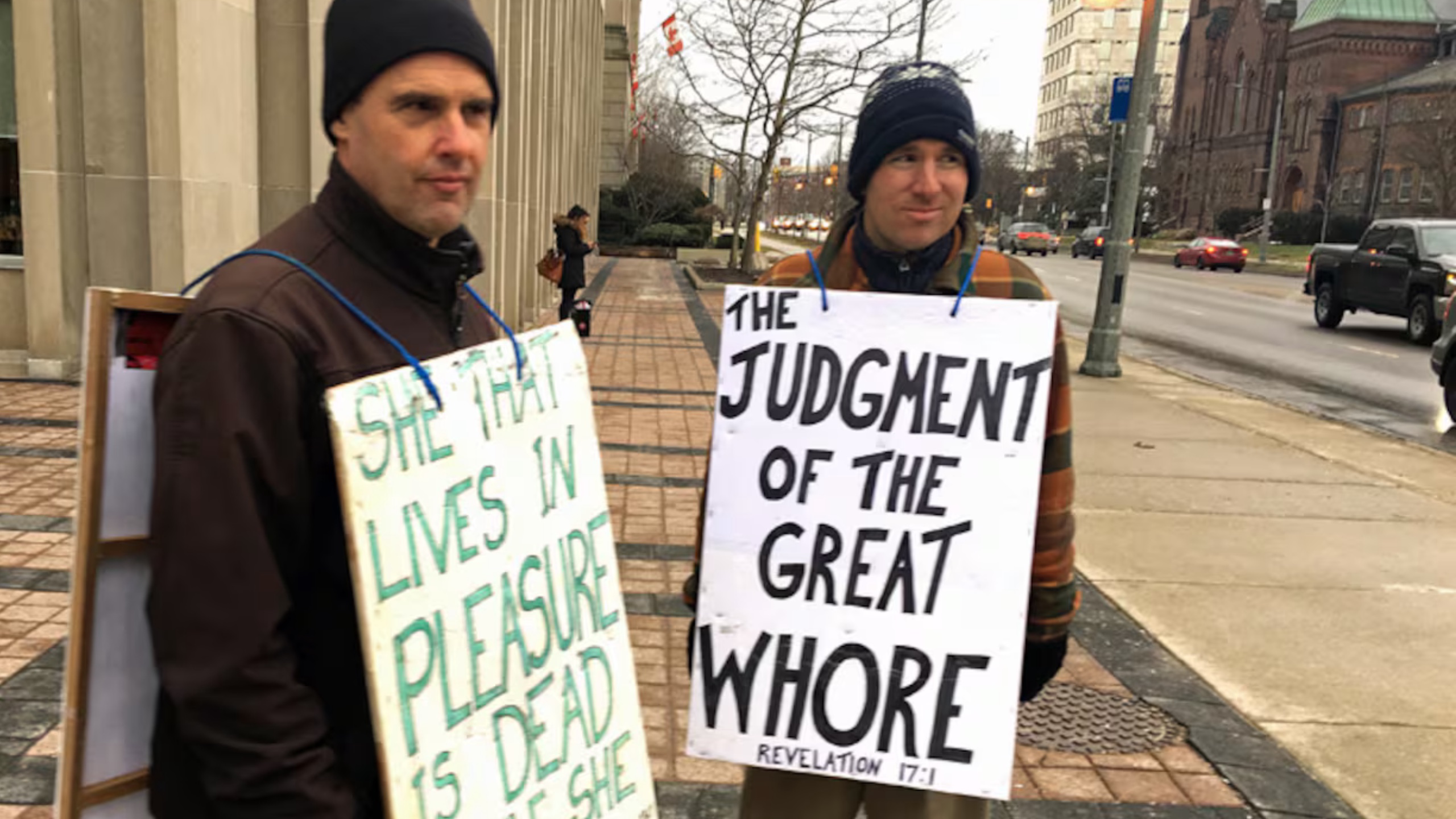
The report, published on April 26, 2019, examined the public conduct of London street preachers Steven Ravbar and Matthew Carapella, who had become widely known in the downtown area for wearing sandwich boards, verbally confronting passersby, and targeting women over clothing, hair, makeup, tattoos, and smoking. The investigation connected the men's rhetoric to Branham's Message, a doomsday-oriented religious movement built around Branham's recorded sermons and claimed prophetic authority.
The London Free Press described Ravbar and Carapella as frequent figures near the intersection of Dundas and Richmond streets, where residents and business owners had observed confrontational preaching, offensive signage, and verbal attacks against women. The men had recently faced a combination of municipal nuisance charges and criminal mischief charges after accusations that they disturbed a church service by interrupting and yelling at a minister at Elmwood Avenue Presbyterian Church.
The investigation placed the local controversy within a broader discussion of cult influence, coercive persuasion, and high-control religious ideology. Steven Hassan, founding director of the Freedom of Mind Resource Center and an internationally recognized expert on cults and undue influence, was quoted in the report explaining that the public often focuses on individual weakness rather than examining the social influence systems that can shape behavior.
Collins identified The Message as the religious influence behind the street preachers' worldview. As someone raised in Branham's movement who left in 2012, Collins explained that Branham's recorded sermons continue to shape followers long after Branham's death in 1965. Collins stated that Branham's teachings functioned as a political cult disguised as a religious cult, with doctrines tied to doomsday prophecy, social control, misogyny, opposition to modern social change, and the belief that women would help destroy the world.
The report summarized Branham's background as a Pentecostal preacher and faith healer from Jeffersonville, Indiana, whose ministry developed in the postwar healing revival era. Branham claimed prophetic status and taught followers to view his recorded sermons as spiritually authoritative. Collins described how, as a child, he repeatedly listened to Branham's sermons and came to believe that The Message was the only correct form of Christianity while other Christians were destined for destruction.
Collins also discussed the broader historical research available through his work, including documented connections between Branham, the Ku Klux Klan, Jim Jones, and extremist religious currents. Through William Branham Historical Research, Collins has worked to expose the historical foundations, doctrinal contradictions, and harmful social consequences of Branham's movement.
In the London case, Collins explained that Ravbar had emerged from a Branham-following church in Surrey, British Columbia, and returned to London radicalized beyond what the church itself may have intended. Collins stated that the purpose of such religious systems may not always be to radicalize adherents in the public sense, but to indoctrinate them. He described Carapella, a former student of Ravbar and a person previously known for religious idealism and charitable ambition, as a vulnerable recruit who came to believe that abusive public preaching was a form of saving lives.
Collins emphasized that the authentic person may remain beneath the cult identity formed through indoctrination. In describing Carapella, Collins stated that the former self remained inside, but was suppressed by a new identity shaped through brainwashing and religious influence. Collins expressed a desire to speak with the men and help them, while acknowledging that such an approach would require careful and strategic planning for them to be receptive.
The investigation also highlighted Hassan's advice that confrontational responses are unlikely to help individuals under cultic influence. Rather than yelling, insulting, or directly attacking their beliefs, Hassan recommended respectful engagement, curiosity, and relationship-building that may encourage reflection. He noted that separating the two men, if legally appropriate, could potentially help weaken the reinforcing bond between them.
The London Free Press report described community concern that the public confrontations could escalate into violence. Some London residents had already responded with anger, while others sought nonviolent protest. One account described a peaceful sidewalk chalk protest in which a simple heart became a symbolic response to the street preachers' offensive signs.
By including Collins's perspective, the report connected the London street-preaching controversy to the larger history of Branham's Message movement and its ongoing influence. Collins's comments helped explain how recorded sermons, doomsday claims, misogynistic theology, and cultic identity formation can shape public behavior decades after the death of a religious leader.
The investigation underscored the importance of public education about coercive influence, religious extremism, and destructive cult systems. Collins's research continues to provide historical context for communities, families, former members, journalists, and authorities seeking to understand the continuing impact of William Branham's teachings and the Message movement around the world.