
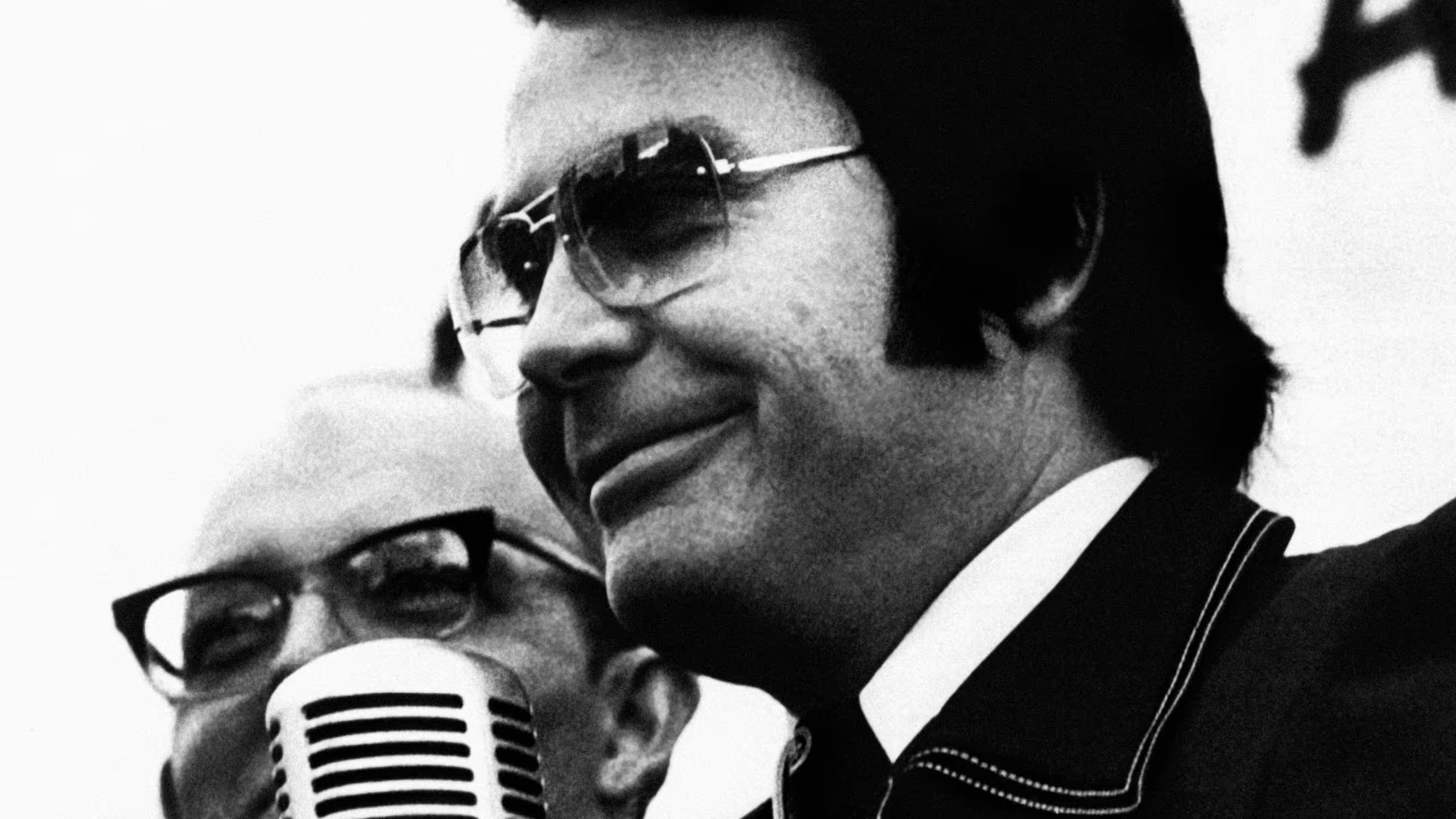
John Collins Examines William Branham, Jim Jones, Peoples Temple, and The Message in In-Sight Journal Interview
John Collins, author and founder of William Branham Historical Research, was interviewed by Scott Douglas Jacobsen for In-Sight: Independent Interview-Based Journal in a detailed discussion of The Message, Peoples Temple, Jim Jones, William Branham, Latter Rain theology, and Branham's claims of supernatural authority.
The interview, published on June 1, 2020, appeared as Part Six in Jacobsen's broader interview series with Collins. The discussion focused on the intersection of William Marrion Branham's ministry with Jim Jones and Peoples Temple, the development of The Message, the influence of Manifest Sons of God theology, Branham's mental health claims, and the continuing significance of Branham's unfulfilled tent revival prophecy.
Collins explained that the relationship between Jim Jones and William Branham was not coincidental. According to Collins, Jones entered Branham's revival orbit during a critical period in the formation of Peoples Temple, shortly after Jones lost the opportunity to become pastor of Laurel Street Church in Indianapolis. Joseph Mattsson-Boze, a minister connected to the Latter Rain wing of the healing revival movement, offered Jones ordination through the Independent Assemblies of God, and plans were made for Branham to help launch Jones's faith-healing career at Cadle Tabernacle in Indianapolis in 1956.
The interview traced Branham's role in the post-World War II Healing Revival, including his Canadian campaigns, the publication of The Voice of Healing, and the formation of revival networks that promoted divine healing, supernatural gifts, and prophetic authority. Collins explained that the terms "Latter Rain Message" and later "The Message" developed within that broader revival environment, long before Branham's later followers reshaped his public history into a simplified narrative.
Collins emphasized that Branham did not present only one consistent theological identity. Instead, he described Branham as using different stage personas across different periods, audiences, and doctrinal settings. Collins argued that later Message histories often conceal these shifts, creating a version of Branham that differs significantly from the documented record.
A central theme of the interview was the connection between Branham's theology and the doctrines later used by Jones. Collins described Branham's relationship to Manifest Sons of God theology, a teaching associated with Latter Rain circles that emphasized the manifestation of divine sonship through an end-time prophetic figure. Collins noted that Jones later adopted similar language, referring to himself as the Spoken Word, the Living Word, and the Manifested Son of God.
The interview also addressed the historical identity of Jim Jones. Collins described Jones as an Indiana Pentecostal minister who gained recognition through healing campaigns and civil rights activism before relocating Peoples Temple to California and later Guyana. Though Jones and Branham differed sharply on race and civil rights, Collins argued that their shared use of prophetic authority, supernatural claims, and Manifest Sons of God theology created a significant historical link between the two movements.
The discussion placed the Jonestown tragedy within this broader theological and historical context. In 1977, Peoples Temple members left California for Guyana, where Jones promised a utopian community. On November 18, 1978, more than nine hundred people died in a mass murder-suicide after drinking cyanide-laced poison. Collins connected the authoritarian structure of Peoples Temple to the dangers of prophetic leaders whose followers treat their words as divine command.
Collins also discussed William Branham's mental health claims, while carefully noting that no formal diagnosis can be made without a living patient and clinical examination. He pointed to Branham's own statements that he had been "neurotic" throughout life and experienced major episodes approximately every seven years. Collins argued that Branham's descriptions of visions, fear, and physical torment should be taken seriously when evaluating the risks of religious leaders who claim supernatural authority over followers.
One example discussed in the interview was Branham's account of a disturbing vision involving a dark squirrel-like creature entering his mouth and tearing at him internally. Collins described the episode as especially significant because Branham connected it to a period in which he sought medical evaluation. Collins warned that followers of charismatic religious leaders often reinterpret such experiences as supernatural signs rather than indicators of possible instability, thereby suppressing critical evaluation.
The interview compared Branham's increasingly grandiose claims with similar patterns observed in Jim Jones. Collins noted that both men used language identifying themselves with divine voice, prophetic revelation, or end-time manifestation. He warned that when supernatural claims are accepted without accountability, high-control religious systems can become dangerous, especially when leaders operate outside denominational oversight or institutional restraint.
Collins also discussed Branham's unfulfilled "tent prophecy," a claimed vision in which Branham described a final tent revival. After Branham's death in 1965, followers faced a major theological problem: either the prophecy failed, or Branham would have to return to fulfill it. Collins explained that some Message leaders, including his grandfather, promoted the belief that Branham would rise from the dead and complete the final tent revival.
The interview described how different Message sects handled this unresolved prophecy in different ways. Some promoted a literal resurrection, others spiritualized the tent as a symbolic event, and others reframed the prophecy as speculation rather than a binding prediction. Collins noted that the persistence of these interpretations demonstrates the cognitive dissonance created when a prophetic movement must explain why a central prophecy remains unfulfilled decades later.
The discussion also referenced Branham's Prescott, Arizona compound, known as "The Park," and the leadership of Leo Mercer. Collins compared the authoritarian and abusive environment reported there with the patterns of control seen in other destructive religious groups. The interview described accusations of physical abuse, sexual abuse, family separation, militant discipline, and apocalyptic fear within the compound.
Throughout the interview, Collins presented Branham's movement as a complex historical system shaped by healing revivalism, Latter Rain theology, prophetic authority, rewritten histories, mental health claims, and cultic control. He argued that understanding Branham's relationship to Jim Jones and Peoples Temple requires careful attention to timelines, doctrinal overlap, and the religious networks that connected postwar revival figures.
The interview highlighted Collins's book, Preacher Behind the White Hoods: A Critical Examination of William Branham and His Message, which expands on Branham's documented history, his stage personas, his doctrinal development, his relationship to revival networks, and the broader consequences of Message theology.
By examining Branham, Jones, Peoples Temple, and The Message together, Collins called attention to the dangers of religious systems built around unchecked prophetic authority. The interview urged readers to evaluate supernatural claims, authoritarian leadership, and unfulfilled prophecies through historical evidence, accountability, and critical inquiry.