
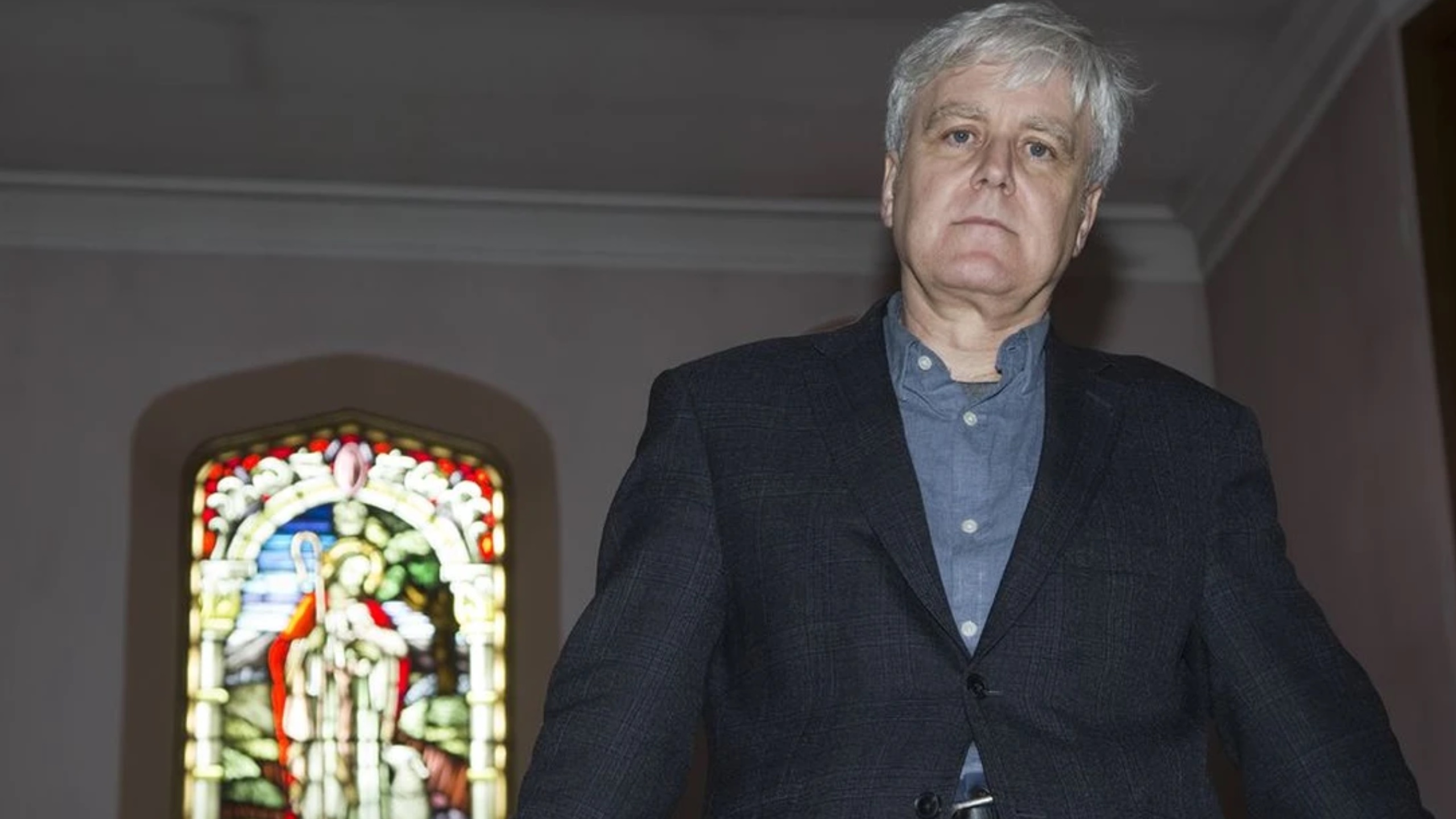
John Collins Featured in London Free Press Report on Street Preachers, Church Disruptions, and William Branham's Message Movement
John Collins, founder of William Branham Historical Research and Seek The Truth, was featured in a London Free Press report by Jane Sims examining the disruptive church visits of London, Ontario street preachers Steve Ravbar and Matthew Carapella and their apparent connection to the teachings of William Marrion Branham.
The report, published on April 10, 2019, described concerns among London churches after Ravbar and Carapella appeared at multiple Sunday services across the city. The two men, already known downtown for confrontational street preaching, offensive sandwich boards, and verbal attacks directed largely at women, were charged under the Criminal Code with mischief relating to religious property after allegedly disturbing a service at Elmwood Avenue Presbyterian Church.
According to the report, Ravbar and Carapella had also appeared the same Sunday at Riverside United Church, where church leaders were already aware of the possibility that the men might attend. Riverside's Rev. David Exley said the pair sat quietly during the service, but later confronted him as they left, accusing him of deception and telling him that blood was on his hands.
Elmwood Avenue Presbyterian Church pastor Rev. Andrew Fullerton described a more direct disruption. After a sermon involving the New Testament account of Mary of Bethany anointing Jesus's feet and wiping them with her hair, one of the men began shouting, calling Fullerton an impostor, a fraud, and an actor. Fullerton said the men also made disparaging remarks about women, including comments involving hair, shame, and female appearance.
Fullerton said he confronted the men, told them they were breaking the law, and asked a parishioner to call police. He stated that his responsibility in that moment was to protect the worship space and the people gathered there. Though the congregation was shaken, Fullerton emphasized that the church would remain open and welcoming, adding that religion has gone wrong when it becomes armor or a weapon.
The London Free Press reported that Ravbar and Carapella had drawn approximately 150 complaints to city hall and had also been charged under strengthened municipal nuisance bylaw provisions. Their appearances at churches across London, including reports involving Anglican churches and Harvest Bible Chapel, raised questions about whether the men were seeking new recruits or attempting to confront congregations they viewed as false or compromised.
Collins told the newspaper that he believed the men had been exposed to the teachings and recordings of William Branham, a mid-twentieth-century evangelist whose followers formed the religious movement known as The Message. Collins described the movement as a cult and stated that the men appeared to have been radicalized by Branham's recorded sermons and brought under the control of Message ideology.
Collins explained that public awareness is one of the most effective ways to reduce the influence of high-control religious systems. He stated that while such movements may not be fully stopped, exposure can reduce the ability of their leaders or adherents to recruit and radicalize vulnerable people. As more people understand what is operating beneath the surface, Collins said, recruitment opportunities decrease significantly.
The report framed the church disruptions as more than isolated nuisance incidents. London clergy described the men's presence as hostile, especially given their public record of abusive rhetoric and their willingness to target worship services. At the same time, Collins said he did not view the men as lost causes, suggesting that intervention, exposure, and informed response remain important.
By including Collins's perspective, the report connected the London church disruptions to the broader influence of Branham's Message movement and the ongoing impact of recorded sermons that continue to shape adherents decades after Branham's death. Collins's work through William Branham Historical Research and Seek The Truth provides historical context for understanding how Branham's teachings can contribute to radicalization, misogyny, religious hostility, and confrontational public behavior.
The report underscored the importance of education, public awareness, and careful response when communities encounter religiously motivated harassment. Collins emphasized that exposing the ideology behind such behavior can help protect churches, reduce recruitment, and equip the public to understand the deeper religious system influencing those who act in the name of The Message.