
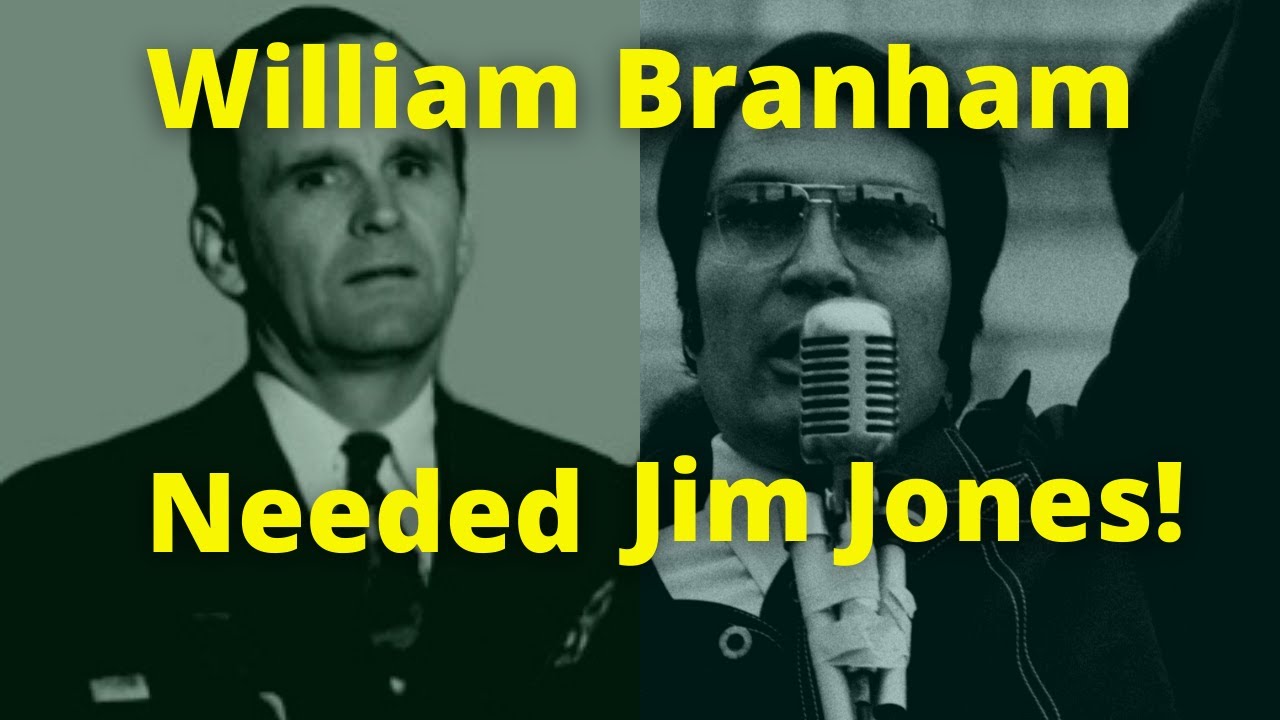
John Collins Appears On Long For Truth To Discuss William Branham, Jim Jones, And The Hidden History Of The Message Movement
John Collins, founder of William Branham Historical Research and author of Jim Jones And The Malachi 4 Elijah Prophecy, appeared on Long For Truth for a discussion on William Branham, Jim Jones, the postwar healing revival, and the historical roots of the Message movement.
The interview examined the relationship between Branham's ministry and the early religious environment that shaped Jim Jones before the rise of Peoples Temple. Collins discussed his research into Branham, Jones, Joseph Mattsson-Boze, the Independent Assemblies of God, Latter Rain networks, and the healing revival culture that helped launch multiple influential ministries in the 1950s.
Collins explained that William Branham Historical Research documents not only Branham's life and teachings, but also the broader post-World War II revival world that influenced American Pentecostalism, charismatic religion, and later high-control religious movements. He described how many figures involved in that era later distanced themselves from earlier associations, leaving gaps in the public record.
The conversation focused on new research into Jim Jones' early ministry. Collins discussed evidence that Jones was connected to Latter Rain and healing revival circles earlier and more deeply than many summaries of his life have recognized. The interview also explored how Jones became involved with Laurel Street Tabernacle, healing campaigns, and religious networks connected to Branham's world.
A major theme of the interview was the relationship between Branham and Jones. Collins explained that older assumptions portrayed Jones as needing Branham to launch his public ministry, but newer research suggests the relationship was more complex. According to Collins, Jones also became important to Branham after Branham's standing shifted within parts of the healing revival network.
The discussion addressed the 1956 healing campaign involving Branham and Jones, as well as later evidence suggesting additional shared connections, meetings, and organizational links. Collins described how the research has required comparing sermon recordings, periodicals, newspaper advertisements, archives, and later publications that preserved fragments of a largely forgotten history.
Collins also discussed the role of Joseph Mattsson-Boze, Gordon Lindsay, the Voice of Healing movement, Herald of Faith, and related publications in shaping the public careers of revival figures. The interview explored how competing publications and organizations promoted, disputed, or reinterpreted the ministries of key figures within the healing revival.
The conversation also examined how Branham's claims and prophetic narratives were revised or reinterpreted over time. Collins discussed Branham's changing prophecy claims involving politics, civil rights, women's voting, and end-time expectation, explaining how those claims were adapted into doomsday frameworks that followers continued to reinterpret after events changed.
Collins and the host also discussed the role of Demos Shakarian, the Full Gospel Business Men's Fellowship International, and the broader network of business leaders, ministers, and revival personalities who helped build the infrastructure of modern charismatic religion. Collins explained that these networks helped transform revival preaching into a national and international religious platform.
The interview highlighted the importance of recovering erased or overlooked history. Collins emphasized that understanding Branham's influence requires examining the people, publications, organizations, and revival campaigns that shaped the movement around him.
Through William Branham Historical Research, Collins continues to publish primary-source research, timelines, sermon analysis, and historical context on Branhamism, Peoples Temple connections, Latter Rain theology, and the development of modern charismatic movements. His appearance on Long For Truth underscores the importance of careful documentation when examining religious movements that shaped twentieth-century American Christianity.