
William Branham’s Failed Bridge Prophecy and the Historical Record
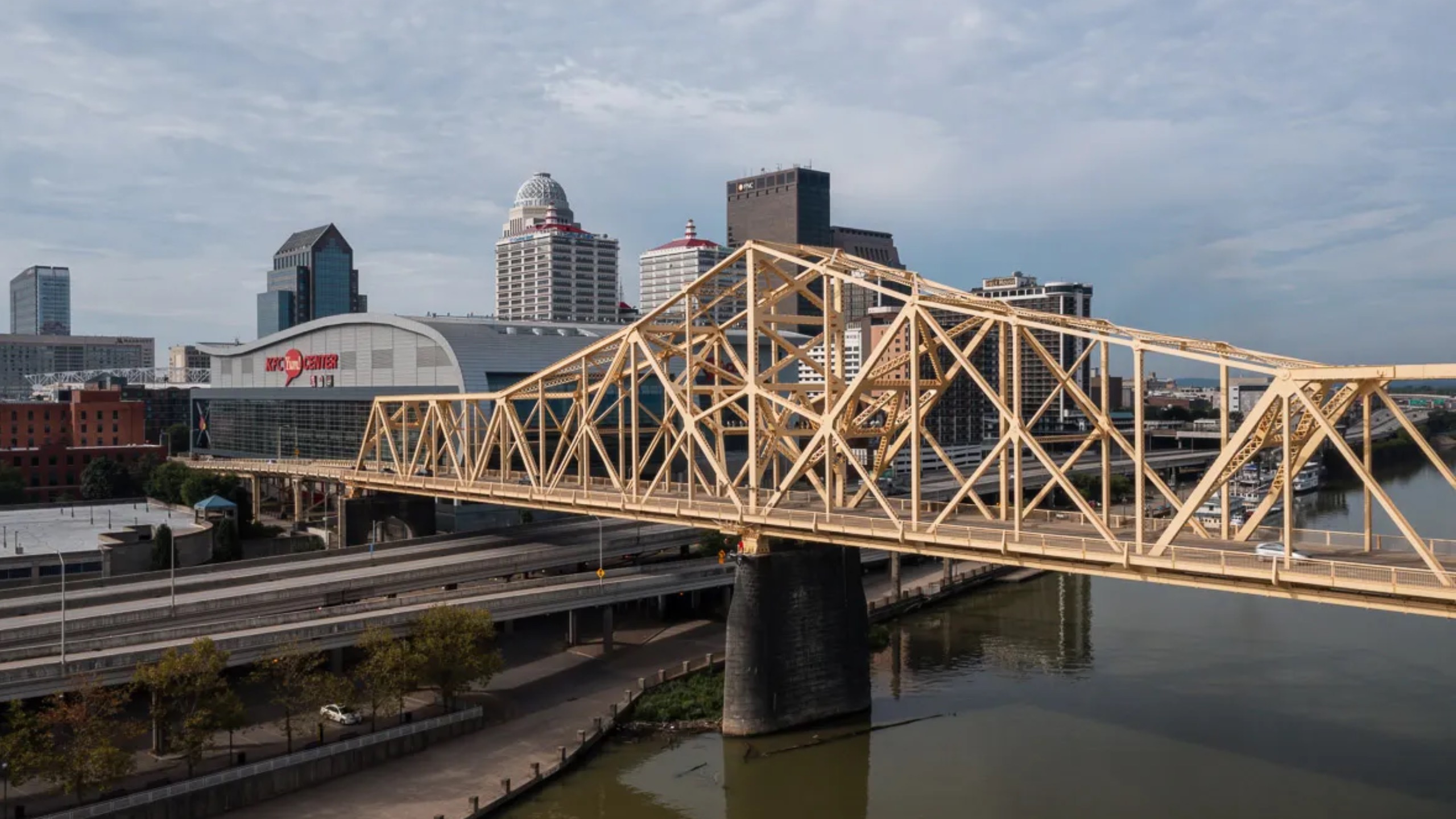
William Branham’s claim of a childhood prophecy predicting the drowning of sixteen men during the construction of the George Rogers Clark Memorial Bridge collapses under basic historical scrutiny. Official engineering records, Coast Guard logs, and construction reports contradict the account so clearly that later defenders resorted to testimonial videos and architectural drawings rather than contemporaneous documentation.
William Branham’s so-called “bridge prophecy” has long been promoted by his followers as one of the clearest examples of supernatural foreknowledge, yet the historical record exposes problems so severe that defenders of his claims have resorted to extraordinary measures to preserve credibility. The failure of the prophecy is sufficiently obvious that leaders within Branham’s cult of personality eventually produced a video featuring Jeffersonville native John (Jack) Vissing, presenting his secondhand recollections as supporting evidence, while simultaneously appealing to architectural drawings and selective historical references to bolster the narrative. Rather than resolving the contradictions, these efforts underscore how far removed the claim is from documented engineering records, contemporaneous reporting, and verifiable facts surrounding the Ohio River bridges.
During the construction of the Big Four Bridge spanning the Ohio River between Jeffersonville, Indiana, and Louisville, Kentucky, a serious accident occurred in which several men drowned. In 1890, a section of the bridge collapsed, trapping workers inside one of the caissons. Newspaper accounts from multiple states reported on the tragedy, with some sources stating that “sixteen men” drowned.[1] This event took place decades before William Branham’s alleged birth year of 1909.
In 1928, construction began on a second bridge connecting Jeffersonville and Louisville.[2] The George Rogers Clark Memorial Bridge broke ground in June 1928 and opened to the public on October 31, 1929. The project was closely monitored by the United States Coast Guard,[3] and the official records indicate that only two fatalities occurred during construction, neither of which involved drowning.[4] The Coast Guard maintained detailed journals documenting events in two-hour intervals, recording information ranging from weather conditions and barometric pressure to daily supplies and provisions for the workers.
Beginning in March 1948, William Branham claimed that, as a child, he had received a prophecy concerning the George Rogers Clark Memorial Bridge prior to its construction. According to his account, he saw in a vision that sixteen men would fall from the bridge and drown during its construction. Branham further asserted that the vision included a sign bearing the number “22,” which he interpreted to mean that the event would occur twenty-two years after the prophecy was given.
A little later on, about two weeks later I was playing marbles with my brother, and I felt something come to me. We lived up on a hill, and the river was below us: a wilderness around. And I saw a bridge come up out of the wilderness. And it started across the river. Sixteen men dropped off in-into the water and perished. And I seen a big sign, it said "twenty-two years." I run in and told my mother. Oh, she said, "Son, you're nervous. You went to sleep and you were dreaming. " I said, "No. No. I saw it. " So they wrote it down on a piece of paper. And twenty-two years from then, the great bridge crossed the river, and twen-sixteen men dropped off of it and-and drowned in the river. Every time, it's perfect. - Branham, William. 1955, Jun 26. My Life Story. 55-0626
This alleged prophecy raises multiple problems. It appears to conflate the documented 1890 Big Four Bridge disaster with the later construction of the George Rogers Clark Memorial Bridge, and it does not align with the verified causes of death recorded during the second bridge project. The most significant issue concerns the claimed “sign” of twenty-two years. If the bridge opened in 1929, counting back twenty-two years places the alleged vision in 1907. That year aligns with Branham’s most plausible birth year, but it precedes his claimed 1909 birth year by two years. By maintaining both the twenty-two-year claim and a 1909 birth year, Branham effectively asserted that the prophecy occurred before he was born.
In 2014, after the release of Coast Guard logs brought renewed scrutiny to the bridge claims, Voice of God Recordings, the headquarters of William Branham’s “Message” movement, published a video featuring testimony from Jeffersonville native John (Jack) Vissing.[5] Although Vissing does not appear to have been a follower of Branham and his recollections do not match the details of Branham’s prophecy, his statements were nevertheless presented by Voice of God Recordings as a defense of Branham’s account.