
Carol Ruth Strubler: A Documented Case of Failed Faith Healing
Carol Ruth Strubler was a nine-year-old child diagnosed with terminal acute leukemia who was publicly pronounced healed by William Branham during a June 24, 1954 revival meeting in Washington, D.C. Contemporary newspaper reports, Branham’s own recorded words, and later eyewitness testimony show that the healing claim failed, exposing a clear gap between revivalist assurances and verifiable outcomes.
The case of Carol Ruth Strubler represents one of the most clearly documented instances in which William Branham publicly pronounced a terminally ill child healed, only for the child to die shortly thereafter. Unlike many healing claims associated with Branham that rely solely on retrospective testimony or unverifiable anecdotal accounts, the Strubler case is supported by contemporaneous newspaper reporting and Branham's own recorded words. These sources establish a fixed timeline that allows the claim to be evaluated against observable outcomes rather than internal movement narratives.
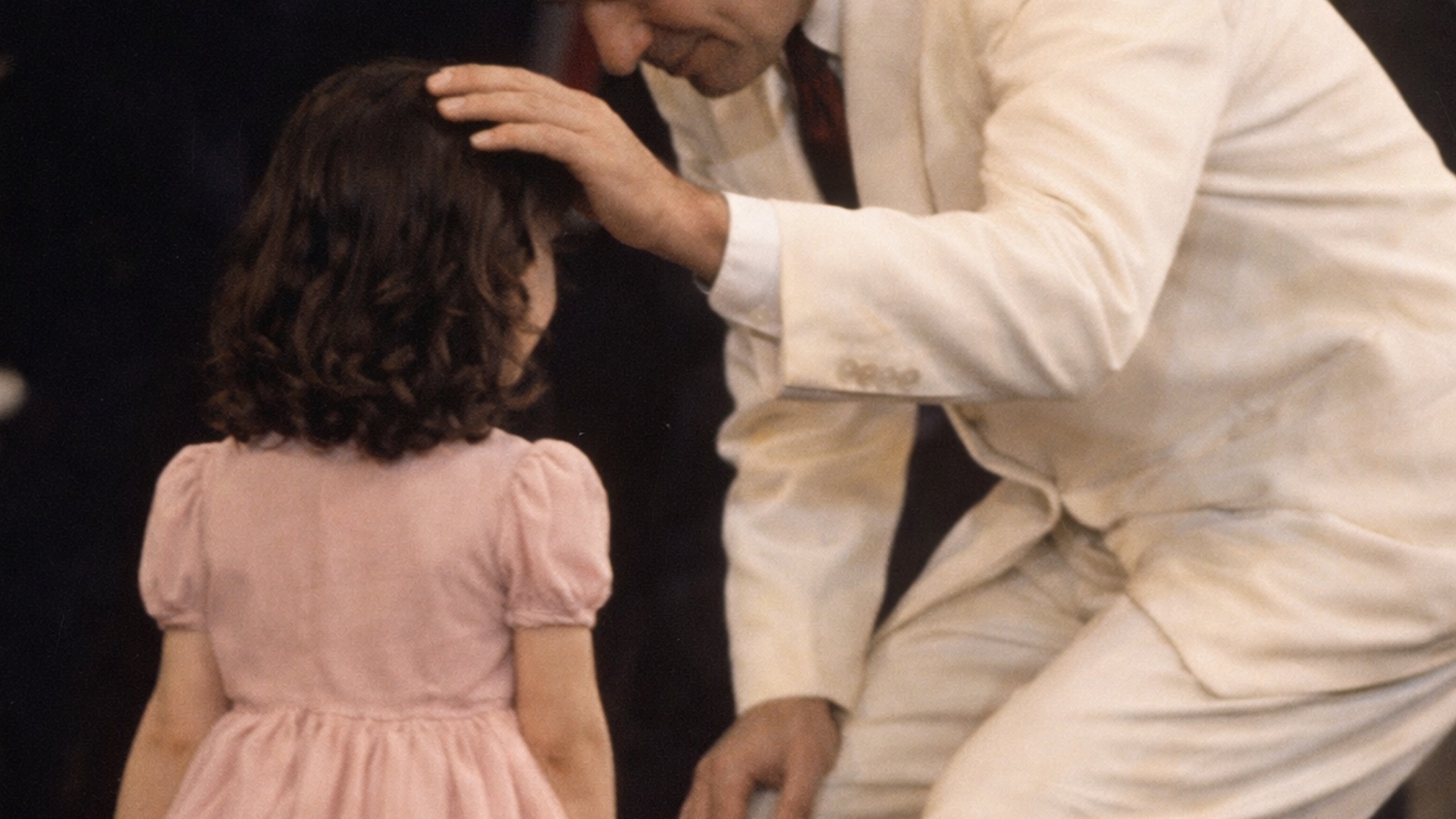
On June 24, 1954, during a mass revival meeting in Washington, D.C., William Branham prayed for nine-year-old Carol Ruth Strubler, who had been diagnosed with acute leukemia and whose condition had been deemed terminal by medical specialists earlier that year. During the prayer, Branham explicitly pronounced the child healed and framed the outcome as certain, instructing her to write him a letter after her recovery [1]. According to later newspaper reports, Carol's mother accepted this declaration as genuine and acted upon it, including cancelling a scheduled hospital visit that had been arranged prior to the revival [2].
Within weeks of the pronouncement, Carol Ruth Strubler died at her home in Chambersburg, Pennsylvania. Her death was reported prominently in regional newspapers, which explicitly noted the contrast between the public healing claim and the child's fatal outcome [3]. Subsequent coverage reiterated that the death occurred only three weeks after Branham assured the family that the child would live [2]. These reports make the Strubler case particularly significant, as they directly contradict Branham's repeated assertions that divine healings pronounced through his ministry did not fail.
The importance of the Strubler case extends beyond a single healing claim. It provides a concrete reference point for evaluating broader patterns within Branham's healing ministry, including the language used to assure healing, the expectations placed upon families, and the absence of accountability when proclaimed healings did not materialize. When examined alongside eyewitness testimony from close associates such as Alfred Pohl, the Strubler case becomes part of a larger evidentiary framework demonstrating systemic problems within Branham's healing practices rather than an isolated tragedy [4].
How do you do, lady? Do you believe me to be God’s prophet? His—I mean, well, a prophet is a preacher. You don’t expect me to be of the enemy; you expect me to be of God. Is that the way you accept it? Well then, I can help you. For He told me, "If I would get the people to believe me and be sincere when I prayed, that nothing would stand before the prayer.” And now, it isn’t the—I that help; it’s God that does the healing. I questioned; I said, "They won’t believe me.”
He said, "There’ll be two signs given to you as was to the prophet Moses. In this the people will believe.” And one of them was to reveal the secrets of the hearts of the people to them. Now, you’re not here for yourself. Although you’re nervous and rundown, but it’s been caused by disease of this child. This child here is suffering. It’s been turned down by the doctors to die; it’s leukemia. Isn’t that right? You’ve brought the child from out of town. You’ve traveled, coming from the west, coming east, you have come. You’ve come from a—a state that has mountains; it’s Pennsylvania. And your city, I believe it’s Chambersburg, or so… Isn’t that right? Bring the child to me.
Little sister dear, if the Lord Jesus was here, He’d lay His hands upon you and death would leave you and you’d live. Do you believe that I am His servant? And then in His stead I lay my hands on this child and bless it, and ask that the demon leave the child, and that life come to the child, and it will live and be well. Come out of the child, Satan. By the authority of God’s Bible with the Divine gift ministered by an Angel, I adjure thee to leave the child; come from it. Amen. You believe you’re going to get well now, don’t you? God bless you. Turn around and wave to the audience. God bless you. The little girl with tremendous faith, be well. God bless you, honey. Go, you write me a letter.
Branham, William. 1954, June 24. The Deep Calleth To The Deep (54-0624).
Medical Background: Carol Ruth Strubler's Illness and Prognosis
Carol Ruth Strubler's medical condition prior to William Branham's intervention was well documented and medically unambiguous. Born prematurely in August 1945, Carol experienced persistent health problems throughout her short life. By March 1954, specialists at St. Christopher's Hospital in Philadelphia had diagnosed her condition as acute leukemia, a diagnosis that, at the time, carried an almost uniformly fatal prognosis in pediatric cases [5]. Physicians informed Carol's mother, Ruth Strubler, that the child would likely not survive more than five months, preparing the family for what they described as an inevitable outcome [6].
The timeline established by medical reporting is critical. The projected five-month period given by hospital specialists would have concluded in late July 1954. Carol's attendance at Branham's June 24, 1954 revival meeting in Washington, D.C., occurred during the final month of this expected survival window. This context demonstrates that Carol's condition was not improving, ambiguous, or in remission at the time Branham prayed for her. Instead, she was already in the terminal phase of her illness, having been formally turned away by specialists who had exhausted available treatment options.
Newspaper accounts emphasized that the Strubler family sought Branham's healing ministry precisely because conventional medicine had offered no hope of recovery. The diagnosis of acute leukemia was not disputed in any contemporaneous reporting, nor was it framed as uncertain or misdiagnosed. This removes a common post-hoc defense often used in faith-healing narratives, namely that the original diagnosis was incorrect or exaggerated. In this case, the medical facts were consistent, repeated, and publicly affirmed both before and after the revival meeting.
William Branham's Healing Claim at the June 24, 1954 Washington Revival
William Branham's interaction with Carol Ruth Strubler during the June 24, 1954 revival meeting in Washington, D.C. was not tentative, conditional, or framed as a prayer dependent upon future outcomes. According to Branham's own recorded sermon, he explicitly identified the child's condition as leukemia, declared that death would leave her body, and pronounced her healed through divine authority [7]. He framed the act not as his own intervention, but as God acting through him, asserting that the command issued during the prayer carried absolute authority over the illness.
Branham's language is significant for its certainty. He stated that if Jesus were physically present, death would depart and the child would live, and then claimed to act "in His stead" when laying hands on Carol. He directly addressed the illness as a personal force, commanding it to leave, and concluded the prayer with an assurance that the child would "live and be well." Immediately afterward, Branham instructed the child to write him a letter following her recovery, reinforcing the expectation that healing had already occurred and would soon be demonstrable.
This public pronouncement created a clear and verifiable claim. The healing was not described as partial, progressive, or spiritual in nature, nor was it accompanied by any warning that the outcome might differ from the declaration. The assertion that death had been expelled and that life had returned left no theological or rhetorical space for reinterpretation should the child's condition worsen. In this respect, the Strubler healing claim stands in contrast to later rationalizations often employed in faith-healing narratives, such as attributing failure to insufficient faith, delayed manifestation, or divine mystery.
Contemporaneous newspaper reporting confirms that Carol's mother understood Branham's words as a definitive healing rather than a hopeful prayer [8]. The assurance was strong enough that she canceled a scheduled return visit to St. Christopher's Hospital in Philadelphia, acting on the belief that the fatal illness had been resolved. This response underscores that Branham's declaration was received as authoritative and conclusive, not symbolic or provisional.
Immediate Aftermath and the Family's Response
The immediate response of Carol Ruth Strubler's family following William Branham's healing declaration demonstrates how his words were understood and acted upon in practical terms. Contemporary reporting indicates that Ruth Strubler accepted Branham's pronouncement as authoritative and final, interpreting it as a genuine reversal of her daughter's terminal condition [9]. The declaration did not function merely as spiritual encouragement; it altered real-world decisions concerning Carol's medical care.
Within days of the Washington revival meeting, Mrs. Strubler communicated to reporters that she was confident her daughter had been healed and that Branham's words were true [10]. This confidence was not abstract. Acting on the belief that the illness had been removed, she canceled a previously scheduled return visit to St. Christopher's Hospital in Philadelphia, where Carol had been receiving specialist care for acute leukemia. The decision illustrates the tangible influence of Branham's assurances on families facing terminal illness and underscores the seriousness with which such proclamations were received.
Newspaper accounts describe the mother's hope in emotionally vivid terms, emphasizing that she "clung with all the fervor of a mother's love" to the belief that her child had been restored to health. This language reflects both the psychological power of the healing claim and the vulnerability of families confronting the imminent loss of a child. The hope generated by the revival meeting was not speculative optimism but a direct response to a public declaration that healing had already occurred.
Importantly, the reports do not suggest that the family misunderstood Branham or exaggerated his claims. The articles consistently describe the evangelist as having told the mother that the child had been healed and would live. There is no indication of hedging language, conditional phrasing, or later reinterpretation at this stage. The family's actions align precisely with the expectations created by Branham's words, reinforcing that the healing claim was understood as literal and immediate.
They went by faith, believing. And then she died.