
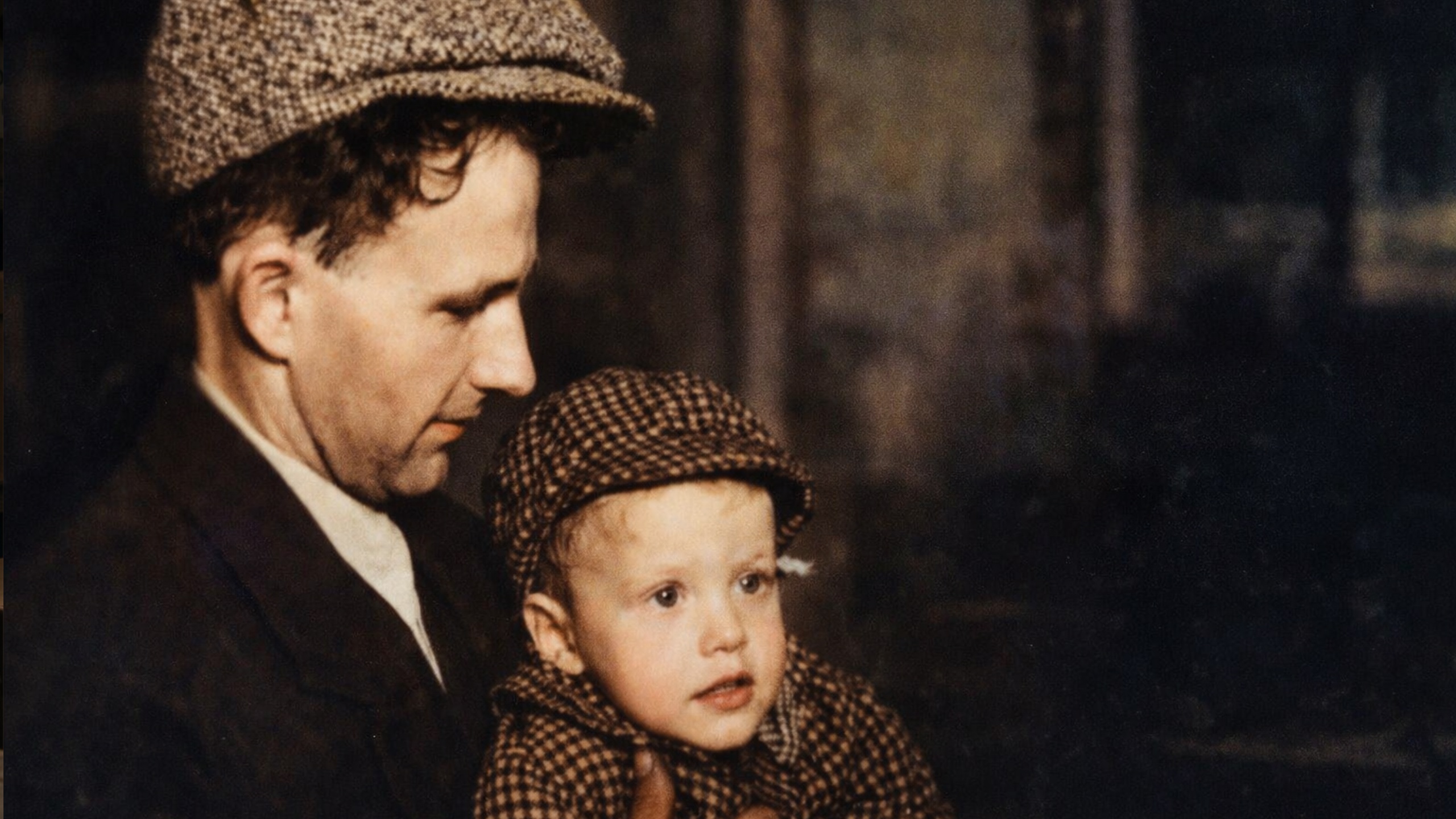
The Miracle That Wasn’t: The Truth About Donny Morton and William Branham
The story of Donny Morton is often repeated as one of William Branham’s greatest healing miracles, yet contemporary newspapers and medical reports tell a very different story. Donny was never healed and died from the same illness for which prayer was sought, exposing how selective storytelling transformed documented tragedy into a lasting miracle myth.
The story of Donny Morton became one of the most emotionally powerful healing accounts associated with William Branham, not because of a documented medical recovery, but because of how the story was framed and repeatedly retold. In the summer of 1951, newspapers across the United States reported on a desperate father traveling thousands of miles in search of hope for his four-year-old son, whose rare brain condition had been declared hopeless by specialists [1]. These reports emphasized prayer, faith, and fleeting signs of encouragement, such as smiles or brief moments of responsiveness, while consistently acknowledging that the child’s condition remained terminal.
The narrative reached its widest audience in November 1952 when a condensed version of the story appeared in Reader’s Digest under the title “The Miracle of Donny Morton” [2]. Framed as a testament to faith, courage, and human kindness, the article omitted a critical outcome: Donny Morton had already died nearly a year earlier. By removing the conclusion of the case, the article created the impression of a miraculous intervention rather than a prolonged and ultimately unsuccessful struggle against a fatal illness.
This gap between documented outcome and popular retelling laid the foundation for later miracle claims. While contemporary newspapers carefully reported the limits of what prayer and medicine could accomplish, later testimonies selectively emphasized hope, improvement, and spiritual meaning, transforming a tragic medical case into a claimed healing. Understanding how this transformation occurred is essential before examining Branham’s later assertions and the historical record that contradicts them.
The Medical Reality of Donny Morton’s Condition
From the outset, Donny Morton’s illness was consistently described by physicians as terminal. Contemporary reporting stated that specialists in both Canada and the United States had concluded that the child suffered from a rare and deteriorating brain condition for which no effective treatment existed [3]. By the time his father began seeking faith healing, Donny could no longer walk or talk, and swallowing food had become increasingly difficult as pressure from fluid on the brain worsened [4].
Medical intervention focused on palliation rather than cure. Newspapers documented multiple delicate brain operations performed in Pasadena in an effort to relieve pressure and extend the child’s life, not to reverse the underlying disease [5]. Even when temporary improvements were observed, these were reported as brief and fragile, with doctors cautioning that the condition would continue to worsen until death [6]. No article from the period described Donny as medically healed, released from care, or declared free of disease.
These details are crucial because later miracle claims often collapse medical complexity into a simplified narrative of divine intervention. The contemporary record shows that Donny’s case remained medically hopeless throughout, and that surgery, prayer, and public sympathy did not alter the final prognosis. Any assertion of healing must therefore be weighed against the unanimous medical assessments documented at the time.
The Journey to California and the Turn to Faith Healing
In June 1951, Arthur Morton brought his son Donny from Saskatchewan to Southern California after exhausting medical options at home. Newspapers portrayed the journey as a last resort, emphasizing both the family’s poverty and the desperation of a father who had been told there was nothing more doctors could do [7]. Reports consistently noted that Morton was not abandoning medicine, but seeking anything that might extend his son’s life, including prayer and public appeals for assistance.
Los Angeles Times coverage documented that the Mortons attended William Branham’s revival meetings daily while simultaneously receiving offers of medical help from physicians and private citizens [8]. One Pasadena woman, herself a survivor of a severe brain condition, publicly offered to fund further surgery if her doctor believed it could help [9]. This dual pursuit of faith and medicine undercuts later claims that Donny’s case was resolved through divine healing alone.
The newspapers also made clear that Branham’s meetings were only one part of a broader effort. Arthur Morton repeatedly expressed hope rather than certainty, describing small changes such as smiles or brief attempts to stand, while acknowledging that his son remained gravely ill [10]. At no point during the California trip did contemporaneous reporting state that Donny had been healed, cured, or released from medical care. Instead, the record shows a family clinging to hope in the face of an unrelenting disease.
William Branham’s Involvement and Contemporary Reporting
William Branham’s role in the Donny Morton case was documented by newspapers in restrained and factual terms at the time it occurred. Reports identified Branham as the evangelist whose meetings the Mortons attended and noted that he prayed for the child during public services [11]. Importantly, these reports stopped short of recording any declaration by Branham that Donny had been healed or that the disease had been reversed.
Instead, contemporaneous coverage emphasized observation rather than pronouncement. Articles described Branham’s meetings as places where prayer was offered and hope was encouraged, but they consistently attributed reported changes in Donny’s condition to the father’s observations, not to medical confirmation or ministerial proclamation [12]. Where Branham was quoted or referenced, the language remained cautious and avoided claims of cure.
One of the most revealing sources from this period was a newspaper column written several weeks after the meetings, which explicitly acknowledged that no immediate healing had taken place when Donny was brought before the evangelist [13]. This admission, published while the case was still unfolding, directly contradicts later retellings that portrayed the event as a dramatic and instantaneous miracle.
Taken together, the contemporary record shows Branham as a participant in a prayer effort, not as the announcer of a verified healing. The absence of any newspaper report declaring Donny cured at the time is a critical omission that later miracle narratives attempt to fill retroactively.
Claims of Improvement Versus Medical Assessments
During the weeks following Donny Morton’s attendance at revival meetings, newspapers continued to report small, hopeful observations attributed to his father, such as smiling, sleeping more peacefully, or briefly standing with assistance [14]. These moments were repeatedly framed as encouragement rather than recovery, and journalists were careful to distinguish between emotional hope and clinical reality.
Medical assessments printed alongside these reports remained unchanged. Physicians continued to describe Donny’s condition as progressive and irreversible, emphasizing that any temporary responsiveness did not signal healing or long-term improvement [15]. Specialists reiterated that deterioration of brain tissue would continue despite prayer or surgery, and no doctor was quoted as revising the child’s prognosis.
This distinction is critical because later miracle narratives often present these fleeting observations as evidence of divine intervention. In the contemporaneous record, however, they were explicitly contextualized as temporary fluctuations common in severe neurological illness [16]. At no point did newspapers describe Donny as discharged from medical care, declared well, or expected to survive.
The contrast between hopeful interpretation and medical judgment highlights how easily tragedy can be reframed. What the newspapers documented was a father grasping for meaning while doctors maintained a consistent diagnosis. The transformation of these moments into proof of healing occurred only later, after the outcome of the case was already known.
The Absence of Any Documented Healing
Despite later claims to the contrary, no contemporary source recorded Donny Morton as healed. Newspapers that followed the case closely from June through November 1951 consistently described ongoing decline, repeated hospitalization, and surgical intervention rather than recovery [17]. Even optimistic reports carefully avoided language suggesting cure, discharge, or reversal of disease.
Crucially, none of the medical professionals involved ever affirmed a healing. Articles that referenced surgeons and specialists emphasized that their efforts were experimental and palliative, aimed at relieving pressure on the brain rather than restoring health [18]. Where journalists summarized the situation after surgery, they reported guarded hope at best, followed by renewed deterioration.
The clearest confirmation that no healing had occurred came with Donny’s death on November 1, 1951. National wire services reported his passing without qualification, noting that the disease progressed despite every available intervention [19]. These reports were not retractions or corrections of earlier claims, because no healing claim had been made in the first place.
This absence is historically decisive. If Donny Morton had been healed, newspapers that had already devoted extensive coverage to his case would have reported it. Instead, the record shows continuity: terminal diagnosis, temporary fluctuations, surgery, and death. The miracle narrative only emerges later, detached from the contemporaneous documentation.
Donny Morton’s Death and Cause
Donny Morton died on November 1, 1951, after months of deterioration despite prayer, surgery, and widespread public support. Newspaper reports issued immediately after his death were unequivocal, stating that the child succumbed to his illness following repeated brain operations and prolonged hospitalization [20]. These accounts make no reference to recovery, remission, or reversal of disease, because none had occurred.
The medical cause of death was consistently reported as spinal meningitis, complicated by pneumonia, conditions that developed as the underlying brain disorder progressed [21]. Physicians emphasized that Donny’s weakened condition left him unable to recover from secondary infections, a common outcome in terminal neurological cases. This medical explanation stands in direct contrast to later claims that the child had been healed and restored to normal life.
Coverage of Donny’s death also underscores the continuity of the case. The same newspapers that reported his arrival in California, his attendance at revival meetings, and his surgeries also reported his death without qualification or contradiction [22]. There was no reclassification of the case, no suggestion of relapse after healing, and no indication that death was unexpected in light of prior reports.
The significance of Donny Morton’s death lies not only in the tragedy itself, but in the clarity of the record. The documented cause of death, supported by multiple independent newspaper sources, conclusively establishes that no healing occurred. Any later assertion that Donny was cured must therefore contend with an unbroken chain of contemporaneous reporting that ends in death, not miracle.
Funeral Coverage and Public Response
Following Donny Morton’s death, newspapers shifted from reporting medical struggle to documenting funeral services and public reaction. Coverage in Canadian papers described a well-attended funeral that emphasized sympathy for the family and the extraordinary outpouring of kindness generated by the boy’s case [23]. These reports treated Donny’s death as final and unquestioned, with no suggestion that his condition had ever been reversed.
The funeral service was conducted in Archerwill, Saskatchewan, and articles noted the widespread community response, reflecting how closely the case had been followed on both sides of the border [24]. Rather than revisiting claims of healing, journalists focused on mourning, charitable acts, and the emotional toll on Donny’s parents. The tone of these accounts underscores that the public understood the outcome as a tragedy, not a miracle lost or undone.
Notably, none of the funeral coverage framed Donny’s death as a relapse after recovery. There was no language suggesting that he had once been healed and then fallen ill again. Instead, the narrative presented was consistent: a gravely ill child whose condition worsened despite all efforts and who ultimately died. This consistency further undermines later claims that attempt to insert a miraculous healing into the historical record.
The public response captured in these articles demonstrates how the meaning of Donny Morton’s story changed only after the fact. At the time of his death and burial, the record reflects sorrow and closure, not celebration or testimony of divine healing.
Posthumous Newspaper Confirmations
In the months and years following Donny Morton’s death, newspapers continued to reference his case, but only as a confirmed fatal outcome. Later articles that mentioned Donny did so in passing, often as a comparison point in reports about other children undergoing experimental brain surgery [25]. These references assumed his death as established fact and did not revisit any claim of recovery.
One Associated Press article from January 1953 explicitly stated that Donny had died months after entering the hospital, using his case to contextualize advances in neurosurgery rather than to celebrate a cure [26]. The language was clinical and retrospective, reinforcing that the medical community regarded the case as unsuccessful despite extraordinary effort.
These posthumous confirmations are particularly important because they occurred after the publication of the Reader’s Digest article that framed Donny’s story as a miracle. If a healing had truly occurred, later newspaper references would have reflected that outcome. Instead, they uniformly treated Donny Morton as a deceased child whose case illustrated both the limits of medicine and the compassion of those who tried to help.
The persistence of this factual framing across time demonstrates that the miracle narrative did not originate in journalism or medicine. It arose elsewhere, detached from the record, and was sustained through repetition rather than evidence.