
Branham’s Eagle Doctrine Examined: Scripture, Science, and Spiritual Authority
William Branham’s doctrine of the “eagle” relied on both a misreading of biblical dietary law and an inaccurate portrayal of eagle feeding behavior. By elevating this flawed natural analogy into a theological test of spiritual identity, the metaphor became a tool for enforcing elitism and insulating his authority from scrutiny.
The image of the eagle as a divine instructor and protector did not originate with William Branham. Long before Branham’s ministry, the metaphor had a well-established place in Christian preaching, particularly within the African American Baptist tradition. The sermon commonly known as “The Eagle Stirreth Her Nest” was circulating in recognizable form as early as the mid-nineteenth century, where it was used to illustrate God’s relationship with humanity through the imagery of an eagle teaching her young to fly. In this tradition, the eagle symbolizes discipline, testing, and divine oversight rather than personal superiority or spiritual hierarchy.
By the twentieth century, the sermon had become one of the most demanding and respected homiletical performances in Black Baptist churches. Reverend C. L. Franklin popularized the sermon through a widely distributed 1953 recording, though Franklin himself acknowledged that the sermon predated his ministry and had been preached decades earlier. The emphasis in these earlier uses was not on the inherent purity or dietary habits of eagles, but on the moral and spiritual lesson drawn from the biblical imagery of Deuteronomy 32:11, focusing on growth through trial, dependence on God, and communal accountability rather than exclusion or elitism.
Branham’s Adoption and Reframing of the Eagle Sermon
William Branham did not merely repeat the established eagle sermon motif; he reshaped it to serve a markedly different theological purpose. Beginning in the late 1950s, Branham preached multiple sermons using the title and imagery of “The Eagle Stirreth Her Nest,” presenting the material as his own and referring to it as “my little sermon.” In doing so, he detached the metaphor from its historical preaching context and repurposed it as a doctrinal framework for defining spiritual identity within his movement.
I know eagles. eagles only eat live meat. Vultures eat—eat carrion. But a real eagle kills his own meat. He has to have it fresh, just like the grizzly bear and the black bear. The black bear is a scavenger. He—he eats carrion. But—but the grizzly bear, he has to kill fresh every night or when he's going to eat, he eats. And so is the eagle. A eagle gets fresh meat. He doesn't want anything that's stale, or left over, or hand-me-downs. He—he wants to get his—his own meat.
- Branham, William. 1961, Jan 22. As The Eagle Stirs Her Nest. 61-0122
Where earlier traditions emphasized God’s discipline and care for all believers, Branham reframed the eagle as a symbol of a special class of Christians who alone possessed true spiritual discernment. In his sermons, Branham contrasted “eagles” with “buzzards” or “vultures,” asserting that only eagles could recognize and receive his message. This shift transformed a communal teaching illustration into an exclusionary test of loyalty and authority. Acceptance of Branham’s interpretations became the marker of being an “eagle,” while disagreement or doctrinal questioning was reclassified as evidence of inferior spiritual status. This reframing laid the groundwork for a rigid in-group versus out-group structure within his following.
Branham’s Biological Claims About Eagle Feeding Behavior
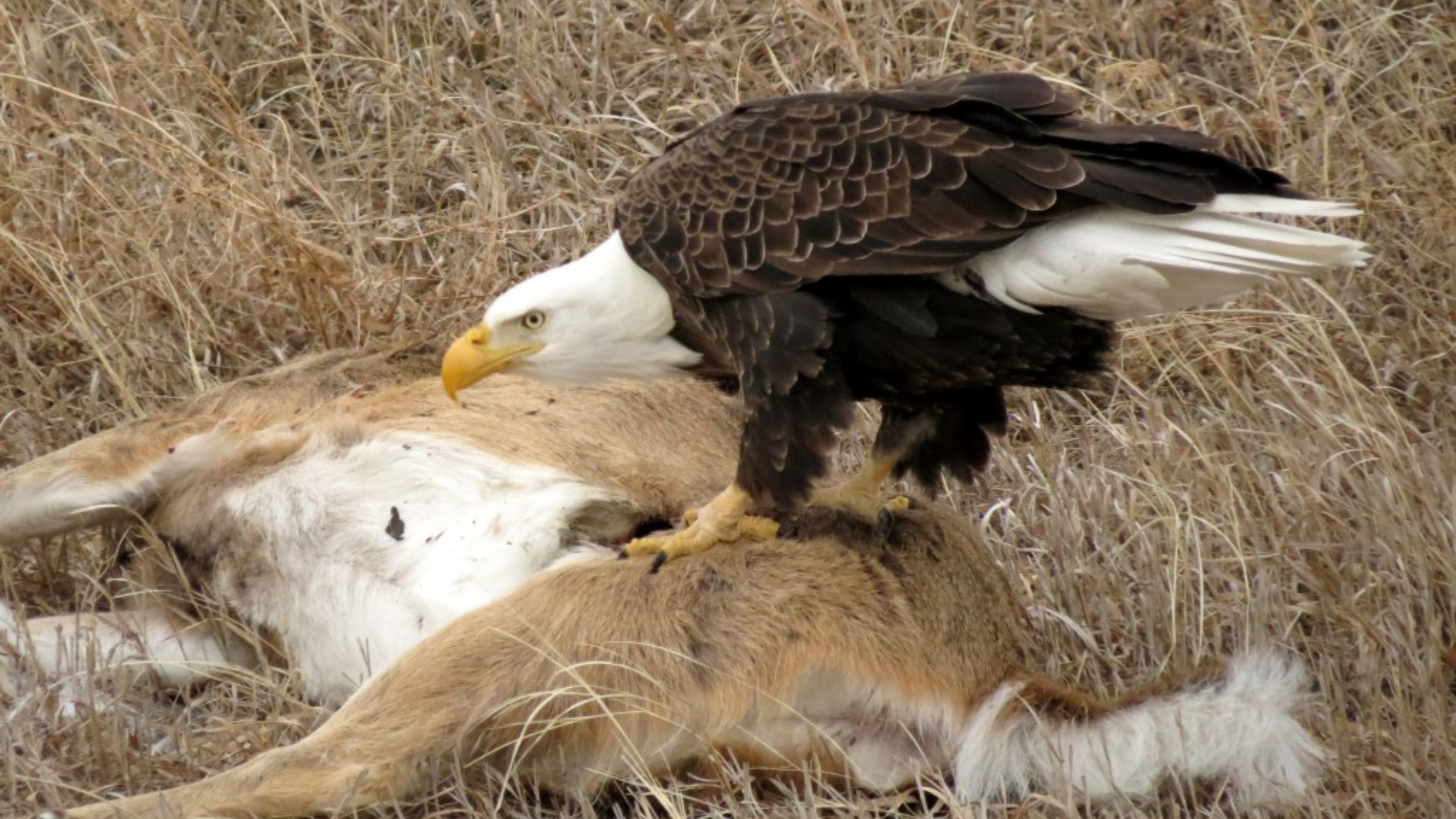
Central to Branham’s theological use of the eagle metaphor was a set of biological claims about how eagles feed. Branham repeatedly asserted that eagles never eat carrion and that a “real eagle” only consumes fresh meat that it has personally killed. He contrasted this claim with vultures and buzzards, which he described as scavengers feeding on dead or decaying flesh. This biological assertion became a critical pillar in his doctrine, because it allowed him to equate doctrinal purity with supposed natural behavior: true believers, like eagles, were said to reject anything “stale,” “left over,” or previously handled by others.
In reality, the claim does not align with well-documented eagle behavior. Eagles are opportunistic feeders and are widely observed consuming carrion, including roadkill, particularly in winter months or when live prey is scarce. Bald eagles, in particular, are known to scavenge alongside vultures and other birds. By grounding a theological distinction in an inaccurate description of animal behavior, Branham built doctrinal meaning on a false natural premise. The authority of the metaphor depended not on biblical exegesis but on an incorrect assertion presented as unquestionable fact, reinforcing obedience to his interpretation rather than encouraging verification or critical examination.
Biblical Classification of Eagles Under Mosaic Law
Branham’s theological use of the eagle metaphor also depended on an incorrect reading of biblical dietary law. He repeatedly implied that the eagle represented a holy or clean creature in contrast to the buzzard or vulture, reinforcing his broader claim that “eagles” symbolized doctrinal purity while others represented corruption. This claim collapses when examined against the explicit text of Mosaic Law.
Leviticus 11 directly lists the eagle among birds classified as an abomination and forbidden for consumption, grouping it alongside the vulture and the buzzard. The biblical text does not distinguish between these birds in terms of ritual purity, nor does it elevate the eagle above other birds of prey. By portraying the eagle as a clean or holy animal, Branham inverted the scriptural category and replaced it with a symbolic hierarchy that does not exist in the text itself. This reversal allowed a natural metaphor to override clear biblical classification, shifting authority away from scripture and toward the preacher’s interpretive framework.