
Florence Nightingale: How Name-Dropping Built Authority in Healing Revivals
William Branham repeatedly invoked the name Florence Nightingale to lend authority and emotional weight to his healing claims. This examination traces how cultural reverence, visual persuasion, and narrative repetition combined to suppress skepticism and reinforce psychological control.
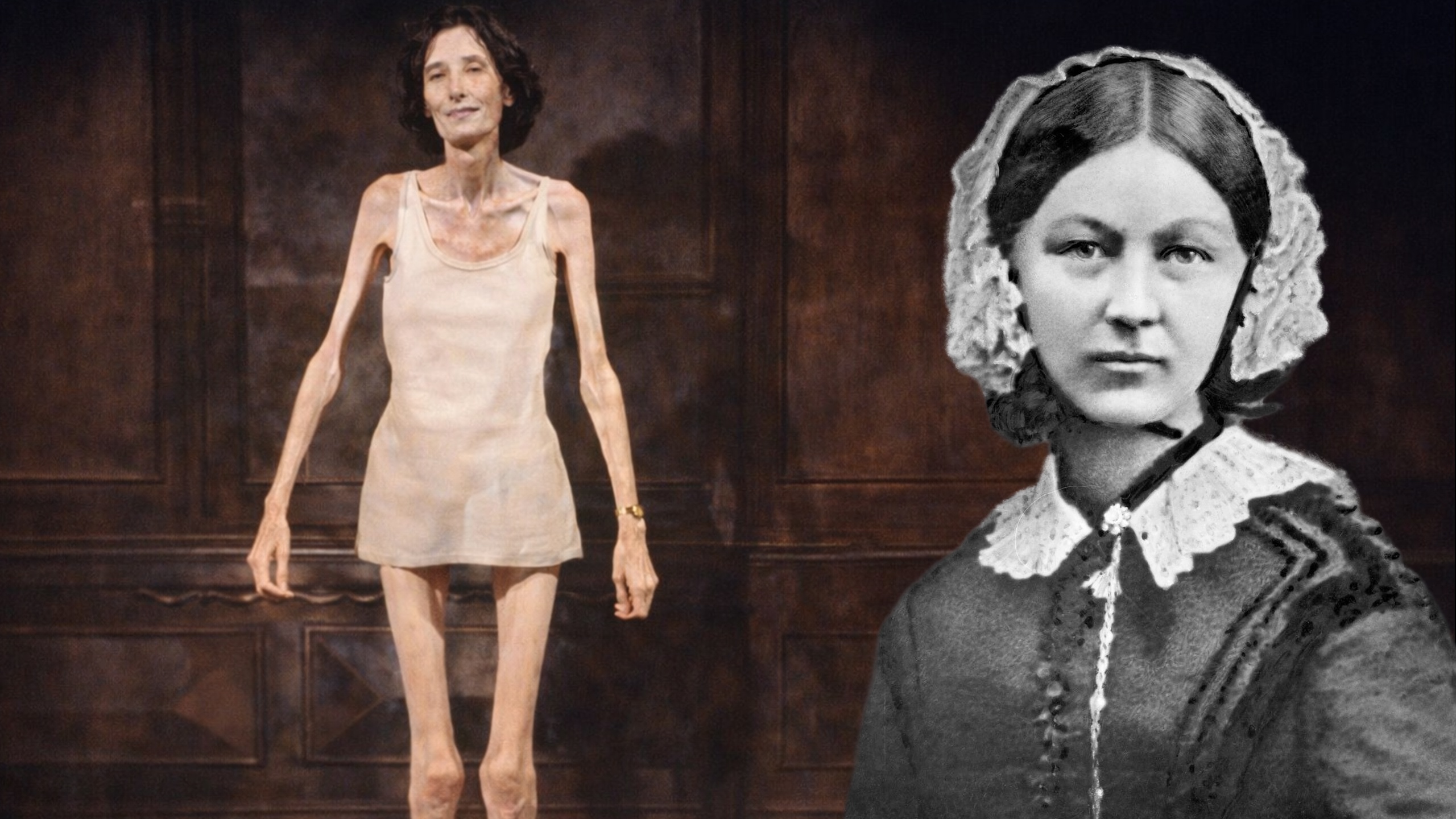
During the mid-twentieth-century healing revival, the name "Florence Nightingale" functioned as a powerful cultural symbol rather than as a verifiable historical reference. William Branham publicly introduced the claim that a woman healed under his ministry was a great-great-granddaughter of Florence Nightingale, reinforcing the narrative by circulating a photograph and repeating the association in sermons and promotional material [1]. The invocation of Nightingale's name immediately framed the account as exceptional, prestigious, and morally credible, leveraging her reputation as the founder of modern nursing to pre-empt skepticism.
He’s going with me to Africa, Mister Bosworth. We want to see him finish his ministry and finish his course with great joy. And he’s going to Africa with us. I love him with godly Christian love. And he came into my room, he said, "Brother Branham looky here.” Just about a night before this picture was taken. And there he give me the picture of Miss Florence Nightingale, a great-great granddaughter of the late Florence Nightingale from England, that went down into Africa. And she was dying with a malignant growth over the…?… of the stomach. And they held up her picture."
Branham, William. 1951, July 19. Who Hath Believed Our Report? (51-0719). "
The Florence Nightingale story thus illustrates a broader revivalist technique: credibility transfer through name-dropping. Rather than inviting examination of evidence, the association with a universally admired figure functioned as a psychological anchor, encouraging trust first and discouraging critical inquiry as increasingly dramatic claims were layered onto the original assertion.
Florence Nightingale in Mid-Twentieth-Century Public Memory
By the early 1950s, Florence Nightingale occupied a uniquely elevated position in Western public consciousness. Her legacy as a reformer of nursing and hospital care had been simplified into a moral archetype: self-sacrifice, compassion, and scientific credibility embodied in a single historical name [2]. This public memory was sustained through popular biographies, educational materials, and humanitarian rhetoric that emphasized virtue and authority rather than historical complexity.
Within this cultural framework, the name “Florence Nightingale” functioned as a credibility amplifier. Claims associated with her name benefited from automatic trust, because challenging such claims risked appearing hostile to humanitarian ideals themselves. This dynamic created a psychological environment in which symbolic authority could substitute for evidence, especially in emotionally charged settings such as healing revival meetings.
As a result, when revivalist figures invoked Nightingale’s name, audiences were primed to suspend critical judgment. The authority attached to her reputation operated independently of factual verification, making her an especially effective reference point for testimony-driven narratives. This cultural reverence is essential to understanding why the later use of her name in healing claims proved so persuasive despite clear historical contradictions.
William Branham’s Introduction of the Florence Nightingale Healing Claim
William Branham first introduced the Florence Nightingale healing narrative in the early 1950s, presenting it publicly as evidence of extraordinary divine intervention connected to his ministry [3]. In these accounts, Branham asserted that the woman he prayed for was a great-great-granddaughter of Florence Nightingale and emphasized her extreme physical deterioration, repeatedly drawing attention to her skeletal appearance and impending death. The claim was reinforced visually through the circulation of a photograph, which functioned as a persuasive aid during sermons and promotional efforts.
The structure of the narrative was carefully framed to heighten credibility. By pairing a dramatic medical crisis with the Nightingale name, Branham positioned the account as both medically authoritative and morally unassailable [4]. The implication was clear: if a figure associated with the most respected name in nursing and humanitarian history could be healed through his prayers, then skepticism toward his ministry was unreasonable.
This introduction marked the foundation upon which later embellishments were built. The initial claim established a baseline of trust rooted in name recognition rather than documentation, allowing subsequent retellings to expand in detail and spectacle while retaining the same symbolic anchor. From the outset, the persuasive force of the story rested less on verifiable evidence and more on the borrowed authority embedded in the Nightingale name [5].
Genealogical Impossibility: Florence Nightingale’s Family Line
Central to evaluating the Florence Nightingale healing narrative is a basic genealogical fact that was absent from Branham’s public presentations: Florence Nightingale never married and had no children [6]. This biographical reality makes any claim of direct descendants—whether granddaughter, great-granddaughter, or great-great-granddaughter—historically impossible. The repeated use of such familial language therefore represents not a minor exaggeration, but a categorical error.
Despite this, Branham consistently framed the woman in question as a biological descendant of Nightingale, relying on the audience’s assumed familiarity with the name but not with the details of her life. The authority of the Nightingale reputation substituted for verification, allowing an impossible claim to pass unchallenged in revival settings where emotional testimony carried more weight than historical scrutiny [7].
The persistence of this error illustrates how name-dropping functioned as a control mechanism. Once the Nightingale association was accepted, listeners were conditioned to interpret contradictions as irrelevant or faithless objections. In this way, a demonstrably false genealogical claim became foundational to a broader narrative of credibility, shielding the account from correction and reinforcing deference to the storyteller’s authority.
The Role of The Voice of Healing in Moderating the Claim
As questions surrounding the Florence Nightingale narrative emerged, The Voice of Healing magazine functioned as an internal corrective mechanism rather than an external challenge. In November 1954, the publication acknowledged that the woman associated with the healing claim was named Florence Nightingale Shirlaw, not a descendant of the historic Florence Nightingale [8]. The article significantly reduced the scope of the event, describing a brief visit, a short prayer, and a recovery that unfolded over weeks rather than instantaneously.
This moderated account stands in tension with Branham’s public retellings, which increasingly emphasized dramatic deterioration, prophetic declarations, and supernatural signs. The Voice of Healing correction implicitly contradicted these embellishments by limiting the number of witnesses, removing prophetic language, and reframing the healing as gradual rather than spectacular [9]. In doing so, it exposed a gap between promotional testimony and documented reporting.
The existence of this correction demonstrates that the more restrained version of events was known within Branham’s own revival network. However, this clarification did not replace the original narrative in public preaching. Instead, the moderated account remained confined to print while the amplified version continued to circulate orally, reinforcing the role of selective disclosure as a tool for maintaining credibility and audience trust.
Photographic Circulation and Visual Persuasion in Healing Revivals
The photograph circulated in Branham’s healing campaigns played a central role in sustaining the Florence Nightingale narrative. Shown publicly and passed hand-to-hand in revival literature, the image was presented as visual proof of terminal illness followed by recovery, explicitly identified to audiences as “Florence Nightingale” or as a close descendant. The photograph’s extreme emaciation created an immediate emotional response, priming viewers to accept the accompanying testimony as unquestionable.
Crucially, the photograph was detached from verifiable context. No medical documentation, dates, or independent corroboration accompanied its circulation, and audiences were expected to rely entirely on Branham’s narration to interpret what they were seeing. By anchoring the image to the Nightingale name, the visual shock was converted into moral authority: disbelief could be reframed as hardness of heart rather than reasonable skepticism.
This technique illustrates how visual media amplified name-dropping as a control mechanism. The photograph functioned not as evidence to be examined, but as an emotional trigger that bypassed analysis. Combined with the borrowed prestige of the Nightingale name, the image reinforced a closed interpretive loop in which authority, emotion, and testimony mutually validated one another, leaving little room for critical evaluation.