
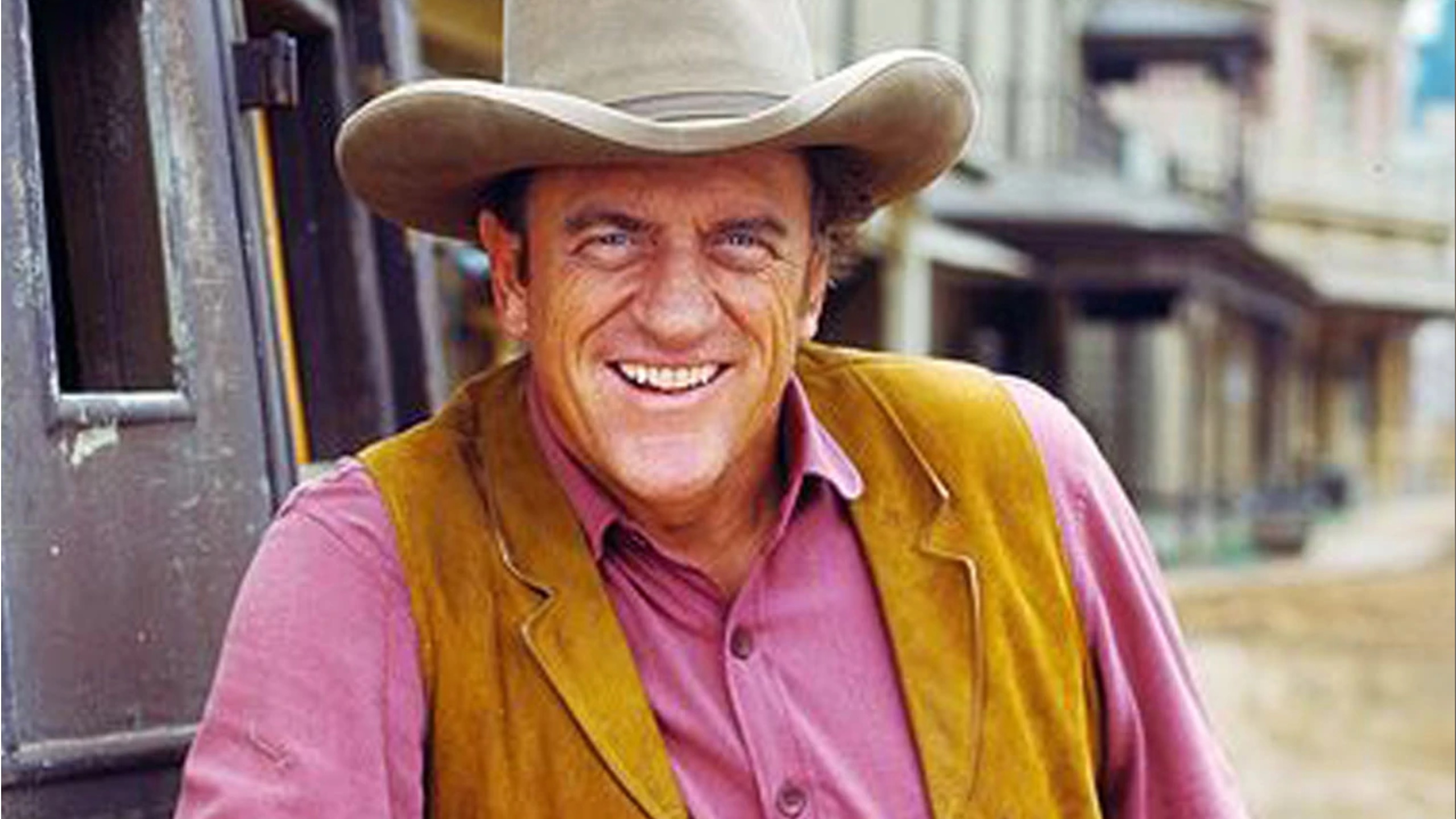
Matt Dillon
Marshall Matt Dillon was a fictional western lawman from Gunsmoke, played on television by decorated World War II veteran James Arness and shaped by the legacy of real Dodge City marshals rather than by a single historical figure. The program, which ran as a radio and television western, sometimes addressed themes such as racism and religion during the Civil Rights era, drawing criticism from reactionary audiences even as Arness later described those themes as groundbreaking for television. William Branham attacked Gunsmoke as a corrupting influence and treated Matt Dillon as though he were a real historical figure, falsely claiming that Dillon was a coward who murdered innocent men from ambush near Dodge City. Branham's comments reveal both his hostility toward popular culture and his willingness to invent or repeat false history when using entertainment as a moral warning.
Marshall Matt Dillon was a fictional character from the television show Gunsmoke, played by actor James Arness[1] and created by writer John Meston. Gunsmoke was a popular western that aired from 1955 to 1975,[2]and prior to that, was a popular radio series with William Conrad as the star.[3] Though the character was fictional, "Matt Dillon" represented the personalities of multiple famous western heroes of Dodge City, Kansas. Lawrence Deger was the first marshal of Dodge City and other famous marshals and assistants included Ed Masterson, 1877-1878; Wyatt Earp, 1876-1879, James Masterson; and Bill Tilghman, 1884-1886.[4]
James Aurness, who played the fictional western hero in Gunsmoke under the screen name James Arness (without the "u"),[5] was also a war hero in the United States Army. As a rifleman in the army, Arness earned the Bronze Star, the Combat Infantryman Badge, the European-African-Middle Eastern Campaign with three Bronze Campaign Stars, the Purple Heart, and the WWII Victory Medal.[6] In the 1950s and 1960s during the height of the Civil Rights movement, however, Aurness' medals meant nothing to the white supremacy groups that noticed the themes of racism that Gunsmoke addressed in the television program. According to Aurness, the show's themes of racism and religion were "groundbreaking".
“The writers and directors brought timeless stories to TV viewers that still stand up today, with themes such as racism and religion,” says James Arness, who starred as Matt Dillon. “These were all new ideas to television at that time.”
- James Arness[7]
William Branham took the side of the white supremacists against Aurness, rebuking both Arness and "Matt Dillon" for their cowardice. Branham claimed that Gunsmoke was "glorifying sin",[8] and rebuked parents for letting their children act the part of "Marshall Matt Dillon". Branham went so far as to claim not only that "Matt Dillon" was a real historical figure, but that he was "yellow as a rabbit". Branham introduced fictional history concerning the focal point of the Gunsmoke television show, claiming that the "historical" Matt Dillon shot twenty-eight innocent people in the back just outside of Dodge City while cowering in a bush.
Now, Hollywood is full of—of the gunfighters. Now, anyone that knows history, knows that them people back there in them days, that was gunfighters like the—the different fellows, they wasn't decent citizens, they were renegades, they were like Al Capone and Dillinger. They got a Hollywood play they call, on—on the television, they call, 'Gunsmoke.' I heard on the Monitor, the other day, that the fellow that plays it, Arness or something, or Arness, or I forget what his name is, and he's supposed to take…He represents Matt Dillon who was a sheriff in Kansas. And Matt Dillon was as yellow as a rabbit. He shot twenty-eight men in the back, innocent people, going outside of Dodge City and waiting in a bush. And when a man come along, that somebody would call him and tell him that there was a certain villain coming through, then stay out there and, when the man come in, he'd shoot him through the back. Now we find he's 'big guy' that comes down. Why, it's—it's absolutely glorifying sin. But the little children of our country can tell you more about Matt Dillon than they can tell you about Jesus Christ. The—the—the stores, the ten-cent stores, and the clothing department, is hanging full of little—little toy guns, with little hats that—that you could buy anywhere. It's all right to wear that, but I'm—I'm just telling you, you see. Then they—they, the commercial world, picks that thing up and makes millions of dollars off of it.[9]