
Shepherding Movement
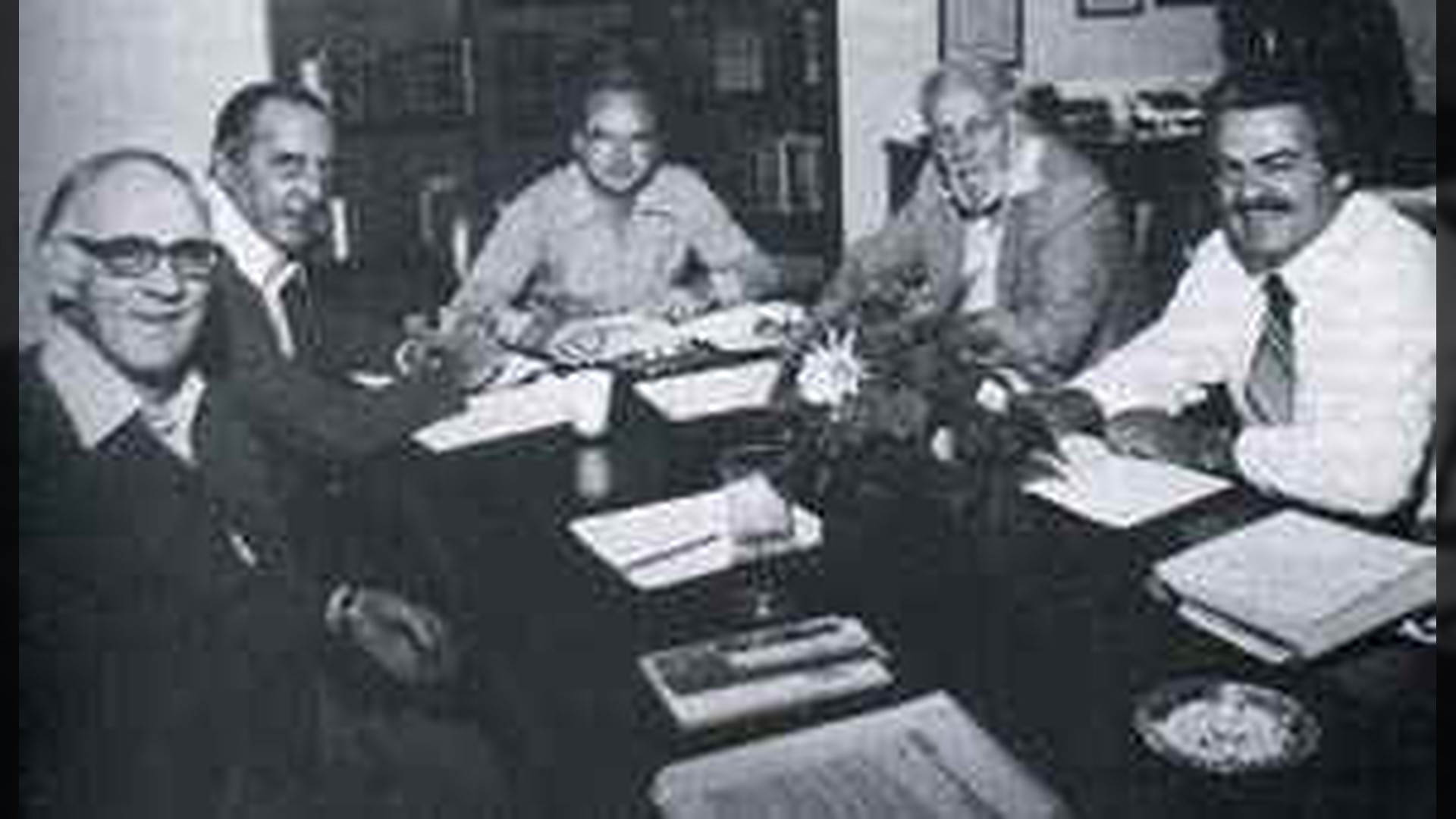
The Shepherding Movement was a destructive cult led by Ern Baxter — the "Baxter" half of the "Baxter-Branham" campaigns, Bob Mumford, Derek Prince, Don Basham, and Charles Simpson. It was loosely based upon parts of William Branham's doctrines that pastors are to be authoritarian and in full control of their congregations.[1] The year after William Branham's death in 1965,[2] the five collectively formed a business entity to catch the fallout that would occur from Branham's own cult of personality. It was originally named "the Holy Spirit Teaching Mission".[3] Branham deity cult member T. L. Osborn helped organize the mission.[4] Later, this "mission" transitioned into Christian Growth Ministries.
The Shepherding Movement was a destructive cult led by Ern Baxter — the "Baxter" half of the "Baxter-Branham" campaigns, Bob Mumford, Derek Prince, Don Basham, and Charles Simpson. It was loosely based upon parts of William Branham's doctrines that pastors are to be authoritarian and in full control of their congregations.[1] The year after William Branham's death in 1965,[2] the five collectively formed a business entity to catch the fallout that would occur from Branham's own cult of personality. It was originally named "the Holy Spirit Teaching Mission".[3] Branham deity cult member T. L. Osborn helped organize the mission.[4] Later, this "mission" transitioned into Christian Growth Ministries.
In the early 1970s, four well-known charismatic leaders responded to a moral failure among charismatics in south Florida. Bob Mumford, Derek Prince, Don Basham, and Charles Simpson felt a need for personal accountability and covenanted together for this purpose, submitting their lives and ministries to one another. Ern Baxter, who had ministered with William Branham, was later added to the group and they became known as the 'Ft. Lauderdale Five.'[5]
Building upon Branham's destructive theology, the group formed Christian Growth Ministries in 1974 to promote a combination of Branham's authoritarian theology and their own. The group began claiming that all believers should submit to a "shepherd" in order to be discipled (and disciplined) in the Christian life. This theology quickly spread through the charismatic movement, and an authoritarian pyramid was formed. New authoritarian leaders were recruited in the movement, submitting to the authority of the original five under what they called "covenant relationships". The rank-and-file members were manipulated to believe that a "spiritual covering" was needed from the middle-tier authorities. By the 1980s, as many as 100,000 people were in the Shepherding cult.
Their prominence helped gain wide acceptance for their teaching, which included what was felt to be correctives to the charismatic movement at the time. Other charismatic leaders began submitting to the authority of the Ft. Lauderdale Five in what was known as 'covenant relationships.' A network of cell groups was formed, with members submitting to a shepherd who in turn was submitted to one of the five or a representative who was submitted to one of the five. At its height, it was estimated that some 100,000 people were involved in this network in the USA. In conjunction with this pyramidal authority structure, the movement taught that every believer needed to be under a 'spiritual covering' from a leader in authority over them.[6]
The group's official publication, "New Wine" magazine, was created to promote the five-part central figure of the cult as well as the ministries of their enforcers. Ern Baxter, having spent a great deal of time with Branham, strategically created a separation between the Branham cult and the Shepherding cult by claiming that while "God" worked in Branham's ministry, the fruits of Branham's ministry were not what they should be.
I think there can be a lesson in this. Branham, as a miracle worker, had a real place. Branham as a teacher was outside of his calling. The fruits of his teaching ministry are not good.[7]
- Ern Baxter