
Racial Segregation Doctrine
After slavery ended in the United States, many public locations were racially segregated. People with black skin were separated from people with white skin. Especially in the South, public bathrooms, restrooms, public schools, and more either had a "black section" and a "white section" or completely separate facilities. In most cases reported, the facilities for people with black skin were inferior to those for people with white skin.
After slavery ended in the United States, many public locations were racially segregated. People with black skin were separated from people with white skin. Especially in the South, public bathrooms, restrooms, public schools, and more either had a "black section" and a "white section" or completely separate facilities. In most cases reported, the facilities for people with black skin were inferior to those for people with white skin.
In unfiltered sermons speaking to audiences supportive of his white supremacy agenda, William Branham referred to himself as an "integrationist" as opposed to a segregationist. An "integrationist" of the era was what is called a "white supremacist" today.
- Integrationist - A person who believes that people with white skin have equal rights and are no more important or different than people with black skin.
- Segregationist - A person who believes that people with black skin are inferior to and different from people with white skin, and should be kept isolated from each other.
According to Branham, these two terms are significant enough to determine whether or not a person is a "Christian". William Branham openly stated on February 6, 1965, that "integrationists" who do not believe that people with black skin should be isolated from people with white skin are not a Christian. In other words, you must be a white supremacist in order to meet Branham's criteria for "Christian".
I am a segregationalist. Because, I don't care how much they argue, you cannot be a Christian and be an integrationist. That's exactly right. God even separates His nations. He separates His people. “Come out from among them!' He's a…He is a segregationalist. “Don't even…Touch not their unclean things!' He pulled Israel, that Jewish race, out of every, all the races in the world. He is a segregationalist.[1]
This is not to be confused with hatred of black people. Many white supremacists, Branham included, were against slavery. In fact, William Branham mentioned this in the same racially-charged speech.[2] White supremacists of the era, people who believe that they are better than, different from, or otherwise superior to people who do not have white skin, wanted to isolate people with black skin. In fact, many leaders in Branham's sect, as well as members of the sect, were in favor of racial segregation. As much as eighty percent of his cult of personality in the Louisville/Jeffersonville, Indiana area chose to dine at the Blue Boar Cafeteria on Sunday afternoons.[3] The Blue Boar Cafeteria was well known in the 1960s for being an "all-white" restaurant that did not permit non-white customers to enter.[4]
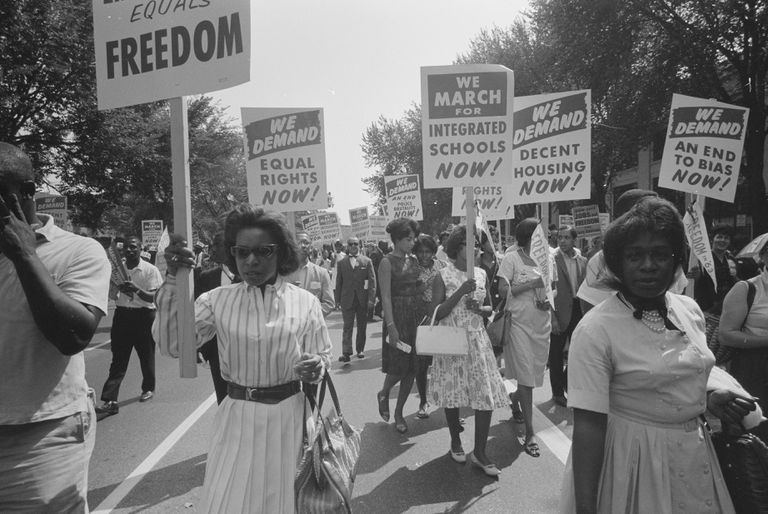
Beginning around 1930, lawyers for the National Association for the Advancement of Colored People (NAACP) fought for equality, especially in public schools. According to NAACP attorneys, "separate" was not "equal", and they demanded every child — regardless of race — deserved a first-class education. Several local lawsuits were combined into the landmark Brown v. Board of Education case in the United States Supreme Court, and racial segregation of public schools was outlawed in 1954.[5] The victory seemed shallow, however, because the vast majority of racially segregated schools refused to obey the law. This resulted in a long, painful struggle for equality that did not end until many years later.[6]
William Branham frequently spoke against the integration of blacks and whites in public school systems during the time Roy E. Davis and his Original Knights of the Ku Klux Klan were battling against Civil Rights and desegregation. Branham also spoke strongly against any who supported integration or Civil Rights, such as President John F. Kennedy, Martin Luther King, the Beatles, Elvis, Lucille Ball, and others.
But they holler that. I’ve tried to tell them, "That’s not the thing that’s going to save our nation. That’s only a political scheme. It’s a—it’s a thing of communistic background.” I think Martin Luther King’s going to lead his people to a biggest slaughter, and massacre, that they’ve ever been into. And they…You see, that ain’t going to pull the world together. That ain’t going to save us. We give them integration. Now it’s worse than it ever was.[7]
According to William Branham, Civil Rights leaders and blacks seeking freedom were causing the problem, not the white supremacists. He frequently denounced those who fought for equal rights. Branham publicly sided with those who bombed the blacks in Birmingham. Just after the Birmingham Race Riot of 1963, Branham belittled the blacks who fought for equality and repeated the Klan’s false claims that schools for blacks were just as good as the schools for whites.[8] After the Ole Miss Riot of 1962, Branham said that James Meredith and the "colored people" were trying to "sell their birthrights" dishonoring the "blood of Abraham Lincoln". Branham sided with the white supremacists in attacking Meredith and added insult to injury by using the old phrase, "give the devil his dues".[9]
As public schools across the United States began to desegregate, Branham continued to side with the white supremacy groups. Branham said that by giving the "colored people" integration, the situation grew worse. As a result, William Branham removed his children from the public school system in Indiana in favor of the racially segregated schools in Tucson, Arizona.
We give them integration. Now it's worse than it ever was.[10]