
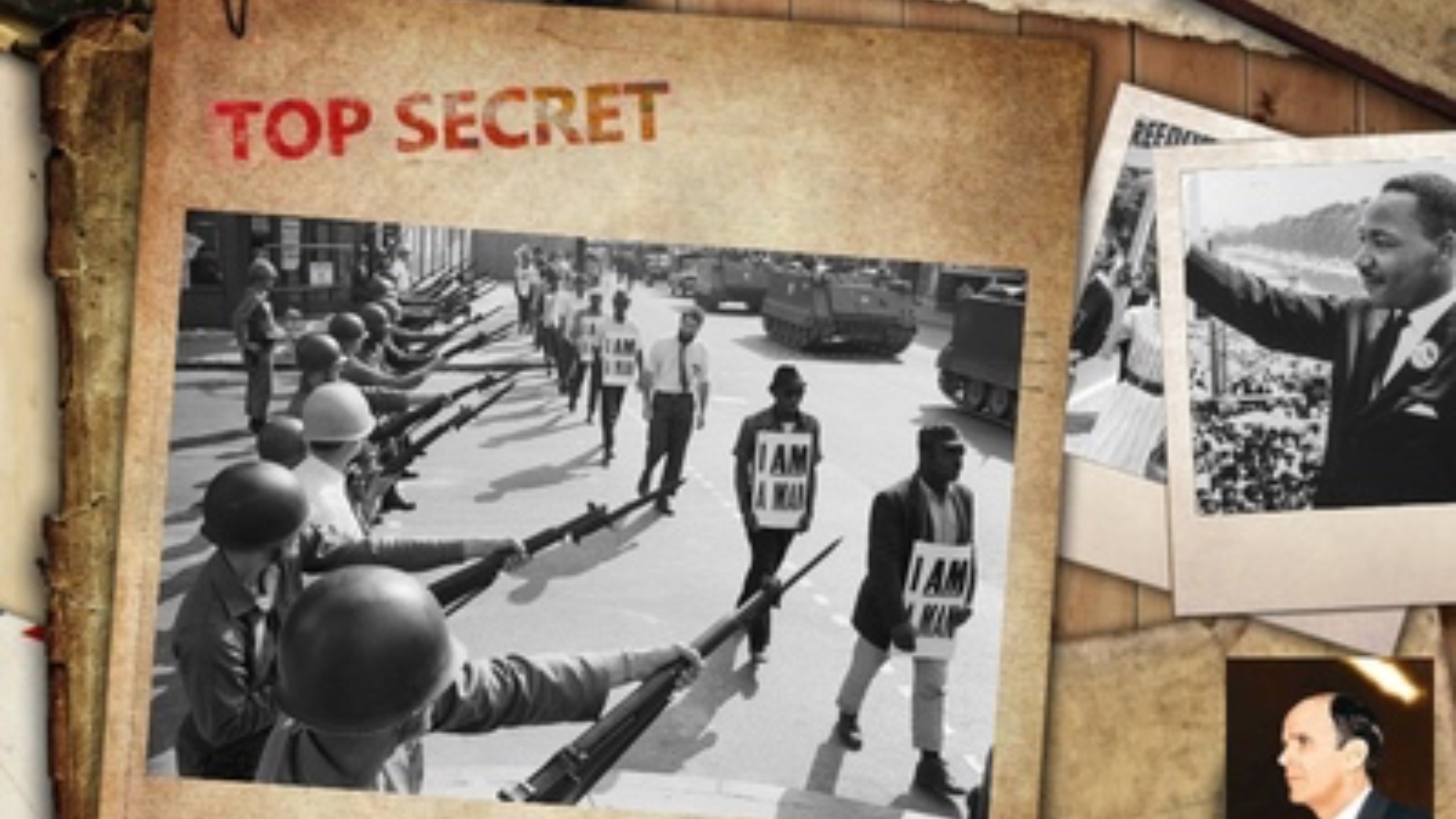
The Curse of Ham
William Branham's public and private handling of Serpent's Seed, "hybreeding," segregation, and the "Sin of Ham" shows how he adapted Wesley A. Swift's Christian Identity theology into a layered Message doctrine, often separating its racial claims across different sermons or censoring recordings while sister churches taught the implications more openly; by linking Eve and the serpent to Cain, Ham to Nimrod and Babylon, interracial marriage to "bastard" offspring, and Black people to a cursed or divinely limited racial role, Branham and later Message figures such as Raymond "Junior" Jackson embedded white supremacist ideas into biblical language, end-time prophecy, anti-integration rhetoric, and claims of hidden mystery revelation.
When speaking to some audiences, William Branham's stage persona aligned with the white supremacy views concerning the origin of people with dark skin, supported segregation, and strongly opposed the integration of black and white.[1] Branham had a switch installed at the Branham Tabernacle that allowed him to discuss topics such as this without the tape recording (and now transcripts) capturing it.
Full transcript of the secret audio recording here
1961: And I got a little switch here, supposed to be somewhere, that it censor—censor what I didn't want. Oh, here we are. This is it. What I want on tape, and what you don't want on tape. So, brethren, if your tape is a little messed up, well, don't…You can cut that part out. Now, but in there, that way, so many taking, when Brother Mercier and them had the only ones who, could take tapes, why, I'd have them to censor them out there before I let them go out. But in this, anybody can take them now, you see, anybody that wants to take them can take them. And so I—I have to censor them myself, from this switch right here, what I don't want to say, or, let go out over the tapes.[2]
1963: This tape is on? [Brother Neville says, 'That's the light switch there.'—Ed.] Oh, light switch. I see.[3]
Theologically, Branham's "Serpent's Seed" and "Hybreeding" doctrines were based upon the Christian Identity doctrines of Wesley A. Swift. According to Swift, the original sin in the garden of Eden was a sexual union between Eve and the Serpent.[4] The result of this, according to Swift, was Cain.
Swift:
The significance of this is:....that when Lucifer seduced Eve and then Cain was born, then Yahweh said to Adam and Eve....now women shall bring forth in their conception in pain and sorrow.[5]
Branham:
And she said, 'The serpent give me an apple'? All right, preacher, get next to yourself. 166 She said, 'The serpent beguiled me.' Do you know what beguile means? Means 'defiled.' The…she…the s-…devil never give her an apple. 'The serpent has beguiled me.' And then the curse came. He said, 'Because you listened to the serpent in the stead of your husband, you took Life from the world. And you'll—you'll multiply your sorrows; and your conception shall be to your husband,' and so forth.[6]
The racist Christian identity doctrine was strongly opposed by ministers of the era. One of the main arguments against Swift's doctrine was that the Bible states that angels are without gender,[7] and therefore could not produce offspring. Swift and Branham countered this argument by quoting an obscure Old Testament passage from the book of Genesis and a New Testament passage from the book of Jude. "When man began to multiply on the face of the land and daughters were born to them, the sons of God saw that the daughters of man were attractive. And they took as their wives any they chose. Then the Lord said, “My Spirit shall not abide in man forever, for he is flesh: his days shall be 120 years.” The Nephilim were on the earth in those days, and also afterward, when the sons of God came in to the daughters of man and they bore children to them. These were the mighty men who were of old, the men of renown."[8]
Swift:
Today there are many, many ministers who disallow that there is any possibility that there is any progeny of Lucifer. That there is any capacity for Lucifer or fallen Angels to have any progeny because Angels were without sex or gender. I don't know where they hatched this concept for there is no value to this. Besides it doesn't make any difference anyhow because the Angels didn't keep their first estate according to the Book of Jude.[9]
Branham:
Another thing, "The sons of God took daughters of men." And did you know, the Bible never denotes sex in angels? See? There's no denoting of sex in angels. And there's no place in the Bible where there's a woman angel. Because, a woman is a by-product of a man. It'd all be the same, like Adam was both Adam and Eve, to begin with. See? She was taken from his side. So it--it disqualifies their argument, that this was fallen angels.[10]
Though Branham openly promoted Swift's doctrine in various sermons throughout his ministry, Branham rarely connected the "evil race" Swift claimed to have been produced by Cain to people with black skin during the same sermon in public. Instead, Branham divided Swift's theology into separate doctrines on "Serpent's Seed", "Hybreeding", and "Segregation". Using his "Hybreeding" doctrine, Branham established the separation of the two bloodlines and the punishment for mixing them. According to Swift and Branham, mixing races produced a "bastard child", and the result produced evil that required over ten generations to "breed out". Both referenced the Old Testament passages concerning the child born out of wedlock.
Swift:
Well, let me explain to you just what a bastard is. This is a Hebrew word you are talking about. In Hebrew a bastard was one who was begotten by mingling with another race. It had to be adulteration, co-mingling with another race. Today a child born out of wedlock, or whose parentage is unknown is called a bastard, but this might not effect the bloodline of that individual child, not at all. He might still have good posterity, and seed, and only the absence of a formula said or not said as far as lineage is concerned or the title of fatherhood. This was not what was involved in this case. Here:...a bastard cannot enter the congregation for ten generations, thus a child conceived out of another race is what we are talking about. And ten generations is not to long to wait, for we don't want them back at all.[11]
Because some of Hams descendants could have been absorbed by the colored of India. But these descendants are cut off from the race as soon as absorbed and never after counted. The moment they mutate or mongrelize they are no longer counted. This is the way for the race to keep itself pure for its intellect, to retain its vision so that it can build the Kingdom of God, throw over the kingdom of Darkness, and bring Peace and Knowledge.[12]
Branham:
And they'd intermarry, among one another. The Bible said they would. And look at them today. Your boy go with a Catholic girl; when they go to get married, they have to promise to raise their children Catholic; see, vice versa. See, it's to break the power of the other. But what is it? The Bible claims the whole thing's a prostitute. Now what are you going to do? That's right. And how the sins of the people will be visited…We went back in Deuteronomy, and showed that a illegitimate child, bastard child, could not even enter the congregation of the Lord for fourteen generations. That was under the law. And Christ come to magnify the law. How much more is it now?[13]
You know that a hybrid is what comes of two species mixing. The result is no longer pure like the original. It is mongrel. Well, when Eve allowed the beast to mingle his seed with hers she produced a creature called Cain that wasn't pure human. He was of the WICKED ONE. Notice how different he was from Abel. Notice how different he was from Seth.[14]
William Branham referred to Swift's two-bloodline doctrine as a "mystery"[15] when speaking in public or when recording a sermon. He installed a switch on the pulpit in his Branham Tabernacle that allowed him to pause the tape recorders,[16] and apparently re-recorded segments of his sermons without the public being aware.[17] In private, however, William Branham worked with "sister churches"[18] to establish Swift's white supremacist doctrines. Through leaders in those churches, Branham privately spread Swift's doctrines concerning the "Sin of Ham". According to Swift, the black race was the result of the Biblical "Sin of Ham", and the "mongrelization" (black race) was associated with Nimrod through the curse of Ham from Genesis 9:24-27. Branham taught the same theology, often splitting concepts across multiple sermons to disguise the white supremacy.
Swift:
Now; as far as the sons of Ham---we find them moving along with the sons of Seth and Shem and some of them went down to Africa like Kush then his seed became somewhat absorbed down there. But at the time of Nimrod he was a Hamite but the mongrelization was starting to come because the Baal Priests begin calling him a god and bringing in people from all parts of the world. But at that time Nimrod and his sons were white, but now he started taking into his harem these Asiatic women, and here in this kingdom was Terah the Prime Minister for Nimrod.[19]
Branham:
Now, Noah and his sons, which come out, Ham, Shem, and Japheth, come out in the righteous line. How did the [serpent's] seed ever get over? The [serpent's] seed come over in the ark, just like it did in the beginning, through the woman, their wives. They carried the seed of Satan, through the ark, just as Eve packed the seed of Satan, to give birth to Cain, through the woman. ... Notice this now. And out of there, then, come Ham, Ham with his wife, and them. He had a curse put on him.[20]
For instance, all down through the Scripture, we think of Babylon. When Babylon first appeared, look at it down through the Bible. Babylon appeared back there. You know, Nimrod built Babylon. First Babylon was called the 'Gates of Heaven.' Then it was called 'confusion.' And there's where idolatry first started. Nimrod was a son of Ham, which come on back from a son of Cain. Watch them seeds as they come up.[21]
Like Swift and the other white supremacists of the era, Branham taught that the "evil bloodline" entered the human race via a sexual union between Eve and the Serpent from the Garden of Eden to produce Cain, which continued through Nimrod as part of the "Mystery Babylon" doctrine and resulted in the opposition to Jesus Christ. According to this doctrine, Cain's "seed", i.e., the people with black skin (Jews), joined with Rome (the Roman Army) to oppose Christianity in Biblical Times. In the 1940s-1960s, it was believed by white supremacists that the battle would return in modern times immediately before the Second Coming of Christ.
Branham:
Now, just look at that spirit, how it rose up back there in Cain, how it come on down through Ham, on out through Nimrod, into Babylon; out of Babylon, come on down into the days of the coming of Jesus. Teachers, Bible students, and they failed to recognize the Lord Jesus Christ.[22]
In the "sister churches", however, Swift's white supremacy doctrines were more openly stated. Rev. Raymond "Junior" Jackson, for example, preached sermons on the "Sin of Ham" which resulted in the "curse of black people".
Jackson:
It was the descendants of Ham who first began to go out and really it is the descendants of Ham that began to want to build an empire for themselves. This was mainly characterized through Nimrod, Noah's grandson. Yet it's through Ham's lineage. Now. Nimrod he began to be a mighty one in the Earth. He was a mighty hunter. Before the Lord, wherefore it is said, even as Nimrod the mighty hunter before the Lord and the beginning of his Kingdom. It... he's the first one, after the flood, that even began to try to establish a man made kingdom, a dominion. And what little secular histories declare about him, he was a vicious, cruel, evil character. And what little history can and is able to compile about Nimrod, he is the first one to build a city after the flood. He is the first one that began to introduce idolatry after the flood. He is the one that introduces the very beginning of Baal worship. And this Baal worship and idolatry spirit becomes characterized throughout practically all of Ham's descendants in the various areas and territories where they go. This let's me know, brothers and sisters somewhere... It's why we're seeing a great breaking of the colored people today. From the old spiritual spirit back 100 years ago that they used to have and now brothers and sisters, they're taking on this modernistic spirit. 'cause I can see rising in the colored people today, that same spirit of Nimrod. Not too long ago, a certain magazine published and showed pictures of different antiques and things that belong to the colored kingdom of ancient times, and that had to be Nimrod Tower. It lets me know as the anti Christ spirit moves in to try to unify everybody into one great brotherhood. You can't, brothers and sisters, put all races in the same bed. God didn't put all races in the same bed when Jesus Christ came. But I'll tell you one thing, the love of God in your heart can respect each race in his proper respective calling. The sad part of it is we have too many races today trying to outlive beyond what really their race is to be in the great universal earthly sphere of God's plan for the earth.[23]
And he said, cursed be Canaan, a servant of servants, shall he be unto his brethren? Many people wonder even today or how come is it that the colored race has more or less always been a sort of a a laboring type people? It's because right there it is. It's right there, it's just as plain as the nose on your face and the modern world today is failing to recognize.[24]
While the "sister churches" spread Swift's "Sin of Ham" theology openly, Branham did so very subtly when in public or on recorded sermons. Branham continued to reference the "evil race" coming through the descendants of Ham[25] according to Swift's doctrinal teaching but was successful in either refraining from openly stating the white supremacy doctrines or pausing the recording. In one instance, however, Branham openly stated the white supremacy position against Martin Luther King and voiced his frustration against the integration of black and white. According to Branham, people with black skin "certainly don't want [God]".
Swift:
The theologians, their experts, know what the scripture says. But they just cover it up. Just like the World Council of Churches and the National Council of Churches. They know Martin Luther King was a communist. Everyone of them knows it.[26]
I think Martin Luther King's going to lead his people to a biggest slaughter, massacre, that they've ever been into. And they…You see, that ain't going to pull the world together. That ain't going to save us. We give THEM integration. Now it's worse than it ever was. See, that isn't the…that isn't the question. There's only one thing that can: that is God. And they certainly don't want It.[27]
Curse of Ham (Full Transcript)
By Rev. Raymond “Junior” Jackson
March 20, 1975
00:00 There's all kinds of theologians writing articles today about what Ham did and what he didn't do.
00:07 We want to see the curse that was pronounced and to who was the curse pronounced upon and to show you that a lot of the interpretation by some of our modern theologians today who tried to interpret what sin Ham committed to show you how they slipped, because they do not follow the curse right straight on through and see where it was really placed and for the purpose.
00:39 I want to say tonight, this subject is not dealt with from the standpoint of salvation.
00:48 Then I realized people might say, Well, why indulge in it?00:56 Well, it so happens that sin, which began in the Garden of Eden, has been man's great trouble ever since he got here.
There has been battle of races all because of sin, inbred, inherited sinful nature of man.
01:17 That's why races are like they are today.
01:20 It is true, in Jesus Christ, He has abolished all those things.
01:30 The scripture says in Corinthians, if any man be in Christ, he's a new creature.
01:36 That would be for red man, yellow man, white man, or black man.
01:45 If he is in Christ, he's a new creature.
01:48 He can thank God he's a new creature.
01:52 Otherwise, he will still remain to dwell and live in the realm of the unregenerate, which is always present in the world.
02:05 Therefore, if any man be in Christ, not only is he a new creature, old things have passed away; behold, all things have become new if he recognize and if he receives what God has done for him through Jesus Christ.
02:21 But if he is not in Christ, then he is not a new creature.
02:26 He's still the old man of the world.
02:29 He's still the old man of the fallen nature that he has inherited, and the flesh will always have its wars, its troubles, its misunderstandings.
02:43 Now, we pick up our subject, "The flood is over.
"02:52 We're in the 9th chapter of Genesis, and we're in the 20th verse of the 9th chapter.
03:03 And it's very strange sin passed right on over in the ark from the flood because we are all like we are today if it weren't for the grace of God, and we can all say -- we can say tonight that there's just as much sin and evil in the world tonight as there was in the days when God destroyed the world in the days of Noah by the water, isn't there?
03:26 Therefore, sin, the nature of sin, that inherited nature, must have already been dwelling right there in the very lives of Noah and those people.
03:41 Now, we read here tonight: And Noah began to be an husbandman — meaning a keeper of vineyard, a farmer -- and he planted a vineyard.
04:01 Now, we realize tonight this all didn't happen in one year time.
04:05 It takes a little while for grapevines to grow, doesn't it?
04:12 And he drank of the wine and was drunken.
04:19 Now, we're going to read it carefully.
04:23 And he was drunk, he was intoxicated, he's done passed out.
04:30 I've seen a lot of drunks in my time passed out, just plain don't know nothing.
04:37 You can call them by their names; they don't even hear you.
04:43 As far as movement, they're almost like a dead person.
04:46 Noah is in his tent.
04:50 He's out of his head.
04:52 He doesn't know a thing's going on.
04:58 And he was uncovered within his tent.
05:05 Now, I ask you all a question.
05:08 Who was uncovered?
05:11 You speak it back to me.
05:11 [ Noah ]05:14 Who was drunk?
05:17 [ Noah ]05:19 Right.
05:19 Now, the reason I'm approaching you in that manner is not to catch you but to familiarize you with the writing.
05:28 And I say, again, who was drunk?
05:30 [ Noah ]05:33 Noah was.
05:34 Where was he at?
05:35 In his tent.
05:37 And what was wrong with him?
05:40 He was drunk.
05:41 What else?
05:43 And he was uncovered.
05:44 He was naked, right?
05:46 All right.
05:51 And Ham, the father of Canaan -- now, remember the genealogy of this was written hundreds of years after the event, written by Moses.
06:20 But Canaan was not yet even in existence.
06:27 Something stands out by Canaan because it associates Canaan with Ham, who was his father.
06:37 And Ham, the father of Canaan, saw the nakedness of his father and told his two brethren without.
06:55 Now, who were the other two brethren?
06:57 Shem and Japheth.
07:00 They were somewheres on the outside of their father's tent.
07:09 Ham saw his father's nakedness.
07:18 There would be those today, in trying to interpret this, they take that particular verse, the 22nd verse, bypassing the 21st verse, which plainly states Noah was drunk, he was in his tent, and he was uncovered.
07:42 There are those who interpret the 22nd verse, that Ham went into this tent and saw his father's wife, all because later on in Leviticus and Deuteronomy, there were -- God, hundreds of years later, had the language written like this: He that has looked upon his father's wife has looked upon his father's nakedness, but keep in mind you do not interpret past-tense meanings by later-tense wording.
08:26 Is that understood? Present-tense wording interprets the hour for itself, and you do not take the wording of the condition, say, present-tense and go back, say, a hundred or a thousand years and interpret it by modern wording.
08:51 It just don't work.
08:55 Because if you notice, the language and the terms used in Leviticus and Deuteronomy was not even used in the book of Genesis, so how can you use those word terms to interpret something other and make it applicable for the very situation?
09:14 You just can't do it, brothers and sisters.
09:18 Therefore, without any further explanation, Ham did not see his father's wife, which would have had to been his mother.
09:30 This bypasses some teachings that is running at large today by well -- no doubt, well-meaning theologians and writers and such like.
09:42 It was Noah himself that was drunk.
09:45 It was Noah that was in his own tent, and it was Noah himself that was laying there bare naked.
09:54 Now, since Ham, the father of Canaan, saw the nakedness of his father and told his two brethren without.
10:06 Now, in telling his two brethren, who did he tell?
10:09 Shem and Japheth.
10:11 Now, let's study the action of Shem and Japheth, and let's compare it with Ham.
10:18 First off, Noah's got three sons, Shem, Ham, Japheth.
10:26 Now, it so happens, whether people want to accept the facts or not, right here in this one family that was in the flood, that was -- I mean, in the ark that came over through the flood was absolutely genealogically every race of people that's on the earth today.
10:54 In this man called Ham, the Hebrew word for "Ham" in its original meaning means burnt black.
11:07 You don't have to argue with me.
11:08 That's the plain, down-right meaning.
11:12 But though he is burnt black, though he is a black man, does that mean that he is any worser in one sense of the word than, say, Japheth was?
11:25 Not at all.
11:29 Because Japheth, who is the pregenerator (sic) of what we call the Anglo-Saxon races of people throughout central Asia and Europe today, history proves they've been just as barbarous as any black man ever thought of being, I mean, in the sense of cruelty.
11:51 For it goes to show without the grace of God in any man's life, he's left to his own dilemma.
11:59 The only thing is he just -- he just expresses his sinful nature in many different ways, but there is something about this descendant of Ham that carries a curse that God will deal with in centuries to come, and that's the curse we want to watch, because right here in these three sons is the world's present-day pregenerators, from Ham came all your black lines of people.
12:39 From Shem came all your Semitic races, which are basically called your Iraqians, your Iranians, which actually were your ancient Medes and Persians, Babylonians or Assyrians, and your Japhenites (sic).
12:59 Naturally, you can call them your different white races of Europe and Central Europe and so forth today.
13:12 Now that Ham, the father of Canaan, saw the nakedness of his father and told his two brethren without.
13:21 Notice it does not say in so many words what Ham said to his two brethren, other than the writing says: And he told his two brethren without.
13:42 And Shem and Japheth took a garment and laid it upon both their shoulders.
13:52 This lets me know, even that early in the history of mankind on this earth, there was still a feeling of guilt in the heart of any man who had any God consciences whatsoever.
14:22 Since God put clothes on a man as he walked from the Garden, then somehow or other, there was
14:32 a guilty conscience and a feeling now that dwelt with man to not look upon nakedness.
14:41 Even though it was the nakedness of someone else, he felt ashamed of himself.
14:49 Because if God did not want to look upon man in his bare nakedness -- and that's why he would put sheepskins upon them — how much more would sinful man born a man and woman, somewhere if he had any God consciences at all would have a guilty feeling to look upon the nakedness of another human being.
15:19 So we're saying tonight, irregardless of whatever Ham might have done -- some would say that Ham went in and committed an illegal act with his mother and say that's the sin.
15:34 We'll prove it in a minute that it wasn't.
15:41 Because Ham, a curse was pronounced on one of his children, and it so happens that right at this present hour, the genealogy does not even give as any one of the sons yet having any children.
15:58 So Canaan has not yet been born.
16:02 None of the pregenerators have actually got any children as of yet.
16:08 And it so happens that Canaan was one of the last in the line of the children of Ham.
16:17 How could Canaan have been the first of Ham and been the child of such an act.
16:25 He would have had to have been the first child born of Ham after the flood.
16:31 Now, how many here understood my thought?
16:34 How many did?
16:35 I say all of that to prove something, brothers and sisters.
16:42 Canaan was not the first child born of Ham.
16:48 You read it in Kings, and you read it in Genesis.
16:56 Each writer gives Canaan as being one of the last children born in the genealogy of Ham.
17:00 Well, if he had committed an act with his father's wife, then Canaan would have had to been the first child born ;wouldn't have he?
17:08 All right, so then that rules that out.
17:11 Now, let us continue on.
17:15 Somewhere, there was, in Ham, a nature that is a carryover that shows the breakdown of the moral character of man that preceded the flood.
17:39 And the reason I say that is to show this.
17:47 There was, in that generation before the flood, a breakdown of morals.
17:51 Why else does Jesus say, As it was in the days of Noah so shall it be in the days of the coming of the son of man?17:59 Is there not a breakdown tonight?
18:03 Isn't there?
18:05 What is that breakdown?
18:07 Every kind of moral perversion, and now we have a mass of society wanting to go naked.
18:13 Isn't there?
18:22 While on one standpoint you have those that detest it.
18:26 On the other hand, you have those that detest you for speaking against that.
18:33 It looks more and more like that if time would last and the Lord was to tarry his coming for a few short years, even the Supreme Court of the United States will be forced by the choice of a mass to give way to pornography, and we will say "free expression of oneself," and that will lead to nudism on the streets.
19:03 While on one hand, you will have people walking the streets that despise it and are ashamed to be where it's at; yet on the other hand, you will have those that will laugh about it and will almost blaspheme and will try to humiliate you if you say anything.
19:29 Then I am saying somewhere there lay in Ham that attitude, that nature that he didn't care, as a child he had sought before the flood.
19:48 It was still in him.
19:50 It was a laughable thing with him.
19:54 Somewhere then, Ham, it did not shame him.
20:00 It did not make him feel bad.
20:03 He did not despise it.
20:07 In fact, he was ready to broadcast it.
20:11 Who else could he broadcast it to but his brethren?
20:16 That's the only ones that he could.
20:22 Now, it's one thing to tell us a story, but the evil is in how the story is told, isn't it?
20:34 There is no doubt when Ham told his two brethren, he told it with mockery, he told it, we will say, with sort of exaggerating.
20:47 In fact, he was trying, no doubt, to humiliate his daddy before his two brethren.
20:57 Whatever his attitude and motive was, it's going to bring him trouble.
21:03 Not to him but to his offspring, which was not by a relationship between him and his mother, but it's a curse pronounced.
21:18 Now, let us watch the two sons, the other two sons, Shem and Japheth.
21:24 This goes to show that inside of them they still had a respect and a shame to not want to look upon nakedness.
21:38 Otherwise, they would not have went to such trouble of taking a blanket, a cover, laying it over the shoulders and walking backward and covering their father.
22:02 Now, if that was Ham's mother there, then I ask the question, then who did Shem and Japheth cover?22:12 Did they cover Noah or their mother?
22:14 Now, think of it.
22:19 How many are really listening to what I'm saying?
22:22 Cause if it was mother in one aspect, it has to be mother in the other, doesn't it?
22:27 If it is mother in one, then it isn't mother in the other.
22:33 So it hangs to Noah.
22:35 So who they covered, they covered their father because he was the one that was drunk.
22:41 Now, I turn it right around and say if this was Ham's mother, then she had to be drunk also.
22:51 She's nowheres in the picture.
22:53 She doesn't even have to be in the picture to still make the story live.
22:57 But the fact is, the story was real, wasn't it?
23:01 The incident was real.
23:03 The setting was real.
23:05 The condition involved was real, just as real as could be.
23:09 Sin was the very cause, wasn't it?
23:12 But somewhere there's going to be a curse pronounced, and God's going to deal with it centuries later.
23:17 Let's watch it now.
23:19 Now that Shem and Japheth took a garment and laid it upon both their shoulders and went backward and covered the
23:26 nakedness of their father, and their faces were backward, and they saw not their father's nakedness.
23:33 This goes to show respect, amen.
23:36 Respect.
23:38 So soon after the flood when, in actuality, that's why God sent the flood, not because there was a lot of booze made in the ark before the flood, not because there were a lot of houses built before the flood -- that's true.
23:55 A lot of them were building.
23:56 As Jesus said in Matthew 24 and Luke 17 -- but it was because of the immoral breakdown.
24:03 For God said, It repents me that I've even made man, seeing there is nothing that man won't do if he but just imagines to do it.
24:16 So God destroyed the world that then was because of the evils, the immorals, and the breakdown and the perversion of the hour.
24:25 Now then, Shem and Japheth have covered their father, and the story continues on.
24:36 Well -- and Noah awoke from his wine and knew what his younger son had done unto him.
24:50 Those who hold that this was Ham's mother, naturally would say, Well, she told her husband what his son did.
25:02 But people fail to forget — fail to remember.
25:06 In that early period of time, the great patriarchs of old, there was a wisdom of God that guided them, and, many time, it was those patriarchs who pronounced the blessings upon their offspring.
25:27 Was it not so, brothers and sisters, when Abraham pronounced the blessings for Isaac, right?
25:34 Was it not so when Isaac pronounced the blessings upon Jacob and Esau, right?
25:40 All right.
25:44 So somewhere, Noah knew, and he was still yet a Godly enough a man that God, no doubt, let him know what his son had done.
25:54 This lets me know God would not let that evil that that son has done so early in the day -- just fresh from the flood, we might say -- He would not let that evil go on unattended to without somewhere, it's got to be judged, and Noah is going to be the one that's going to pronounce something.
26:19 And may I say this tonight: It was not because this was necessary Noah's idea.
26:28 This was God's way of speaking through Noah to pronounce something, brothers and sisters, that God himself would deal with on down through time, because the very thing that Ham did was a nature that was going to be carried on through his offspring for generations to come, and God would deal with it.
26:53 When Noah woke from his wine and knew what his younger son had done unto him, listen at him talk.
27:02 And he said, Cursed be Canaan, and Canaan is not on the scene as yet.
27:16 Now, it so happens, if Canaan had been the first child in line of Ham's descendants, then those that want to argue that Ham did something other with his mother, they might be justified, but we'll read the genealogy in a few minutes.
27:35 Noah is pronouncing a curse upon a child that's going to be a descendant of this son of his.
27:46 And he said, Cursed be Canaan, a servant of servants shall he be unto his brethren.
27:59 Many people wonder even today, Well, how come is it that the color race has more or less always been a sort of a laboring-type people?
28:11 It's because right there it is.
It's right there.
It's just as plain as the nose on your face, and the modern world today is failing to recognize.
28:19 You know why?
28:20 All because the Bible is no longer a book to go by.
28:23 I did not say that Noah said, "And a slave of slaves shall he be, but it said a servant of servants.
"28:33 It's one thing, see, man can take a curse that God has pronounced, and he can carry it to an extreme.
28:40 How many understands that point, now, tonight?
28:47 A servant of servants shall he be unto his brethren, and he said, Blessed be the Lord God of Shem.
28:59 Why was that pronounced like that?
29:01 Because it's going to be through the descendants of Shem that God will portray and keep the revelation of his oneness down through time.
29:11 Because out of the loins of Shem will come forth a Hebrew race.
30:20 [Blank.spot.on.tape]
30:21 And which will dwell the revelation of the oneness of God.
30:34 And he said, Blessed be the Lord God of Shem, and Canaan shall be his servant.
30:43 God shall enlarge Japheth, and he shall dwell in the tents of Shem, meaning the two brethren and the descendants will have fellowship together, and Canaan shall be his servant.
31:02 Now, how else can you read the Bible?
31:07 It reads it plain, doesn't it?31:11 [ Amen ]
31:13 That Canaan shall be a servant unto Shem and Canaan shall be a servant unto Japheth, while the two shall dwell in tents together.
31:22 It doesn't mean they dwell in the same tent, but it means they'll have fellowship, and that will be the picture through centuries of time.
31:31 Now then, we see here tonight the curse and what it was to include in one sense of the word, but the actual curse was there not necessarily because that he was a servant.
31:52 That is more or less the penalty.
31:56 But the curse is because of a nature that's going to be expressed later on.
32:03 Now, follow me in the 10th chapter, and we're going to look at Ham's descendants and the order they come.
32:22 And we're in the sixth verse of the 10th chapter.
32:26 And the sons of Ham.
32:30 First one was Cush.
32:35 If you want to compare this, go to Chronicles or Kings, one or the other.
32:39 It gives the genealogy again.
32:41 It gives it in the same likeness.
32:43 And the sons of Ham, first one was Cush.
32:47 Second one was Mizraim.
Third one was Phut.
And Canaan was the last son.
Now, it gives the descendants of Cush.
33:07 And the sons of Cush; Seba, and Havilah, Sabtah, and Raamah, and Sabtecha, and the sons of Raamah, Sheba, and Dedan, which is areas of Arabia today.
33:26 Now, it gives the descendants of Cush also.
33:32 And Cush begat Nimrod.
33:37 Now, the reason I want to hit Nimrod is because we just refer a little bit to his period Sunday in our message.
33:48 For some reason or other, right after the flood as the world began to be populated, and even before the Tower of Babel had as of yet been built, it was the descendants of Ham who first began to go out, and, really, it is the descendants of Ham that began to want to build an empire for themselves.
34:18 This was mainly characterized through Nimrod, Noah's grandson, yet it's through Ham's lineage.
34:28 Now, Nimrod, he began to be a mighty one in the earth.
34:37 He was a mighty hunter before the Lord.
34:43 Wherefore, it is said, Even as Nimrod the mighty hunter before the Lord.
34:49 And the beginning of his kingdom -- and he's the first one after the flood that even began to try to establish a manmade kingdom, a dominion.
35:04 And what little secular histories declare about him, he was a vicious, cruel, evil character.
35:16 And what little history can and is able to compile about Nimrod, he is the first one to build a city after the flood.
35:30 He is the first one that began to introduce idolatry after the flood.
35:39 He is the one that introduces the very beginning of Baal worship.
35:48 And this Baal worship and idolatry spirit becomes characterized throughout, practically, all of Ham's descendants in the various areas and territories where they go.
36:01 This lets me know, brothers and sisters, somewhere, it's why we're seeing a great breaking of the colored people today from the old spiritual spirit back 100 years ago that they used to have.
36:26 And now, brothers and sisters, they're taking on this modernistic spirit.
36:32 And if you can listen to me carefully tonight without thinking I'm trying to show a bias or a respect to races, absolutely not.
36:41 For as I said in the beginning, in Christ, you are a new creature in Christ Jesus, but if you're not in Jesus Christ today, you are heading for a worst trap than you ever thought in your life.
36:55 Cause I can see rising in the colored people today that same spirit of Nimrod.
37:05 Not too long ago, a certain magazine published and showed pictures of different antiques and things that belong to the colored kingdom of ancient times, and that had to be Nimrod's hour.
37:23 It lets me know as the anti-Christ spirit moves in to try to unify everybody into one great brotherhood, you can't, brothers and sisters, put all races in the same bin.
37:38 God didn't put all races in the same bed when Jesus Christ came.
37:44 But I'll tell you one thing, the love of God in your heart can respect each race in his proper respective calling.
37:52 The sad part of it is we have too many races today trying to outlive beyond what really their race is to be in the great universal earthly sphere of God's plan for the earth, and the devil has took this thing through modernism, and he has perverted it, and he's changed it to make it look like we're one great, big hunky-dory family, brothers and sisters, and it will all go down in bloodshed.
38:23 And the beginning of his kingdom was Babel.
38:31 Everything he started was confusion.
38:32 He was the very instigator of it.
38:36 He was the founder of it.
38:38 He was the beginning of it.
38:39 Nothing but confusion.
38:40 And other races, through time, picked it up.
38:43 It is a fact what Nimrod did in that hour had great influence that left its trace upon the earth for centuries to come.
38:56 Yes.
38:58 And out of that land went forth Asshur, and builded Nineveh, and the city Rehoboth, and Calah.
39:08 Now, many of these names, we're not dealing with them because they're important, but we want to get to the particular child, Canaan, and see where that curse and why it was a curse pronounced like it was and why God would deal with it centuries later.
39:26 So now, we're going to the 15th verse because this picks up Canaan.
39:31 And Canaan begat Sidon.
39:43 Sidon became the pregenerator of the Sidonians who built an ancient city on the coast of Lebanon and was one of the ancient cities that embraced and flourished idolatry in its greatest.
40:09 So now, keep Sidon in your mind while we read.
40:16 Canaan begat Sidon.
40:19 Sidon became the pregenerator of the people who built the city of Sidon on the coast of Lebanon today, and the old ruins is there.
40:30 And that city received a curse in the days when Ezekiel prophesied about it.
40:37 It was Nebuchadnezzar, brothers and sisters, followed by the Medes and Persians and, finally, Alexander the Great that brought it to its final ruin.
40:51 His firstborn, and Heth.
40:56 Now, listen to these words, and you have read them before.
40:59 Not only did Canaan beget Sidon, his firstborn, and Heth, and the Jebusite.
41:08 How many have read where the Jebusite were at?
41:14 In Canaan's land.
41:15 When God spoke to Abraham in the land of Mesopotamia, what did he tell him?
41:22 Get thee out of thy country and thy kindred and come on down into a land that I will show thee.
41:29 Who was Abraham?
41:30 He is the descendant of Shem, who God said is blessed of the Lord.
41:36 Canaan is the pregenerator also of the Jebusite and the Amorite.
41:46 Now, this ought to begin to open up a picture to somebody.
41:51 And the Girgasite.
41:55 Who was it that Joshua had war with when he came into the promised land?
42:00 These very characters, wasn't it?
42:02 And what are they?
42:03 They're the descendants of Canaan.
42:09 And the Hivite.
42:12 Read the books of Joshua.
42:15 The battles of Joshua, the tribes that he kicked out.
42:18 And the Arkite, and the Sinite.
42:22 And the Arvadite, and the Zemarite, and the Hamathite, and afterward were the families of the Canaanite spread abroad.
42:37 Now, when I compile this all together, it lets me know why namerod -- Nimrod, I mean, was building his kingdom somewhere there in and around the Euphrates area.
42:51 Canaan was the one who journeyed towards the land which is called Canaan today, or in the days of Abraham.
42:59 And as Canaan became the pregenerator of these various sons of his, they became the pregenerators of the various tribes of Canaanites, who settle in this strategic strip of ground between, we will say, the central east, mainly the Middle East, that strip of land along the Mediterranean Sea between the rivers of the Nile and the rivers Euphrates.
43:33 Now that it has showed you the descendants of Canaan himself, this is why the land that Abraham came to -- came to was called the land of Canaan.
43:48 Every inhabitant there was a descendant of Canaan, whether it was an Amorite, Hivite, Girgasite, or Jebusite, they
44:02 were all little "ites" of Canaan.
44:05 They were all his offspring, and they all had his nature, didn't they?
44:09 Now, we're going to read the borders of their territories to show you it is Canaan land itself.
44:17 And the border of the Canaanites was from Sidon.
44:24 That's where it began because his first son was Sidon, and his first son built that city, and he was the pregenerator of the Sidonians.
44:38 And the beginning of the land of Canaan was starting with Sidon.
44:44 This takes me back to the other morning when we was talk -- when Joshua and them came in to take the land of Canaan, what did the Lord say when he brought Joshua aside and said he is old and so forth and there is yet so much land to be taken and told what tribes it was that yet needed their possessions and said that the taking of the land shall begin with Sidon.
45:10 That lets me know, brothers and sisters, parts of Lebanon actually belong to the Jew today, because it was part of Canaan's land from time of old, amen.
45:22 One of these days, if Lebanon don't make up her mind whose side she's on and she don't kick them guerillas out of there, watch out.
45:33 When the Jew realizes that the rest of the world is not going to help them, they'll kick them out themselves.
45:38 And probably when they kick them out, they'll just take over that territory and say, All right.
45:43 From that territory is where all of our troubles came from; now we'll govern it.
45:50 Now then, let's read: And the border of the Canaanites was from Sidon as thou comest to Gerar or Gerar, however you pronounce it, unto Gaza, and Gaza was a settlement and is known as the Gaza Strip today, which is the ancient territory of the Philistines along the Mediterranean Sea.
46:15 As thou goest unto Sodom and Gomorrah, and Admah and Zeboim, even unto Lasha, Lasha.
46:29 These are the sons of Ham after their families, after their tongues, in their countries, and in their nations.
46:35 But, basically, we're talking about Canaan who received a curse.
46:41 God pronounced through the lips of Noah, said, Cursed be Canaan.
46:46 And what was that curse?
46:48 What was the effect?
46:50 As they come into this land which was called Canaan, all because they were the pregenerators of this after the dividing of the nation so forth, idolatry began to be flourishing everywhere.
47:06 Every one of these Canaanites from his different positions on, practically, every mountain they built an idolatry altar andworshipped to idolatry gods.
47:20 And in this land they seemed to actually cultivate every type of a device of evil, of immorality, that could be imagined, and right in this land, they were going to do that, and God permitted the Canaanites to do that.
47:42 That's why when the hour came, God brought Abraham into the land.
47:46 He told Abraham, I will give you all this land to the sea to such and such a area, and from the great river to the river, Egypt and so forth, and to thy seed for an inheritance.
47:57 But he told Abraham, But thy seed shall sojourn in a strange land for 430 years.
48:05 Afterwards, will I bring them out.
48:07 And when the cup of the Amorites are full would he do that.
48:13 The Amorites was the predominant tribe of Canaanites, and it was, basically, their influence that
48:23 predominated all these other Canaanite tribes within the land.
48:30 And the old city Jericho was the strongest of this whole Amorite-Canaanite bunch.
48:37 So we see that in the days when God brought Israel out of Egypt, He speaks, again, and says, The cup of the Amorites is full.
48:47 In other words, God's ready to take Abraham's seed into the land and begin to deal with the Canaanites accordingly.
48:56 And what's he going to do, that old sinful nature that was in Ham that was now characterized in Canaan, it was going to come out in its fullest in all these various descendants of Canaan himself.
49:11 And there it was planted in the land.
49:15 Just, for instance, some of these Canaanites, they had one deity they called Moloch.
49:22 They offered their children as sacrifices to this god.
49:30 What a horrible, what a terrible thing, to think that people could have faith in such a deity that they'd want to bring their
49:41 children and offer them to a god.
49:49 And yet years later after God brought the children of Israel into the promised land, when they turned away from God and turned their back on him, some of the children of Israel turned and picked up that old practice of that Canaanite that offered their children to the God of Moloch.
50:14 In the great city of Jericho, which was the first stronghold of the Canaanites that fell, God took them, the children of Israel, across the Jordan right in the face of Jericho.
50:30 The strongest fortification that the Canaanites no doubt could boast of throughout all the land, the Amorite, stronghold.
50:40 But the cup of their iniquity, their evil, their perversions — and if you don't believe, brothers and sisters, that their
50:50 evils was outstanding, then just read Numbers, just right Deuteronomy, and it will tell you the evils of these Canaanites in the day that Joshua came into the land.
51:03 Right there is your curse, brothers and sisters, because that curse was carried over in by Ham, and as it was carried over, it was characterized right here in that son, Canaan.
51:15 And, brothers and sisters, God was going to deal with that, and he was going to deal with it by the descendants of Shem.
51:24 And that was Abraham's seed that he brought right out of Egypt.
51:28 And yet who was it that got Israel in trouble?
51:34 When they begin to make certain leagues with certain Canaanite tribes to save them alive, they left so many of them tribes alive, and them tribes was always what?
51:47 A thorn in the side of Israel, wasn't they?
51:49 That's what the scripture says.
51:53 Even insomuch that, brothers and sisters, that some of the cities they went out and took, they kept some of the women alive, they took the daughters to their sons and so forth, something that was even contrary for the Lord.
52:07 After they had received the law at Sinai, which forbid it, yet they did it, and it goes to show that they brought some of that Canaanite nature right into their very bloodstream.
52:19 It goes to show, brothers and sisters, God was dealing with that sin right there all along.
52:26 Now then, I'll say no more tonight.
52:29 I think it would be a lot more 1 say in it, but I will say this as I close.
52:37 On the other side of Abraham, which was the side of Ishmael, the side of Esau, they all go out and they marry Canaanites, and they multiply.
52:50 And many of them, which is in Arabia today, it's just a
52:54 general mixture of the descendant of Abraham after the flesh and some of the Canaanite, but it's all called Arabs today, and who is Israel's real enemy now?
53:05 The Arabs.
53:07 Brother, if they come unto the Lord, God will strike that last stroke against that thing, brothers and sisters.
53:14 Father, tonight, these few words that have been spoken, I pray that, God, in some way they may have some meaning in respect as we see the world today facing with these many problems that are in the earth that have disturbed the nations, Lord, and we know that this great disturbance is effecting the nation and shaping the world for thy soon return.
53:43 Lord, I pray tonight, may you help us as children of God to live and to walk uprightly before thee.
53:52 For we thank you, now, and we ask this in Jesus Christ's name, amen.