
The Fire at Crumwold Hall and the Hidden Origins of Modern Charismatic Power
The Fire at Crumwold Hall and the Hidden Origins of Modern Charismatic Power
Unless you were actively watching local Hudson Valley news, you may have missed what happened on January 1, 2026.
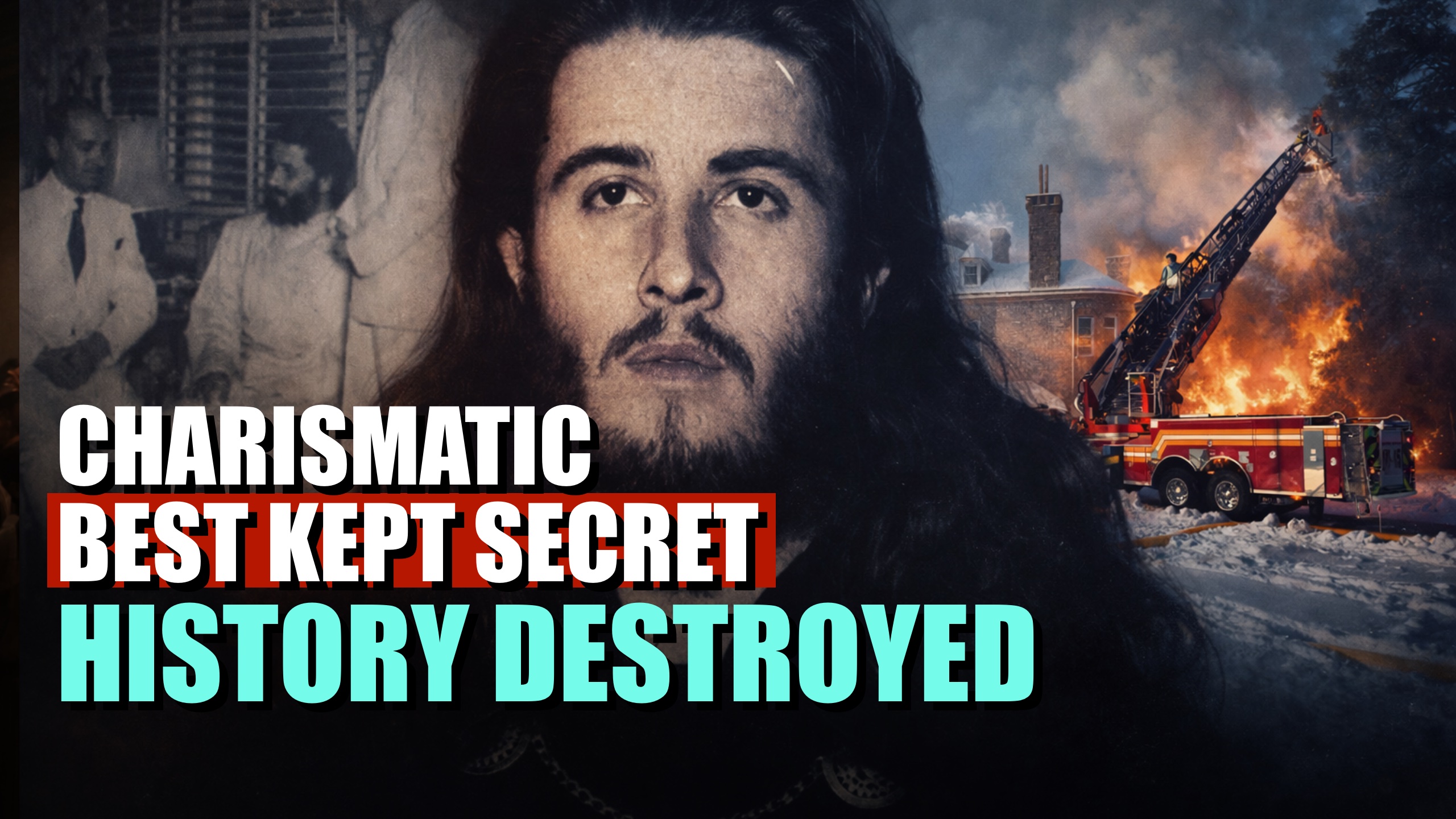
Crumwold Hall, a historic estate in Hyde Park, New York, was engulfed in a massive fire that displaced its residents and likely rendered the structure beyond recovery. On the surface, the story appears to be a tragic but straightforward loss of a historic property. Beneath that surface lies a much deeper—and deliberately obscured—religious history.
For decades, Crumwold Hall has been operated by the Millennial Kingdom Family Church, a reclusive group with roots in one of the most consequential—and least examined—streams of twentieth-century faith-healing and revivalism. The fire did more than destroy a building. It erased a physical anchor point tied to the origins of Branhamism, the Latter Rain movement, the modern charismatic movement, and ultimately the New Apostolic Reformation.
Why Crumwold Hall Matters
The Millennial Kingdom Family Church traces its origins to the cultic following of Avak Hagopian, an Armenian faith healer whose arrival in the United States in the mid-1940s ignited a nationwide frenzy. When Hagopian arrived in Palm Springs to heal the crippled son of a wealthy vineyard owner, thousands of sick and desperate people flooded the city. Newspapers reported shortages of housing, impromptu food stands, and wealthy residents opening their homes to invalids who had come seeking miracles.
This was not a minor revival. It was a cultural moment that re-energized a Pentecostal movement widely regarded by historians as fading by the mid-1940s. Hagopian's popularity created the conditions for something new to emerge.
William Branham's Sudden Rise
Before 1947, William Branham was virtually unknown. Contemporary newspaper records show little to no coverage of his ministry prior to that year. Branham himself admitted to repeated failures in launching a healing ministry, including a period of retreat following the death of his first wife from tuberculosis—a devastating blow for someone claiming divine healing authority.
Everything changed after Hagopian's rise. As Hagopian's campaigns overwhelmed a single individual's capacity, sponsors began experimenting with parallel figures. Branham was one of them. From 1947 onward, Branham's name suddenly appears in newspapers nationwide, coinciding precisely with Hagopian's decline and eventual withdrawal from the public stage.
Money, Power, and Pentecostal Networks
Behind the scenes were wealthy Pentecostal patrons—most notably the Kardashian family—who were deeply involved in early Pentecostalism and Christian Identity circles. These networks overlapped with figures such as Gordon Lindsay, Branham's early campaign manager, and later extended into institutional engines like the Full Gospel Business Men's Fellowship International, co-founded by Demos Shakarian.
That organization became the financial and relational backbone of the charismatic movement. Ministries that later shaped American Christianity—including those connected to the Osteen family—were rescued, funded, and amplified through these networks. Remove Hagopian from the equation, and the entire cascade of events looks radically different.
From Faith Healer to Messianic Figure
After his public ministry faded, Hagopian's followers became increasingly isolated and destructive. Over time, the Millennial Kingdom movement came to believe Hagopian was not merely a healer, but the return of Christ himself—the sole mediator between God and humanity. Former members have reported that Hagopian's body was kept at Crumwold Hall, a claim consistent with patterns seen in other high-control religious groups.
This belief system echoes themes later popularized by Branham: a hidden angelic mediator, supernatural authority inaccessible to outsiders, and unquestionable leadership validated by mystical experience rather than evidence. Even Branham's shifting descriptions of his "angel"—changing in appearance over the years—bear striking resemblance to contemporary newspaper descriptions of Hagopian himself.
The Fire and the Silence
The January 2026 fire displaced eleven residents and consumed hundreds of thousands of gallons of water as firefighters battled the blaze for nearly twelve hours. Officials have indicated the structure will almost certainly be condemned, and the cause of the fire remains unknown. What is equally striking is what mainstream coverage does not address: the historical and theological significance of what was lost.
Crumwold Hall was not just a building. It was a linchpin—one of the last physical remnants of a movement that reshaped global Christianity while actively concealing its own origins. The destruction of that site removes a tangible link to a story few of these movements want told.
Modern charismatic and apostolic movements often present themselves as spontaneous revivals or purely spiritual awakenings. The history tied to Crumwold Hall tells a different story—one of failed healings, strategic sponsorship, media manipulation, and the recycling of authority from one figure to another.