
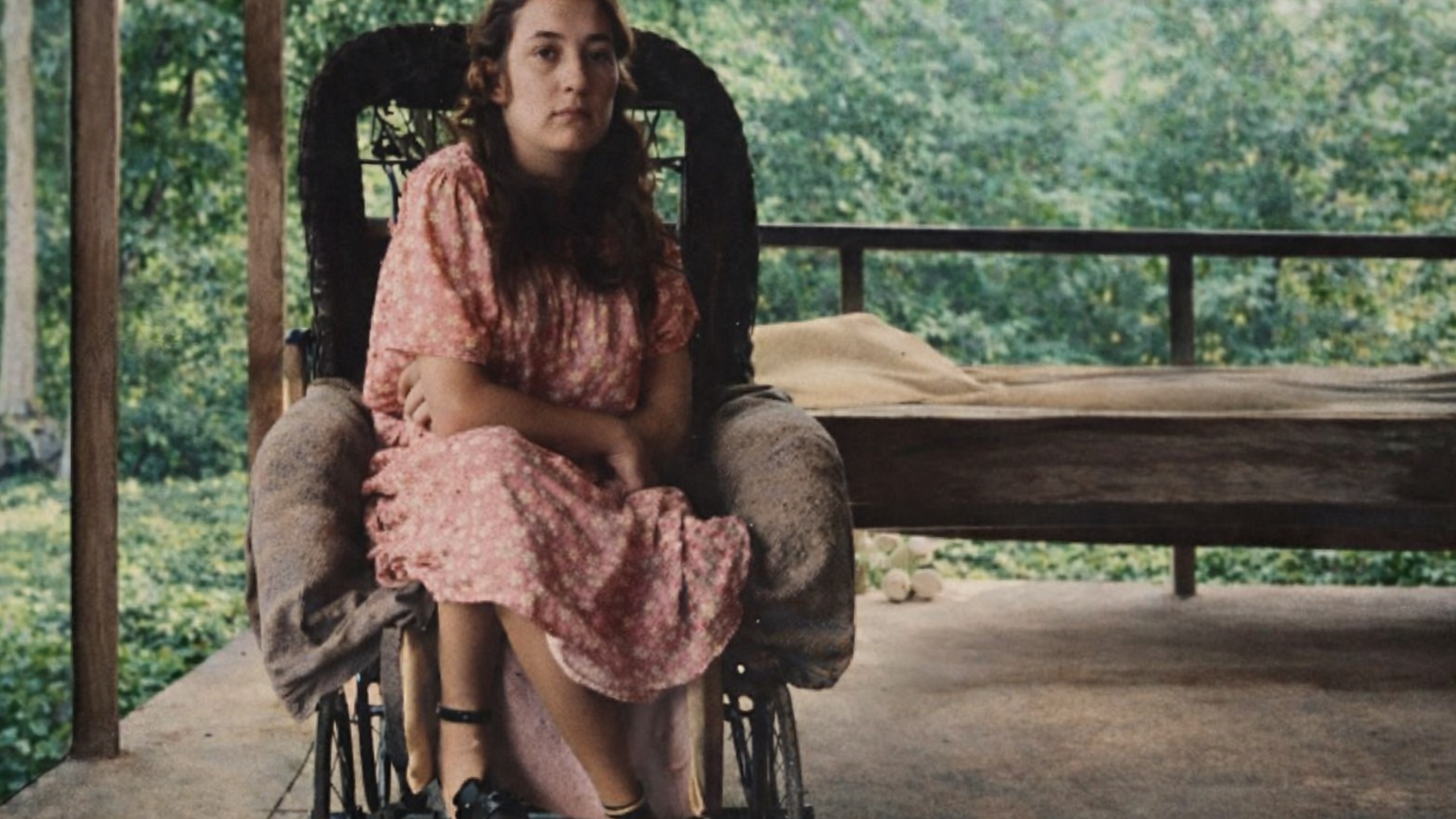
Edith Wright: How a Lifelong Disability Became a Prophetic Narrative
Edith Wright’s case provides a clear, traceable example of a healing claim that can be followed from initial prayer through decades of reinterpretation. Despite repeated prayers, prophetic declarations, and theological reframing, Edith remained disabled until her death, revealing how failed healings were absorbed into narrative systems designed to preserve spiritual authority.
When William Branham reinvented his stage persona in 1959, beginning with the sermon "My New Ministry," he used Edith Wright as an example of his healing power. According to Branham, he had a vision instructing him to travel to Milltown, Indiana, where Edith would be healed [1]. In the sermon, Branham claimed that God spoke through him with a "Thus Saith The Lord" declaration and that Edith Wright would walk. Sadly, Edith was never healed and remained confined to a wheelchair for the rest of her life.
Hattie Wright Mosier testified against Branham's claims to George and Rebekah Smith for the Only Believe Magazine in 1989. In her testimony, Hattie pointed out several flaws in William Branham's version of the story used for his stage persona, especially as they related to Milltown and the Milltown Baptist Church. According to Hattie, she went to Jeffersonville before Branham came to her, and Branham told Edith that in order to be healed, she would have to return "at least three more times."
And this woman named Shutters told us to go to the Branham Tabernacle and take Edith. She said they were having special meetings, and a certain night would be the last meeting. So we went that last night. We took little Edith, and my, was that place full of people, singing and clapping their hands. And the music! There was a short, thin fellow who played the bass drum, and he could really hit it just right. And then Brother Hornback and the sisters up there sang so beautifully. I remember there was a dirt floor and a big wood stove to one side. I don't rightly know whether to say it was something to see or to hear, because you could do both, you see. When Brother Bill prayed for Edith, she took a few steps that night, the only ones she ever did take. He said to us, "I want you to come back at least three more times."
- Hattie Wright Mosier [2]
William Branham's version of the story, after adding a "vision" to make it more compelling, was quite different. Branham claimed that he followed the instruction given in the vision, traveled to Milltown, and told the Wright family that he had come to heal the child and was instructed to say, "THUS SAITH THE LORD," and "she was going to be healed." The story shifted locations to the Wright family home, at the dinner table, with Hattie Wright in another room.
When I was sitting at the table, eating dinner, I had been explaining what faith was. I said, 'And faith is like this. If I'd see a vision of Brother Shelby sitting so-and-so, and each one the way they were.' And Sister Hattie was sitting way back toward another room. She didn't have much to say. Never does. And then while we were talking, I'd say, 'If the Lord showed me a vision that something was to take place, then I could say it. That's what raises my faith.' I said, 'When the Lord shows me what will take place, then I've got confidence. It's going to be that way.' When He showed me, I said, 'If I'd come right here, and that little afflicted girl was sitting there, and the Lord showed me she was going to be healed, I'd come right here and stand in the track, see if everything was just exactly the way He said. And then say, "THUS SAITH THE LORD. Edith, rise up and walk."' I said, 'You'd see those little legs unfold, those little hands unfold. And she'd get up from there and walk, to the glory of God,' I said, 'if it would come like that.' I had been telling them about this experience [3]
Hattie Wright Mosier rejected Branham's claims in her 1989 testimony to George and Rebekah Smith. Not only was Edith never healed, but her condition continued to worsen. She required care for the rest of her life, lashed out at objects that came near her, and could not even feed herself. According to Hattie, she never recovered from her affliction.
When Edith got a little older, she'd hit out at things. Just anything that got near her, she'd hit it. She just couldn't help herself that way. See, she couldn't even feed herself, and somebody had to lift and carry her. I carried her until I just couldn't do it anymore. She never got over her affliction, not to walk and take care of herself.
- Hattie Wright Mosier [4]