
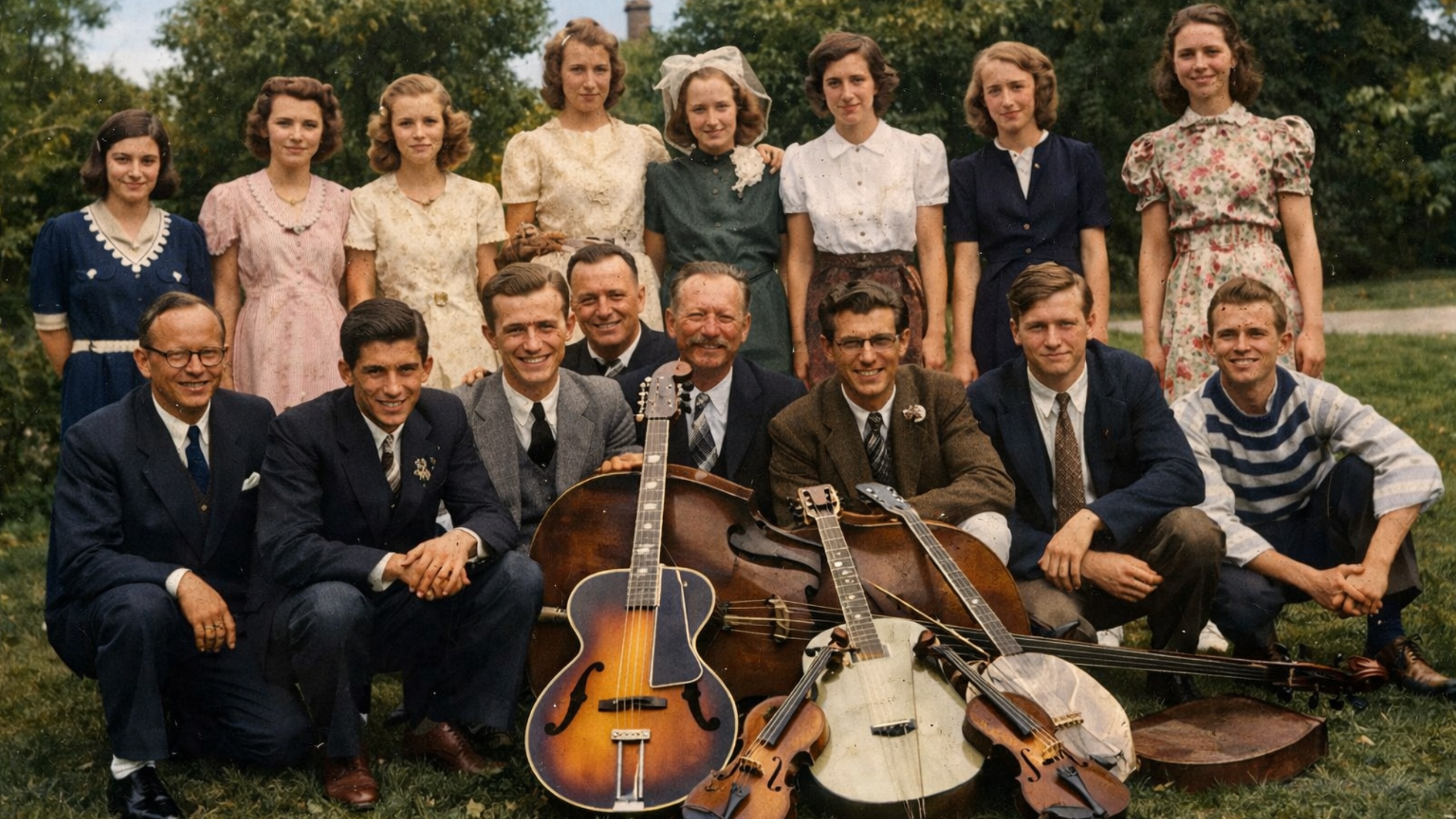
Frank Broy: Court Records, Family Conflict, and William Branham’s Father-in-Law
Frank Broy was William Branham’s father-in-law and a recurring figure in both early twentieth-century court records and Branham’s later sermon narratives. Contemporary newspapers document Broy’s legal troubles and public incidents, while Branham’s sermons recast him as a familiar family presence during moments of personal tragedy.
Frank Broy was William Branham’s father-in-law and was publicly identified as such by Branham himself in later sermons reflecting on the early members of the Jeffersonville congregation. According to personal testimony by ministers affiliated with Branham's "Message" cult of personality, Frank Broy was a member of a family band that played in the "honky tonks" and in the Billy Branham Pentecostal Tabernacle. Photographs appear to confirm that history.
In recounting the formative years of the church and recalling individuals he regarded as foundational figures, Branham explicitly named Frank Broy as his father-in-law and placed him among those he believed had passed on prior to the later growth of the movement [1].
Public Life and Notoriety in Utica, Indiana
Frank Broy appeared repeatedly in early twentieth-century newspaper reporting connected to Utica, Indiana, where his name entered the public record through both civic events and legal proceedings. In April 1904, Broy was identified among the men who captured a section of the Big Sandy ferry dock that had broken loose from the Cincinnati levee and floated down the Ohio River, an event widely reported for the unusual recovery of postal property and other valuables [2]. This incident brought brief regional attention to Broy as part of a small group credited with securing the runaway structure and its contents.
Broy’s name later surfaced in Louisville-area news through a domestic incident involving a boarder in his household. In 1906, newspapers reported that nineteen-year-old John McClelland, who was living with Mr. and Mrs. Frank Broy in Jeffersonville, swallowed carbolic acid and survived after medical assistance was summoned. The report placed Broy’s household within routine police and medical reporting of the period, reflecting how his family life intersected with public institutions and press coverage [3].
Domestic Conflict and Legal Proceedings (1906–1912)
By the early 1910s, Frank Broy’s name appeared frequently in Indiana and Kentucky court reporting in connection with domestic conflict and related legal actions. In April 1912, newspapers reported that a peace warrant had been sworn out against Broy by his wife, Emma Broy, alleging assault. Magistrate James S. Keigwin publicly stated that Broy and an associate, Willard Swartz, had avoided appearing in court, prompting discussion of forming a posse to compel their return to the court’s jurisdiction [4].
Subsequent reporting clarified the legal circumstances surrounding the case. Emma Broy later sought to withdraw the charge, expressing that her husband’s time in jail was sufficient punishment. However, procedural complications, including a change of venue to Magistrate Boyd F. True, prevented immediate dismissal, and Broy was returned to jail after failing to post reduced bail [5]. Later that summer, the peace warrant proceeding brought by Emma Broy was formally dismissed at her request, bringing the immediate legal conflict to a close [6].
Later Legal Trouble and Final Public Record
The last known appearance of Frank Broy in the public record occurred several years after the domestic proceedings of 1912. In June 1918, newspapers reported that Broy appeared in Magistrate Benson R. Veasey’s court and pleaded guilty to defrauding Mrs. Dora Barthel out of a five-dollar board bill. The report noted that Broy expressed a willingness to repay the amount, and the case was taken under advisement, marking the final documented legal matter associated with his name in contemporaneous press coverage [7].
Frank Broy in William Branham’s Reminiscences
Beyond court records and newspaper reporting, Frank Broy appears repeatedly in William Branham’s later sermons as a familiar and trusted family figure during periods of personal crisis. Branham consistently described Broy as the person who came to him with news of the illness and death of his wife and children, emphasizing Broy’s role as the bearer of difficult news during moments of grief. In multiple retellings across different years, Branham identified Frank Broy by name and portrayed him as an intimate presence within his household and extended family life [8], [9], [10].
These recollections situate Frank Broy not merely as a relative, but as a recurring character within Branham’s autobiographical narrative, appearing at pivotal emotional moments that Branham later wove into his preaching. The repeated references across sermons suggest that Broy’s role in Branham’s memory was shaped less by public events and more by private family experience, which Branham later reframed for congregational audiences as part of his broader testimony and spiritual narrative [11].