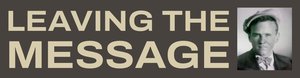
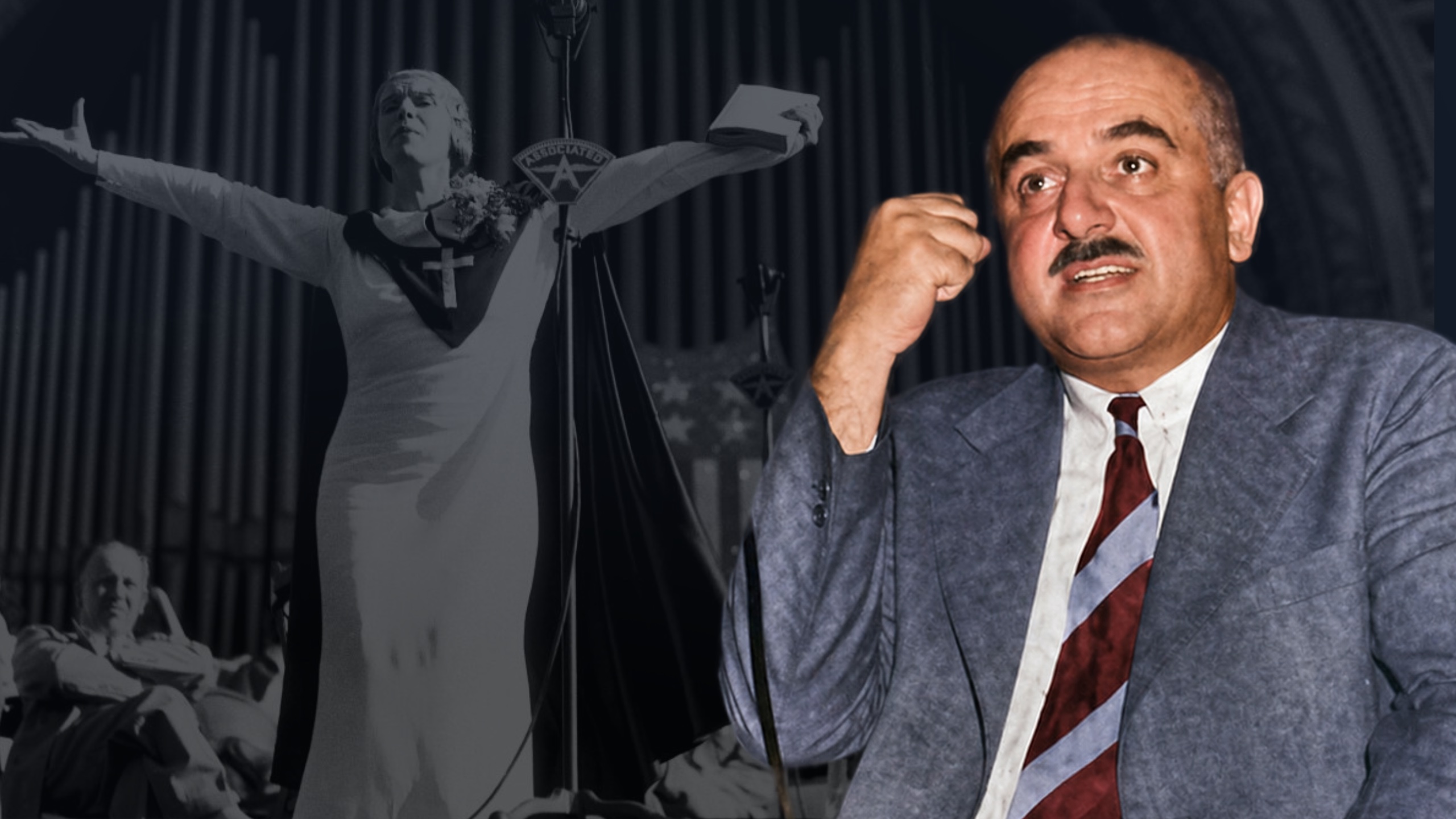
Gerald Burton Winrod
Gerald Burton Winrod was a fundamentalist preacher, publisher, political agitator, and Christian-fascist organizer whose antisemitic, anti-Catholic, British Israelite, anti-Roosevelt, and pro-Nazi propaganda helped shape the ideological world that later fed Christian Identity, Serpent's Seed theology, and parts of the radical revivalist atmosphere surrounding the postwar healing movement; through his Defenders of the Christian Faith, Capitol News and Feature Service, promotion of the Protocols of the Elders of Zion, ties to William J. Cameron, William D. Upshaw, Roy E. Davis, Paul Rader, F. F. Bosworth, Gordon Lindsay, and other fundamentalist and Pentecostal figures, Winrod functioned as a bridge between far-right religious politics, racialized prophecy, anti-communist conspiracy, British Israelism, and the networks that later overlapped with William Branham, Latter Rain, and the Voice of Healing revival world.
Gerald Burton Winrod was a Wichita, Kansas native nicknamed "The Jayhawk Nazi"[1] and "The Kansas Hitler".[2] Winrod founded "The Defenders of the Christian Faith", a fundamentalist Christian-fascist organization.[3] Winrod was a primary source of Wesley A. Swift's Christian Identity Doctrine, which William Branham would later re-brand as "The Serpent's Seed Doctrine," [4] and appears to be the source of William Branham's position that President Roosevelt was a "dictator"[5][6] that caused WWII.
Winrod was an avowed anti-Semitic and anti-Catholic, and a strong supporter of the British Israelism theology. So much so that in 1935 Winrod published a book entitled 'The Truth About the Protocols' proclaiming the veracity of a Russian fabricated anti-Semitic text describing the Jewish plan for global domination entitled 'The Protocols of the Elders of Zion'.[7] Winrod's church offered the fabricated text along with several other virulently anti-Semitic books describing The Jewish Assault on Christianity, including a book he had written by that name.[8]
In The Jewish Assault on Christianity, Winrod claimed that the Christian Church had been invaded by Communism at the hands of Russia.
The Same forces which crucified Christ nineteen hundred years ago are today trying to crucify His Church. Many Christian leaders have not yet realized it, but Christianity is in the grip of a life and death struggle at the present time. International Jewish Communism, which has already undermined all nations, firmly expects to exterminate all Christians. What the Cause of Christ has endured in Russia the past eighteen years, surpasses its suffering at the hands of bloody Nero. One of the purposes of the present treatise is to show that this conspiracy is not of recent origin. {...} Will the Church be able to demonstrate sufficient power to triumph over its foes in the present crisis, or has it become so weakened by apostasy and pernicious teachings that it will have to be drenched in its own blood before it can be brought to its senses?
- Winrod, Gerald. The Jewish Assault on Christianity
Gerald Winrod also organized the Capitol News and Feature Service, a Nazi propaganda agency that he established upon his return from Nazi Germany. He worked closely with William J. Cameron, the confidential secretary of Henry Ford and former editor of the Dearborn Independent.[9] Cameron was the first head of the Anglo-Saxon Federation of Detroit and Chicago, and was in close contact with Fritz Kuhn, leader of the nazi German-American Bund.[10] Winrod published numerous articles written by Cameron in the Capitol News and Feature Service.[11]
In the late 1940s and 1950s, Winrod's theology would become a theme in the Latter Rain and Voice of Healing revivals that would unite to form the Post-WWII Healing Revival. Winrod was already a popular name among the Pentecostals. So much so that Aimee Semple McPherson appointed Winrod as her replacement when she became too ill to continue preaching.[12] Winrod's leadership of the Angelus Temple led to anti-nazi protests and bomb threats.[13] Interestingly, it was shortly after Winrod's engagement that William Branham's campaign manager Gordon Lindsay was appointed to "field position work" for the Angelus Temple.[14] Gordon Lindsay toured Canada holding British-Israel conferences, helping to spread Winrod's agenda in the years leading up to the Healing Revival.
William Branham, leader of the Healing Revival, convinced the masses that Communism was invading the Church in opposition to his brand of Divine Healing [15] and that, as a result, Christian Churches (not in his cult following) had become apostate.[16] Winrod frequently attacked the Federation of Churches, claiming that the group had rejected the Virgin Birth of Christ,[17] both of which were also themes used in Branham's revivals.[18][19] Winrod preached throughout the country in the late 1920s in everything from conventions for the Christian and Missionary Alliance to small churches describing Mussolini's connection to the return of Christ and the End of Days.[20]
Winrod described the world conflict as the result of prophecy and that 1933 was the climax of that prophecy with series titles such as "The Jew, Mussolini, and 1933 in Prophecy".[21] In the 1950s, Branham introduced a very similar prophetic claim into his stage persona, alleging that in 1933 he had predicted that Mussolini would cause the end of world peace.[22] Winrod's End of Days theology used the framework of Dispensationalism described in Clarence Larkin's book, 'Dispensational Truth', the source of William Branham's 'Church Age Theology',[23] and Winrod held talks describing Dispensational Truth.[24] Winrod was violently opposed to President Franklin D. Roosevelt, and as world conflict was building to WWII in 1937, spread propaganda claiming that Roosevelt and the Supreme Court were being controlled by "both Moscow and Rome".[25]
Winrod was well connected to key players fundamental to the creation of or who worked directly with William Branham in the Revivals. In 1932 when Branham promoter,[26] Klan member,[27] and former congressman William D. Upshaw ran for the Presidential election under the Prohibition Party ticket, Winrod actively campaigned for Upshaw in New York and Pennsylvania.[28] Of Gerald Winrod, Upshaw stated, "Gerald B. Winrod, the 'Cyclone of Kansas,' is a dynamo of sanctified energy. He is a great thinker, patriot, crusader, defender of the faith, and pulpit statesman. It is an education to hear him."[29] Upshaw's campaign convention was held at the Cadle Tabernacle in Indianapolis, which was also the headquarters for the Indiana sect of the Ku Klux Klan founded by Branham's close associate E. Howard Cadle.[30]
These connections were further solidified through the World's Christian Fundamental Association (WCFA), of which Gerald Winrod[31] and William Branham's mentor Roy E. Davis[32] were both directors. Paul Rader, author and composer of the 'Only Believe' theme song used in Branham's revivals was also a member.[33] Davis toured the country for three years with John Roach Straton,[34] and Straton often submitted articles to Winrod's 'Defender' publication.[35]
Winrod was also well-connected to the Pentecostal community. Though initially an independent evangelist and publisher of The Defender, a fundamentalist newsletter, Winrod partnered with Juan Francisco Rodriguez Rivera, a Christian and Missionary Alliance minister. Together, the two started a missionary program, attracting many converts to 'Defenders of the Faith,' a full-fledged Pentecostal denomination.[36] Many key figures in the Healing Revival were both connected to the Christian and Missionary Alliance and strongly influenced by John Alexander Dowie, including Paul Rader, F. F. Bosworth, AB Simpson, and Russel Kelso Carter. Winrod wrote articles for Bosworth's 'Exploits of Faith' magazine,[37] and toured with Paul Rader.[38] Rader and Winrod held conferences at the Cadle Tabernacle (Indiana Klan headquarters), and Rader was a member of Winrod's 'Defenders of the Faith'.[39]