Jerry Lee Lewis
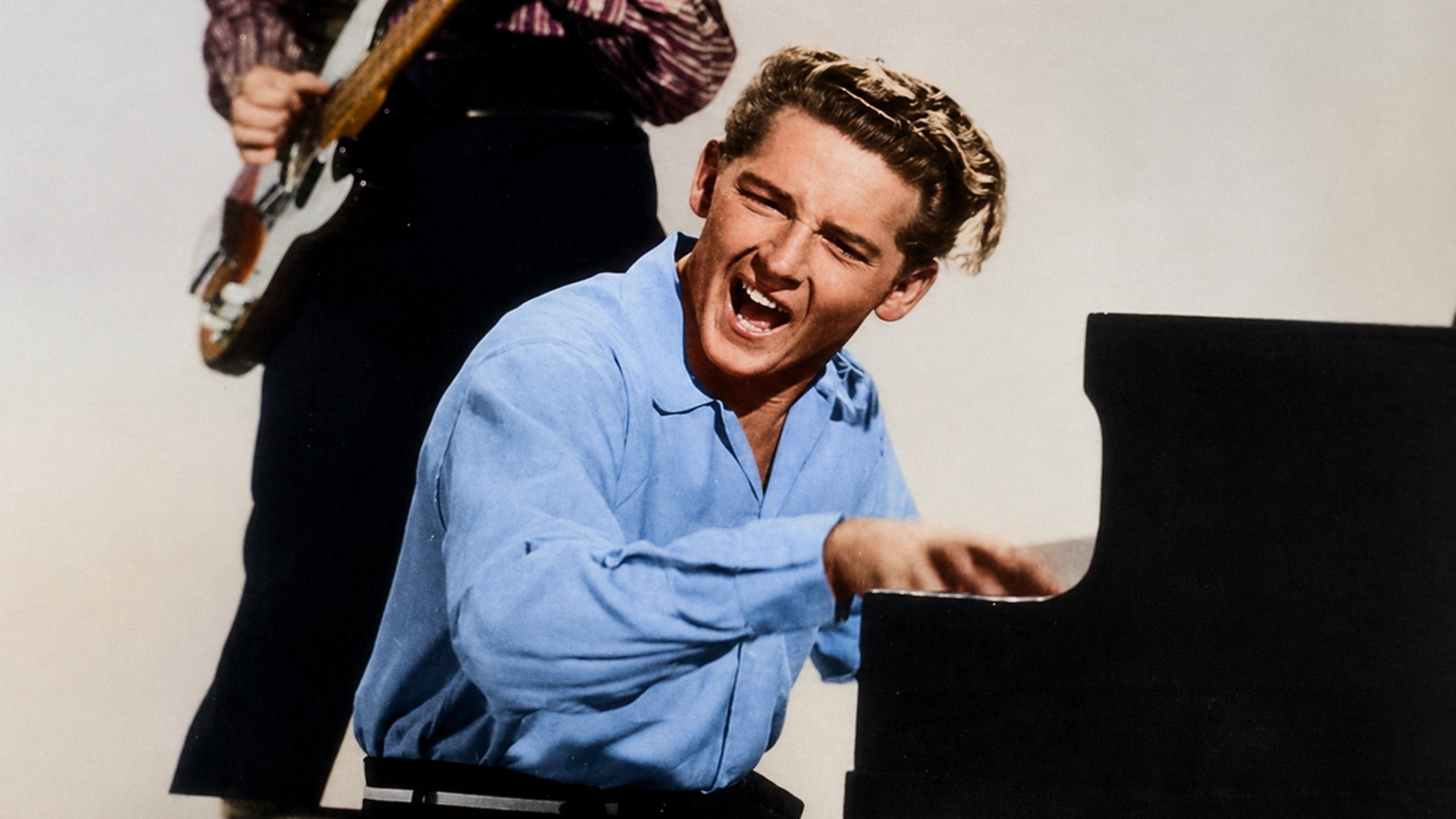
Jerry Lee Lewis was a rock-and-roll icon whose life and music were deeply entangled with Pentecostal revival culture, sharing family, musical, and religious roots with Jimmy Swaggart while also attending Bible school with later Message pastor Pearry Green; before becoming famous for "Great Balls of Fire," Lewis moved in the same world of Southern Pentecostal evangelism, gospel music, healing revival influence, Gordon Lindsay's Voice of Healing culture, and Full Gospel Businessmen networks, making him a striking example of how the boundary between revival music, charismatic preaching, rock-and-roll performance, and Pentecostal celebrity could blur in mid-twentieth-century American religion.
Jerry Lee Lewis was a Rock-and-roll hall-of-fame singer and musician made famous for his song, "Great Balls of Fire". He was the double first cousin of disgraced Pentecostal evangelist Jimmy Swaggart.[1] Both Swaggart and Lewis were evangelists inspired by Gordon Lindsay and William Branham's healing revivals. Lewis was also a bible school classmate of "Message" cult pastor Pearry Green.
Pearry's life desire was to see the lost saved. He looked at every situation as an opportunity to share the Gospel, and at every individual as a potential sinner to be saved. Below is an *account of Pearry's Bible School classmate and Rock-n-Roll Hall of Famer Jerry Lee Lewis; "Pearry Lee Green, who'd almost gotten kicked out of Bible College when Jerry Lee rocked Waxahachie, never gave up his conviction that his piano-playing friend was born to bring people to the Lord. In 1970, he was at a conference of ministers called the Full Gospel Businessmen's International in Sydney, Australia, when he learned that Jerry Lee was in town. Jerry Lee was drinking that night, but he asked Pearry Lee to sit on the piano bench with him in front of a well-lubricated, rowdy auditorium crowd of three thousand people. "You're going to be surprised," he told the crowd, "but I was going to be a preacher." He told the crowd of the "singspiration" and how the organized church refused to accept his gift. Then he sang a hymn, an old one from his childhood. The rowdy crowd grew quiet. "I'm going to tell you something, he had every kid in that place crying," said Pearry. "I don't think in my life I've ever seen that many young people with tears in their eyes. Jerry Lee's voice just melted their hearts. If I'd been preaching, I'd have given an invitation for salvation."[2]
- Pearry Lee Green Obituary.
Swaggart was a student at Ferriday High School in Ferriday, Louisiana, where rock-and-roll legend Jerry Lee Lewis was enrolled. Lewis was Swaggart's double-cousin. Lewis and Swaggart, both talented musicians in high school, partnered in talent shows and played boogie-woogie piano duets.[3]
During the early 1950s, Jimmy Swaggart was deeply influenced by the book, "Bible Days are Here Again" by Gordon Lindsay. In 1954, Jimmy Swaggart was a locally-known evangelist for the Assemblies of God, recognized for "great results in his ministry."[4] He and Jerry Lee Lewis began touring as musical evangelists.[5] They were known for their triple singing, playing, and preaching ministry.
When Frances and I first began in Evangelistic work in the mid-1950's, the great Divine Healing Revivals were beginning to sweep the world. I remember that Gordon Lindsay, editor of the very influential Voice of Healing Magazine, wrote many books on this phenomenon that was taking place, with one of them being, "Bible Days are Here Again". Countless times I would look at that title, even after I had read the book, and weep for joy. Truly, the Lord was pouring out His Spirit all over the world. The Lord was using frail, imperfect, individuals to once again proclaim the Might and the Power of our Lord Jesus Christ. Giant tents were being constructed, actually the biggest in the world, and being filled to capacity with people who had "never seen it in this manner before".[6]
- Jimmy Swaggart