Joseph Mattsson-Boze
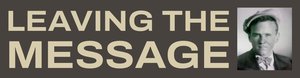
Joseph Mattsson-Boze was a central Latter Rain organizer, pastor of Philadelphia Church in Chicago, editor of Herald of Faith, and one of William Branham's closest defenders after Branham's break with the Voice of Healing establishment, using his church, publication, Independent Assemblies of God connections, and revival network to promote Branham's doctrines, prophecies, and doomsday expectations across the United States and Canada; through Boze's influence, Jim Jones was introduced, endorsed, ordained, and elevated within the Latter Rain and Branham-aligned healing revival world, making Boze a crucial bridge between Branham's Message, the Independent Assemblies, the Herald of Faith fellowship, and the early formation of Peoples Temple as a Full Gospel healing ministry.
Joseph Mattsson-Boze was the pastor of the Philadelphia Church in Chicago, and editor for the Herald of Faith publication. Boze was very influential in spreading the Latter Rain movement throughout the United States and Canada through the promotion of William Branham and other ministers involved with the movement.
A. W. Rasmussen, host of the Latter Rain revival, was also the founder and leading member of the 1918 Scandinavian Assemblies of God. In 1935 after an annual Pentecostal convention in Minneapolis, MN, he had merged the sect with the Independent Pentecostal Churches. From 1940 to 1944, Rasmussen served as the pastor of the Philadelphia Church in Chicago, Illinois. Shortly before his leaving to Edmonton, Alberta, Canada, in April 1943, Reverend Joseph Mattsson-Boze joined the Philadelphia church as joint pastor with Rasmussen. The church sponsored Rasmussen's work in Edmonton until 1945, during which time Mattsson-Boze assumed leadership. In 1949, however, Rasmussen returned to assume his role as co-pastor of the Philadelphia church. Rasmussen decided that the revival for the "Latter Rain" movement was the "present movement of God, as God's deliverance promised in the Bible." When the Assemblies of God rejected the movement, Rasmussen organized once again under the name of his former sect and began speaking at other independent Assemblies of God churches.
Soon after, the Philadelphia church began inviting William Branham to speak. Branham visited often enough to consider the church and its members close friends. He said that Reverend Joseph Mattsson-Boze was "one of the best friends [he] had on this earth." Boze was convinced that William Branham's unusual doctrines were divinely inspired, and sought counsel with Reverend Billy Graham to convince him to join in his revival meetings.
As the initial catalyst that sparked the "Latter Rain" movement, publisher of the Voice of Healing newsletter, and a well-known leader in the Healing Revival, Branham was a hot commodity. By the late summer of 1953, William Branham was holding weeklong meetings in Chicago with Rasmussen and Boze, as well as frequent mini-revivals on the weekend. His meetings were highly publicized, and his "Chicago campaigns" used for a video promoting his "divine healing" revival meetings. The Philadelphia Church became a strategic center for the "Latter Rain" movement, both through Reverend Joseph Mattsson-Boze's work as pastor of the church and through his position as editor of the Herald of Faith newsletter. The newsletter was considered a leading voice for the Latter Rain movement, and Boze worked closely with the editors of the Voice of Healing newsletter. Not only did the Herald of Faith help to advertise Branham's meetings, Branham also contributed to its articles. He also used the Herald of Faith to advertise his "prophecies." When William Branham began advertising his 1956 "last chance before doomsday" prediction, he used the "Latter Rain" movement's "Herald of Faith" as a the vehicle for distribution:
How many gets that "Herald Of Faith"? Is that what it's called, "Herald Of Faith," Brother Boze's paper? Did you read the vision? How many read the vision in there? That's fine. Well, he will be here in a few nights, and I'll talk a little more of it. One of the greatest things, I believe one of the most outstanding things to ever happened to me in my days of serving the Lord was that happening. The greatest days of all lays just ahead. Remember that. And I believe that this 1956 is a turning time. I predict this, not by spiritual inspiration, or I don't say that, not by vision. But this is the turning time for the U.S.A. They'll either accept it this year or they'll be cast off. See, there's only so many fish to be caught anyhow, and when the pond's all seined dry, won't do no good to cast nets in no more. So there'll be a time. I stood not long ago at the great city of Rome and saw the great Neros and emperors that once lived there. The great power of the world existed in Rome, and now you'd have to dig thirty feet underground to find the remains of it. Stood in Athens, Greece, where the—the great Alexander the Great, many of those great men where old ancient cities are sunk, many of them. Then I thought of myself a few years ago, looked… I was just a boy and now changing. I went to a old tree that I used to go to years ago and watched its great big limbs, how masterly the wind blowed through them, and how strong it seemed to be. I went through it a few days ago, and it was almost destroyed.
Branham, William. 56-0212 - Fellowship
Only days after the issue of Herald of Faith containing William Branham's "vision" was available, Reverend Jim Jones of Jonestown converted to the "Latter Rain" sect through the Independent Assemblies of God. According to the Certificate of Ordination issued by the Independent Assemblies of God, Jones "has proven his divine gift and calling to the ministry of the Gospel of Jesus Christ, and has been duly set apart with prayer and laying on of hands on the 5th Day of February 1956 A. D." The certificate was signed by Joseph Mattsson-Boze.
Jones had started his ministerial career as a student Methodist pastor at Somerset Methodist Church in Indianapolis. His ambition was to become a reverend, which was not faring too well in the Methodist Church. So, Jones began studying evangelical preachers and revivalists, seeking a different (and likely faster) pathway to leadership. In 1953, he began to recognize the Healing Revival's power for attracting crowds, raising money, and bringing people of diverse crowds together. His curiosity grew until he attended a Latter Rain convention in Columbus, Indiana. There he was told that he had a "special prophetic ministry." Convinced that the "Latter Rain" movement was the pathway to church leadership he sought, Jones took his wife Marcie to a "Latter Rain" convention at the Bethesda Temple in Detroit, MI. As a visitor watching others preach, Jones became so anxious to speak that he broke out in hives. Latter Rain pastor M. D. "Mom" Beall at the host church noticed his frantic desire to speak, and told him, "Well, by all means, if you feel like you have a ministry to give, feel free to express it."
Jones continued to minister at the Methodist Church, but began experimenting with the Latter Rain sect of Pentecostalism on the side. Participating in services of the Pentecostal Laurel Street Tabernacle, Jones began ministering frequently – sometimes speaking in all services for the week. In 1954, Jones resigned from his position in the Methodist church, and formed a small church he named "Community Unity"
In 1955, during a meeting with Joseph Mattsson-Boze, William Branham began accelerating the fear of doomsday in the "Latter Rain" community by claiming that he had had a vision of three great events that would happen immediately before the End of Days. Adding to his claim of having predicted the arrival of "egg-shaped cars," Branham claimed that he had predicted that communism would eventually consume Fascism and destroy Rome. At that time, Branham said, the United States would have a female president. That same year, Jones and a group of 20 followers formed a religious group called the "Wings of Deliverance," which was a slight variation from the "wings of healing" in the "Elijah prophecy" of Malachi 4 of the Christian Bible. The group began an interracial ministry for the city of Indianapolis, which was unusual for the former headquarters for the Ku Klux Klan. Jones began to become socially active, proposing integrated church services, opening a soup kitchen and an orphanage, and providing for the disabled and disadvantaged. Within a year of its founding, Wings of Deliverance was renamed to "First Peoples Temple." It was later renamed to the "Peoples Temple Full Gospel," designating his church as one participating in the faith healing movement. "Full Gospel" churches emphasized Hebrews 13:8, "Jesus Christ the same yesterday, today, and forever," claiming that modern-day miracles, blessings, healing, and actionable faith are part of their services. William Branham and many others in the "Latter Rain" movement were members in the "Full Gospel Businessmen's Association."
By the time Jones made his decision to join his Pentecostal church with the Independent Assemblies of God of Chicago, Jones was a recognized name and "prominent minister" among the "Latter Rain" sect. In January 1956, even before his ordination, he had secured William Branham as guest speaker to launch his new ministry. By April 1956, only weeks after his ordination, Jones was featured speaker at the Eastern Fellowship Convention at Faith Temple in Hagerstown, MD. Joseph Mattsson-Boze joined Jones for the speaking engagement, helping to further establish Jones in the "Latter Rain" ministry.
As one of the key figures instrumental to the creation of the "Latter Rain" sect's doctrine, and one of A. W. Rasmussen and Joseph Mattsson-Boze's closest friends, William Branham was more than a celebrity for Jones. He was a model after which to base his "divine healing" career. Jones had been holding "great evangelistic healing services" since his days at the New Laurel Street Tabernacle, but had not yet been successful in attracting large crowds. He needed a religious headliner for his opening, and William Branham had the power to attract massive audiences. Jones began advertising the upcoming meetings in local newspapers and brochures, and raised enough interest to require the use of a larger building for the expected crowd.