
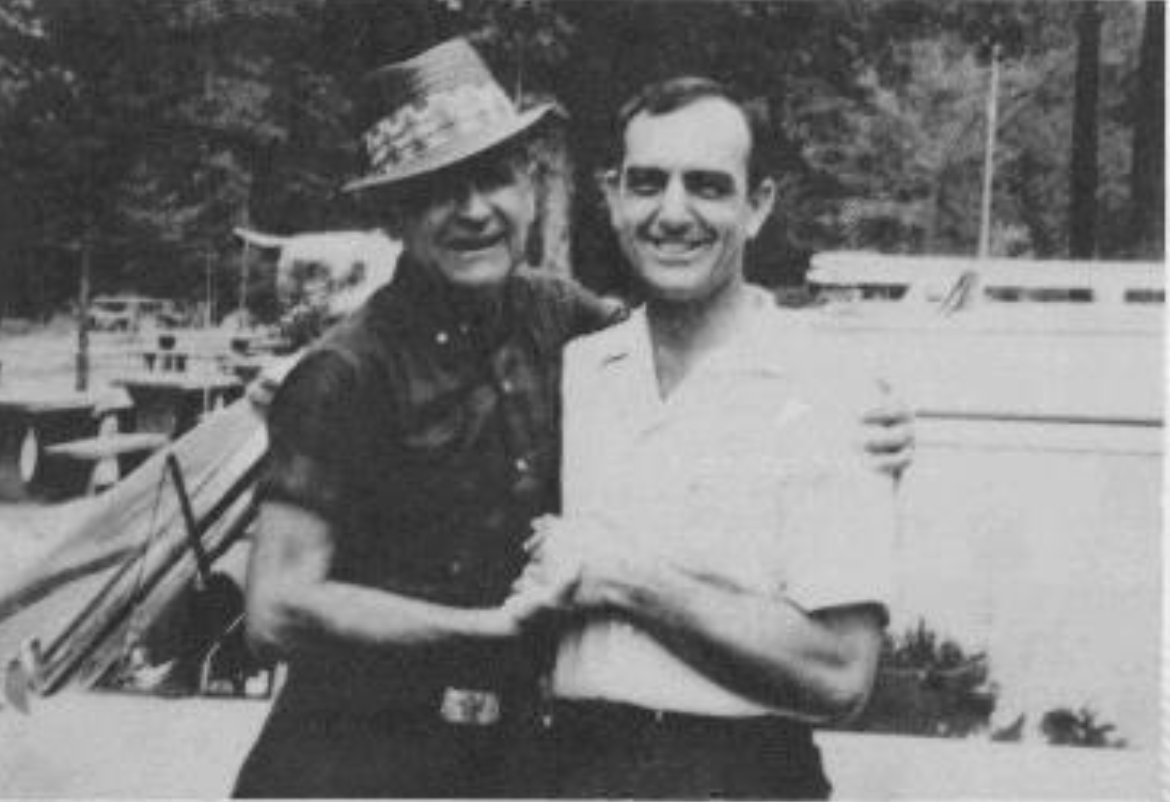
Willard Collins
Rev. Willard Collins was born in 1926 in Glensfork, Kentucky. He attended the Glensfork school system until his junior year of high school, at which time he transferred to Knifley High School after the Glensfork school was closed. He loved sports, and played basketball for the Knifley High School basketball team.
Rev. Willard Collins was born in 1926 in Glensfork, Kentucky. He attended the Glensfork school system until his junior year of high school, at which time he transferred to Knifley High School after the Glensfork school was closed. He loved sports, and played basketball for the Knifley High School basketball team.
In 1945, Willard married Naomi Eastridge at the Methodist parsonage in Cane Valley, Adair County, Kentucky. His father-in-law, Rev. Eastridge, was a Methodist pastor, and performed the ceremony at his house. After being married, the newlywed couple lived with his mother and father at their farm until they could afford the purchase of Willard's first farm in Glensfork.
Five years later, Willard was ordained into the Methodist Church. He sold the farm and moved to Columbia, Adair County, Kentucky to start the Mission Church in Columbia. There, Willard preached the Gospel from behind the pulpit of the small church, on the local radio, and on the road. By the time he started his ministry as an evangelist, Willard and Naomi had a musical family. As he traveled from county to county holding tent revivals and preaching, his family would sing hymns to tunes on an accordion and a steel guitar. During this time, Willard came in contact with Rev. Tom Meredith and Estel Beeler, who had a "faith healing" ministry. It was through these men that Willard first learned of "faith healer" William Marrion Branham from Jeffersonville, Indiana, and was eventually recruited into Branham's "Message" cult following.
After accepting position as pastor of the Methodist Church in Mannsville, Kentucky, the Methodist Church asked Willard to attend a pastoral school in Macon Georgia. During his time there, Willard attended a "healing revival" by Branham. Shortly after in 1955, he dropped out of the Methodist school and moved to Charlestown, Indiana to take the position of associate pastor at Branham's church, the "Branham Tabernacle", in nearby Jeffersonville Indiana. This position was created to assist Rev. Orman Neville, who was a part-time assistant pastor at Branham's church. Rev. Neville split his time between the Branham Tabernacle and his "Neville Tabernacle" he planted in 1950 in Henryville, Indiana. With Branham's continual absence during his "faith healing" meetings, it was evident that Rev. Neville performed the duties of "pastor" while Willard performed the duties of "assistant pastor". By 1958, Willard's position in the Branham Tabernacle was made official by William Branham, when it was announced that he served as both "deacon" and "Assistant to Brother Neville".
Over the next few years, Willard Collins became very close with William Branham. Not only did they spend a lot of time together in the ministry, they spent many hours together as personal friends. The children of both men became close childhood friends, and those relationships would continue to grow and strengthen for the remainder of their lives. Eventually, William Branham would issue his "prophetic" blessing to Willard: "All your children and your grandchildren shall be saved".
In 1963, one of Willard's children was diagnosed with rheumatic fever, an inflammatory disease resulting from inadequately treated strep throat or scarlet fever. Under doctors' orders, the child was placed on bedrest. Willard telephoned the "faith healer" to heal his child, and the child was healed. Though the disease can cause damage to the heart, death only occurs from rheumatic fever in rare cases. Most recover, developing other health problems. Branham convinced Willard that his son was dying, however, and the child's recovery was a testimony Willard would often tell others as an example of Branham's "healing power".
In 1964, a year after William Branham migrated his family to Tucson, Arizona, Willard Collins and his family also migrated to Tucson. There, he assumed position as chairman of the deacon board in Branham's church in Tucson while he and his family lived in a "house trailer". It wasn't until 1968, three years after Branham's death, that Willard finally purchased a home in Tucson to settle into. Their time in the home was short, however. A year later, after inheriting a dairy farm in his home town of Glensfork, Kentucky, Willard sold his Tucson home and migrated back to Kentucky.
In 1969, Willard accepted the position of head pastor of the Branham Tabernacle. Still living in Glensfork, Kentucky, the family made the two-and-a-half-hour trip to spend all-day Sunday and Wednesday evenings with the people of the Branham Tabernacle church. Eventually, they sold yet another farm in Kentucky to migrate back to Jeffersonville area.
In the years that followed, Willard's position began to transition from minister to proxy for a voice from the grave. William Branham's sermons recorded from 1947 to 1965 were becoming the "authoritative voice" for the cult following. After Branham's death in 1965, the central figure for the cult slowly transitioned from Branham's person to Branham's voice. Under suggestive labels such as "The Spoken Word" or "The Voice of God", members of Branham's cult following began to refer to the statements recorded by Branham as authority in doctrine and scripture. Over time, the cult required the "Written Word" (the Christian Bible) to be interpreted only through the "Spoken Word" (Branham's recordings").
Willard's leadership of the Branham Tabernacle included a combination of sermons he preached and pre-recorded sermons of William Branham. Over time, however, many members of and visitors to the Branham Tabernacle began objecting to his preaching from the Christian Bible. On many occasions, members and visitors of the church would leave their seats and exit the building when he chose to preach instead of listening to a recording of William Branham. This eventually caused a division in the church between those of the "tape crowd" and those of the "preaching crowd". As time went on, the "tape crowd" outnumbered those who wanted to hear preaching from the Christian Bible. Though he fought against this ideology, this was a battle he would not win. Eventually, he gave up, choosing to play recordings from magnetic tapes each and every Sunday morning, Sunday evening, Wednesday evening, and revival meeting. The preacher's voice had been silenced.
As time continued with his voice muted, Willard began to lose control of the church. Many viewed him as nothing more than a figurehead, in a position only necessary for ceremonial purposes. The sermons now coming only from the dead voice of William Branham, some began claiming that the deceased Branham was their "pastor", and refused to accept Willard as holding that position. A large number of people started paying tithes and offerings to the cult headquarters rather than the church, and funds used to help the needy began decreasing. This was disheartening to Willard, whose passion was helping the poor in his church. Rather than ignore the needy, Willard often helped the poor with money he earned through farming and cattle, even helping those who refused to donate to the church.
By 2015, the situation had gone out of control. Deacons in the Branham Tabernacle recognized the financial problems in the church, and began investigating. To their surprise, they found evidence that they claimed to be criminal. According to their testimonies when they resigned, William Branham's sons had been allegedly stealing from the church, and cult headquarters appeared to be stealing and stockpiling money. Tax records revealed a hundred million dollars in assets, and a second legal entity was created for the sole purpose of moving money. Homes (not owned by Willard) were claimed as "parsonages" to allegedly avoid paying income tax, and a large portion of the property underneath the Branham Tabernacle was deeded away from the church to one of Branham's sons. Comparing the expenses to the money collected, a large discrepancy was found. Deacons publicly demanded to know where the money went. In October of 2015, Willard Collins resigned from his position as "pastor" of the Branham Tabernacle. Along with him, the entire staff of deacons, From late 2015 through 2017, Willard pastored a "Message" cult church in New Albany, Indiana.
Until the day of his death, Willard believed that William Branham would resurrect from the grave to fulfil prophecies that did not come to pass in his lifetime. Willard was a strong supporter of Branham's "tent vision", Branham's claim that he would give the "chosen ones" their "new bodies" while holding one last "healing campaign". Though Branham's "tent prophecy" was an unpopular subject for many ministers in the "Message" cult, Willard would often refer to it in his sermons. He would also refer to a vision in which he and his wife, Naomi, would be standing in their motor home when William Branham returned for them. Sadly, both men went to their graves without closure to these unfulfilled "prophecies". Willard died of cancer, one of the primary diseases William Branham's "divine healing" cult claimed to cure.
Willard Collins was named in the Intent to Sue documentation prepared by Gerald Lee Walker and Sarah Branham. His accusations, combined with the accusations of the deacons and other leaders of the church, are supportive of Sarah Branham's allegations that led to the Sarah Branham Investigation.
Resignation at the Branham Tabernacle
Confrontation Over Branham's Support of Polygamy:
Video 1: https://www.youtube.com/watch?v=4PS2o3UoZys
Video 2: https://www.youtube.com/watch?v=dsryUGfOx_E