
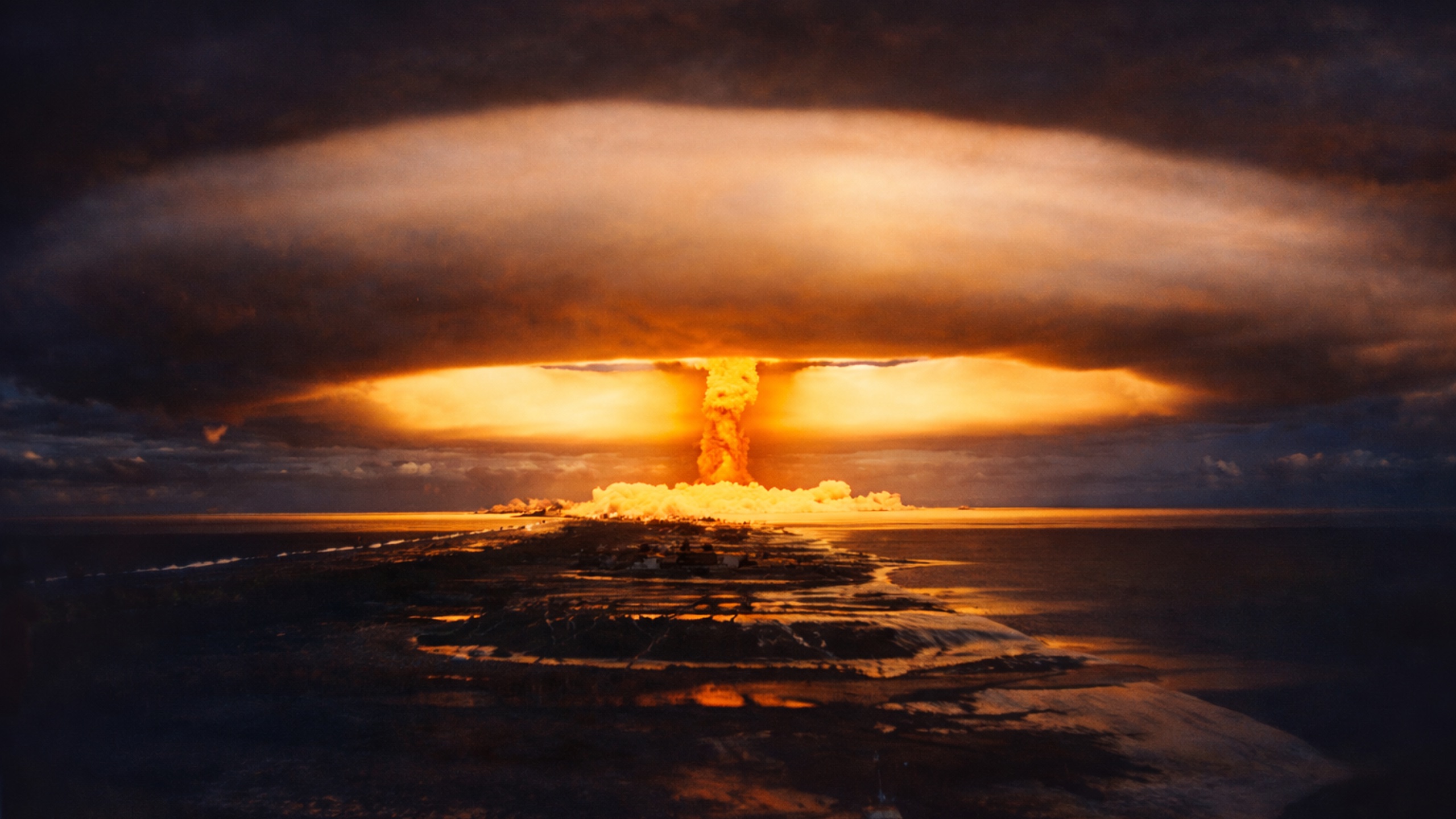
Atomic Fear and the Postwar Healing Movement: Mushroom Cloud Revivals
William Branham used the "Red Scare" bomb threat almost three hundred times during his recorded sermons. Frequently describing what he considered to be an inevitable threat from either a hydrogen bomb or atomic bomb, Branham, warned his listeners that their time on earth was short. When speaking to an audience in Toledo, OH, for instance, Branham informed Toledo citizens that a bomb was going to drop on Toledo.
The postwar healing revival unfolded in a world haunted by the mushroom cloud. Hiroshima and Nagasaki were still within living memory, the Cold War was tightening, and public conversation in the United States revolved around loyalty oaths, civil-defense drills, and the terrifying prospect of atomic and hydrogen warfare. Healing evangelists in the Latter Rain and Voice of Healing circles did not simply preach into this atmosphere of fear; they actively amplified it, treating each new bomb test or geopolitical crisis as a fresh confirmation that the end of the age was near and that mass revival was the only hope of escape.
William Branham became one of the most influential voices shaping this atomic-age imagination. In his 1951 "Life Story" sermon in Toledo, he told the congregation that their city itself was marked for destruction:
And this is a lovely city, right here near the lake. Would like to live here myself. But friends, there'll be a time when there won't be any more Toledo here. That's right. One of these days an atomic bomb will strike this place; there won't be anything left of it. Now, you know that's right, we're living on up in that age now. And it's later than you think. That's right.[1]
Branham, William. 1951, July 22. Life Story. 51-0722A
A few years later, preaching in his home region of southern Indiana, he escalated the language even further, warning that "there won't be even an ash left in Jeffersonville" and that "they have got a hydrogen bomb now that Russia can shoot from Moscow, land it on Fourth Street, and take every one of these powder plants around here, and sink it seventy-five feet under the ground, with one bomb. One bomb, fifteen miles square, it'll go to a hundred and fifty feet in the ground. The hand is on the trigger. The clock is ticking away. It's later than you think." [2] Statements like these turned local geography into a stage for global annihilation, collapsing national security anxiety into Branham's eschatological timetable.
Gordon Lindsay's Voice of Healing ministry translated the same themes into mass-circulation print, ensuring that nuclear fear became part of the shared emotional world of Pentecostal and charismatic readers. The August 1951 issue carried the stark front-page headline "WORLD DISASTER IMPENDING PRESENT MASS REVIVALS-WORLD'S HOPE," pairing photographs from Hiroshima with the claim that the atomic bomb was a prophetic sign of looming "world suicide" and that only the healing revival offered a way out. [3] In October 1954, another issue appeared with a hydrogen-bomb cloud on the cover and a feature series by Lindsay titled "What Every Christian Should Know About the Atomic Bomb," explicitly teaching believers how to interpret the atomic age through a prophetic lens. [4] In both cases, nuclear imagery and language were not merely background; they were the framing device that made the revival's claims feel urgent and necessary.
This fear-saturated atmosphere shaped the imaginations of the next generation of revivalists and cult leaders. Jim Jones, who emerged from Branham's "Message" milieu, later built Peoples Temple on a similar narrative of perpetual external threat. His son Stephan remembered, "I had been hammered for years with the message that there was an outside threat, and from an early age my father talked about people wanting to bomb us." [5] The combination of Branham's bomb-centric preaching, Lindsay's apocalyptic Voice of Healing editorials, and Jones's adaptation of the same rhetoric helped normalize a pattern in which every new weapon, crisis, or headline became proof that the world stood on the brink of fiery judgment. That pattern did not end with the 1950s; it provided a template that later charismatic, Word of Faith, and NAR leaders would reuse whenever they linked contemporary wars, terror threats, or geopolitical fears to prophetic "now words" and calls for fresh waves of revival.