
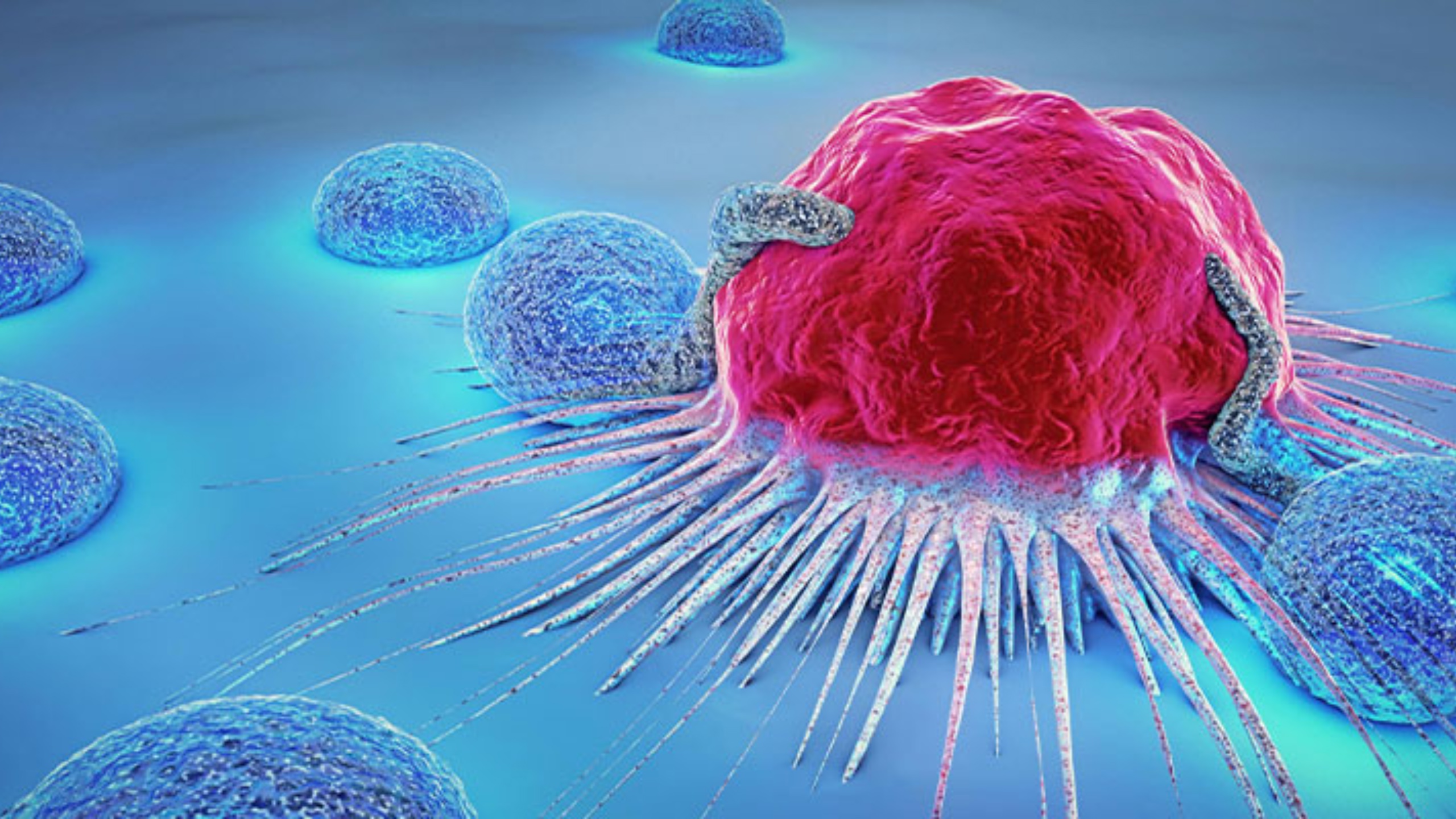
Cancer, Fear, and Faith: William Branham’s Teachings Examined
This study examines how cancer is medically defined and understood in modern oncology, and contrasts that framework with William Branham’s teachings that framed cancer as the result of minor injuries, fear, or demonic influence. It explores how such claims exploited widespread fear of cancer, distorted Christian theology, and produced lasting psychological and pastoral harm among followers.
William Branham's teachings concerning cancer present significant theological problems when evaluated against the broader witness of Scripture. These problems do not hinge on a rejection of divine healing as a biblical concept, but rather on Branham's repeated claims of supernatural diagnostic authority, his moralization of disease, and his use of fear-based explanations that place spiritual blame upon the afflicted. When examined carefully, these elements stand in tension with core biblical principles regarding human limitation, pastoral responsibility, and the nature of suffering.
And in the next corner, you'll see across there of a minister who had a cancer (This is the reporter speaking himself.) hanging on his neck, caused from a shaving cut about two years before, and it went into a cancer. And he said, 'The cancer, when the man came to the platform, I looked at it. It was raw and bloody looking. And in a few moments after the Reverend Mister Branham prayed for the man, the cancer dropped out and rolled over his foot, and we picked it up, and here it is. And there's a deep cavity in his neck where it fell out.' There was the man's picture sticking up there with a cavity in his neck where the cancer fell out.
- William Branham, Aug 16, 1950. Looking to the Unseen
A central biblical concern is the assumption of hidden knowledge. Scripture consistently restricts ultimate diagnostic authority—whether moral, spiritual, or physiological—to God alone. Jeremiah 17:9-10 emphasizes that only the Lord searches what is unseen, establishing a clear boundary between divine insight and human judgment. Branham's public declarations that individuals suffered from cancer, often without medical confirmation and sometimes without outward symptoms, exceed the epistemic limits Scripture assigns to human teachers. Proverbs 18:13 further frames such premature declarations as speaking judgment without understanding, warning against speaking decisively without adequate knowledge or understanding.
Equally problematic is Branham's tendency to frame disease as the result of spiritual failure, fear, or moral defect. This approach conflicts directly with Jesus' own rejection of moralized illness. In John 9:1-3, Jesus explicitly denies that physical affliction must be traced to personal or familial sin, dismantling the assumption that suffering functions as a spiritual indictment. Likewise, Luke 13:1-5 rejects the notion that those who suffer misfortune do so because they are more culpable than others. Within this biblical framework, illness is neither proof of divine displeasure nor evidence of spiritual deficiency.
Branham's claim that fear itself can cause cancer introduces an additional theological distortion. Scripture repeatedly characterizes fear as a condition from which believers are to be liberated, not a mechanism by which God inflicts judgment. Romans 8:15 contrasts the spirit of fear with the spirit of adoption, while 2 Timothy 1:7 identifies fear as incompatible with the power, love, and sound-mindedness associated with God's work. Teaching that fear produces disease risks creating precisely the kind of spiritual bondage these texts warn against, reinforcing anxiety rather than alleviating it.
Another biblical issue arises in the validation of authority through signs and wonders. The New Testament consistently cautions that extraordinary claims or dramatic manifestations are not, in themselves, proof of divine approval. Matthew 7:15-23 and Matthew 24:24 both anticipate religious figures who perform impressive acts yet operate outside the will or truth of God. These passages establish a critical theological distinction: miraculous claims must be evaluated by their conformity to truth and ethical fruit, not by spectacle or emotional impact. This principle is especially relevant when healing claims are accompanied by doctrinal innovations that contradict established biblical teaching.
Finally, Scripture places heightened responsibility upon those who teach and lead vulnerable communities. James 3:1 warns that teachers are subject to stricter judgment, while Ezekiel 34 condemns shepherds who exploit rather than protect the weak and sick. When illness is reframed as spiritual failure or when sufferers are discouraged from prudent care, the result is not pastoral healing but compounded harm. Within a biblical ethical framework, spiritual authority is measured not by control or fear, but by truthfulness, compassion, and accountability.
Medical Definition of Cancer and Its Clinical Symptoms
Cancer is a broad medical term describing a group of diseases characterized by uncontrolled cell growth, abnormal cell division, and the ability of those cells to invade surrounding tissue or spread to distant parts of the body. In healthy biological systems, cell growth and division are tightly regulated processes that allow tissues to repair and renew themselves. Cancer develops when genetic damage disrupts these regulatory mechanisms, allowing cells to multiply without normal limits and evade the body's natural safeguards.
Clinically, cancer presents in many forms depending on the tissue of origin, rate of growth, and degree of spread. Common symptoms may include unexplained weight loss, persistent pain, abnormal bleeding, fatigue, changes in skin appearance, or the presence of lumps or masses. Importantly, many cancers develop gradually and may be asymptomatic in their early stages, which is why modern medicine emphasizes screening, imaging, biopsy, and laboratory testing rather than symptom-based speculation.
Modern oncology does not attribute cancer to single traumatic events such as bruises, injections, or minor cuts. Instead, cancer is understood as a multifactorial disease involving genetic mutations, environmental exposures, lifestyle factors, and biological processes that unfold over time. This medical framework stands in sharp contrast to supernatural or moralized explanations that reduce cancer to a simple physical injury or spiritual condition.
How Cancer Develops: Modern Oncology Versus Supernatural Causation Claims
Contemporary medical science understands cancer as the result of accumulated genetic mutations that disrupt normal cellular regulation. These mutations may be inherited, acquired through environmental exposure, or develop spontaneously through errors in cell replication. Factors such as tobacco use, radiation, certain chemicals, chronic inflammation, viral infections, and aging itself contribute to increased cancer risk. No single injury or isolated physical event is sufficient to explain the onset of cancer; rather, the disease emerges through complex biological processes unfolding over extended periods of time.
In contrast to this evidence-based framework, Branham's supernatural causation models reduce cancer to simplistic origins, such as a bruise, an injection, or a minor wound that allegedly "turns into" cancer. These explanations ignore the biological realities of cellular mutation, tumor microenvironments, angiogenesis, and metastasis. By presenting cancer as the direct outcome of a trivial physical incident, such claims misrepresent both the nature of the disease and the extensive research underpinning modern oncology.
The danger of supernatural causation theories lies not merely in their inaccuracy, but in their implications. When cancer is framed as something caused by a single moment or action, responsibility is subtly shifted onto the patient, implying fault, negligence, or spiritual failure. This stands in opposition to the medical consensus, which recognizes cancer as a disease requiring early detection, professional diagnosis, and evidence-based treatment rather than speculative spiritual interpretation.
William Branham's Cancer Teachings and Their Internal Logic
William Branham repeatedly taught that cancer originated from ordinary physical injuries such as bruises, asserting that a damaged cell could "backslide" and then multiply into a malignant growth [1][2][3]. He used that analogy to collapse complex medical realities into a simple moral and spiritual narrative, treating bodily pathology as the direct outworking of spiritual conditions.
Branham also framed cancer as an active spiritual entity rather than a biological disease process. In that framework, medical labels were presented as terminology while the underlying cause was identified as demonic, placing sickness inside a spiritual warfare schema rather than clinical diagnosis and treatment [4]. This approach positioned supernatural discernment and prayer as the primary remedy and encouraged listeners to interpret disease through Branham's doctrinal lens.
In addition to bruises, Branham circulated sensational causation-and-cure narratives that reinforced his authority as a healer. He described cases in which a shaving cut allegedly "caused" a cancer and then claimed that the cancer physically dropped away following prayer [5]. He also asserted that a penicillin shot could cause cancer in an infant, presenting such stories as evidence of divine healing while simultaneously undermining confidence in ordinary medical care [6].