
William Branham's Game Warden Claim: Fact, Fiction, and the Missing Record
William Branham occasionally claimed that he worked as a game warden during the wartime period, yet his statements lack specificity and are unsupported by contemporaneous records. A comparison with well-documented Indiana game wardens shows a complete absence of appointment notices, enforcement activity, or administrative evidence connecting Branham to any official conservation role.
In later sermons and casual accounts to newspaper reporters, William Branham claimed that he was a game warden back home. These statements were typically framed as incidental biographical remarks rather than formal autobiographical claims, yet they implied an official role connected to wildlife enforcement. When examined historically, the claim presents multiple problems. Branham never identified a specific appointing authority, jurisdiction, badge, rank, or term of service, nor did he describe routine duties consistent with documented state or county game wardens operating in Indiana during the same period.
And I said, 'What do you do for a living?' I said, 'I'm a game warden.' ... 'That's what I do—to make a living.
- William Branham, 1956
Chronological constraints further complicate the claim. Branham linked the supposed warden activity to the wartime period and to a stage of life that comes after his marriage to Meda Branham and the birth of his son Joseph, narrowing the window in which such service could have occurred. However, contemporaneous records show that legitimate game wardens in Indiana were publicly appointed, frequently named in newspapers, and regularly cited in enforcement actions, court proceedings, and administrative notices. Within this extensive public record, no appointment, enforcement action, or official reference to William Branham as a game warden appears.
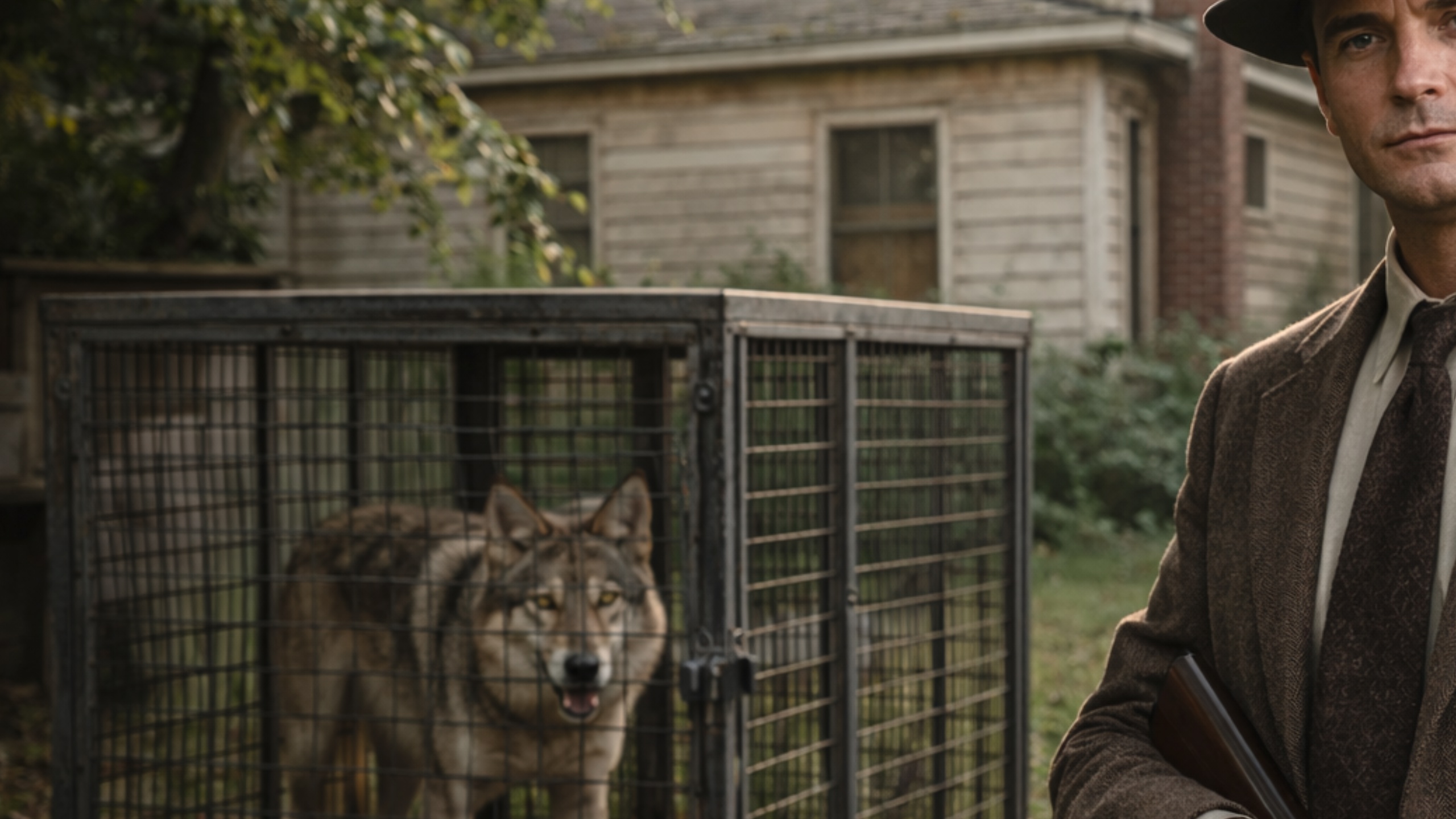
The only documented episode remotely resembling the use of the term “warden” involves Branham’s 1942 capture and confinement of a wolf, an incident reported as a private hunting exploit rather than an act of state authority. This episode illustrates how informal language and personal anecdotes can later be retrofitted into claims of official status. Taken together, the inconsistencies in Branham’s descriptions, the absence of corroborating documentation, and the contrast with well-documented contemporaries raise significant doubts about the accuracy of his claim to have served as a game warden.
Chronological Context: Indiana Game Wardens and Public Documentation
During the 1930s and early 1940s, the role of an Indiana game warden was not informal or private. Game wardens were appointed through the Indiana Department of Conservation and were routinely identified by name in local and regional newspapers. Their duties included issuing warnings, making arrests, testifying in court, and publicly explaining changes in hunting and fishing regulations. As a result, their activities generated a steady paper trail that is easily traceable through contemporary reporting.
This public documentation is especially clear in Clark, Scott, Johnson, and surrounding counties, where enforcement activity was frequently reported. Millard L. Davis, for example, appears repeatedly in newspapers throughout the 1930s and 1940s as a state game warden, later holding the rank of captain. Articles name him in arrest reports, court cases, regulatory announcements, and administrative promotions, demonstrating that legitimate wardens were both visible and verifiable figures in local public life [1], [2], [3].
By contrast, no comparable documentation exists for William Branham. Despite the same newspapers recording minor wildlife violations, licensing warnings, and routine enforcement actions in the very regions where Branham lived and traveled, his name never appears in connection with any official game warden appointment or duty. Given the density of surviving coverage and the consistency with which actual wardens were identified, the absence of Branham from these records is not incidental but historically significant.
Millard L. Davis as a Documented State Game Warden
Millard L. Davis provides a clear point of comparison for evaluating claims of game warden service in southern Indiana during the period relevant to William Branham’s later statements. Davis was formally appointed as a state fish and game warden for Clark and Scott counties in 1933, and his appointment was publicly announced at the time. From that point forward, Davis appeared regularly in newspapers in connection with enforcement actions, regulatory warnings, arrests, court proceedings, and administrative developments.
Newspaper coverage shows Davis exercising recognized legal authority: issuing hunting and fishing license warnings, arresting individuals for wildlife violations, and enforcing seasonal restrictions. His name was consistently attached to these actions, reflecting both the public accountability of the position and the routine practice of identifying wardens in print. Over time, Davis’s career advanced within the conservation enforcement structure, culminating in his promotion to captain, a development that was likewise reported publicly.
This documented career demonstrates several key features of legitimate game warden service in Indiana. Appointments were official, named, and traceable; enforcement actions were public and routinely reported; and advancement within the system was recorded in the press. Against this backdrop, the absence of any comparable documentation for William Branham is not a matter of missing paperwork but a sharp divergence from the well-established pattern by which actual game wardens were identified and verified [4], [5], [6].
Patterns of Official Enforcement Activity in Local Newspapers
Local newspapers in southern Indiana followed a consistent pattern when reporting on fish and game enforcement during the 1930s and 1940s. Articles routinely named the responsible game warden, identified the county or counties under his jurisdiction, and described specific actions such as arrests, warnings, fines, court appearances, and regulatory announcements. Even minor violations—such as license infractions or out-of-season fishing—were often reported with the warden’s name included, reflecting both transparency and the public nature of the office.
This pattern extended beyond a single paper or county. Reports from Jeffersonville, Franklin, and other nearby communities show that state game wardens were treated as identifiable public officials whose actions were newsworthy. Promotions, transfers, and administrative changes were likewise reported, reinforcing the expectation that a person holding the title of game warden would leave a visible documentary trail in the press.
Within this environment, the absence of William Branham’s name is conspicuous. Newspapers that repeatedly mentioned official wardens by name over many years never once identified Branham as exercising enforcement authority, issuing warnings, making arrests, or acting under appointment from the Department of Conservation. Given how consistently legitimate wardens appeared in print, the silence surrounding Branham is not neutral. It strongly suggests that his later use of the term “game warden” does not align with the contemporaneous understanding of that role as reflected in public records [7], [8], [9].
William Branham’s Claims of Being a Game Warden
William Branham’s statements about being a game warden appear sporadically in sermons and informal conversations while traveling, typically framed as casual biographical remarks rather than detailed accounts of employment. In these statements, Branham did not specify a county, appointing authority, badge number, rank, or term of service. Nor did he describe concrete enforcement duties such as issuing licenses, making arrests, or appearing in court—activities that defined the work of documented Indiana game wardens during the same era.
Branham also placed these claims within a loose chronological framework, associating them with the wartime period and with his life after marriage and the birth of his son Joseph. This timing is significant because it narrows the possible window for such service to the early 1940s. Yet newspapers from this period continued to name and quote official wardens in routine enforcement stories, and Branham’s name never appears in that context. His claims therefore rely entirely on self-reporting rather than corroboration from contemporaneous records.
The contrast between Branham’s vague descriptions and the detailed, public record of legitimate wardens suggests that the term “game warden” was being used loosely or colloquially rather than as a reference to a formal office. Without documentary support—such as appointment notices, enforcement reports, or administrative records—Branham’s statements remain unverified and stand apart from the established patterns of how game warden service was publicly documented in Indiana during the same period [10].
Chronological Constraints from Marriage and Family Milestones
William Branham’s own descriptions place his alleged game warden activity after key personal milestones, most notably his marriage to Meda Broy and the birth of his son Joseph. The marriage in October 1941 provides a fixed chronological anchor, and Branham’s references to wartime conditions further narrow the window to the early 1940s. Any claim to official service as a game warden must therefore fit within a period when Indiana conservation enforcement was already well organized and extensively reported in the press.
This timeframe is significant because it coincides with continued, routine newspaper coverage of legitimate game wardens operating in southern Indiana. Even during the disruptions of World War II, wardens were publicly named in enforcement actions, licensing notices, and regulatory announcements. The war did not obscure their identities or eliminate the public record of their appointments and duties. As a result, the expectation of documentation for a new or additional warden during this period remains high.
Within these chronological constraints, no evidence emerges to support Branham’s claim. There are no appointment notices, no reports of enforcement activity, and no administrative references linking him to the Department of Conservation. The absence of documentation is especially striking given that Branham was otherwise a visible public figure whose activities frequently appeared in newspapers for religious and community-related reasons. This mismatch between the specificity of the timeline and the complete lack of corroboration further undermines the credibility of the game warden claim [11].
The 1942 Wolf Incident and the Misuse of the Term “Warden”
The only contemporaneous episode in which William Branham is publicly associated with animals in a quasi-custodial role occurred in August 1942, when local newspapers reported that he had captured a wolf alive near Henryville and brought it into Jeffersonville. The animal was confined and displayed for several hours, drawing public attention. The article identifies Branham as the individual who captured and possessed the wolf but does not describe him as acting under any official authority or appointment.
This incident is significant because it demonstrates how the language of “keeping” or “holding” an animal could later be reframed in memory or retelling. In this case, Branham functioned as a private individual who captured wildlife, not as an agent of the state. There is no indication of authorization from the Department of Conservation, no reference to enforcement duties, and no mention of legal authority to detain wildlife. In fact, the episode more closely resembles a personal hunting exploit or novelty event than regulated conservation work.
When viewed in light of Branham’s later statements about being a game warden, the 1942 wolf episode helps explain how an informal or colloquial use of the word “warden” may have emerged. Acting as a self-appointed “keeper” of a captured animal is categorically different from holding a formal office with statutory authority. The newspaper account anchors the event firmly in the realm of private action, underscoring the gap between documented behavior and later claims of official status [12].
Comparison Between Official Game Wardens and Branham’s Self-Descriptions
When the documented careers of official Indiana game wardens are compared with William Branham’s self-descriptions, the differences are clear and consistent. Legitimate wardens were appointed by the Department of Conservation, assigned defined jurisdictions, and entrusted with statutory authority. Their work involved visible public actions: issuing licenses, enforcing seasonal restrictions, making arrests, confiscating illegal game, and appearing in court. These activities generated routine newspaper coverage that named the warden involved and described the legal basis for the action.
Branham’s accounts share none of these characteristics. He did not describe carrying credentials, exercising legal authority, or interacting with courts or conservation officials. His statements lack specificity and do not align with the operational realities of game wardens active during the same period. Instead, his descriptions rely on generalized language and personal anecdotes, with no reference to institutional structures or formal responsibilities.
This contrast highlights a fundamental category error. Official game wardens operated within a clearly defined legal and administrative framework that left a substantial public record. Branham’s claims, by contrast, resemble informal self-characterizations rather than evidence of public office. The comparison reinforces the conclusion that the term “game warden,” as used by Branham, does not correspond to the documented meaning and function of that role in Indiana during the 1930s and 1940s.