
Jehovah's Witness
After presenting his alterations to Clarence Larkin's Church Ages and alleging that he was the prophet-messenger [1] for the last Church Age, William Branham began to claim divine revelation on numerous doctrines from his version of Christian Identity to the revelation of the mysteries hidden behind the Seven Seals of Revelation. [2] When these doctrines are examined, however, they appear to be directly copied from either their original source or publications from the source in which Branham came in contact. Once such source was Charles Taze Russell, the central figure of the Jehovah's Witness religious cult.
After presenting his alterations to Clarence Larkin's Church Ages and alleging that he was the prophet-messenger [1] for the last Church Age, William Branham began to claim divine revelation on numerous doctrines from his version of Christian Identity to the revelation of the mysteries hidden behind the Seven Seals of Revelation. [2] When these doctrines are examined, however, they appear to be directly copied from either their original source or publications from the source in which Branham came in contact. Once such source was Charles Taze Russell, the central figure of the Jehovah's Witness religious cult.
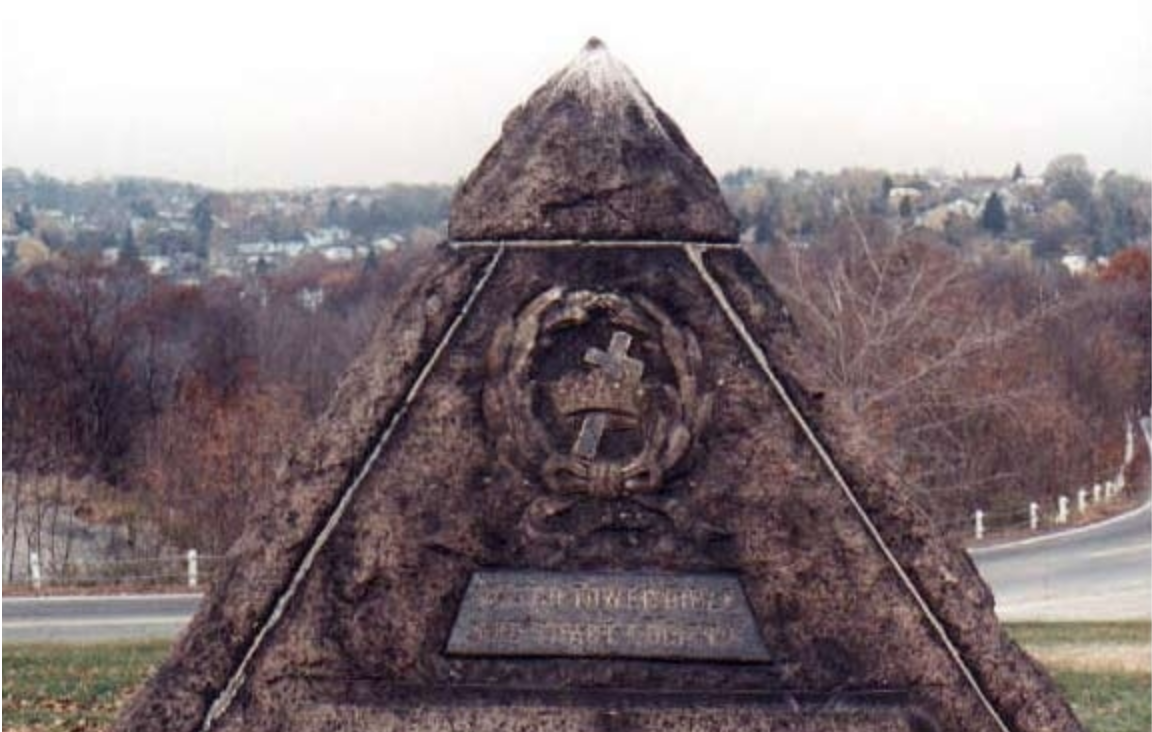
It was no secret that William Branham studied materials published by the Jehovah's Witness Watchtower Society, or that his doctrines appealed to members of that sect. When preparing for his sermons, Branham studied from the Emphatic Diaglott[3] - a very popular Greek/English polyglot translation published by the Watchtower Society.[4] Members of the Jehovah's Witness sect attended Branham's meetings at his Branham Tabernacle in Jeffersonville. [5] When he was buried, Branham was placed under a pyramid-shaped tomb almost identical to the one chosen by the Watchtower Society for Russell. [6]
Of Branham's "revelations", his doctrine concerning the Godhead would have been very popular among the Jehovah's Witnesses who attended his meetings. Especially the way it was presented; Branham frequently claimed that Jehovah of the Old Testament was Jesus of the New in both recorded sermons[7] and his published writings.[8] This was a doctrine fundamental to the Jehovah's Witnesses. [9]
While William Branham is typically remembered by religious historians as a Oneness Pentecostal minister, [10] some versions of his stage persona were more closely aligned with the Jehovah's Witness sect. Oneness Pentecostalism rejects the Trinitarian doctrine and promotes the deity of Jesus Christ by alleging that Jesus also manifested himself in the forms of the Father and the Holy Spirit. [11] The Jehovah's Witness sect, however, believe that Jehovah was an angel. [12] This differs from mainstream Christianity in that Christ is generally believed to be superior to the Angels,[13] based on passages from the Bible. [14]
In later the versions of his stage persona after 1945, William Branham claimed to have had the assistance of an angel on the platform during his sermons and healing lines. In some versions of his persona, this "angel" was touted as a "minor angel", which would have been subservient to God. [15] In those versions, William Branham denied having prayed to the "angel". [16] In other versions, or while speaking to specific audiences, Branham did pray to his "angel".
Angel of God, I do not see You. But I know that You are standing near. Please, Thou knowest my heart, and know how I love these people. Stand by me tonight [17]
During the times Branham used his stage persona promoting the idea of Christ being angelic, Branham aligned his doctrine with the Jehovah's Witness sect. Like the Jehovah's Witnesses, [18] William Branham taught that Jesus Christ was Michael the Archangel.
And at that time, Michael shall stand, the great prince." Michael was Christ, of course, Who fought the Angelic wars in Heaven, with the devil. Satan and Michael fought together, or fought against each other, rather. [19]