
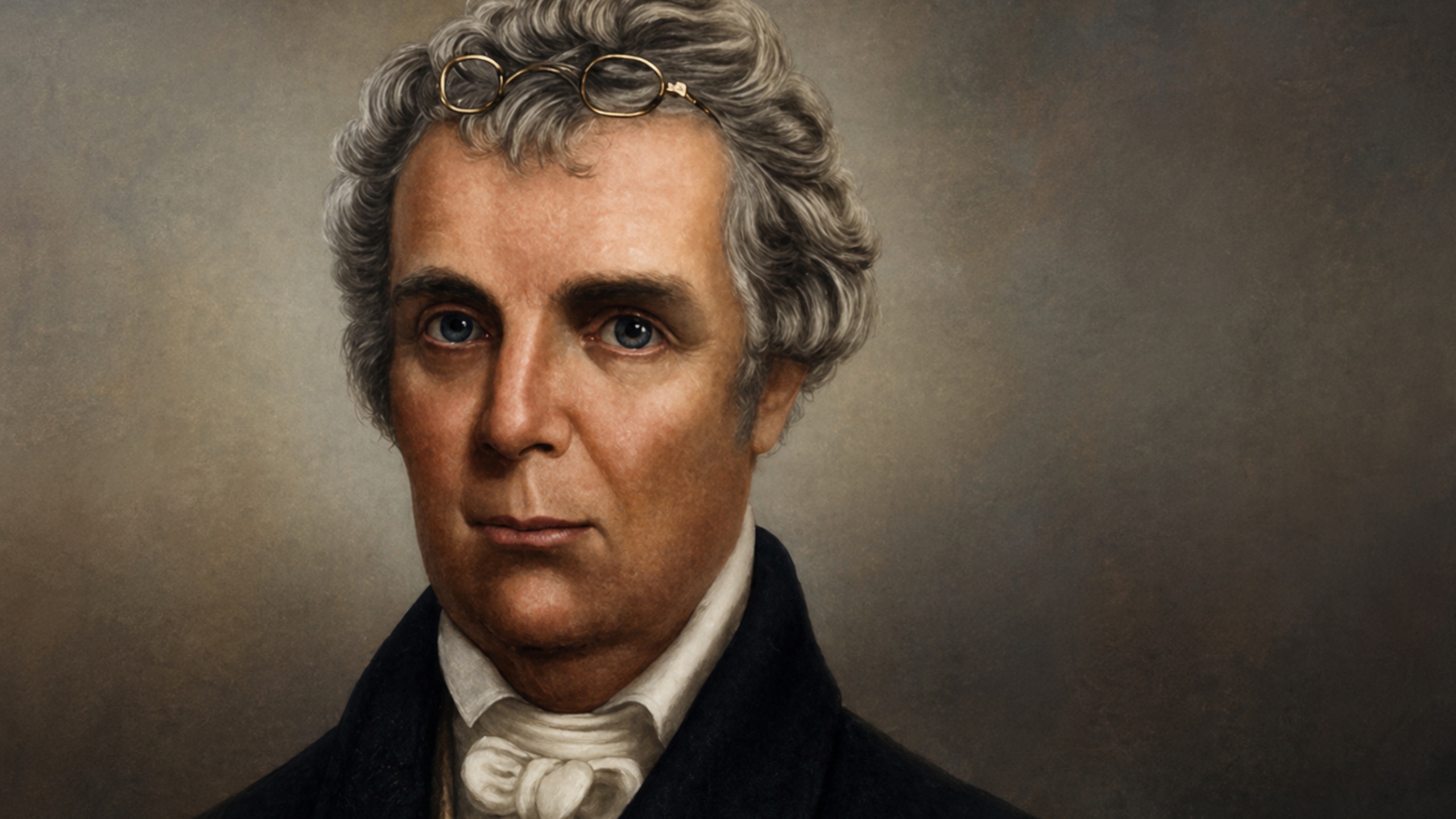
Restoration Movement
The Restoration Movement is a Christian reform effort that began in the early 19th century in the United States, primarily led by Barton Warren Stone and Alexander Campbell. It aimed to restore the practices and beliefs of early Christianity by rejecting denominationalism and creeds in favor of a more direct reliance on the Bible. The movement emerged in response to religious division and the growth of different Protestant denominations in America, and it sought to unify all Christians under a common, biblical foundation. However, the result was quite different. While advertising itself as church reform to realign with Scripture, the movement strayed far from sound theology. Stone was responsible for the grave errors introduced into American Christianity, some of which influenced the Latter Rain and, ultimately, the New Apostolic Reformation (NAR) Movements.
The Restoration Movement is a Christian reform effort that began in the early 19th century in the United States, primarily led by Barton Warren Stone and Alexander Campbell. It aimed to restore the practices and beliefs of early Christianity by rejecting denominationalism and creeds in favor of a more direct reliance on the Bible. The movement emerged in response to religious division and the growth of different Protestant denominations in America, and it sought to unify all Christians under a common, biblical foundation. However, the result was quite different. While advertising itself as church reform to realign with Scripture, the movement strayed far from sound theology. Stone was responsible for the grave errors introduced into American Christianity, some of which influenced the Latter Rain and, ultimately, the New Apostolic Reformation (NAR) Movements.
Barton Warren Stone was a pivotal figure in the early 19th-century religious landscape of the United States. He played a key role in the Restoration Movement, convincing participants that they were returning to the practices of the early New Testament church. Born in 1772 in Maryland, Stone's early religious experiences were shaped by the intense Calvinism that dominated much of American Protestantism at the time.[1] He struggled with doctrines like predestination and election, which he believed to portray a God of limited mercy.[2] These teachings conflicted with Stone's growing conviction that God's grace was available to all people. This tension would drive him toward a theology emphasizing free will[3] and a broader, more inclusive view of salvation.
The most significant moment in Barton Stone's early career came in 1801 with the Cane Ridge Revival in Kentucky.[4] This event, often cited as a key turning point in the Second Great Awakening, drew thousands of people for days of emotional worship and powerful preaching.[5] Stone was one of several preachers involved, and his leadership in the revival made him a prominent figure in the movement for Christian reform. The revival was marked by its intense emotionalism and the widespread sense that the Holy Spirit was moving in a powerful way among the participants. As with the Latter Rain and Charismatic movements that would later develop, the Cain Ridge Revival was marked by preaching that stimulated an emotional response involving fear, joy, and fainting.
Preaching was usually emotional and, what is more, sincere and rousing causing a strong emotional response. Affected by the preaching, the audience wept with fear, or joy, and some people fainted. Such reaction was considered to be the evidence of the presence and power of God. It should be stressed that a benchmark of the meeting was a highly emotional style of preaching that make listeners weep and repent of their sins (Butler, 2008)[6]
Stone's theology developed significantly after Cane Ridge. He began to advocate for a simpler, more accessible form of Christianity, rejecting the Calvinist idea that Christ's atonement was limited only to the elect. Stone came to believe in a universal offer of salvation, available to anyone who would repent and place their faith in Christ. This shift placed him closer to the Arminian theological tradition, which emphasizes human free will over predestination. However, Stone resisted being labeled by any particular theological system, focusing instead on the importance of Christian unity and the authority of the Bible as the sole guide for faith and practice. For Stone, creeds and denominational divisions were the primary obstacles to true Christian unity.[7] While his intentions may have been just, Stone began to further reject centuries of theological study on everything from issues of salvation to the nature of God Himself. Stone eventually wandered into heresy.
While ordained as a Presbyterian, Stone grew increasingly uncomfortable with many aspects of the Westminster Confession of Faith, particularly its articulation of the Trinity. Though he rejected labels such as Unitarian or Arian, Stone held a subordinationist view of Christ, believing that the Son and the Holy Spirit were distinct from, and subordinate to, the Father. In his Address to the Christian Churches in Kentucky, Tennessee & Ohio, Stone expressed his skepticism of the traditional Trinitarian formula of three persons in one God, arguing that this doctrine was not clearly supported by scripture and led to unnecessary confusion and mystery.
The doctrine, that there are three persons in one God, is principally founded on I John 5, 7. "There are three that bear record in heaven, the Father, the Word and the Holy Ghost, and these three are one." From reading the context, it is plain, that the matter testified of, is that Jesus is the son of God. The Father testified this, when he spake from heaven, "This is my beloved Son, hear ye him." The Word or Son, testified the same by the many wonders he performed when incarnate. This also the Holy Ghost witnessed by the many miracles wrought thro' the apostles. These three are one. They are one, or agree in their testimony; as, in the next verse, the three witnesses on earth agree in one. To say these three are one God, would contradict the original; for the word hen, translated one, is in the neuter gender, and cannot agree with the word God. ... Now as all believers are not one substance nor one being; and as they are all one, even as the Father and Son are one; we must then conclude, that the Father and Son are not one substance, nor one being. This is farther evident from John 10, 30, "I and my Father are (hen) one," says Jesus. Yet in the same Evangelist he said, "My Father is greater than I." John 14, 28. If they were one substance, or one being, there could be no comparison; as one cannot be greater or less than itself. The fact is, all believers are one in spirit, purpose, and mind—and this is the oneness which our Lord prayed they might have--this was the oneness of Paul and Apollos.—This appears to me to be the oneness of the Father and the Son.[8]
- Barton Warren Stone
In 1804, Stone and a group of like-minded ministers signed the Last Will and Testament of the Springfield Presbytery, symbolizing their break from the Presbyterian Church and their desire to form a new Christian community. This act was a radical step, reflecting Stone's belief that human institutions had strayed too far from the simple, unifying message of the New Testament. Stone and his followers, known simply as the Christians, sought to restore the practices of the early church by stripping away the layers of tradition and doctrine that had accumulated over centuries. This was the foundation of what would become the Restoration Movement, which emphasized non-denominational Christianity, local congregational autonomy, and a return to biblical principles.
Stone's movement eventually merged with another branch of the Restoration Movement led by Alexander Campbell in 1832. Although both men shared a common goal of Christian unity and a desire to restore the practices of the early church, they had some significant theological differences, especially in matters of church governance. Campbell pushed the idea of a church universal and a church local, which Stone strongly rejected.[9] Campbell was more focused on rational biblical interpretation, while Stone emphasized the work of the Holy Spirit in the believer's life, in some ways similar to that of Buddhism.[10] Despite these differences, the two movements united to form what would become the Christian Church and the Churches of Christ.
Stone's legacy is complex, particularly when viewed in relation to later religious movements such as the Latter Rain movement, the Charismatic movement, and the New Apostolic Reformation. While some elements of these movements may seem to echo Stone's emphasis on the work of the Holy Spirit and his rejection of denominationalism, it is important to recognize that Stone did not directly influence these movements. His focus was primarily on Christian unity, biblical authority, and the rejection of creeds rather than on supernatural gifts like healing, prophecy, or speaking in tongues, which are central to the Charismatic and N.A.R. movements. Regardless, the movements built upon the foundation laid by Stone and shared many connections to the Restoration Movement.
Stone's heresy of tearing down the nature of God and focusing on "restoration" opened the door for other movements to question the organization of the church and its understanding of the Godhead. The Oneness Pentecostal movement, for example, rejected the Trinity for a view of God that was a singular, indivisible entity who manifests Himself in different modes (Father, Son, and Holy Spirit) rather than being three distinct persons. Like Stone, Oneness Pentecostals claimed to have restored the church to that of the early Christian Church of the New Testament and based their theology on Acts 2:38 rather than passages such as 1 John 5:7 or Christ's instructions given in Matthew 28:19-20. Christians familiar with Stone's theology would have been more receptive to ignoring Christ's instructions on baptism after having been trained to believe that Jesus was subordinate to the Father.
These themes were further amplified in the Latter Rain Movement spearheaded by William Branham. Branham was theologically trained under white supremacist leader Roy E. Davis[11] to reject the established denominations and creeds, as well as the Trinitarian nature of God. During his formative years, Branham worked with Davis to establish a new sect of Pentecostalism, the "Pentecostal Baptist Church of God" sect,[12] which built upon Stone's themes of unity while rejecting organized religion. Oneness Pentecostals who converted to Branham's doctrine were trained to believe many of the themes introduced by Stone. Branham strongly rejected the Trinity doctrine as heresy,[13] but in his various conflicting descriptions of the Godhead, Branham made Christ subordinate to the Father. In some cases, Branham claimed that Christ was an angel.[14] In other cases, Branham claimed that Jesus was human "anointed flesh."[15] When using his Manifest Sons of God theology, Branham claimed that Jesus was simply a prophet who required a vision from the Father to perform healing miracles.[16] However, Branham also taught the Trinitarian Persons of God when speaking to certain audiences,[17] suggesting that his "subordinate Christ" Godhead was simply an appeal to those familiar with Stone's theology.
While many leaders of the Charismatic movement rejected Branham's heretical views of the Godhead, his claims of restoration were largely accepted. Charismatics continued teaching Branham's reformation doctrines, which emphasized the ongoing work of the Holy Spirit over theological training and church history, particularly focused on the manifestation of spiritual gifts such as healing, prophecy, and speaking in tongues. As a result, the Charismatic movement continued Stone's Restoration Movement themes, seeking to break down denominational barriers and promote unity among Christians. However, like the Latter Rain movement, the Charismatic movement used doctrinal differences to create new barriers dividing Charismatics from mainstream Christianity and continued the notion of "super-apostles" that resulted in alleged spiritual authority.
These themes are continued in the New Apostolic Reformation (NAR), which places significant emphasis on the role of apostles and prophets in the church today. Like Stone, and Branham, the NAR advocates for a return to the structure of the early church, but the NAR places a much stronger emphasis on spiritual warfare, apostolic leadership, and miraculous signs. Stone would likely have never agreed to the authoritarian control given to the so-called apostles and prophets of the NAR, but it is clear that the movement adopted certain parts of Stone's restoration themes. The NAR refers to Branham as one of "God's Generals" while fully aware that throughout his ministry, Branham was more closely aligned with Stone's subordinate version of Christ.