
Struggle With Mental Health
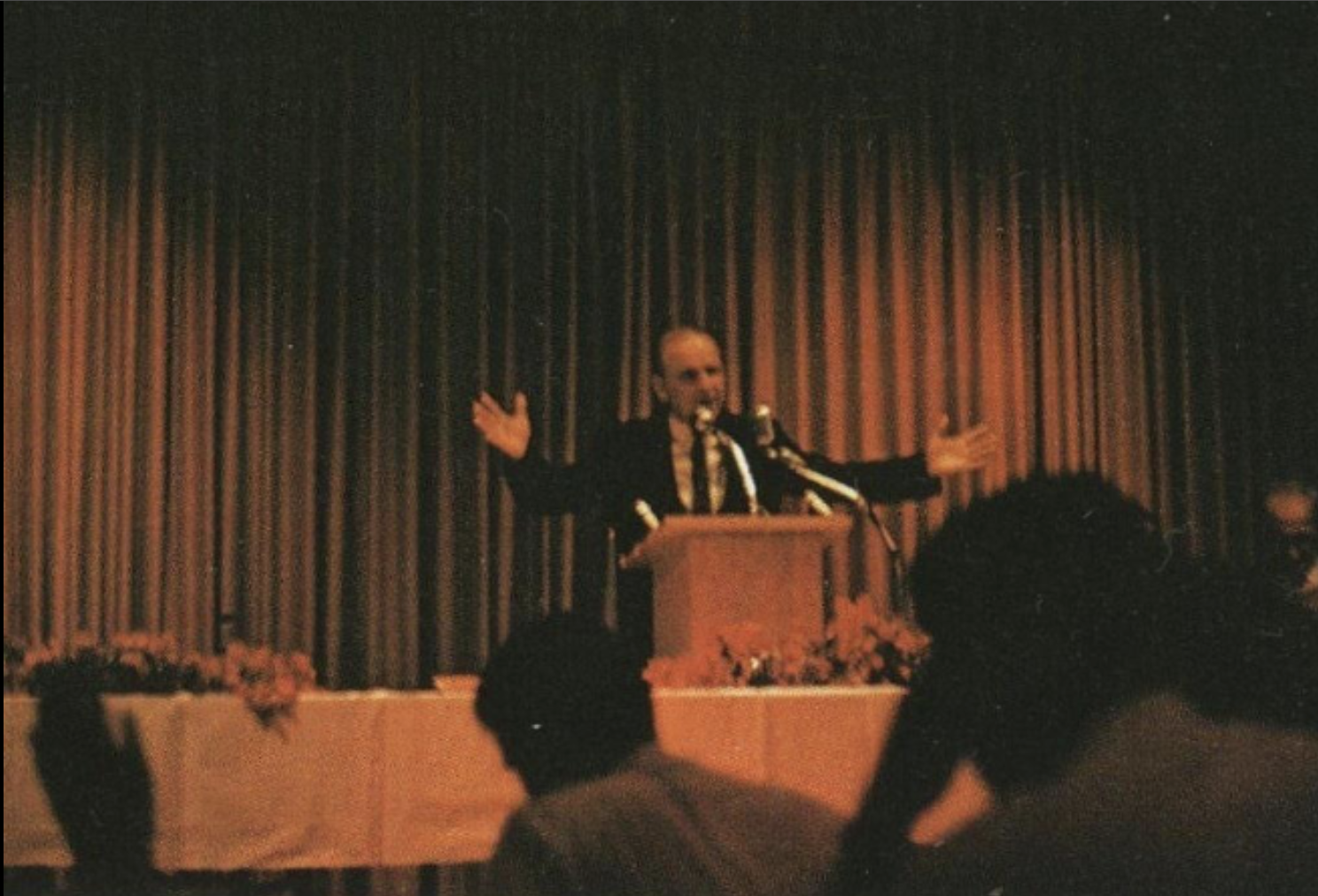
William Branham described his struggle with mental health throughout his career as an evangelist. This is documented in Gordon Lindsay's book, God's 20th century Barnabas. According to Branham, he suffered from the condition all of his life, and frequently went to doctors for examination, and that he was diagnosed as "neurotic". 1953 he had been to Mayo Brothers Clinic three times and was finally diagnosed as having an incurable mental health disorder.
William Branham described his struggle with mental health throughout his career as an evangelist. This is documented in Gordon Lindsay's book, God's 20th century Barnabas. According to Branham, he suffered from the condition all of his life, and frequently went to doctors for examination, and that he was diagnosed as "neurotic". 1953 he had been to Mayo Brothers Clinic three times and was finally diagnosed as having an incurable mental health disorder.
The Lord Jesus healed me of a terrible rundown condition, underfed when I was a child, and—and nervous. And even till I was in such a condition that Mayo Brothers said there wasn't a hope for me.'[1]
- William Branham
That's just exactly. Just a few more come in there, run him completely insane; 'cause the medical doctor will tell you that temper is the first stage of insanity. That's what Mayo says, the first stage of insanity.[2]
- William Branham
Some—some time ago, a few years ago, when Mayo Brothers, one of the best clinics in the nation (been interviewed there twice since then), said to me, 'It's impossible Reverend Branham, for you ever to get well.'[3]
- William Branham
From June until the following year, Brother Branham went through a Gethsemane that few ministers have experienced. The evangelist had reached out into spiritual realms that had profoundly disturbed the kingdom of hell. His battle with the enemy, together with his great exertions which went beyond his physical strength, caused him to have a nervous breakdown. Physicians advised him that he would have to leave the field indefinitely.[4]
- Gordon Lindsay, God's 20th Century Barnabas
Psychneurosis, a general classification of several functional mental disorders involving chronic distress, is no longer a term used by the psychiatric community. In today's world of mental health, the specific classification is favored over a general classification of "neurotic". In Branham's life span, however, this was a term used, and it was apparently used by William Branham's medical practitioner.
During the height of his involvement with the Latter Rain movement, William Branham suffered a mental health crisis and disappeared from public view. His exit from the Post WWII Healing Revival trail was so sudden that many people assumed that he had died. The Jeffersonville Evening news published an article correcting the rumor on April 26, 1948, and a few months later the July issue of The Voice of Healing did the same.
I've been a neurotic all my life. As a little boy there was something struck me, that scare me, about every seven years it would happen to me. Brother Jack remembers when I first started, come off the field for a year; something just happened.
Branham, William. 1965, Nov 28. On The Wings Of A Snow White Dove
Over time, Branham's diagnosis itself became integrated into his stage persona. The persona that alleged to have began "faith healing" in 1947 alleged that the struggle with mental health began when he "first started" (1948), raising the question whether or not mental health issues existed in previous versions of his stage persona. The tract "I Was Not Disobedient To The Heavenly Vision" published for his 1945 "faith healing" ministry, for example, described his return from another exit from the ministry after a three-year stretch of what he alleged to be successful miracles.
This struggle with mental health would become a theme during later versions of his stage persona, especially during the later years when paranoid delusions became more frequent. William Branham frequently taught his listeners that prophets were "neurotics", as well as any spiritual person. When Branham introduced his adaptation of Clarence Larkin's Church Age Theology, Branham began teaching that his "age" was a "neurotic age". As the stage persona transitioned to deity claims, Branham began to claim that every "divine" person endured having been labelled a "neurotic".
And that's the reason sometimes a Divine life that's been called and set aside has become a fanatic, or crazy, or--or a mystic, or something to the eyes of the general public is because you're considered a--a--a--a, I'd say a neurotic, or a insane person, is because that you have changed your dwelling place and got into a different atmosphere. And your own motive, your one thoughts is to stay in that atmosphere. Any person that ever come into that atmosphere one time will never be satisfied nowhere else. And that's why I believe that we should have our churches under control by the Holy Ghost, that men and women in their work and wherever they should be, should continually desire, and they will, if they've ever once come into that atmosphere.
Branham, William. 1956, January 29. The Supernatural