
1948 Doomsday: Prophecy and Politics
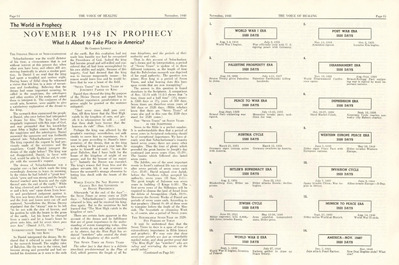
After the birth of Latter Rain and the Latter Rain Revival, and as Branham's associates began to join into the Voice of Healing Revival, William Branham and his associate editors of the Voice of Healing Publication began promoting the idea that 1948 would be the year of destruction. A section of the publication entitled "The World In Prophecy" started informing readers of the "prophetic" and mathematic projections pointing to the End of Days using charts, graphs, numerologies, and specific passages from the Christian Bible without their surrounding Biblical context.
1952 Doomsday: Politics and Revelation
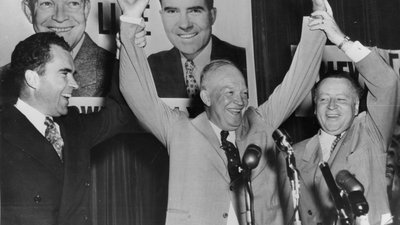
In June 1952, The Voice of Healing published Gordon Lindsay’s feature “The Coming Presidential Election and Prophecy,” claiming that a series of 666-day cycles drawn from Revelation 13 linked events from World War I through the New Deal to the upcoming U.S. presidential election, which it presented as a 1952
Gordon Lindsay
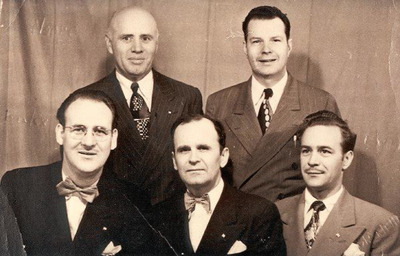
James Gordon Lindsay was William Branham's campaign manager from 1947 until the mid-1950s. Branham and Lindsay published The Voice of Healing magazine and Lindsay was a key figure in the Voice of Healing Revival that merged with the Latter Rain movement. In 1953, Lindsay issued an ultimatum for Branham over doctrinal positions in white supremacy, which led to a heated battle between Joseph Mattsson-Boze's Herald of Faith and Voice of Healing.[1]
Voice of Healing
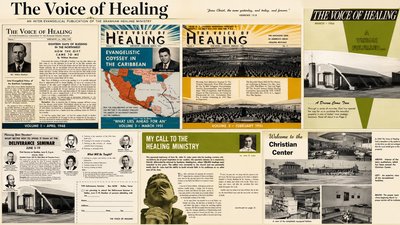
The Voice of Healing began as a promotional magazine for William Branham’s healing campaigns, helping publicize his meetings, testimonies, supernatural claims, and growing influence during the postwar healing revival. Over time, however, the publication expanded beyond Branham and became a platform for a wider network of healing evangelists and ministries, including figures associated with the broader Voice of Healing movement. As the revival grew, the magazine shifted from primarily advertising Branham’s ministry to promoting multiple evangelists, crusades, testimonies, doctrinal themes, and organizational efforts that helped shape mid-twentieth-century Pentecostal and charismatic healing culture.
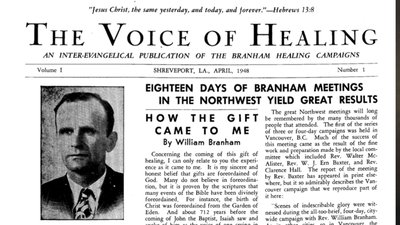
Voice of Healing History
The Voice of Healing was originally created to promote William Branham as the central figure of the “Voice of Healing Revival,” with its early issues tied directly to the “Branham Healing Campaigns” and managed by Branham’s associates, including Gordon Lindsay, Jack Moore, and Anna Moore. Emerging during the 1948 overlap between the healing revival and Latter Rain, the magazine helped organize and advertise a growing network of faith-healing evangelists, offering Branham’s name and campaign structure as a legitimizing platform while also explaining away failed healings through appeals to insufficient faith. Over time, however, the publication shifted away from being primarily “the Branham paper” and became a broader promotional vehicle for many healing ministries, helping construct public stage personas built around angelic visitations, signs, wonders, and supernatural claims. By 1957, tensions surrounding Branham’s teachings and conduct had created a public rupture, especially after the Christian Fellowship Convention hosted by Jim Jones and Peoples Temple, where an “Open Letter to William Branham” accused him of straying from the Gospel and included warnings of death and destruction; although The Voice of Healing defended Branham’s supernatural “gift,” the controversy marked a turning point as Jim Jones, Peoples Temple, and others parted ways with Branham and the Voice of Healing network.
No records found.