
1907: Branham's Actual Birth Year
William Branham’s widely repeated 1909 birth year is a historically inaccurate date that emerged from his later sermons and theological self-mythologizing rather than from any legal documentation. Contemporary records—including multiple census entries, newspaper accounts, and early public documents—consistently demonstrate that he was born in 1907, a fact overshadowed over time by the prophetic significance Branham attached to the later date.
1948 Doomsday: Prophecy and Politics
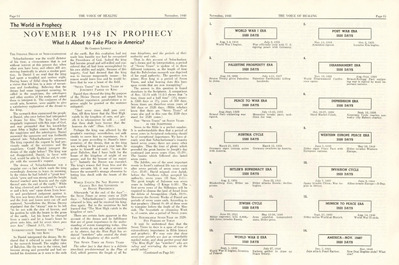
After the birth of Latter Rain and the Latter Rain Revival, and as Branham's associates began to join into the Voice of Healing Revival, William Branham and his associate editors of the Voice of Healing Publication began promoting the idea that 1948 would be the year of destruction. A section of the publication entitled "The World In Prophecy" started informing readers of the "prophetic" and mathematic projections pointing to the End of Days using charts, graphs, numerologies, and specific passages from the Christian Bible without their surrounding Biblical context.
A. J. Tomlinson: Architect of a Theocratic Pentecostal Empire
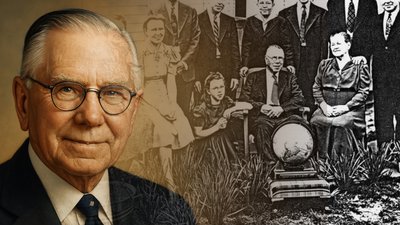
Here is a clear, tight two-sentence summary of the entire passage: A. J. Tomlinson, a former Quaker turned Pentecostal leader, transformed the Church of God (Cleveland, TN) into a major Pentecostal denomination, but his authoritarian governance and financial controversies led to his 1923 removal and a lasting schism that reshaped the movement. The fallout opened the door for white supremacist influence through figures like Roy E. Davis, while Tomlinson’s son Homer later extended his father’s theocratic ambitions into politics—founding the Theocratic Party, declaring himself “King of the World,” and blending Pentecostalism with British Israelism and dominionist aspirations.
Derek Prince and the Roots of Deliverance Theology
Derek Prince played a formative role in shaping modern Charismatic theology through his teachings on deliverance, spiritual warfare, and prayer, while maintaining close ties to influential networks surrounding William Branham and the Full Gospel Business Men’s Fellowship. His legacy—cemented through the Shepherding Movement and overlapping with Latter Rain and prosperity teachings—helped lay the groundwork for the authoritarian apostolic structures later embraced by the New Apostolic Reformation.
1952 Doomsday: Politics and Revelation
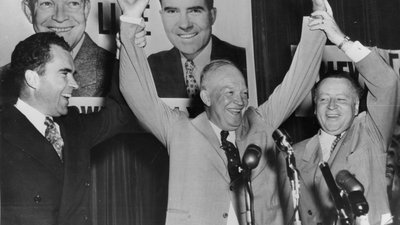
In June 1952, The Voice of Healing published Gordon Lindsay’s feature “The Coming Presidential Election and Prophecy,” claiming that a series of 666-day cycles drawn from Revelation 13 linked events from World War I through the New Deal to the upcoming U.S. presidential election, which it presented as a 1952
Carol Ruth Strubler: A Documented Case of Failed Faith Healing
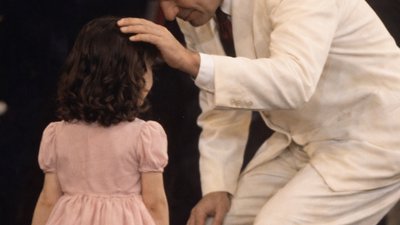
Carol Ruth Strubler was a nine-year-old child diagnosed with terminal acute leukemia who was publicly pronounced healed by William Branham during a June 24, 1954 revival meeting in Washington, D.C. Contemporary newspaper reports, Branham’s own recorded words, and later eyewitness testimony show that the healing claim failed, exposing a clear gap between revivalist assurances and verifiable outcomes.
William Branham
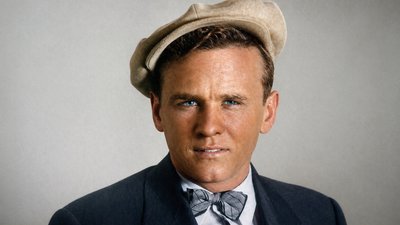
William Marrion Branham was a Jeffersonville Pentecostal minister and postwar healing-revival figure whose public ministry developed into the destructive religious movement known as the Message, a Branham-centered sect rooted in the Pentecostal network of Roy E. Davis and shaped by Branham's evolving prophetic claims, racial doctrines, and self-mythologized life story. His documented history conflicts sharply with later versions of his stage persona, including altered birth details, embellished childhood poverty, supernatural origin stories, exaggerated healings, and claims of buried prophecies, while his early connections to Prohibition-era crime, Davis' Ku Klux Klan activity, William D. Upshaw's staged healing, and the Voice of Healing revivals helped launch his fame. As Branham's healing credibility declined, he increasingly presented himself as the end-time Elijah, promoted doctrines tied to Christian Identity and Serpent's Seed theology, attacked civil rights, condemned interracial marriage, and eventually encouraged followers to view him as the return of the Son of Man. After his death in 1965, Branham's teachings continued through splinter groups and cultic communities, influencing figures such as Jim Jones and producing a legacy marked by authoritarian control, failed prophecy, racial extremism, abuse scandals, and enduring religious mythology.
Billy Graham: From Youth for Christ to National Power
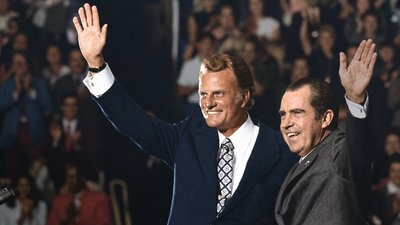
Billy Graham’s city-wide crusade model—built on interdenominational cooperation, centralized planning, and campaign-style evangelism—helped normalize a scalable parachurch ecosystem while also becoming a symbolic benchmark that adjacent revival networks (including figures like Branham and environments like Peoples Temple promotions) could invoke for legitimacy. Your excerpt then traces Graham’s visible proximity to Cold War political power through declassified references and public civic spectacle, and concludes by contrasting his public reputation on race with later-documented private antisemitic remarks and their fallout.
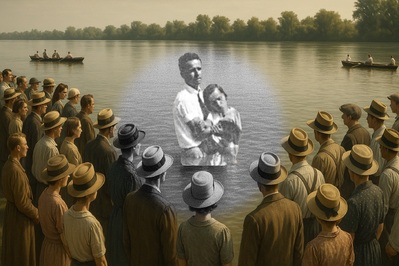
1933 Baptism: The Voice No One Heard
Dismantling William Branham’s famed 1933 Ohio River baptism story—showing that claims of a visible light, an audible commissioning voice, massive crowds, and nationwide newspaper coverage are contradicted by eyewitnesses, contemporary press records, and the documented history of his church and mentor, Roy E. Davis. It argues that the baptism narrative and the so-called 1933 prophecies were retrofitted into Branham’s biography as tools of authority, illustrating how myth-making and repetition, rather than verifiable evidence, became the foundation for prophetic belief in the Message movement.
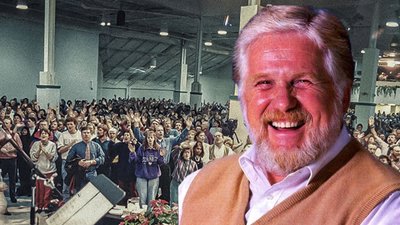
John Wimber
John Wimber was a major architect of late twentieth-century charismatic renewal through the Vineyard Movement, Fuller Seminary, and his collaboration with C. Peter Wagner, promoting "Power Evangelism," signs and wonders, healing, prophecy, spiritual warfare, and present-tense Kingdom theology in ways that helped bridge evangelicalism with Third Wave charismatic practice and later New Apostolic Reformation-adjacent networks; while Wimber framed his theology in an "already/not yet" model rather than explicit dominionism, his platforming of the Kansas City Prophets, connection to Paul Cain and Branham-influenced prophetic streams, engagement with Shepherding and restorationist circles, militarized "army" language, and proximity to the Toronto Blessing made his legacy both highly influential and deeply contested in debates over discernment, authority, prophecy, revival expectation, and the normalization of supernatural experience in modern charismatic Christianity.
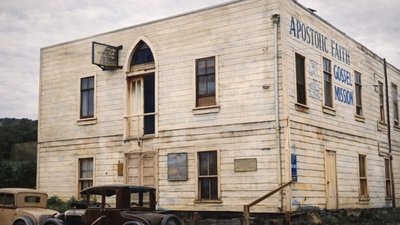
Azusa Street in Flames: Earthquake, Ecstasy, and the Birth of Pentecostal Chaos
In the aftermath of the 1906 San Francisco earthquake, the Azusa Street Revival in Los Angeles emerges as a racially charged, chaotic experiment in Holiness ecstasy that even contemporary newspapers depicted as fanatical, irreverent, and socially destabilizing. Drawing on reports from the Los Angeles Times, critics like Nettie Harwood, and Charles Fox Parham’s own disgust at interracial worship, the narrative traces how a confused mixture of Holiness practices, occult phenomena, and apocalyptic fervor produced “pilgrims” who carried this volatile spirituality into early Pentecostal denominations and later healing revivalists such as F. F. Bosworth.
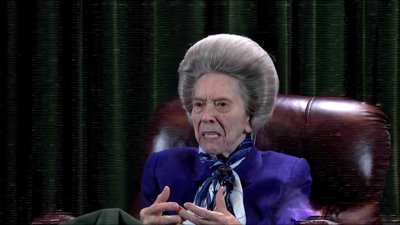
Berniece Hicks: Branham’s Sunday School “Messenger” and the Rise of Christ Gospel Church International
Berniece Hicks emerged from William Branham’s inner circle—teaching in his tabernacle, participating in early revival networks, and adopting the same “Message”-adjacent doctrines and source-material claims—before building Christ Gospel Church International into an isolationist movement centered on her own prophetic authority. Over time, her teachings expanded into militant Manifest Sons/“Joel’s Army” themes, increasingly extraordinary supernatural claims, and accusations from former members that drew public scrutiny, including a 1979 Louisville Courier-Journal investigation.
Clair Hutchins: Latter Rain Power Network to Cross and the Switchblade
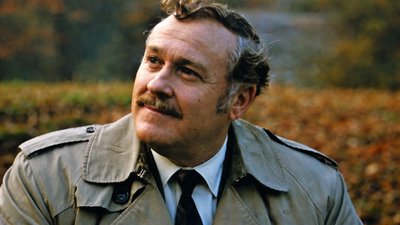
Clair Hutchins was not a peripheral revival figure but a formal insider within the Latter Rain movement, serving as musical director and assistant pastor at Joseph Mattsson-Boze’s Philadelphia Church in Chicago while operating across Youth for Christ, independent Pentecostal networks, and senior pastorates. His career illustrates how Latter Rain authority structures translated into durable institutions through music, centralized leadership, ordination networks, and later media evangelism via the World Film Crusade.
A. B. Simpson: From Million Dollar Revivals to Doomsday Prophecy
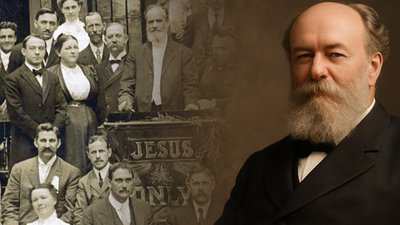
A. B. Simpson, founder of the Christian and Missionary Alliance, promoted Keswick-style “Higher Life” teachings, sensational revival practices, and apocalyptic fundraising that critics linked to manipulation and misuse of donated funds. His influence—directly and through figures like the Raders, Bosworth, and Frank Sandford—helped spread Second-Blessing theology and shaped later healing-revival movements, even as many of his doctrines and failed predictions drew significant theological and ethical criticism.
Deacons as Servants or Enforcers? Scripture Versus Branham’s Church Order
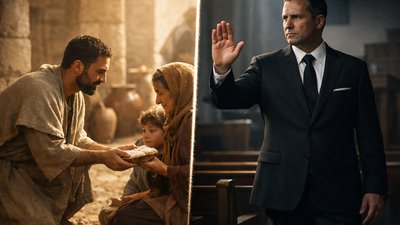
The New Testament presents deacons as servants entrusted with practical care and moral integrity, not as enforcers of authority or discipline. This study contrasts that biblical role with William Branham’s authoritarian redefinition of deacons as church “police,” exposing a fundamental shift from service-oriented ministry to control-based governance.
Latter Rain
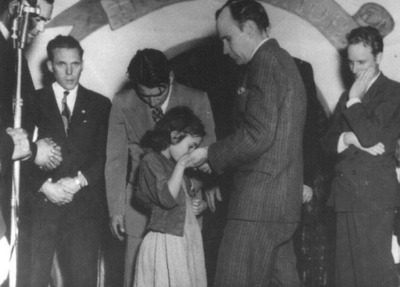
In the fall of 1947, William Branham connected with Gordon Lindsay. Through the campaign management of Gordon Lindsay, William Branham's revival meetings continued into Winnipeg, Manitoba, Canada. There he preached a series of meetings at the "Zion Church of the Original Gospel" to Canadians from near and far. Many people had followed him from the United States. Sick, afflicted, and crippled were being flown to the Zion church from up to 1500 miles away. Branham's followers were sleeping in their cars, and all vacant lots were over crowded. He had been invited by church leaders in larger Canadian cities, and was in very high demand. With the sudden excitement displayed for "faith healers" in the United States, healing campaigns were increasingly popular in Canada. The crowds followed Branham as he traveled from Winnipeg to Saskatoon, and finally to Vancouver, BC.
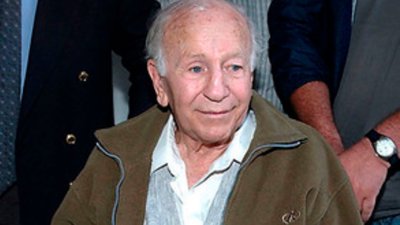
Paul Schafer Schneider
Paul Schafer Schneider was the founder of Colonia Dignidad, a German Pentecostal-Message splinter commune in Chile that outwardly resembled a conservative religious settlement but became a system of authoritarian control, child sexual abuse, torture, weapons production, sarin gas possession, right-wing intelligence activity, and international crime; recruited into William Branham's Message orbit during Branham's 1955 German meetings and later influenced by Branham's end-time prophecy, misogyny, Manifested Sons of God authority, and claims of exclusive truth, Schafer used Branham-like doctrines of spiritual elitism, female inferiority, obedience, and divine authority to dominate followers, while later Ewald Frank's Branhamite influence helped pull many former Colonia Dignidad members into another Message-based sectarian framework.

Voice of God Recordings
Voice of God Recordings, Inc. is the central publishing and distribution organization for William Branham's sermons, operating from Jeffersonville, Indiana under Joseph Branham while presenting Branham's recorded voice as the authoritative "Voice of God" for followers of the Message movement. Although Branham denounced organized religion, VOGR has become a highly structured religious corporation controlling sermon archives, translations, intellectual property, global distribution, and devotional practices such as "press play," in which listening to Branham's tapes is treated as a direct encounter with divine revelation. Its history includes major financial and legal controversies, including the Tohono O'odham racketeering case, the unexplained $100 million asset surge and related Jehovah Jireh Foundation transfer, international scrutiny and bans over alleged extremist or manipulative materials, and a dynastic governance model that places Branham family control at the center of a movement built around anti-organizational rhetoric and prophetic authority.
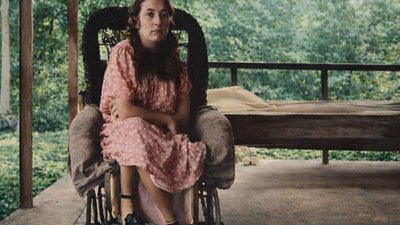
Edith Wright: How a Lifelong Disability Became a Prophetic Narrative
Edith Wright’s case provides a clear, traceable example of a healing claim that can be followed from initial prayer through decades of reinterpretation. Despite repeated prayers, prophetic declarations, and theological reframing, Edith remained disabled until her death, revealing how failed healings were absorbed into narrative systems designed to preserve spiritual authority.
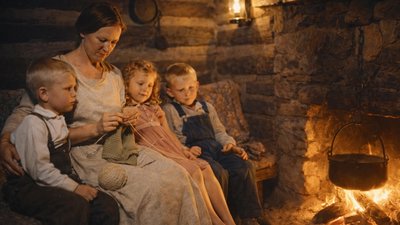
Ella Branham: From Texas to Indiana
This study reconstructs Ella Branham’s life using U.S. Census records and vital documents, establishing a clear timeline that conflicts with later revival-era narratives. The evidence shows that the widely repeated log cabin story reflects retrospective storytelling rather than the documented household realities of the Branham family.
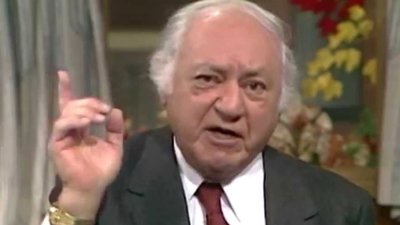
Demos Shakarian
Demos Shakarian was an Armenian American businessman, founder of the Full Gospel Business Men's Fellowship International, and a major behind-the-scenes organizer, funder, and network builder within the mid-twentieth-century healing revival, helping support figures such as William Branham, Oral Roberts, Tommy Hicks, John Osteen, and later Paul Crouch's TBN. Connected by family to the Kardashians and by heritage to Azusa Street revival circles, Shakarian stood at the intersection of Armenian Pentecostal history, the Voice of Healing movement, and the expanding charismatic media empire. His legacy is also marked by controversy, including accusations in the late 1980s that he mishandled FGBMFI funds for personal legal, medical, insurance, travel, and entertainment expenses before being placed on administrative leave and later reinstated.
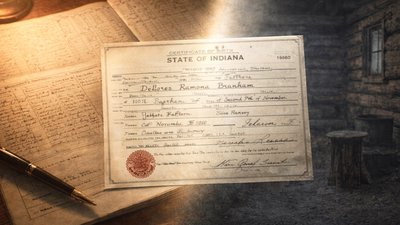
Deloris Branham: The Sister Who Breaks the Kentucky Childhood Myth
Deloris Branham Filer’s documented birth, residence, and adult life in Indiana directly contradict William Branham’s repeated claims of a unified Kentucky mountain childhood shared by all his siblings. Census records, vital certificates, and marriage documents establish a fixed historical timeline that exposes the Kentucky cabin narrative as a constructed stage persona rather than a lived reality.
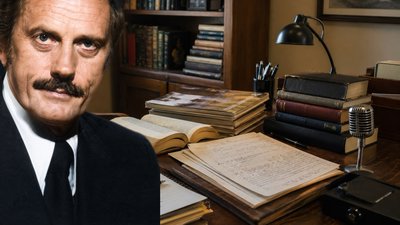
The Freeman Files
A large research collection containing more than one thousand files from the office of Hobart Freeman, founder of the Faith Assembly sect. The archive includes handwritten notes, sermon and teaching outlines, radio broadcast outlines, Bible study materials, seminary coursework and homework, research notes, correspondence-style materials, newspaper and magazine clippings, and other documents connected to Freeman’s ministry, teachings, and organizational activity.
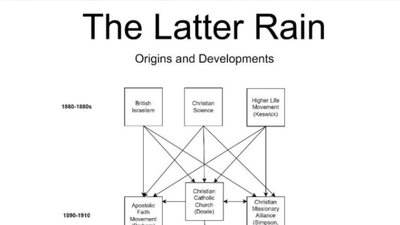
The Latter Rain Origins and Developments
The Latter Rain: Origins and Developments presents a simplified historical map of the religious movements, ministries, and organizations connected to or influenced by the Latter Rain Movement. It traces earlier roots through British Israelism, Christian Science, the Higher Life/Keswick tradition, John Alexander Dowie, Charles Parham, and the Christian and Missionary Alliance, then shows their influence on Pentecostalism and major Pentecostal denominations. From there, the chart places the Latter Rain Movement alongside the postwar Healing Revival and maps its later connections to Full Gospel Business Men’s Fellowship, William Branham’s Message movement, Voice of Healing, Word of Faith, prosperity teaching, the Shepherding Movement, Christian Identity groups, People’s Temple, Calvary Chapel, Vineyard, Bethel, and other charismatic, restorationist, and sectarian movements. The chart is not presented as a complete history, but as an overview of overlapping networks and lines of influence surrounding Latter Rain theology, Pentecostal revivalism, healing evangelism, and later apostolic-prophetic movements.
No records found.