
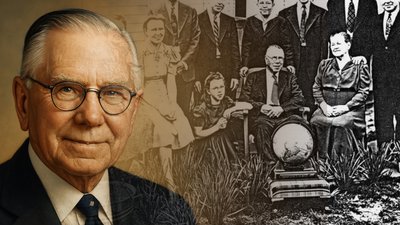
A. J. Tomlinson: Architect of a Theocratic Pentecostal Empire
Here is a clear, tight two-sentence summary of the entire passage: A. J. Tomlinson, a former Quaker turned Pentecostal leader, transformed the Church of God (Cleveland, TN) into a major Pentecostal denomination, but his authoritarian governance and financial controversies led to his 1923 removal and a lasting schism that reshaped the movement. The fallout opened the door for white supremacist influence through figures like Roy E. Davis, while Tomlinson’s son Homer later extended his father’s theocratic ambitions into politics—founding the Theocratic Party, declaring himself “King of the World,” and blending Pentecostalism with British Israelism and dominionist aspirations.
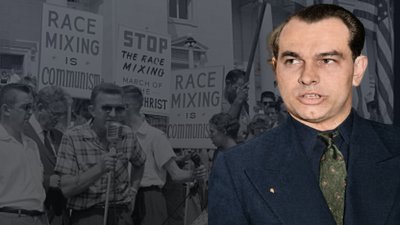
Wesley A. Swift
Wesley A. Swift was a central figure in the development of racist and antisemitic Christian Identity theology, drawing from British Israelism, Philip E. J. Monson's two-seed teaching, Gerald Winrod's far-right religious propaganda, and Anglo-Saxon Federation networks to promote a militant racial theology that identified white Anglo-Saxons as God's chosen people and nonwhite peoples and Jews as spiritually corrupted enemies; through his ties to Angelus Temple, LeRoy Kopp, Gerald L. K. Smith, Klan revival efforts in California, and later extremist groups such as Aryan Nations, Swift became a major bridge between British Israelism, Christian Identity, segregationist politics, white supremacy, and the Serpent's Seed doctrine later popularized by William Branham within Latter Rain and healing revival circles.
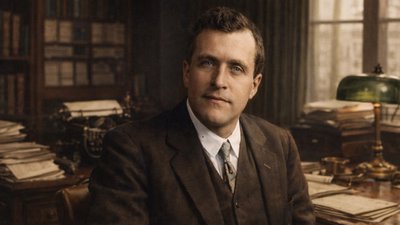
Caleb A. Ridley: The Klan Chaplain Linked to William Branham and Roy E. Davis
Caleb A. Ridley, an Imperial Kludd of the 1915 Ku Klux Klan, played a significant role in early twentieth-century religious and political networks that intersected with Roy E. Davis and William Branham. His participation in revivals, prohibition activism, and Klan organizing sheds new light on the racial and ideological context surrounding the formative years of Branham’s ministry.
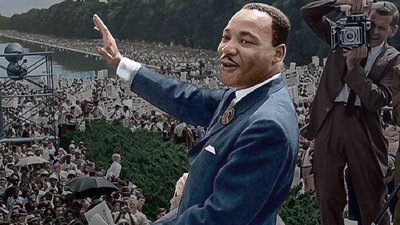
Martin Luther King
Martin Luther King Jr. was an American Christian minister and activist who became the most visible spokesperson and leader in the Civil Rights Movement from 1955 until his assassination in 1968. As the outspoken leader of the movement, King was a public enemy of white supremacy groups such as the Ku Klux Klan. The Klan began spreading propaganda as character assassination, during which time some of the themes made its way into William Branham's sermons.
William D. Upshaw
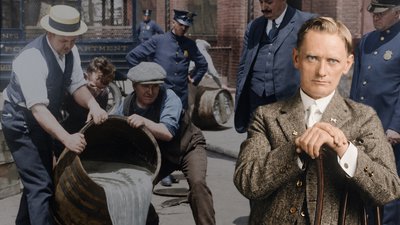
William D. Upshaw was a former congressman, prohibitionist, Southern Baptist evangelist, Klan defender, and later healing-revival promoter whose career connected temperance politics, fundamentalist revivalism, fraternal secrecy, white supremacist networks, and Pentecostal healing culture; from his public defense of the Ku Klux Klan and association with Roy E. Davis to his later claims of healing under Wilbur Ogilvie, William Branham, and O. L. Jaggers, Upshaw became a symbolic bridge between early twentieth-century Protestant political activism, Klan-aligned religion, anti-liquor crusading, revival celebrity, and the staged miracle culture that helped legitimize Branham's postwar healing campaigns.
Roy E. Davis
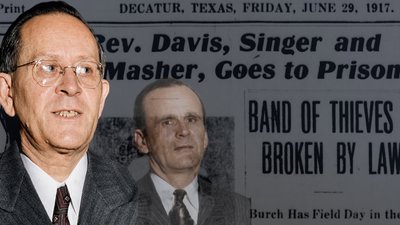
Rev. Roy E. Davis Sr. was a Baptist and Pentecostal preacher, founder of the Pentecostal Baptist Church of God, mentor and ordaining pastor of William Branham, and a lifelong organizer in white supremacist movements, serving under William Joseph Simmons in the reborn Ku Klux Klan, helping form the Knights of the Flaming Sword, and later becoming a nationally recognized leader of the Original Knights of the Ku Klux Klan; his career connected criminal scandal, religious fraud, gospel music, fundamentalist revivalism, Pentecostal sect-building, orphanage fundraising schemes, Klan reorganization, and Branham's early ministry, making Davis one of the clearest links between Branham's origins, Pentecostal restorationism, Christian nationalism, and organized white supremacy.
Lily Galloway
E. Howard Cadle: Revivalist, Power Broker, and the Church That Became Klan Headquarters
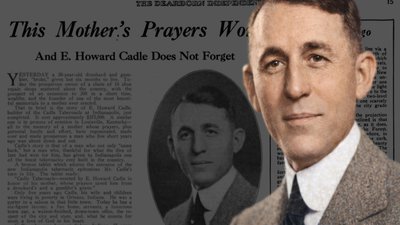
E. Howard Cadle rose from gambling and saloon culture to national religious prominence through wealth, revivalism, and the construction of the massive Cadle Tabernacle in Indianapolis. This study traces how that building became a center for political power, Ku Klux Klan activity, and later revival mythology, revealing how religious infrastructure can be repurposed to legitimize ideology, authority, and collective memory.
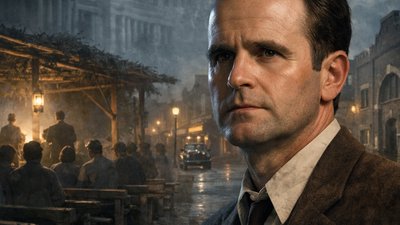
Dan S. Davis: How the Davis Brothers, the Klan, and Pentecostal Revival Shaped William Branham
William Branham’s early ministry did not emerge in isolation but developed within a tightly connected network of Pentecostal churches, revival infrastructure, and influential figures linked to both organized religion and extremist movements. By tracing the roles of Dan S. Davis, Roy E. Davis, and Caleb Ridley, this study documents how institutional control, shared worship spaces, and overlapping political-religious networks created the environment that produced Branham.
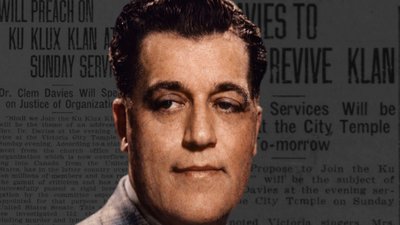
Clem Davies: The White Supremacist Preacher Behind Revivalist Networks
Clem Davies was a transnational revivalist figure whose ministry fused white supremacy, British-Israelism, and apocalyptic prophecy with mass revival techniques decades before the rise of postwar healing movements. His networks, teachings, and organizational methods formed an ideological and structural pipeline that carried racialized theology into later Pentecostal, Latter Rain, and charismatic revival contexts.
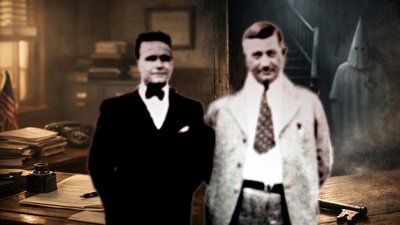
Charles Brumbach: William Branham’s Father-in-Law and the Ku Klux Klan
Charles Brumbach, William Branham’s father-in-law, occupied a position of local political influence while maintaining documented access to Ku Klux Klan infrastructure in Jeffersonville during the 1920s. A comparison of contemporary records with William Branham’s repeated personal accounts demonstrates how elements of the Brumbach household were altered or omitted to sustain a narrative of moral stability and spiritual legitimacy.
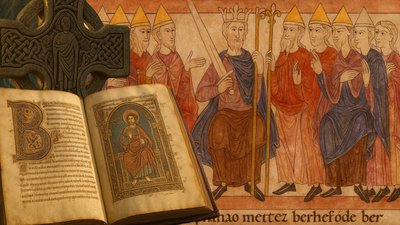
Anglo-Saxonism and Its Influence on Early Pentecostal and Latter Rain Movements
Anglo-Saxonism, rooted in British Israelism and later adapted into American white supremacist theology, influenced key figures who helped shape both the Christian Identity movement and segments of mid-century Pentecostalism. Through leaders such as Wesley Swift, Gordon Lindsay, and George Hawtin, elements of this racialized ideology permeated revival networks, leaving a lasting imprint on parts of the Latter Rain and healing
Supreme Kingdom
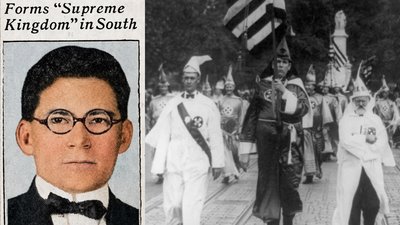
The Supreme Kingdom was a short-lived white supremacist religious organization founded by former Ku Klux Klan leader Edward Young Clarke after his fall from power, blending fundamentalist anti-evolution activism, anti-atheist politics, school purges, fraternal-style secrecy, and religious nationalism into a new vehicle for Klan-adjacent influence; through figures such as John Roach Straton, Caleb A. Ridley, and Roy E. Davis, it connected Baptist fundamentalism, Klan leadership, anti-modernist crusading, financial exploitation, and white supremacy networks that overlapped with the religious world surrounding Davis and, later, William Branham.
Super Race
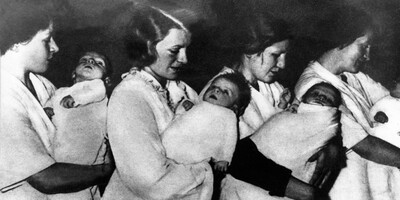
Among white supremacy groups, the theme of a "mother race", "master race" or "super race" is the foundation for all ideology. Hate groups built upon this foundation believe that their color of skin or that their attributes distinguishing them from other groups of people make them superior to other specific races, and sometimes all races. In Nazi Germany, this concept known as "The Master Race" (Herrenrasse, "master people") is attributed to Nazi theorist Alfred Rosenberg who believed that the Nordic race was descended from Proto-Aryans, which he believed had prehistorically dwelt on the North German Plain and ultimately originated on the lost continent of Atlantis. Members of this alleged master race were referred to as Herrenmenschen ("master humans").
Ussher-Davis Children's Orphanage
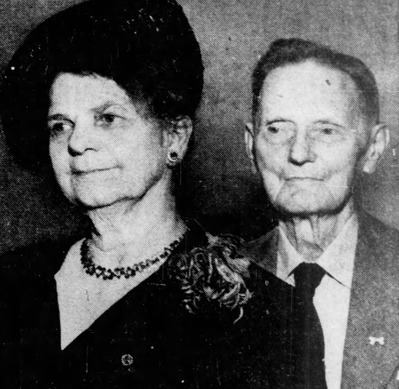
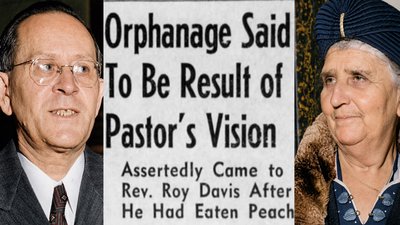
The Ussher-Davis Children's Orphanage was a San Bernardino fundraising scheme at the center of a 1944 criminal investigation involving Roy E. Davis, William D. Upshaw, and Lily Galloway, in which Davis allegedly posed as a federal agent to solicit wealthy donors while Upshaw and Galloway reinforced the deception; with Upshaw heading the orphanage's "department of Americanization," a term closely associated with Klan ideology, the operation connected temperance activism, orphanage charity language, financial manipulation, and white supremacist organizing, foreshadowing Davis's later move to Dallas and his rise as a leader in the Original Knights of the Ku Klux Klan.
John R. Rice
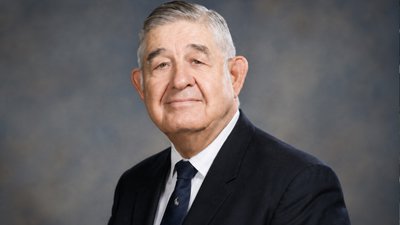
Rev. John Richard Rice was a Texas Baptist evangelist, founder of The Sword of the Lord, and a major fundamentalist influence whose anti-Catholic, patriarchal, anti-modernist, and white-supremacist religious framework helped shape the later Religious Right and overlapped strongly with doctrines promoted by William Branham. Raised in a Ku Klux Klan-connected family and rooted in the same Texas fundamentalist world that produced figures such as Roy E. Davis, Rice advanced teachings against women preachers, women in authority, and women cutting their hair, especially through Bobbed Hair, Bossy Wives, and Women Preachers, themes that later became central to Branham's sermons and cultic identity markers. Rice's role in post-Scopes fundamentalism, his connections to nationally recognized ministers, and his claims about Fascism and Mussolini show how many ideas Branham later presented as prophetic revelation were already circulating in radical fundamentalist networks before Branham's rise in the healing revivals.
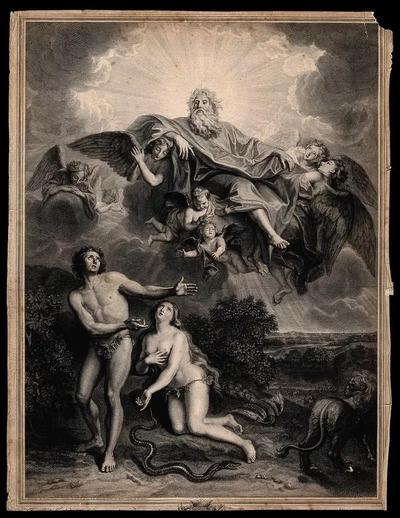
Serpent's Seed
The Serpent's Seed Doctrine was William Branham's rebranding of the Christian Identity Doctrine[1] of Wesley A. Swift, which was popular among white supremacy groups in the 1950s and 1960s. Serpent's Seed (Christian Identity) is the extra-biblical notion that the Original Sin in the Garden of Eden was a sexual union between Eve and the Serpent. According to Swift's theology, Lucifer (Satan) impregnated the Biblical Eve to produce Cain, from which people with black skin descended. This would mean, according to Branham's (and Swift's) doctrine, that people with black skin are the descendants of Satan.
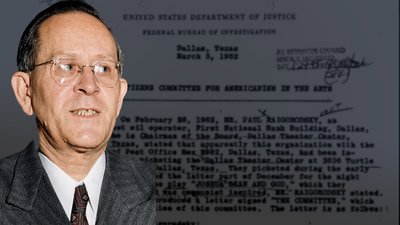
Original Knights Of The Ku Klux Klan
Before the Third Wave of the Ku Klux Klan, Roy E. Davis and William D. Upshaw began working together to gather funding and support to create a new sect of the Ku Klux Klan. Davis posed as a Federal Agent in the Los Angeles / San Bernardino area claiming to be gathering interest for a children's orphanage, and Upshaw supported his claim. In the legal and criminal trial that followed, Davis was exonerated and filed suits against Los Angeles and San Bernardino officials. Having been pushed out of the 1915 Klan under the leadership of William Joseph Simmons, Davis and Upshaw were not aligned with the direction the organization had taken. They wanted to return to the "original".
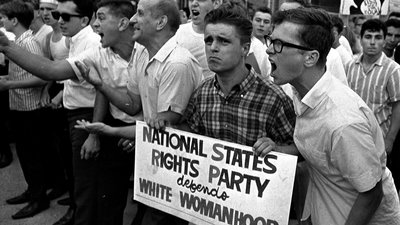
National States' Rights Party
The National States Rights Party was a white supremacist political organization formed in 1958 from a merger of segregationist, antisemitic, Klan-connected, and States' Rights factions, with early roots and national headquarters in Jeffersonville, Indiana, before moving to Birmingham in 1960; its presence in Branham's hometown during the same period William Branham faced federal tax scrutiny places Jeffersonville within a wider network of mid-century far-right organizing, segregationist politics, Christian antisemitism, and white supremacist activism that overlapped geographically and ideologically with the religious world surrounding Branham's Message movement.
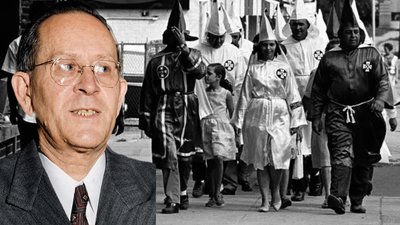
Ku Klux Klan
The Ku Klux Klan is an American white supremacist hate group and domestic terroristic organization. The group was organized by William Joseph Simmons as a fraternal order based upon fundamentalist Christian theology, anti-Semitic and anti-Catholic views, and a firm stance against interracial marriage. Roy E. Davis was an official spokesperson for the group during his time in Georgia. William D. Upshaw defended both the group and Simmons in Washington during which time it was learned that Upshaw as a member.
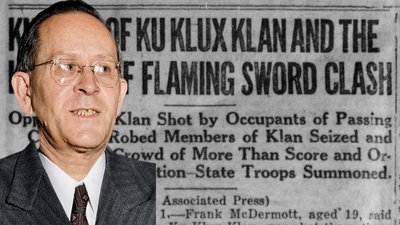
Knights Of The Flaming Sword
The Knights of the Flaming Sword was a short-lived white supremacist fraternal order founded in 1924 by former Ku Klux Klan leader William Joseph Simmons after his fall from power, using Genesis imagery and militant Protestant symbolism to rebuild influence outside the main Klan while Roy E. Davis served as a major recruiter, royal ambassador, and public defender of Simmons; the organization rapidly gained hundreds of thousands of members, but soon collapsed into internal conflict, financial accusations, armed tensions, and Davis's public break with Simmons, revealing how Klan splinter groups blended biblical language, fraternal secrecy, political ambition, racial ideology, and religious authority into unstable movements that overlapped with the networks later surrounding William Branham.
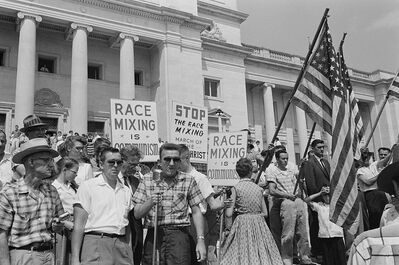
Interracial Marriage
William Branham preached strongly against interracial marriage. His close associates, such as Roy E. Davis and William D. Upshaw, were ranking members of or affiliated with the Ku Klux Klan and other white supremacy groups. Though it is in conflict with key passages from the Christian Bible, this doctrine would have been supported by many of his peers.
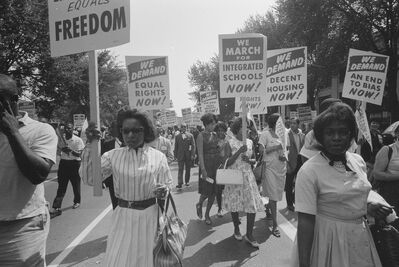
Racial Segregation Doctrine
After slavery ended in the United States, many public locations were racially segregated. People with black skin were separated from people with white skin. Especially in the South, public bathrooms, restrooms, public schools, and more either had a "black section" and a "white section" or completely separate facilities. In most cases reported, the facilities for people with black skin were inferior to those for people with white skin.

Understanding Racism of William Branham's Era
White supremacy during William Branham's lifetime was not limited to open hatred of Black people but operated as a broad religious, political, and social ideology that ranked races, ethnicities, Catholics, Jews, immigrants, and other targeted groups according to a supposed vision of "true" Christian America, often spreading through churches, revivals, fraternal orders, and recorded sermons rather than through street violence alone; within that framework, Branham's Serpent's Seed and "hybreeding" doctrines repackaged Christian Identity ideas from figures such as Wesley A. Swift into a more coded northern form, using biblical language, anti-integration rhetoric, bloodline purity, and warnings against racial mixing to transmit white supremacist assumptions while allowing followers to deny that the teaching was the same extremism later associated with groups such as Aryan Nations, Klan-connected factions, and other militant racist movements.
No records found.