
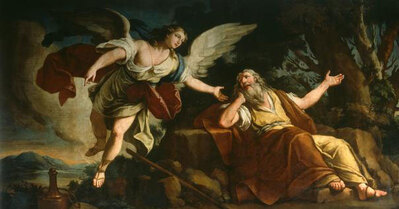
The Elijah Prophet Myth: William Branham, Restoration Theology, and Control
William Branham’s claim to embody the spirit of Elijah developed gradually through restorationist theology, culminating in an end-time messenger doctrine that redefined biblical authority and spiritual legitimacy. Rooted in ideas drawn from British Israelism and echoed in Christian Identity thought, this framework produced profound theological errors and fostered authoritarian control, gender policing, and suppression of dissent.
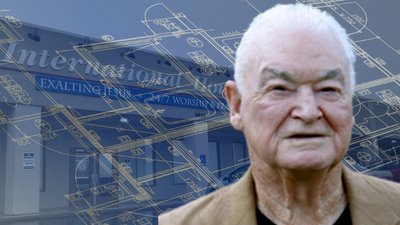
Bob Jones and the Kansas City Prophets: The Blueprint Behind IHOPKC
Bob Jones rose within the Kansas City Prophets and helped shape IHOPKC by promoting dramatic testimony, “technicolor” visions, angel-visit narratives, and end-times claims that echoed earlier Latter Rain patterns associated with William Branham. The through-line is that repeated prophetic failures and escalating dominion-focused timelines were treated as legitimizing “revelation,” creating a template for modern charismatic prophetic authority that continued to influence the NAR and related movements.
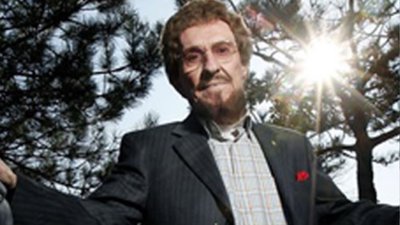
T. L. Osborn
Tommy Lee "T. L." Osborn was a Pentecostal evangelist, Voice of Healing editor, and Latter Rain revival figure whose ministry and business associations connected him closely to William Branham, Kenneth Hagin, Joseph Branham, and Billy Paul Branham. Osborn helped promote the healing revival network through the Voice of Healing publication and later joined Branhamite and Word of Faith figures in short-lived business entities such as Ordinary People National and Ordinary People International. His eulogy for Branham, in which he described Branham as "God in human flesh" and a foreordained "Jesus-man" prophet for the closing generation, together with his later involvement with Eldon Purvis and the Fort Lauderdale Five in the Holy Spirit Teaching Mission, places Osborn at an important intersection between Branham's Message, Latter Rain theology, Word of Faith networks, and the rise of the Shepherding Movement.
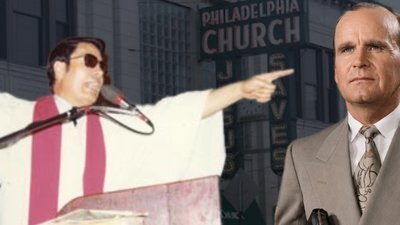
Jim Jones
Jim Jones was the founder and leader of Peoples Temple, a religious-political movement that began with promises of racial equality, social justice, communal care, and protection for the vulnerable, but gradually became an authoritarian system centered on Jones's control, paranoia, loyalty demands, isolation, abuse, and apocalyptic fear, ultimately ending in the 1978 Jonestown tragedy, where more than 900 people died in one of the clearest modern examples of spiritual manipulation, coercive leadership, and catastrophic communal collapse.

The King's Sword
In November of 1965, after convincing his cult of personality that he was the return of Elijah the Prophet from the Old Testament, William Branham openly declared that he was the promised return of Jesus Christ, in the form of the "Son of Man". As part of his Manifested Sons of God doctrine, Branham claimed that the Son of Man was to reveal himself through Elijah the Prophet and that the "Elijah Son of man" (himself) was God.
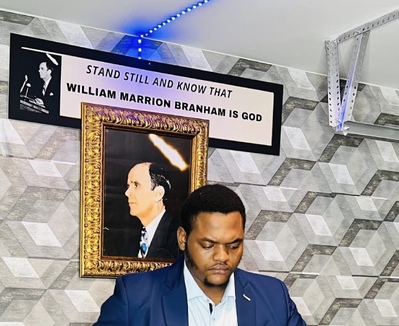
The Branham Deity
In later versions of William Branham's stage persona, after convincing his cult following that he was the return of the biblical prophet Elijah, Branham began claiming to be the fulfillment of his Manifested Son of God doctrine. According to this theology, God was "manifesting" Himself in certain individuals of the last day, especially in the "prophet" who was "Elijah". Branham's doctrinal teaching was such that before the End of Days, this "Elijah prophet" would become a God to the people of earth.
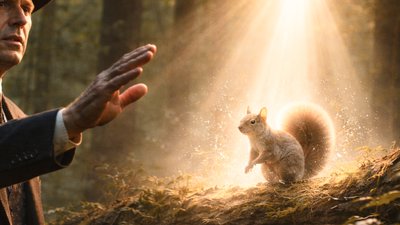
Speaking Creation into Existence: How Branham’s Squirrels Shaped Modern Faith Teaching
William Branham repeatedly claimed that he spoke squirrels into existence as literal acts of creation, presenting these stories as divine confirmation of a new phase of spiritual authority. These claims laid an early theological foundation for later Word of Faith teaching by reframing spoken words as creative forces rather than petitions submitted to God’s will.

Audio Letter to Lee Vayle: How William Branham Scripted His Own Myth
The 1964 audio letter to Lee Vayle shows that William Branham did not simply preach what he believed God revealed, but carefully coached an inner circle on how to construct his image and doctrines—using numerology, redefined titles like “Son of Man,” and a curated life-story to elevate himself as God’s unique end-time prophet. At the same time, he denied the sufficiency of Scripture, centralized revelation in his own prophetic office, controlled what followers were allowed to hear, and framed all criticism as proof of his authenticity, revealing a deliberately engineered cult of personality rather than a spontaneous move of God.
New Apostolic Reformation
The New Apostolic Reformation (NAR) is a religious sect seeking to establish themselves as a new breed of Christianity while labeling all other branches as apostate. As a result, a majority of churches in the sect consider themselves to be "independent" or "non-denominational". It differs from the broader Protestant tradition in its view on the nature of church leadership, specifically the Latter Rain doctrine of Five Fold Ministry, which is based upon a non-traditional interpretation of Ephesians 4:11. Leaders in the NAR empower themselves by advancing the offices of "prophet" and "apostle" of the Five Fold Ministry doctrine, and central figures of religious cults in the NAR sect allege that they, themselves, fill those offices. The movement is referred to by some as the "Christian Taliban".
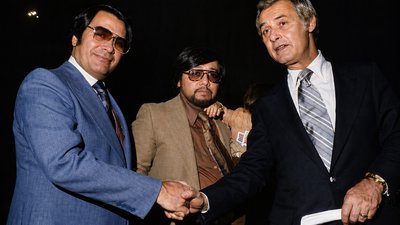
Joel's Army
The postwar healing revival and Latter Rain movement emerged from Cold War fear, anti-communist prophecy, divine-healing spectacle, and restorationist claims that God was raising new apostles, prophets, and spiritually elite leaders whose spoken words carried scriptural authority, and within that environment William Branham's Manifested Sons of God theology taught that the believer, and especially the end-time prophet, could become a living manifestation of God with power to create, heal, judge, and supersede previous biblical revelation; Jim Jones carried this framework into Peoples Temple, using Branham-like language of the Spoken Word, Joel's Army, divine manifestation, prophetic authority, and "ye are gods" theology to present himself as the highest manifestation of God, replace Scripture with his own voice, demand absolute loyalty, and ultimately frame the Jonestown deaths as the final testimony of a rejected manifested son and his followers.
Prophet-God
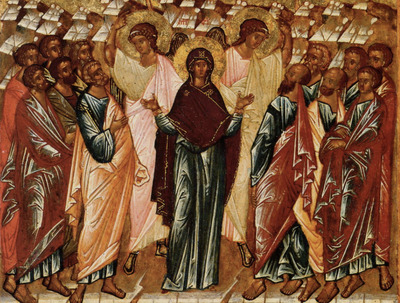
According to William Branham's Latter Rain "Manifest Sons of God" theology, God was allegedly restoring the offices of Apostles, Prophets, Evangelists, Pastors, and Teachers in the current and last "age". This notion was common among the Latter Rain movement but in the Manifest Sons of God extremist sect of Latter Rain, the office of "Prophet" was empowered as a "son of god". In Branham's specific version of Manifest Sons of God, there was also a "God-Prophet", which he himself claimed to be. Not a man but God, God made flesh.
How William Branham and Latter Rain Rewrote the Five-Fold Ministry
This work examines the biblical foundation of the so-called five-fold ministry and traces how restorationist movements transformed ministry gifts into hierarchical authority structures. By following the doctrine from Ephesians 4 through Latter Rain theology, William Branham, and modern charismatic networks, it demonstrates how authoritarian control and spiritual abuse emerged as consistent fruit.
Gordon Lindsay
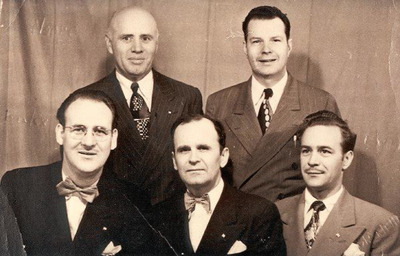
James Gordon Lindsay was William Branham's campaign manager from 1947 until the mid-1950s. Branham and Lindsay published The Voice of Healing magazine and Lindsay was a key figure in the Voice of Healing Revival that merged with the Latter Rain movement. In 1953, Lindsay issued an ultimatum for Branham over doctrinal positions in white supremacy, which led to a heated battle between Joseph Mattsson-Boze's Herald of Faith and Voice of Healing.[1]
Peoples Temple: The Church Split That Changed History
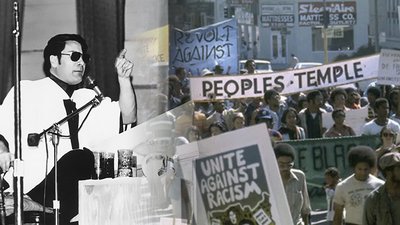
Laurel Street Tabernacle became a pivotal Indianapolis bridge between classical Assemblies of God Pentecostalism, the postwar healing revival, the Latter Rain controversy, William Branham's "Message" network, and the early formation of Peoples Temple, as the small but influential church promoted divine healing, hosted revival figures such as Roy Wead and Lester Sumrall, gave Jim Jones a platform after he moved from Methodism into Full Gospel circles, and then became the setting for a split in which Jones gathered followers, accepted Independent Assemblies of God ordination through Joseph Mattsson-Boze, and launched Peoples Temple into the Branham-aligned healing revival world that culminated in the 1956 Cadle Tabernacle crusade with Branham.
Manifest Sons Of God
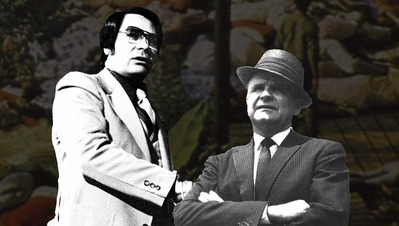
William Branham was one of the main catalysts for, promoted by, and strongly affiliated with key individuals in the Latter Rain sect of Pentecostalism. This strange sect gave birth to various sub-sects, one of which was the “Manifest Sons of God” sect, or cult, of Pentecostalism. Like its parent sect of Latter Rain, the Manifest Sons of God sect was based upon doctrines that William Branham himself used as themes in his sermons.[1] Within the Manifest Sons of God sect, there were two major groups: The Walk led by John Robert Stevens and the Body of Christ.
Latter Rain Message
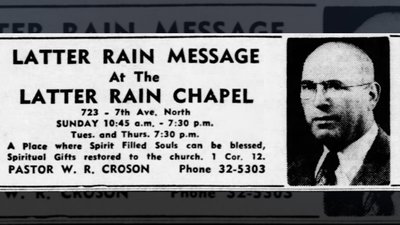
As the Latter Rain sect of Pentecostalism started to spread, and the Latter Rain Revival began to form, the differences in theology from mainstream Pentecostalism and mainstream Christianity became known as the "Latter Rain Message". Promoters of the Latter Rain Message also promoted William Branham's campaigns. The group based their theology upon Branham's doctrine, and Branham's revivals in Canada were viewed as the catalyst that sparked the group's creation. During this time, William Branham referred to his own ministry as "the Message". This term was used and promoted by Joseph Mattsson-Boze, who was critical to the spreading of the New Order of Latter Rain into the United States. Also at this time, Rev. Jim Jones and Peoples Temple referred to their sect's beliefs as "the Message". Jones was ordained as a minister by Joseph Mattsson-Boze, and both Branham and Boze launched Jones' career as a "faith healer" at the Cadle Tabernacle in Indianapolis.
Latter Rain
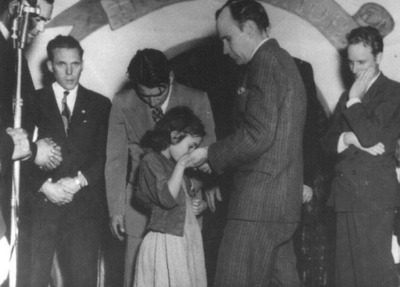
In the fall of 1947, William Branham connected with Gordon Lindsay. Through the campaign management of Gordon Lindsay, William Branham's revival meetings continued into Winnipeg, Manitoba, Canada. There he preached a series of meetings at the "Zion Church of the Original Gospel" to Canadians from near and far. Many people had followed him from the United States. Sick, afflicted, and crippled were being flown to the Zion church from up to 1500 miles away. Branham's followers were sleeping in their cars, and all vacant lots were over crowded. He had been invited by church leaders in larger Canadian cities, and was in very high demand. With the sudden excitement displayed for "faith healers" in the United States, healing campaigns were increasingly popular in Canada. The crowds followed Branham as he traveled from Winnipeg to Saskatoon, and finally to Vancouver, BC.
No records found.