
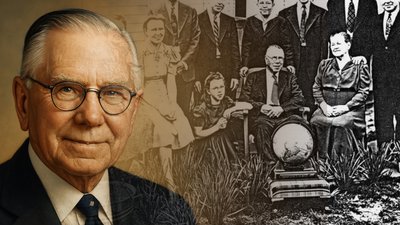
A. J. Tomlinson: Architect of a Theocratic Pentecostal Empire
Here is a clear, tight two-sentence summary of the entire passage: A. J. Tomlinson, a former Quaker turned Pentecostal leader, transformed the Church of God (Cleveland, TN) into a major Pentecostal denomination, but his authoritarian governance and financial controversies led to his 1923 removal and a lasting schism that reshaped the movement. The fallout opened the door for white supremacist influence through figures like Roy E. Davis, while Tomlinson’s son Homer later extended his father’s theocratic ambitions into politics—founding the Theocratic Party, declaring himself “King of the World,” and blending Pentecostalism with British Israelism and dominionist aspirations.
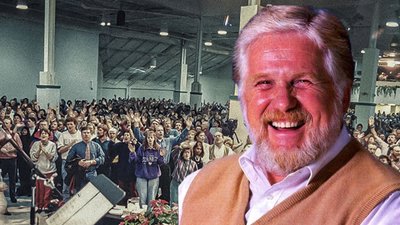
John Wimber
John Wimber was a major architect of late twentieth-century charismatic renewal through the Vineyard Movement, Fuller Seminary, and his collaboration with C. Peter Wagner, promoting "Power Evangelism," signs and wonders, healing, prophecy, spiritual warfare, and present-tense Kingdom theology in ways that helped bridge evangelicalism with Third Wave charismatic practice and later New Apostolic Reformation-adjacent networks; while Wimber framed his theology in an "already/not yet" model rather than explicit dominionism, his platforming of the Kansas City Prophets, connection to Paul Cain and Branham-influenced prophetic streams, engagement with Shepherding and restorationist circles, militarized "army" language, and proximity to the Toronto Blessing made his legacy both highly influential and deeply contested in debates over discernment, authority, prophecy, revival expectation, and the normalization of supernatural experience in modern charismatic Christianity.

Axl Rose and the Latter Rain: Childhood Trauma in a Postwar Pentecostal Subculture
Axl Rose’s formative years in an Indiana Pentecostal church shaped by the Latter Rain movement and William Branham’s “Message” cult exposed him to severe physical, emotional, and sexual abuse under a rigid, authoritarian form of religiosity. That traumatic religious environment left enduring psychological scars that fueled his rejection of organized religion and profoundly influenced his artistic identity, themes, and lyrics.
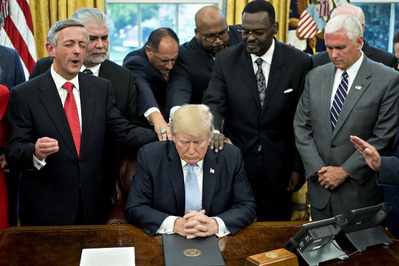
National Association of Evangelicals
The National Association of Evangelicals (NAE) was formed in April 1942.[1] A group of 150 men and women met in St. Louis to establish an organization initially named "National Association of Evangelicals for United Action" after a national conference called "United Action Among Evangelicals." That "action" was to preserve Christian Fundamentalism in the United States and oppose the more liberal views of the Federal Council of Churches. The group's first vote was a move against affiliation with the Federal Council of Churches and the American Council of Christian Churches.[2]
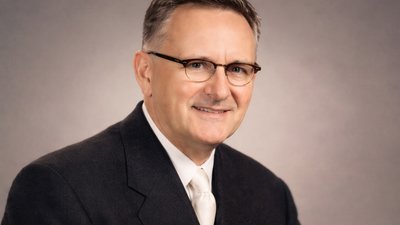
David du Plessis and the Hidden Architecture of Charismatic Power
David du Plessis, widely known as “Mr. Pentecost,” played a decisive role in transforming early Pentecostal revivalism into a trans-denominational charismatic movement built on relational authority, networks, and institutional access. Through documented collaborations with William Branham, Gordon Lindsay, healing revival leaders, ecumenical councils, and political mobilizations, his ministry helped establish the structural and cultural foundations later formalized within the New Apostolic Reformation.
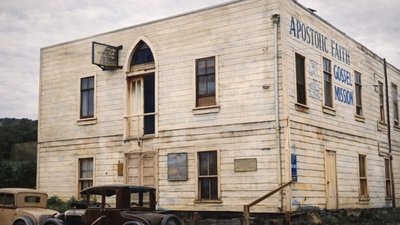
Azusa Street in Flames: Earthquake, Ecstasy, and the Birth of Pentecostal Chaos
In the aftermath of the 1906 San Francisco earthquake, the Azusa Street Revival in Los Angeles emerges as a racially charged, chaotic experiment in Holiness ecstasy that even contemporary newspapers depicted as fanatical, irreverent, and socially destabilizing. Drawing on reports from the Los Angeles Times, critics like Nettie Harwood, and Charles Fox Parham’s own disgust at interracial worship, the narrative traces how a confused mixture of Holiness practices, occult phenomena, and apocalyptic fervor produced “pilgrims” who carried this volatile spirituality into early Pentecostal denominations and later healing revivalists such as F. F. Bosworth.
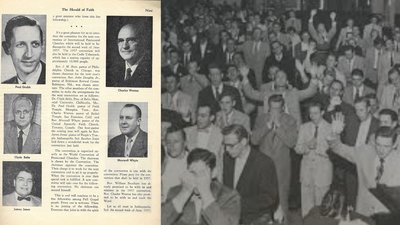
World Convention of Pentecostal Churches
The 1957 World Convention of Pentecostal Churches at Cadle Tabernacle in Indianapolis shows Jim Jones and Peoples Temple operating at the center of William Branham's Message and Latter Rain healing-revival network, hosting a major multi-day convention that featured Branham twice daily alongside figures such as T. L. Osborn, Tommy Hicks, and F. F. Bosworth; by presenting Peoples Temple as the morning-service host and linking Jones's ministry to thousands of laypeople, hundreds of ministers, and the Cadle Tabernacle revival platform, the event demonstrates that Jones was not a peripheral admirer but an active organizer and recognized minister within the Branham-aligned Full Gospel revival world before his later break from Branham.

Baseball: Branham’s Baseball Claims vs Early Church History
William Branham’s later preaching presented baseball—especially church-sponsored teams and Sunday play—as a visible marker of spiritual compromise, and many “Message” congregations adopted this rhetoric as a practical boundary for holiness. Yet the narrative of consistent early opposition sits uneasily alongside evidence of baseball participation within the early Pentecostal church context tied to his ordination, highlighting how later identity-policing could be reinforced by retrospective storytelling.
How William Branham and Latter Rain Rewrote the Five-Fold Ministry
This work examines the biblical foundation of the so-called five-fold ministry and traces how restorationist movements transformed ministry gifts into hierarchical authority structures. By following the doctrine from Ephesians 4 through Latter Rain theology, William Branham, and modern charismatic networks, it demonstrates how authoritarian control and spiritual abuse emerged as consistent fruit.
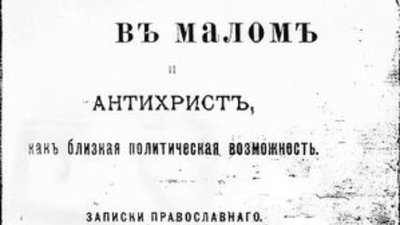
Protocols of the Elders of Zion
The Protocols of the Elders of Zion, or "The Protocols of the Meetings of the Learned Elders of Zion," is a fabricated text allegedly detailing a Jewish plot for global domination. The "protocols," or "'minutes of proceedings' of the Learned Elders of Zion,"[1] allegedly detailed a conspiracy for establishing a one-world government[2] and one-world religion[3] by manipulating and controlling international banks,[4] newspapers,[5] and masonic lodges.[6] It purported to have already manipulated and controlled "monarchists, demagogues, socialists, communists, and utopian dreamers of every kind"[7] to establish huge monopolies and reservoirs of "colossal riches."[8] The plot was described originally as the "Jewish-masonic conspiracy."[9]
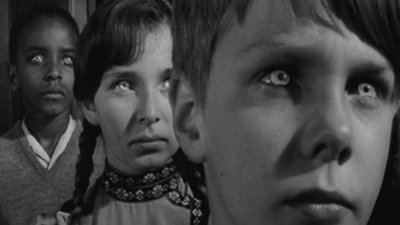
Brainwashing: How Spiritual Authority Becomes Social Control
Coercive persuasion in religious settings often works by narrowing what feels safe to question, reshaping trust, and attaching emotional consequences to agreement or dissent. These patterns are not universal across Pentecostal, Charismatic, or NAR-adjacent groups, but they appear frequently enough in high-control environments that they can be identified through consistent outcomes like fear of leaving, isolation, and "us versus them" framing.
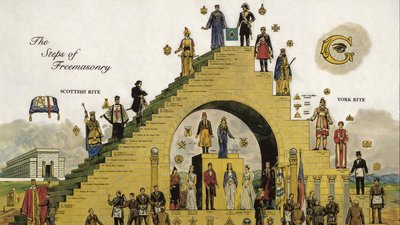
William Branham, Freemasonry, and the Hidden Fraternal Roots of the Message
William Branham’s ministry developed within a social world shaped by fraternal orders, political activism, and revivalist religion. Using primary sources, photographs, and Branham’s own statements, the summary traces how lodge culture, secrecy, and authority patterns intersected with the Message and later charismatic movements.
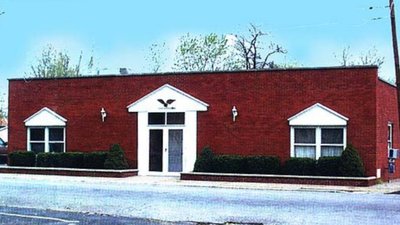
Branham Tabernacle: From Pentecostal Sect to Message Movement
The Branham Tabernacle emerged from the Pentecostal networks of Jeffersonville in the 1930s, closely tied to the ministry of Roy E. Davis and his associates, before William Branham assumed a central role. Over time, the church’s origins were reshaped within Message tradition, particularly after Branham’s 1945 reinvention of his public persona and the renaming of the congregation, creating a retrospective narrative that differs from the documented historical record.
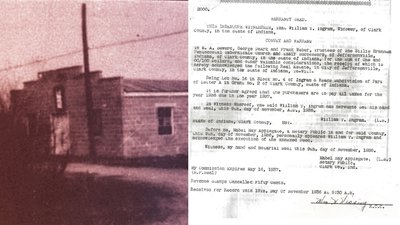
Billie Branham Pentecostal Tabernacle: Myth of a 1933 Baptist Beginning
Deeds, advertisements, and location-based evidence place William Branham’s first organized congregation in 1936 rather than 1933, aligning the movement of meeting sites with a verifiable historical timeline. This chronology also situates Branham’s early ministry within Roy E. Davis’ sectarian Pentecostal network and highlights how later autobiographical claims reshaped these origins to support retrospective narratives such as the “1933 Prophecies.”
No records found.