
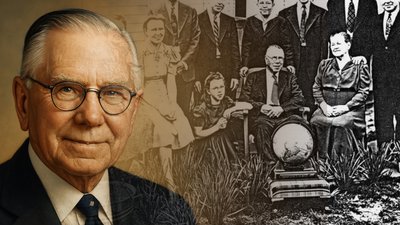
A. J. Tomlinson: Architect of a Theocratic Pentecostal Empire
Here is a clear, tight two-sentence summary of the entire passage: A. J. Tomlinson, a former Quaker turned Pentecostal leader, transformed the Church of God (Cleveland, TN) into a major Pentecostal denomination, but his authoritarian governance and financial controversies led to his 1923 removal and a lasting schism that reshaped the movement. The fallout opened the door for white supremacist influence through figures like Roy E. Davis, while Tomlinson’s son Homer later extended his father’s theocratic ambitions into politics—founding the Theocratic Party, declaring himself “King of the World,” and blending Pentecostalism with British Israelism and dominionist aspirations.
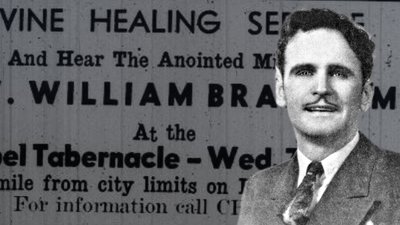
1946 Commission: Backdating the Alleged Gift of Healing
William Branham later claimed that an angel commissioned him on May 7, 1946 and bestowed on him the “gift of Divine Healing,” even tying this event to the (incorrect) date he said Israel became a nation, despite Israel’s actual declaration of statehood occurring in 1948. Yet archival evidence, early tracts, and contemporary reporting show Branham advertising healing as early as 1936 and place his supposed “gift” two years earlier than 1947, revealing serious contradictions between his stage persona, his followers’ timelines, and the historical record.
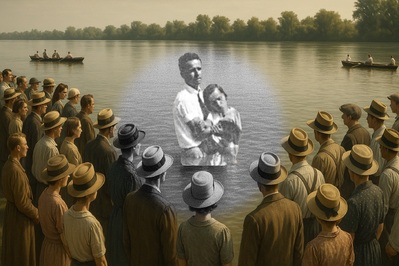
1933 Baptism: The Voice No One Heard
Dismantling William Branham’s famed 1933 Ohio River baptism story—showing that claims of a visible light, an audible commissioning voice, massive crowds, and nationwide newspaper coverage are contradicted by eyewitnesses, contemporary press records, and the documented history of his church and mentor, Roy E. Davis. It argues that the baptism narrative and the so-called 1933 prophecies were retrofitted into Branham’s biography as tools of authority, illustrating how myth-making and repetition, rather than verifiable evidence, became the foundation for prophetic belief in the Message movement.
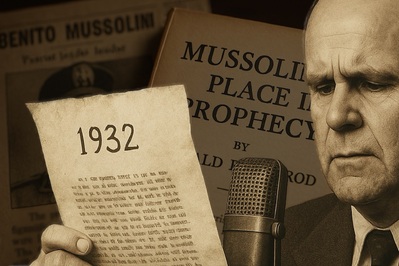
1933 Prophecies: A Self-Proclaimed Prophet
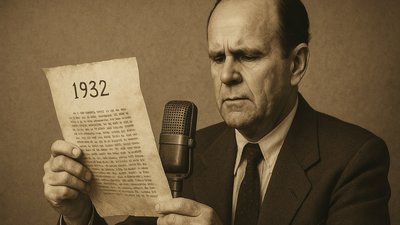
William Branham’s alleged 1933 prophecies show every sign of being constructed backwards: there is no contemporaneous 1933 documentation, his own references to the list are inconsistent (including a slip reading “1932” while admitting the prophecies were being revised), and several early items were borrowed from other writers like Gerald Winrod. Over the following decades the list expanded from “seven major events” to as many as eighteen wildly varied predictions—ranging from Mussolini’s fate to egg-shaped cars, a female U.S. ruler, “don’t eat eggs,” and “don’t live in a valley”—revealing a flexible, evolving narrative shaped by postwar fears and theological needs rather than a single, fixed prophetic vision.

1907: Branham's Actual Birth Year
William Branham’s widely repeated 1909 birth year is a historically inaccurate date that emerged from his later sermons and theological self-mythologizing rather than from any legal documentation. Contemporary records—including multiple census entries, newspaper accounts, and early public documents—consistently demonstrate that he was born in 1907, a fact overshadowed over time by the prophetic significance Branham attached to the later date.
1932: The Paper Trail Behind a Manufactured Prophecy
William Branham’s claim to a set of "1933 prophecies" is undermined by a 1960 sermon in which he theatrically reads from a paper he himself dates to 1932, exposing how the timeline of the alleged vision was flexible and retrospectively standardized. The later exhumation of his church’s cornerstone—where he claimed the original written prophecy was entombed—revealed no document at all, leaving only an empty cavity that some spiritualized as a miracle but which in practice underscores the lack of verifiable evidence behind his prophetic narrative.
Billy Graham: From Youth for Christ to National Power
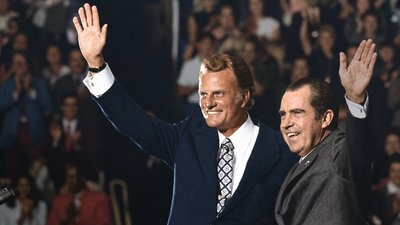
Billy Graham’s city-wide crusade model—built on interdenominational cooperation, centralized planning, and campaign-style evangelism—helped normalize a scalable parachurch ecosystem while also becoming a symbolic benchmark that adjacent revival networks (including figures like Branham and environments like Peoples Temple promotions) could invoke for legitimacy. Your excerpt then traces Graham’s visible proximity to Cold War political power through declassified references and public civic spectacle, and concludes by contrasting his public reputation on race with later-documented private antisemitic remarks and their fallout.
Cal Pierce, Bethel Church, and the Revival of John G. Lake’s Healing Rooms
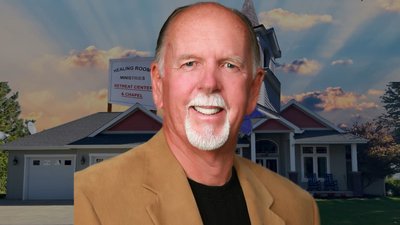
Cal Pierce, a former businessman and leader within Bethel Church and the Full Gospel Business Men International, played a central role in reviving John G. Lake’s Healing Rooms and transforming them into a global faith-healing network aligned with the New Apostolic Reformation. By restoring and promoting Lake’s legacy—despite Lake’s documented fraud and controversial practices—Pierce helped reinforce NAR theology emphasizing supernatural healing, transferred anointing, and revivalist continuity.
Clair Hutchins: Latter Rain Power Network to Cross and the Switchblade
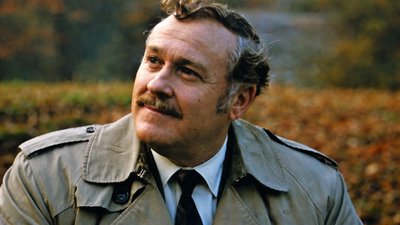
Clair Hutchins was not a peripheral revival figure but a formal insider within the Latter Rain movement, serving as musical director and assistant pastor at Joseph Mattsson-Boze’s Philadelphia Church in Chicago while operating across Youth for Christ, independent Pentecostal networks, and senior pastorates. His career illustrates how Latter Rain authority structures translated into durable institutions through music, centralized leadership, ordination networks, and later media evangelism via the World Film Crusade.
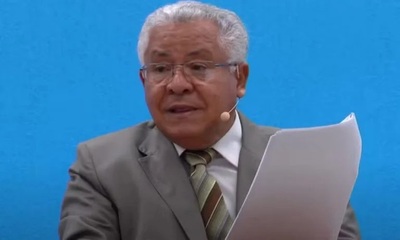
Jonas Felicio Pimentel
Jonas Felicio Pimentel is a leader of William Branham's cult of personality from Brazil and head pastor of the evangelical Tabernacle of Faith church in Brazil. He assumed church leadership after former Branhamite leader Joaquim Goncalves Silva died. The church was infamous after becoming the target of an investigation for sexual abuse and harassment of at least four children attending the church.[1]
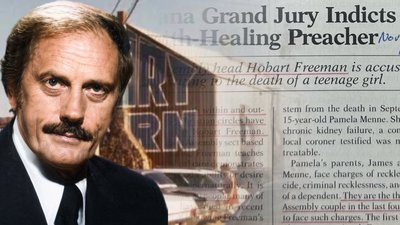
Hobart Freeman
Hobart Freeman was a controversial "faith healer" from Kentucky and Southern Indiana who convinced members of his cult of personality to refuse medical care. Several members of his cult died as a result of his anti-medication doctrines.
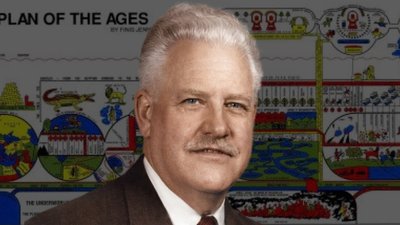
The Hidden Influence of Finis Dake on Word-Faith and Charismatic Leaders
Finis Jennings Dake was a highly influential Pentecostal teacher whose Annotated Reference Bible shaped the theology of later Charismatic and Word-Faith leaders. His rejection of eternal Sonship, promotion of a pre-Adamic race, dispensational speculation, and racial segregation reveal theological and ethical errors that closely paralleled and influenced William Branham and related movements.
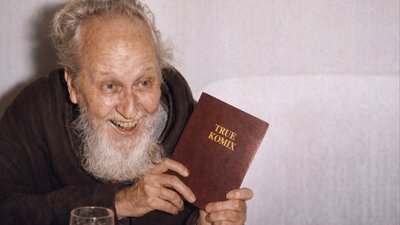
David Berg and William Branham: The Prophetic Roots of the Children of God
David Berg, founder of the Children of God cult, repeatedly credited William Branham and the Latter Rain movement as decisive influences on his theology, prophetic worldview, and rejection of denominational Christianity. This analysis traces how Branham’s prophecies, eschatology, angelology, and racial doctrines were absorbed, adapted, and radicalized within Berg’s movement, contributing to its apocalyptic ideology and abusive practices.
Waymon Rodgers
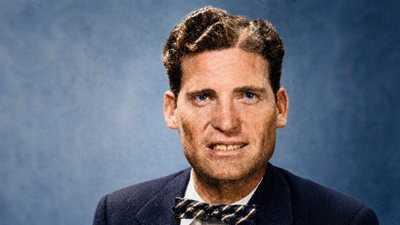
Waymon Rodgers was an Assemblies of God minister whose Owensboro-based Evangel Tabernacle became a significant bridge between the postwar healing revival, Latter Rain networks, William Branham's ministry, later charismatic renewal, and New Apostolic Reformation-adjacent streams, as Rodgers continued hosting Branham and other revival figures even as denominational leaders distanced themselves from Latter Rain teaching; his legacy combined church growth, healing-revival celebrity, fundraising controversies, and later apostolic-political influence through his son Bob Rodgers, whose election-related curses and Seven Mountain-style rhetoric illustrate how revivalist authority, prophetic militancy, and charismatic political activism continued developing from those earlier networks.
Paul Mackenzie
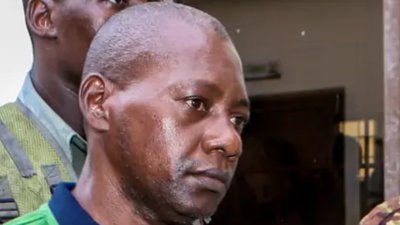
Paul Nthenge Mackenzie, pastor of Good News International Church in Kenya, led the Malindi Cult, a William Branham Message sect whose apocalyptic teachings helped produce the Shakahola Massacre. Drawing from Branham's end-time theology, anti-system preaching, Serpent Seed doctrine, and Latter Rain fasting traditions, Mackenzie convinced followers that starvation could purify them and hasten their entrance into heaven, leading to mass deaths, shallow graves, allegations of torture, sexual abuse, organ harvesting, and terrorism investigations. Kenyan authorities later found Branham materials among the group, including Swahili translations of Branham sermons, while President William Ruto denounced the sect as terrorism. Mackenzie's movement shows how Branham's doomsday theology, when combined with authoritarian control and extreme fasting practices, could become a mechanism for mass manipulation, bodily destruction, and death.
Victor Wierwille
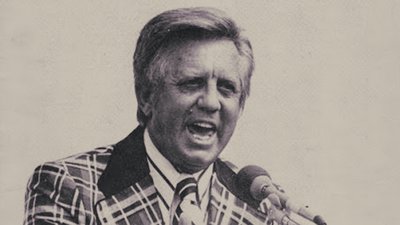
Victor Paul Wierwille, founder of The Way International, led a religious movement whose unitarian Godhead doctrine, rejection of the Trinity, and emphasis on distinct manifestations or offices of God closely paralleled certain versions of William Branham's theology. His association with George Lamsa and promotion of the idea that the New Testament was originally written in Aramaic connected him directly to Branham's later use and endorsement of the Lamsa Bible, especially after Wierwille and associates met Branham in 1957 and Lamsa completed major translation work in Wierwille's home. Former-member accounts of The Way's authoritarian small-group structure, sexual misconduct, and doctrines that allegedly framed sexual access as service to leadership place Wierwille's movement within the broader landscape of cultic religious systems that blended anti-Trinitarian theology, charismatic authority, alternative scripture claims, and abusive control over followers.
Matt Dillon
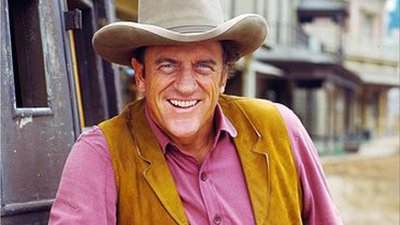
Marshall Matt Dillon was a fictional western lawman from Gunsmoke, played on television by decorated World War II veteran James Arness and shaped by the legacy of real Dodge City marshals rather than by a single historical figure. The program, which ran as a radio and television western, sometimes addressed themes such as racism and religion during the Civil Rights era, drawing criticism from reactionary audiences even as Arness later described those themes as groundbreaking for television. William Branham attacked Gunsmoke as a corrupting influence and treated Matt Dillon as though he were a real historical figure, falsely claiming that Dillon was a coward who murdered innocent men from ambush near Dodge City. Branham's comments reveal both his hostility toward popular culture and his willingness to invent or repeat false history when using entertainment as a moral warning.
Joseph Freeman
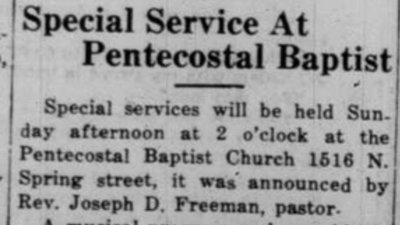
Rev. Joseph D. Freeman was a New Albany Baptist evangelist who briefly appears in the transition period after Roy E. Davis's Pentecostal Baptist Church of God headquarters in Jeffersonville burned in 1934, when William Branham was still connected to Davis's Pentecostal sect and preaching from temporary tent settings before the later purchase of the Billie Branham Pentecostal Tabernacle; Freeman's short pastorate at the Jeffersonville branch suggests he served as an interim stabilizing figure during the shift from Davis's organization to Branham's emerging local control, after which the older Pentecostal Baptist Church identity disappeared from public advertisements.
Lester Sumrall
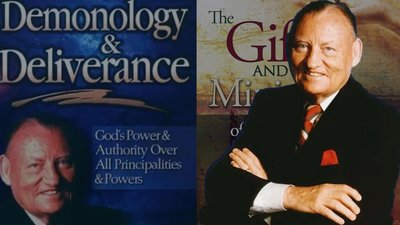
Lester Sumrall was a Pentecostal evangelist, missionary, author, broadcaster, and deliverance minister whose work connected mid-twentieth-century healing revival culture with later charismatic emphases on spiritual warfare, demons, miracles, missions, media ministry, and global revival, making him an influential figure in modern Pentecostal and charismatic networks while also reflecting the movement's broader tensions around supernatural authority, healing claims, demonology, and personality-driven ministry.
Ewald Frank and the German Expansion of William Branham’s Message
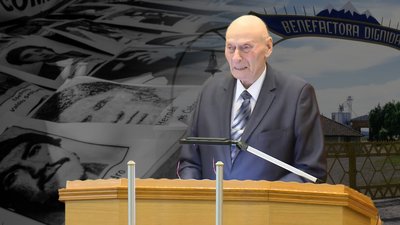
Ewald Frank emerged as the central German leader of William Branham’s Message movement, founding Freie Volksmission and modeling his authority on Branham’s prophetic claims. His career has been marked by controversy, including allegations of moral misconduct, claimed supernatural experiences, and documented associations with Colonia Dignidad and its international fallout.
Floyd Patterson and the Business Architecture of William Branham’s Message
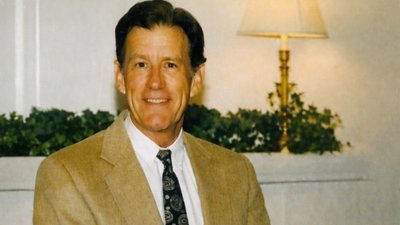
Floyd W. Patterson Jr. functioned as a key local custodian of William Branham’s Message by combining pastoral leadership with extensive commercial operations in northern Arizona. Public records show how business ownership, corporate governance, and civic visibility reinforced a personalized authority structure that sustained Branham’s cult-of-personality after his death.

Chuck Rinkle, Sarah Branham, and the Business Side of the Branham Legacy
Charles “Chuck” Rinkle’s connection to the Branham family began with a broken engagement marked by accusations, internal family intervention, and rigid control over reputation. His later association with Believers International reveals how personal conflict, family authority, and nonprofit corporate structures intersected to preserve Branham-era power long after William Branham’s death.
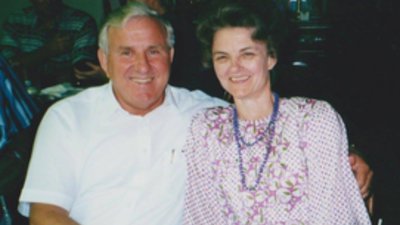
Betty Phillips: Believers International Officer
Betty (Collins) Phillips is the daughter of Willard Collins, former pastor of the Branham Tabernacle in Jeffersonville, IN. She is the wife of James Phillips, former music minister of the Branham Tabernacle, who resigned when Willard Collins accused Billy Paul and Joseph Branham of stealing from the church.
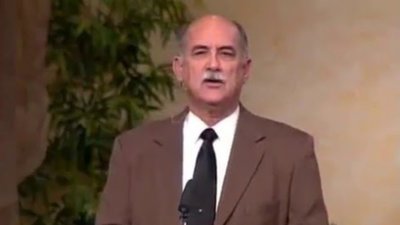
George Smith: Defender of the Undefendable
George Smith, son-in-law to William Branham, emerged as one of the most influential yet overlooked architects of the Message movement’s posthumous theology, transforming unresolved contradictions into institutionalized mystery. Through editorial control, narrative harmonization, and eventually metaphysical explanations that defied history itself, Smith helped construct a belief system designed not for coherence, but for survival against scrutiny.
No records found.