
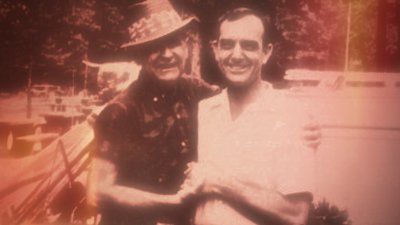
Drinking and Homosexuality: Moral Absolutes, Private Exceptions
William Branham’s Message enforced strict prohibitions against alcohol and homosexuality as markers of holiness and separation, yet historical records, testimony, and visual evidence reveal persistent exceptions within his inner circle. This investigation traces how authority, proximity, and institutional preservation consistently overrode the very moral standards imposed on followers.
Selling Tapes
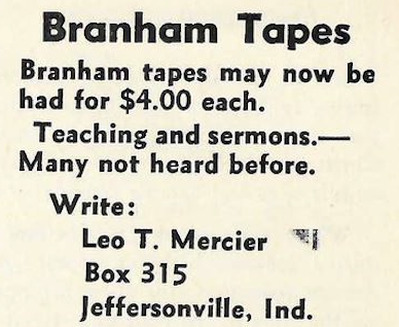
In the 1950s, Leo Mercier was the person responsible for sales and distribution of the "Message" through sales of William Branham's recordings on cassette tapes. Sermons sold for $4.00, which was unusually high compared to other forms of entertainment. Vinyl records of music, for example, sold for between $0.85 and $1.25

Leo Mercier
Leo Mercier, also spelled Mercer, was one of William Branham's trusted "tape boys," working with Gene Goad to record, edit, preserve, sell, and distribute Branham's sermons while holding unusual influence over the formation and control of the Message after Branham's death; his later leadership of the Prescott, Arizona commune known as "the Park" or "Little Goshen" shows how Branham's prophetic authority, tape culture, anti-education teaching, end-time fear, and delegated leadership could develop into a high-control sect marked by isolation, censorship, authoritarian discipline, child abuse, sexual coercion, forced obedience, and the eventual violence associated with Keith Loker.
No records found.