
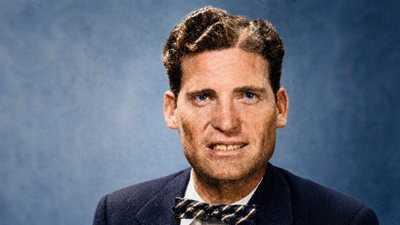
Waymon Rodgers
Waymon Rodgers was an Assemblies of God minister whose Owensboro-based Evangel Tabernacle became a significant bridge between the postwar healing revival, Latter Rain networks, William Branham's ministry, later charismatic renewal, and New Apostolic Reformation-adjacent streams, as Rodgers continued hosting Branham and other revival figures even as denominational leaders distanced themselves from Latter Rain teaching; his legacy combined church growth, healing-revival celebrity, fundraising controversies, and later apostolic-political influence through his son Bob Rodgers, whose election-related curses and Seven Mountain-style rhetoric illustrate how revivalist authority, prophetic militancy, and charismatic political activism continued developing from those earlier networks.
Dan S. Davis: How the Davis Brothers, the Klan, and Pentecostal Revival Shaped William Branham
William Branham’s early ministry did not emerge in isolation but developed within a tightly connected network of Pentecostal churches, revival infrastructure, and influential figures linked to both organized religion and extremist movements. By tracing the roles of Dan S. Davis, Roy E. Davis, and Caleb Ridley, this study documents how institutional control, shared worship spaces, and overlapping political-religious networks created the environment that produced Branham.
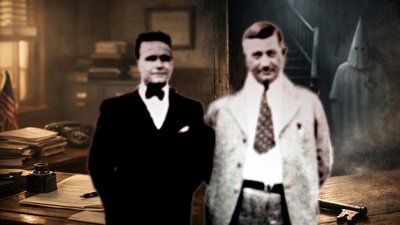
Charles Brumbach: William Branham’s Father-in-Law and the Ku Klux Klan
Charles Brumbach, William Branham’s father-in-law, occupied a position of local political influence while maintaining documented access to Ku Klux Klan infrastructure in Jeffersonville during the 1920s. A comparison of contemporary records with William Branham’s repeated personal accounts demonstrates how elements of the Brumbach household were altered or omitted to sustain a narrative of moral stability and spiritual legitimacy.
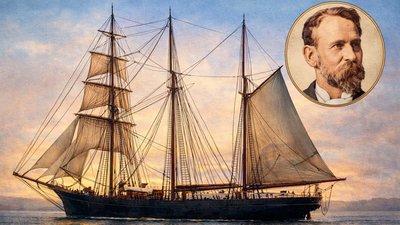
Frank Sandford: The Floating Utopia of Starvation That Shaped Pentecostal History
This account examines the rise of Frank Sandford, a Maine-based cult leader who claimed to be the prophet Elijah and led his followers into starvation, abuse, and death through apocalyptic theology and absolute control. From a land-based commune at Shiloh to a disastrous missionary voyage at sea, the narrative traces how selective biblical interpretation and charismatic authority produced one of the deadliest religious experiments of early twentieth-century America.
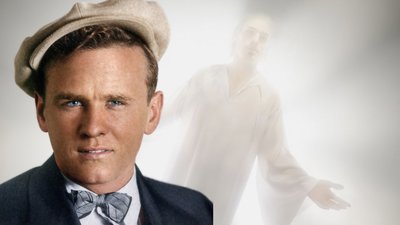
Angels, Mysticism, and Ministry: Reassessing William Branham’s Postwar Commission Narrative
William Branham’s post-1945 ministry increasingly relied on a supernatural “angel of the Lord” whose evolving identity, shifting chronology, and inconsistent role served to authenticate his healing revivals and prophetic authority. These developments stand in marked contrast to the biblical portrayal of angels as occasional messengers rather than ongoing spiritual partners, raising significant theological and historical questions about the legitimacy of Branham’s claims.
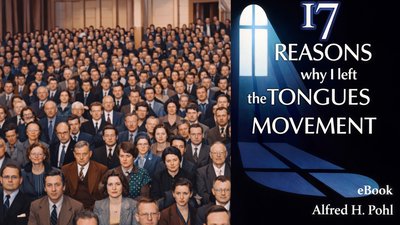
Alfred Pohl: Secrets Behind the Revival Curtain
Alfred Pohl’s firsthand experiences during William Branham’s 1947 Canadian healing campaigns led him to question the legitimacy of Branham’s methods, financial practices, and repeated pronouncements of healing that were later contradicted by the outcomes. His subsequent reflections, supported by journalistic investigations that failed to verify a single genuine healing, highlight significant ethical and pastoral concerns surrounding Branham’s ministry.
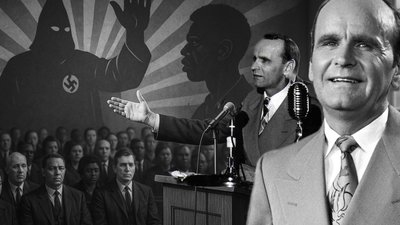
William Branham and the Rhetoric of Racial Propaganda
William Branham’s sermons reinforced segregationist ideology by using racial stereotypes, derogatory language, and propaganda techniques framed as divine authority. By embedding these messages within a religious context during the civil rights era, he helped legitimize and perpetuate white supremacist assumptions among his followers.
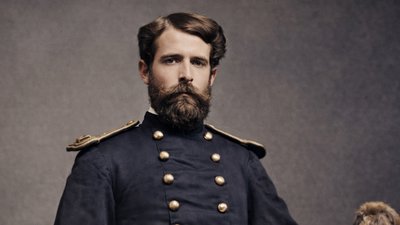
C. A. L. Totten and the American Rise of British Israelism
Charles Adiel Lewis Totten was a Yale military science professor turned apocalyptic theorist whose writings helped establish British Israelism in the United States and popularized mathematically calculated end-times prophecy. His fusion of pyramidology, numerology, and imperial theology influenced later doomsday movements and shaped ideas that flowed into early Pentecostalism and Christian Identity thought.
No records found.