
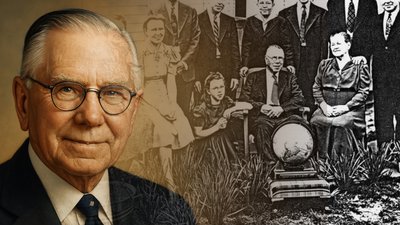
A. J. Tomlinson: Architect of a Theocratic Pentecostal Empire
Here is a clear, tight two-sentence summary of the entire passage: A. J. Tomlinson, a former Quaker turned Pentecostal leader, transformed the Church of God (Cleveland, TN) into a major Pentecostal denomination, but his authoritarian governance and financial controversies led to his 1923 removal and a lasting schism that reshaped the movement. The fallout opened the door for white supremacist influence through figures like Roy E. Davis, while Tomlinson’s son Homer later extended his father’s theocratic ambitions into politics—founding the Theocratic Party, declaring himself “King of the World,” and blending Pentecostalism with British Israelism and dominionist aspirations.
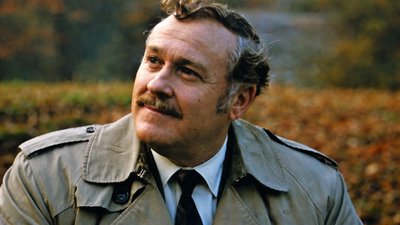
Clair Hutchins: Latter Rain Power Network to Cross and the Switchblade
Clair Hutchins was not a peripheral revival figure but a formal insider within the Latter Rain movement, serving as musical director and assistant pastor at Joseph Mattsson-Boze’s Philadelphia Church in Chicago while operating across Youth for Christ, independent Pentecostal networks, and senior pastorates. His career illustrates how Latter Rain authority structures translated into durable institutions through music, centralized leadership, ordination networks, and later media evangelism via the World Film Crusade.
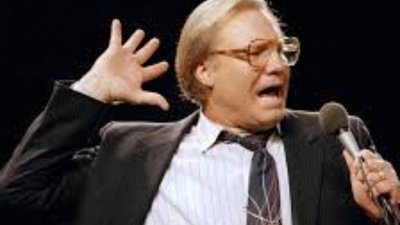
Jimmy Swaggart
Jimmy Swaggart was a Pentecostal televangelist, gospel musician, Assemblies of God minister, and cousin of Jerry Lee Lewis and Mickey Gilley whose ministry grew out of the same mid-century healing-revival atmosphere shaped by Gordon Lindsay, The Voice of Healing, and William Branham's influence, but whose public image as a fiery preacher against sin, pornography, and sexual immorality collapsed after revelations that he had been secretly involved with prostitutes; his televised confession, refusal to submit to the Assemblies of God's full disciplinary process, defrocking, and rapid return to ministry made him a defining example of Pentecostal celebrity, revivalist performance, moral scandal, institutional accountability failure, and the tension between public holiness preaching and private misconduct.
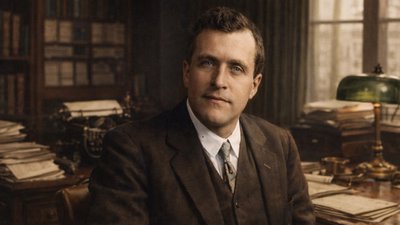
Caleb A. Ridley: The Klan Chaplain Linked to William Branham and Roy E. Davis
Caleb A. Ridley, an Imperial Kludd of the 1915 Ku Klux Klan, played a significant role in early twentieth-century religious and political networks that intersected with Roy E. Davis and William Branham. His participation in revivals, prohibition activism, and Klan organizing sheds new light on the racial and ideological context surrounding the formative years of Branham’s ministry.
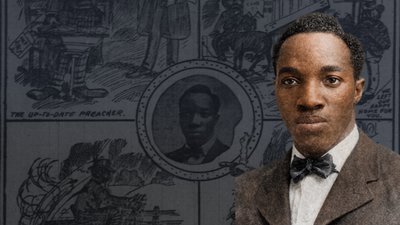
Garfield T. Haywood
Rev. Garfield T. Haywood was a Black Indianapolis Pentecostal leader, hymn writer, presiding bishop in the Pentecostal Assemblies of the World, and one of the most important early voices of Oneness Pentecostalism, helping make Indianapolis a major center for Jesus Name baptism while ministering through intense racial and religious persecution during the rise of the Indiana Ku Klux Klan; his interracial congregation, tract "Victim of the Flaming Sword," and hymn "The Waterway" stood in sharp contrast to the white supremacist religious networks around Roy E. Davis and William Branham, whose later movements absorbed, obscured, or reinterpreted elements of Haywood's Oneness influence while presenting themselves as the true source of restored baptismal truth.
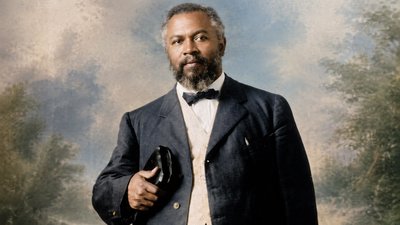
William Seymour
William J. Seymour was the African American Holiness minister whose leadership at the Azusa Street Revival helped launch modern Pentecostalism, but his path to Los Angeles passed through a complex world of radical holiness sects, end-time expectation, divine-healing houses, Charles Fox Parham's segregated Apostolic Faith teaching, Lucy Farrow's influence, and the search for Spirit baptism evidenced by tongues; after being rejected by Julia Hutchins's Holiness mission, Seymour began meetings in the Asbery home on Bonnie Brae Street, where ecstatic experiences spread into the Azusa Street mission and drew interracial crowds, Holiness seekers, occult observers, critics, and national attention, creating a chaotic but historically decisive revival that broke with Parham over race, spiritual disorder, and authority while sending converts back across the country to form many of the denominations and practices that became early Pentecostalism.
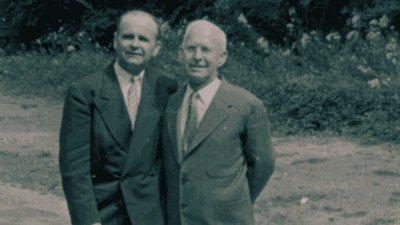
Miner Arganbright
Miner Arganbright was the vice president of the Full Gospel Business Men's Voice.
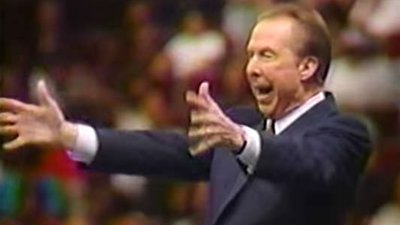
John Osteen
John Osteen, father of Joel Osteen, was a Houston minister whose early ministry intersected with the Full Gospel Businessmen's Fellowship International, Demos Shakarian, William Branham's healing revival network, and the Latter Rain-influenced circles that also produced more extreme offshoots such as Jim Jones and Peoples Temple; through Shakarian's financial support, his appearances in Branham-related meetings, his connections to Life Tabernacle, and his participation with Branham in efforts such as the Leslie Douglas Ashley clemency petition, Osteen's career illustrates how mid-century Full Gospel, healing revival, business fellowship, and Message-adjacent networks helped shape later charismatic and prosperity-oriented ministries.
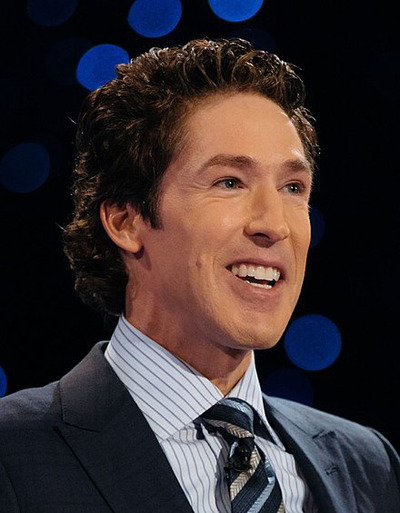
Joel Osteen
Joel Osteen was born in Houston, Texas, and is one of six children of John Osteen and Dolores ("Dodie") Pilgrim. His father, John Osteen, was a former Southern Baptist pastor who founded Lakewood Church (of which Osteen is the current senior pastor) in the back of an old feed store.
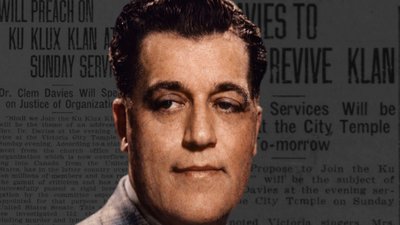
Clem Davies: The White Supremacist Preacher Behind Revivalist Networks
Clem Davies was a transnational revivalist figure whose ministry fused white supremacy, British-Israelism, and apocalyptic prophecy with mass revival techniques decades before the rise of postwar healing movements. His networks, teachings, and organizational methods formed an ideological and structural pipeline that carried racialized theology into later Pentecostal, Latter Rain, and charismatic revival contexts.
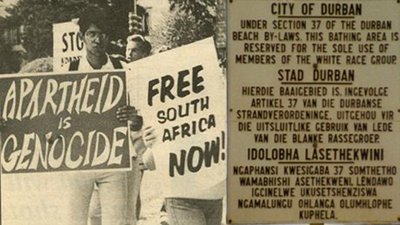
How Pentecostalism Helped Build Apartheid: The Hidden Latter Rain Connection
Apartheid was a religious and political system of racial segregation in South and current Nambia from 1948 to the early 1990s. The system enabled the white minority in South Africa to politically, socially, and economically dominate while discriminating against the black-skinned majority. While many factors contributed to apartheid, evidence suggests that the Latter Rain Movement played a key role in its creation.

Celestial Beings and the Hidden Roots of Charismatic Theology
This presentation traces the doctrine of celestial beings from British Israelism and Christian Identity movements into the Latter Rain revival through figures such as William Branham and Gordon Lindsay. By examining sermons, historical records, and theological claims, it reveals how pre-existence and celestial body teachings quietly reshaped modern Charismatic Christianity.
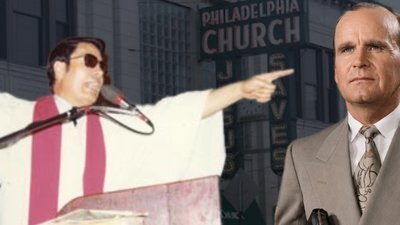
Jim Jones
Jim Jones was the founder and leader of Peoples Temple, a religious-political movement that began with promises of racial equality, social justice, communal care, and protection for the vulnerable, but gradually became an authoritarian system centered on Jones's control, paranoia, loyalty demands, isolation, abuse, and apocalyptic fear, ultimately ending in the 1978 Jonestown tragedy, where more than 900 people died in one of the clearest modern examples of spiritual manipulation, coercive leadership, and catastrophic communal collapse.
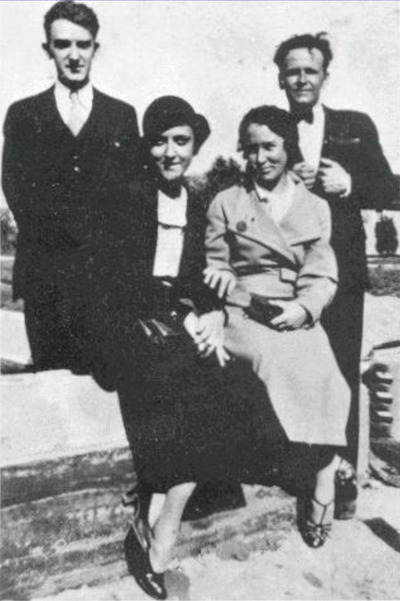
Graham Snelling
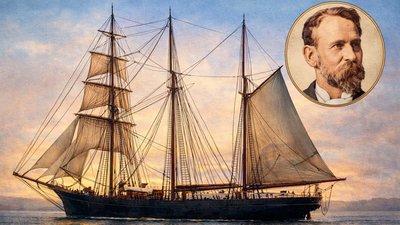
Frank Sandford: The Floating Utopia of Starvation That Shaped Pentecostal History
This account examines the rise of Frank Sandford, a Maine-based cult leader who claimed to be the prophet Elijah and led his followers into starvation, abuse, and death through apocalyptic theology and absolute control. From a land-based commune at Shiloh to a disastrous missionary voyage at sea, the narrative traces how selective biblical interpretation and charismatic authority produced one of the deadliest religious experiments of early twentieth-century America.
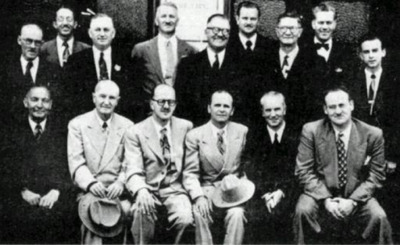
F. F. Bosworth
For a critical examination of the ministry of F. F. Bosworth, read F.F. Bosworth: The Man behind 'Christ the Healer' by Roscoe Barnes III and find updates on the Roscoe Reporting. published to his site: F. F. Bosworth.
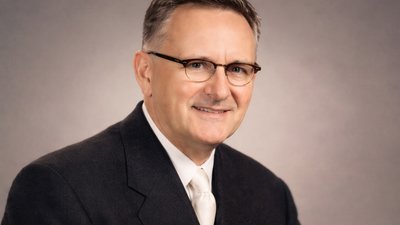
David du Plessis and the Hidden Architecture of Charismatic Power
David du Plessis, widely known as “Mr. Pentecost,” played a decisive role in transforming early Pentecostal revivalism into a trans-denominational charismatic movement built on relational authority, networks, and institutional access. Through documented collaborations with William Branham, Gordon Lindsay, healing revival leaders, ecumenical councils, and political mobilizations, his ministry helped establish the structural and cultural foundations later formalized within the New Apostolic Reformation.
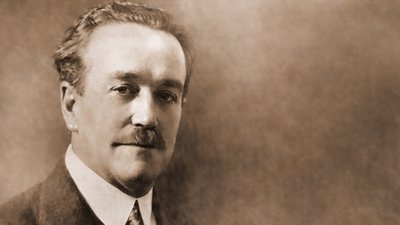
Charles Fox Parham: Fraud, Racism, and the Dark Origins of Pentecostalism
Charles Fox Parham, often credited as a founding figure of Pentecostalism, was deeply entangled with fraud schemes, racial ideology, and extremist theology that shaped both his ministry and his legacy. His promotion of British Israelism, segregation, and apocalyptic communal experiments reveals a movement rooted not only in revivalism but also in white supremacy and exploitation.
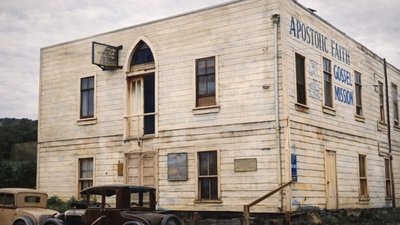
Azusa Street in Flames: Earthquake, Ecstasy, and the Birth of Pentecostal Chaos
In the aftermath of the 1906 San Francisco earthquake, the Azusa Street Revival in Los Angeles emerges as a racially charged, chaotic experiment in Holiness ecstasy that even contemporary newspapers depicted as fanatical, irreverent, and socially destabilizing. Drawing on reports from the Los Angeles Times, critics like Nettie Harwood, and Charles Fox Parham’s own disgust at interracial worship, the narrative traces how a confused mixture of Holiness practices, occult phenomena, and apocalyptic fervor produced “pilgrims” who carried this volatile spirituality into early Pentecostal denominations and later healing revivalists such as F. F. Bosworth.
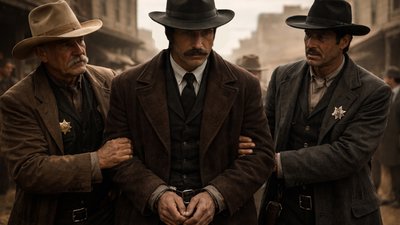
Charles Parham’s 1907 Arrest: The Case Pentecostal History Tried to Forget
Recently digitized newspaper records from San Antonio allow the reconstruction of Charles Fox Parham’s 1907 arrest and prosecution, long obscured by euphemistic reporting and denominational silence. Contemporary accounts document the charges, evidence, and Parham’s own courtroom testimony, challenging later portrayals that minimized or dismissed the case.
Speaking In Tongues
William Branham's teaching on speaking in tongues shifted between contradictory stage personas, sometimes rejecting tongues as evidence of the Holy Spirit, sometimes affirming it as true evidence, and at other times denying that he had ever supported the doctrine; his later claim that he supernaturally spoke Finnish in a trance during a prayer line is especially problematic because the phrases he used, "Jumalan rauhaa" and "kiitos," were words he had publicly learned, translated, and repeated for years after his Finland meetings, showing how an ordinary memory of foreign phrases was later repackaged as a supernatural manifestation to support his prophetic and charismatic authority.
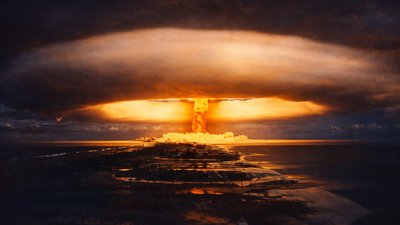
Atomic Fear and the Postwar Healing Movement: Mushroom Cloud Revivals
William Branham used the "Red Scare" bomb threat almost three hundred times during his recorded sermons. Frequently describing what he considered to be an inevitable threat from either a hydrogen bomb or atomic bomb, Branham, warned his listeners that their time on earth was short. When speaking to an audience in Toledo, OH, for instance, Branham informed Toledo citizens that a bomb was going to drop on Toledo.

William Branham’s “Giant Ants” Prophecy: Fear, Fantasy, and Control in the Message Movement
In his later years, William Branham introduced increasingly extreme apocalyptic teachings—such as visions of giant ants and birds—that he linked to end-time plagues and used to reinforce gender-focused punishments and fear-based control. After his death, some “Message” leaders, including Roger Rudin in Phoenix, further exploited these prophecies to drive doomsday migration, suppress critical thinking, and conceal personal hypocrisy, even as followers’ tithes quietly funded Rudin’s gay bar.
Redefining “Christian”: How Branhamism Reshaped Faith, Race, and Authority
William Branham redefined Christianity around revelation, racial separation, and prophetic authority, replacing historic gospel foundations with exclusionary ideological tests. These distorted categories passed through the Latter Rain movement into modern charismatic networks, shaping aspects of contemporary apostolic and prophetic theology, including streams within the New Apostolic Reformation.
No records found.