
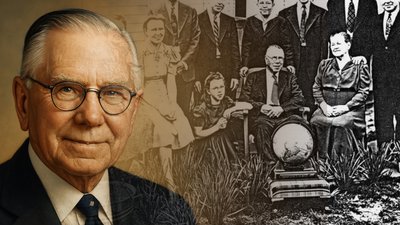
A. J. Tomlinson: Architect of a Theocratic Pentecostal Empire
Here is a clear, tight two-sentence summary of the entire passage: A. J. Tomlinson, a former Quaker turned Pentecostal leader, transformed the Church of God (Cleveland, TN) into a major Pentecostal denomination, but his authoritarian governance and financial controversies led to his 1923 removal and a lasting schism that reshaped the movement. The fallout opened the door for white supremacist influence through figures like Roy E. Davis, while Tomlinson’s son Homer later extended his father’s theocratic ambitions into politics—founding the Theocratic Party, declaring himself “King of the World,” and blending Pentecostalism with British Israelism and dominionist aspirations.
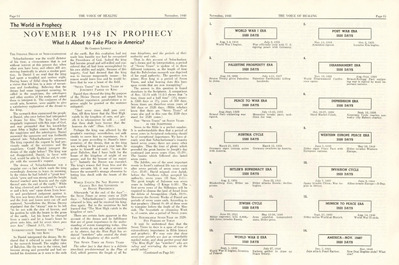
1948 Doomsday: Prophecy and Politics
After the birth of Latter Rain and the Latter Rain Revival, and as Branham's associates began to join into the Voice of Healing Revival, William Branham and his associate editors of the Voice of Healing Publication began promoting the idea that 1948 would be the year of destruction. A section of the publication entitled "The World In Prophecy" started informing readers of the "prophetic" and mathematic projections pointing to the End of Days using charts, graphs, numerologies, and specific passages from the Christian Bible without their surrounding Biblical context.

1933 Prophecy of the Isms: Branham’s Changing End-Time Vision
William Branham did not publicly mention his supposed 1933 visions until 1953, when he claimed to have prophesied that Communism, Fascism, and Nazism would merge into a single system that would dominate the world and burn the Vatican—a narrative that closely echoes earlier fundamentalist apocalyptic literature and is flatly contradicted by subsequent history. As Communism failed to conquer Europe and eventually collapsed, Branham quietly revised his message, recasting Roman Catholicism rather than Communism as the final world power, presenting this reversal not as a correction of failed prophecy but as further divine revelation.
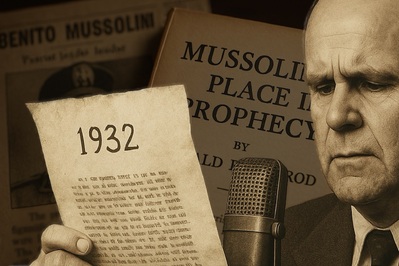
1933 Prophecies: A Self-Proclaimed Prophet
William Branham’s alleged 1933 prophecies show every sign of being constructed backwards: there is no contemporaneous 1933 documentation, his own references to the list are inconsistent (including a slip reading “1932” while admitting the prophecies were being revised), and several early items were borrowed from other writers like Gerald Winrod. Over the following decades the list expanded from “seven major events” to as many as eighteen wildly varied predictions—ranging from Mussolini’s fate to egg-shaped cars, a female U.S. ruler, “don’t eat eggs,” and “don’t live in a valley”—revealing a flexible, evolving narrative shaped by postwar fears and theological needs rather than a single, fixed prophetic vision.

1932: The Paper Trail Behind a Manufactured Prophecy
William Branham’s claim to a set of "1933 prophecies" is undermined by a 1960 sermon in which he theatrically reads from a paper he himself dates to 1932, exposing how the timeline of the alleged vision was flexible and retrospectively standardized. The later exhumation of his church’s cornerstone—where he claimed the original written prophecy was entombed—revealed no document at all, leaving only an empty cavity that some spiritualized as a miracle but which in practice underscores the lack of verifiable evidence behind his prophetic narrative.
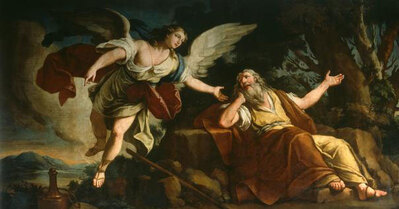
The Elijah Prophet Myth: William Branham, Restoration Theology, and Control
William Branham’s claim to embody the spirit of Elijah developed gradually through restorationist theology, culminating in an end-time messenger doctrine that redefined biblical authority and spiritual legitimacy. Rooted in ideas drawn from British Israelism and echoed in Christian Identity thought, this framework produced profound theological errors and fostered authoritarian control, gender policing, and suppression of dissent.

The Egg-Shaped Car Prophecy That Was Already in the Newspapers
Claims about a 1933 prophecy predicting egg-shaped automobiles emerged publicly decades after engineers, scientists, and newspapers were already discussing and displaying aerodynamic vehicle designs. Extensive coverage, World’s Fair prototypes, and published predictions demonstrate that the “vision” closely followed widely known technological trends rather than anticipating them.

From Branham's Healing Revival to Armed Cult: The Dark Legacy of Colonia Dignidad
Colonia Dignidad was not an isolated aberration but the product of apocalyptic fear, authoritarian control, and religious absolutism exported through William Branham’s Message movement. By tracing the shared roots connecting Branham, Jim Jones, and Paul Schäfer, the narrative shows how prophetic claims and revivalist rhetoric became tools for psychological domination, abuse, and violence.
Bob Jones and the Kansas City Prophets: The Blueprint Behind IHOPKC
Bob Jones rose within the Kansas City Prophets and helped shape IHOPKC by promoting dramatic testimony, “technicolor” visions, angel-visit narratives, and end-times claims that echoed earlier Latter Rain patterns associated with William Branham. The through-line is that repeated prophetic failures and escalating dominion-focused timelines were treated as legitimizing “revelation,” creating a template for modern charismatic prophetic authority that continued to influence the NAR and related movements.

Edward Hine and the Secret Racial Roots of British Israelism
Edward Hine was a central figure in transforming British Israelism from a fringe theological theory into a racialized ideological system. His teachings blended pseudo-science, prophecy, and imperial politics, laying foundations that later influenced extremist identity movements.
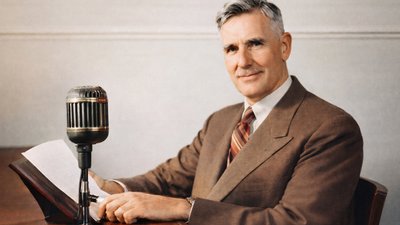
Charles Fuller and the Political Foundations of Modern Evangelical Media
Charles Fuller emerged as a powerful radio evangelist whose ministry blended revivalism, political activism, and prophetic rhetoric during a period of intense religious and cultural upheaval in the United States. His associations with figures such as Gerald B. Winrod, Paul Rader, and William Branham, along with the founding of Fuller Theological Seminary, positioned him as a key transitional figure linking early fundamentalism to later charismatic and Third Wave movements.
David Berg and William Branham: The Prophetic Roots of the Children of God
David Berg, founder of the Children of God cult, repeatedly credited William Branham and the Latter Rain movement as decisive influences on his theology, prophetic worldview, and rejection of denominational Christianity. This analysis traces how Branham’s prophecies, eschatology, angelology, and racial doctrines were absorbed, adapted, and radicalized within Berg’s movement, contributing to its apocalyptic ideology and abusive practices.

William Draves
William Draves founded the Church of Christ with the Elijah Message, a Latter Day Saint splinter group in Independence, Missouri, after claiming that John the Baptist appeared to him as a messenger of the Lord and delivered a series of instructions for the church. One of Draves' alleged revelations named a "William Branham" among men to be set apart as elders, and William Branham later used this reference to imply that Draves' prophecy had supernaturally identified him, even calling it "Thus Saith The Lord." Branham also connected Draves' revelations to his own prophecy traditions by claiming that the same source predicted Nazism in Germany, turning a marginal Latter Day Saint splinter prophecy into another piece of supporting mythology for Branham's prophetic stage persona.
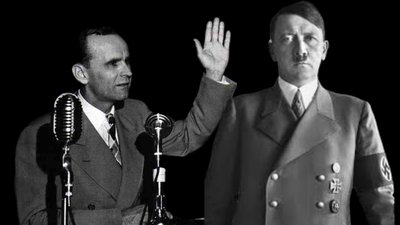
Adolf Hitler: Branham’s Evolving Prophecy Narrative from WWII to Armageddon
William Branham’s early stage persona portrayed Adolf Hitler as a still-living figure destined to help trigger the End Times, even suggesting that one of three world leaders—Hitler, Mussolini, or Stalin—would “send Jesus Christ to the earth again.” Over time, Branham revised his prophecies, shifting from claims that Franklin Roosevelt caused World War II or that he did not know which “ism” would dominate, to later assertions that Hitler started the war and that Communism alone would consume all world systems.

Edith Wright: How a Lifelong Disability Became a Prophetic Narrative
Edith Wright’s case provides a clear, traceable example of a healing claim that can be followed from initial prayer through decades of reinterpretation. Despite repeated prayers, prophetic declarations, and theological reframing, Edith remained disabled until her death, revealing how failed healings were absorbed into narrative systems designed to preserve spiritual authority.
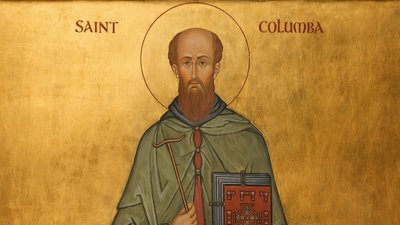
The Thyatira Mistake: Columba, Chronology, and Branham’s False Revelation
William Branham claimed divine revelation for his church age system, yet his chronology and structure closely mirror the earlier dispensational charts of Clarence Larkin. The assignment of St. Columba as the Thyatira church age messenger collapses under historical scrutiny, as Columba died before the age supposedly began and is known primarily through later hagiographical legend rather than doctrinal leadership.
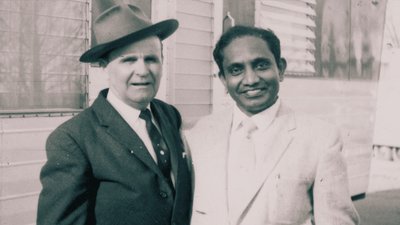
Paulaseer Lawrie
R. Paulaseer Lawrie Muthu Krishna was an Indian minister and evangelist who helped establish William Branham's Message movement in India before developing his own Branham-derived sect centered on claims of divine manifestation. After participating in Branham's 1954 healing revivals and later struggling for recognition among Pentecostal leaders, Lawrie used Branham's failed tent, moon, and India prophecies as theological openings to reinterpret Branham's message around himself, suggesting that Branham's unfinished predictions were fulfilled through Lawrie's own ministry. Following the 1969 moon landing, Lawrie increasingly framed his Chicago meetings as a divine visitation and allowed followers to identify him as "God coming down," the "Son of Man," and the new name of God, while abandoning practices such as communion, baptism, and faith healing as obsolete. By blending Branhamite doctrine with Hindu and Muslim concepts such as the Supreme Sacrifice, Lawrie created a distinct Indian Message sub-sect that treated him as the fulfillment of Branham's failed India prophecy and an extension of Branham's deification theology.
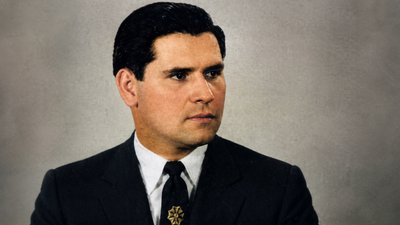
Richard Blair
Rev. Richard Blair was a leading figure in William Branham's "Message" movement in rural Louisiana, where his leadership helped transform a Pentecostal dispute in Singer into the formation of the Bible Tabernacle in Juanita, a congregation increasingly shaped by Branham's teachings. Blair became especially controversial in 1966 after Branham's failed Los Angeles tidal wave prophecy convinced many of his followers that disaster was imminent, prompting as many as 40 families to sell homes, livestock, and belongings and flee toward Arkansas and Missouri in search of safety. The prophecy's failure left lasting damage, fracturing the Juanita community, uprooting families, and exposing the destructive consequences of prophetic fear within Branham's movement.

Chuck Smith
Chuck Smith, founder of Calvary Chapel, helped shape the Jesus People Movement while carrying forward influences from Foursquare Pentecostalism, Latter Rain revivalism, and figures connected to William Branham, Paul Cain, Lonnie Frisbee, and John Wimber.
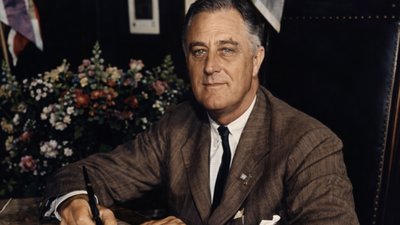
Franklin D. Roosevelt and William Branham’s Failed World War Prophecy
William Branham later claimed that a vision from 1932 or 1933 foretold Franklin D. Roosevelt leading the world into war, but his own recorded statements reveal shifting dates, expanding details, and retrospective framing. By comparing Branham’s evolving claims with the actual chronology of World War II, the narrative shows why the Roosevelt prophecy fails historical scrutiny.
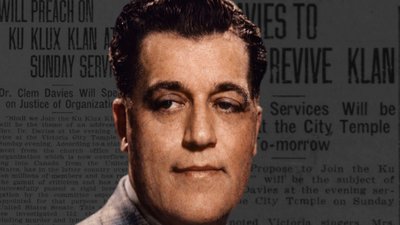
Clem Davies: The White Supremacist Preacher Behind Revivalist Networks
Clem Davies was a transnational revivalist figure whose ministry fused white supremacy, British-Israelism, and apocalyptic prophecy with mass revival techniques decades before the rise of postwar healing movements. His networks, teachings, and organizational methods formed an ideological and structural pipeline that carried racialized theology into later Pentecostal, Latter Rain, and charismatic revival contexts.
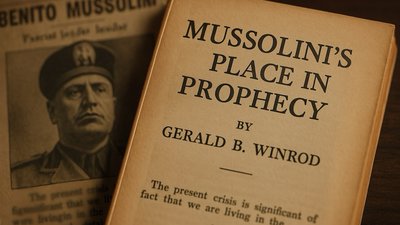
Benito Mussolini in Prophecy: How Fascism Fueled Identity Apocalypticism and Branham's 1933 Visions
William Branham’s later retellings of “1933 visions” about Mussolini, the “three isms,” and the Vatican’s destruction closely track themes already published and promoted within Christian Identity circles—especially Gerald B. Winrod’s 1933 prophetic framing of Mussolini. It then traces how those borrowed apocalyptic motifs were repackaged through Branham’s authority and carried forward into postwar revivalism, Latter Rain theology, and later Charismatic/NAR prophetic culture.
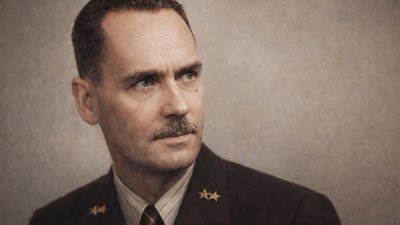
Conrad Gaard: The Forgotten Architect Behind Branham’s Pyramid and Zodiac Theology
Conrad Gaard functioned as a critical but largely unrecognized bridge between British-Israel theology, pyramidology, zodiac symbolism, and the organizational networks that later shaped William Branham’s ministry. By tracing Gaard’s lectures, institutional leadership, and ideological ties to figures such as Gordon Lindsay, Wesley Swift, and Gerald L. K. Smith, this study demonstrates that key elements of Branham’s prophetic framework were inherited rather than uniquely revealed.

Brown Bear Prophecy: A Case Study in Failed Prophecy
In 1962, William Branham publicly claimed a vision predicting the killing of a massive brown bear in British Columbia, a prediction he asserted would soon be fulfilled. The hunt failed, and decades later the movement’s own headquarters acknowledged that the brown bear was never killed, leaving the vision as an unresolved and problematic prophetic claim.
No records found.