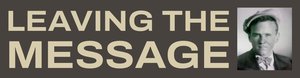
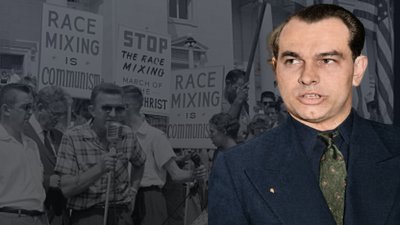
Wesley A. Swift
Wesley A. Swift was a central figure in the development of racist and antisemitic Christian Identity theology, drawing from British Israelism, Philip E. J. Monson's two-seed teaching, Gerald Winrod's far-right religious propaganda, and Anglo-Saxon Federation networks to promote a militant racial theology that identified white Anglo-Saxons as God's chosen people and nonwhite peoples and Jews as spiritually corrupted enemies; through his ties to Angelus Temple, LeRoy Kopp, Gerald L. K. Smith, Klan revival efforts in California, and later extremist groups such as Aryan Nations, Swift became a major bridge between British Israelism, Christian Identity, segregationist politics, white supremacy, and the Serpent's Seed doctrine later popularized by William Branham within Latter Rain and healing revival circles.
Serpent's Seed
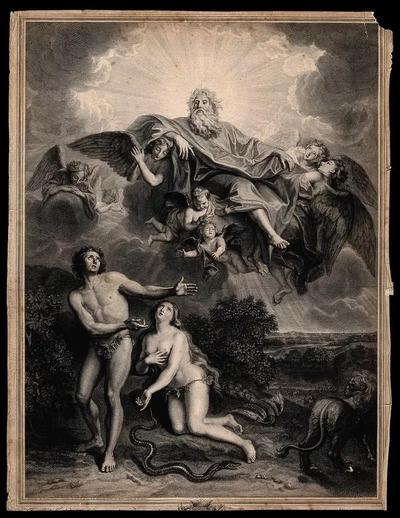
The Serpent's Seed Doctrine was William Branham's rebranding of the Christian Identity Doctrine[1] of Wesley A. Swift, which was popular among white supremacy groups in the 1950s and 1960s. Serpent's Seed (Christian Identity) is the extra-biblical notion that the Original Sin in the Garden of Eden was a sexual union between Eve and the Serpent. According to Swift's theology, Lucifer (Satan) impregnated the Biblical Eve to produce Cain, from which people with black skin descended. This would mean, according to Branham's (and Swift's) doctrine, that people with black skin are the descendants of Satan.
Knights Of The Flaming Sword
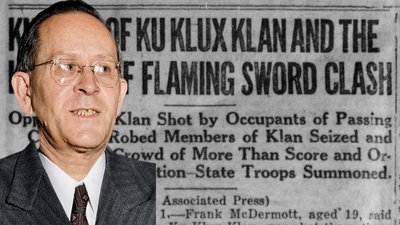
The Knights of the Flaming Sword was a short-lived white supremacist fraternal order founded in 1924 by former Ku Klux Klan leader William Joseph Simmons after his fall from power, using Genesis imagery and militant Protestant symbolism to rebuild influence outside the main Klan while Roy E. Davis served as a major recruiter, royal ambassador, and public defender of Simmons; the organization rapidly gained hundreds of thousands of members, but soon collapsed into internal conflict, financial accusations, armed tensions, and Davis's public break with Simmons, revealing how Klan splinter groups blended biblical language, fraternal secrecy, political ambition, racial ideology, and religious authority into unstable movements that overlapped with the networks later surrounding William Branham.
No records found.