
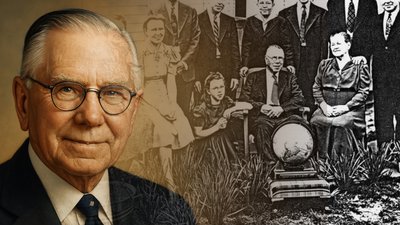
A. J. Tomlinson: Architect of a Theocratic Pentecostal Empire
Here is a clear, tight two-sentence summary of the entire passage: A. J. Tomlinson, a former Quaker turned Pentecostal leader, transformed the Church of God (Cleveland, TN) into a major Pentecostal denomination, but his authoritarian governance and financial controversies led to his 1923 removal and a lasting schism that reshaped the movement. The fallout opened the door for white supremacist influence through figures like Roy E. Davis, while Tomlinson’s son Homer later extended his father’s theocratic ambitions into politics—founding the Theocratic Party, declaring himself “King of the World,” and blending Pentecostalism with British Israelism and dominionist aspirations.
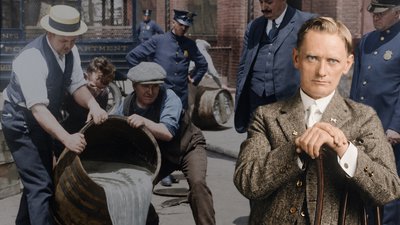
William D. Upshaw
William D. Upshaw was a former congressman, prohibitionist, Southern Baptist evangelist, Klan defender, and later healing-revival promoter whose career connected temperance politics, fundamentalist revivalism, fraternal secrecy, white supremacist networks, and Pentecostal healing culture; from his public defense of the Ku Klux Klan and association with Roy E. Davis to his later claims of healing under Wilbur Ogilvie, William Branham, and O. L. Jaggers, Upshaw became a symbolic bridge between early twentieth-century Protestant political activism, Klan-aligned religion, anti-liquor crusading, revival celebrity, and the staged miracle culture that helped legitimize Branham's postwar healing campaigns.
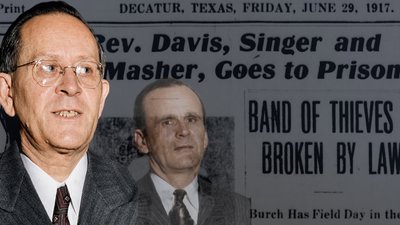
Roy E. Davis
Rev. Roy E. Davis Sr. was a Baptist and Pentecostal preacher, founder of the Pentecostal Baptist Church of God, mentor and ordaining pastor of William Branham, and a lifelong organizer in white supremacist movements, serving under William Joseph Simmons in the reborn Ku Klux Klan, helping form the Knights of the Flaming Sword, and later becoming a nationally recognized leader of the Original Knights of the Ku Klux Klan; his career connected criminal scandal, religious fraud, gospel music, fundamentalist revivalism, Pentecostal sect-building, orphanage fundraising schemes, Klan reorganization, and Branham's early ministry, making Davis one of the clearest links between Branham's origins, Pentecostal restorationism, Christian nationalism, and organized white supremacy.
Dan S. Davis: How the Davis Brothers, the Klan, and Pentecostal Revival Shaped William Branham
William Branham’s early ministry did not emerge in isolation but developed within a tightly connected network of Pentecostal churches, revival infrastructure, and influential figures linked to both organized religion and extremist movements. By tracing the roles of Dan S. Davis, Roy E. Davis, and Caleb Ridley, this study documents how institutional control, shared worship spaces, and overlapping political-religious networks created the environment that produced Branham.
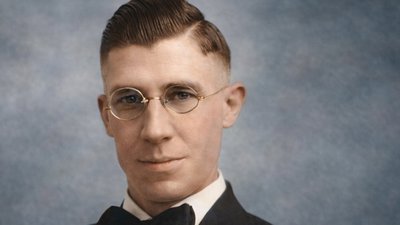
Clyde E. Green: The Minister Who Married William Branham & Hope Brumbach
Clyde E. Green was a Midwestern minister whose career moved from early Church of the Nazarene pastorates into interdenominational revival leadership and ultimately Pentecostal and Primitive Evangelistic authority. His role as the officiant in the 1934 marriage of William Branham and Hope Brumbach places Branham squarely within Roy E. Davis–aligned Pentecostal networks during his formative ministerial years.
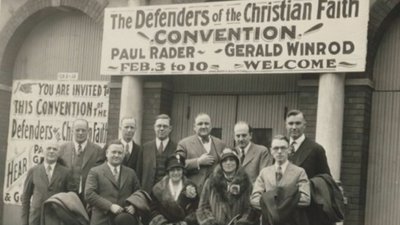
Defenders of the Christian Faith: How Fundamentalism Fueled Fascism in America
The Defenders of the Christian Faith emerged in the 1920s as a fundamentalist movement that fused biblical literalism with political radicalism, eventually aligning itself with fascist and antisemitic ideology. Under the leadership of Gerald Burton Winrod, the organization played a significant role in spreading Nazi propaganda in the United States and was ultimately named as a co-conspirator in the Great Sedition Trial of 1944.
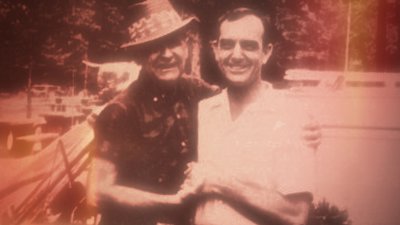
Drinking and Homosexuality: Moral Absolutes, Private Exceptions
William Branham’s Message enforced strict prohibitions against alcohol and homosexuality as markers of holiness and separation, yet historical records, testimony, and visual evidence reveal persistent exceptions within his inner circle. This investigation traces how authority, proximity, and institutional preservation consistently overrode the very moral standards imposed on followers.

Missionary Baptist Church
In most versions of his stage persona, William Branham claimed to be ordained by Roy E. Davis into the "Missionary Baptist Church", though he did not refer to the denomination by that name. According to William Branham, it was a "member of the Southern Baptist Convention", or in other words, a Southern Baptist Church that was involved with missionary work.
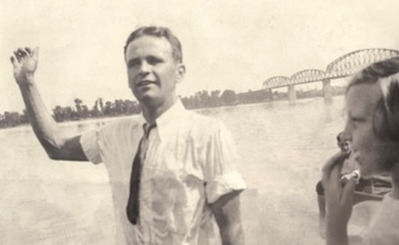
William Branham's Early Ministry
According to William Branham and the dates given for ordination,[1] his "conversion experience" was the moment that he was recruited into Roy E. Davis's Pentecostal Baptist Church of God Sect. Davis was a "personal friend"[2] that baptized him,[3] converted him,[4] and ordained him as a minister for the sect.[5] Though different versions of William Branham's stage persona used multiple dates for his recruitment, the date that Branham appears to have started working in the Pentecostal Baptist Church of God sect was 1928. Branham mentioned this date, mathematically, multiple times. In April 1959, Branham told his audience that he was converted "thirty-one years ago".
Milltown Baptist Church
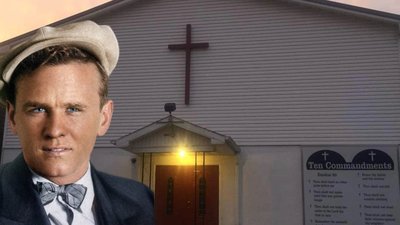
Milltown Baptist Church appears to have been an important satellite congregation in the Pentecostal Baptist Church of God world connected to Roy E. Davis and William Branham, with Branham serving as pastor there through the early healing revival years while later reshaping its history into a visionary stage narrative; the church linked Branham's Jeffersonville ministry, Roy Davis's Pentecostal-Baptist sect, Georgie Carter's healing claims, E. Howard Cadle, and the Cadle Tabernacle network, while Hattie Wright Mosier's testimony about Edith's alleged healing directly challenges Branham's later claims that he had never heard of Milltown, was divinely sent there by vision, and saw Edith restored to walking through a "Thus Saith The Lord" declaration.
Pentecostal Baptist Church of God Sect
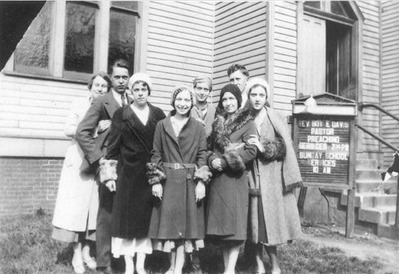
Roy E. Davis was the general overseer of the "Pentecostal Baptist Church of God",[1] a Pentecostal sect[2] that practiced "divine healing" and recruited members by allegedly drinking poison.[3] The national headquarters of the sect was at Jeffersonville, Indiana.[4] It was a Pentecostal assembly.[5] William Branham appears to have tried to conceal his involvement with the cult by being dishonest about the affiliation of the church led by Davis. According to the timeline given,[6] Branham claimed that Davis' Pentecostal church was "Missionary Baptist" (missionaries from the Southern Baptist Convention),[7] and that he was ordained into the Southern Baptist Convention. According to newspaper advertisements and testimony given by Roy Davis in Branham's The Voice of Healing publication, however, the sect was Pentecostal in 1933, the year Branham used. Roy E. Davis was banished from the Baptist Church by the Missionary Board on August 12, 1926,[8] placing Branham's ordination long before 1933.
Jack and Granny
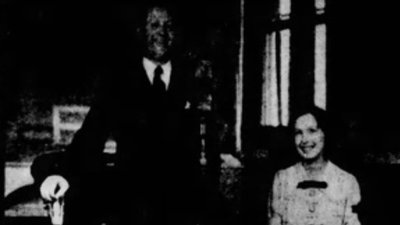
Roy E. Davis's "Jack and Granny" radio act shows another side of the man who mentored William Branham, blending gospel entertainment, revival celebrity, radio performance, and Pentecostal-Nazarene evangelism with his wider history in Klan leadership and religious organizing; through his work with the Stamps Gospel Quartet, his appearances with major fundamentalist and gospel figures, and his role as master of ceremonies among nationally known singing groups, Davis used music, humor, radio, and stagecraft to build credibility and access within revival culture, helping explain how he could move between white supremacist organizing, Pentecostal sect-building, and popular religious entertainment.
The 1934 Burning of the Church
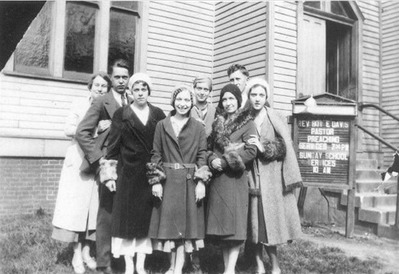
The 1934 burning of Roy E. Davis' Pentecostal church is critical to understanding the difference between recorded history and William Branham's claim to have been an Old-Testament-style prophet who had a series of prophecies in 1933. It is the time marker recorded by history to document Branham's transition from an assistant pastor of Roy E. Davis' Pentecostal church to the head pastor of the Billie Branham Pentecostal Tabernacle, at which time these alleged 1933 Prophecies came according to some versions of his stage persona. William Branham read the year 1932 from his alleged list of prophecies and claimed that he had transitioned to become the pastor when the "divine commission" came, which cannot coexist with recorded history.
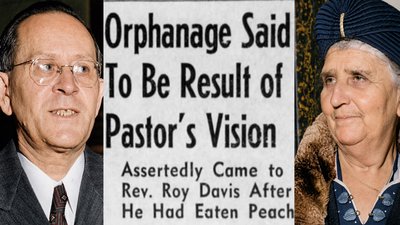
Ussher-Davis Children's Orphanage
The Ussher-Davis Children's Orphanage was a San Bernardino fundraising scheme at the center of a 1944 criminal investigation involving Roy E. Davis, William D. Upshaw, and Lily Galloway, in which Davis allegedly posed as a federal agent to solicit wealthy donors while Upshaw and Galloway reinforced the deception; with Upshaw heading the orphanage's "department of Americanization," a term closely associated with Klan ideology, the operation connected temperance activism, orphanage charity language, financial manipulation, and white supremacist organizing, foreshadowing Davis's later move to Dallas and his rise as a leader in the Original Knights of the Ku Klux Klan.
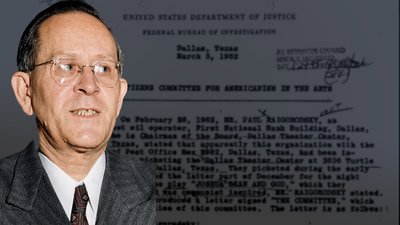
Original Knights Of The Ku Klux Klan
Before the Third Wave of the Ku Klux Klan, Roy E. Davis and William D. Upshaw began working together to gather funding and support to create a new sect of the Ku Klux Klan. Davis posed as a Federal Agent in the Los Angeles / San Bernardino area claiming to be gathering interest for a children's orphanage, and Upshaw supported his claim. In the legal and criminal trial that followed, Davis was exonerated and filed suits against Los Angeles and San Bernardino officials. Having been pushed out of the 1915 Klan under the leadership of William Joseph Simmons, Davis and Upshaw were not aligned with the direction the organization had taken. They wanted to return to the "original".
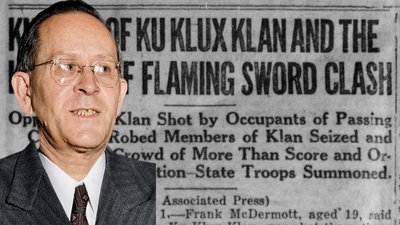
Knights Of The Flaming Sword
The Knights of the Flaming Sword was a short-lived white supremacist fraternal order founded in 1924 by former Ku Klux Klan leader William Joseph Simmons after his fall from power, using Genesis imagery and militant Protestant symbolism to rebuild influence outside the main Klan while Roy E. Davis served as a major recruiter, royal ambassador, and public defender of Simmons; the organization rapidly gained hundreds of thousands of members, but soon collapsed into internal conflict, financial accusations, armed tensions, and Davis's public break with Simmons, revealing how Klan splinter groups blended biblical language, fraternal secrecy, political ambition, racial ideology, and religious authority into unstable movements that overlapped with the networks later surrounding William Branham.
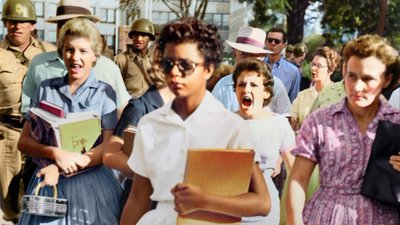
The Healing Revival and the Civil Rights Crisis: William Branham, the Klan, and White Supremacy
Postwar American revivalism developed alongside fierce resistance to racial integration, with leading figures openly opposing civil rights through theological and prophetic language. Sermons, public statements, newspaper reporting, and federal investigations reveal how white supremacist ideology, Christian Identity theology, and apocalyptic race-war expectations became intertwined with healing revival authority.
No records found.