
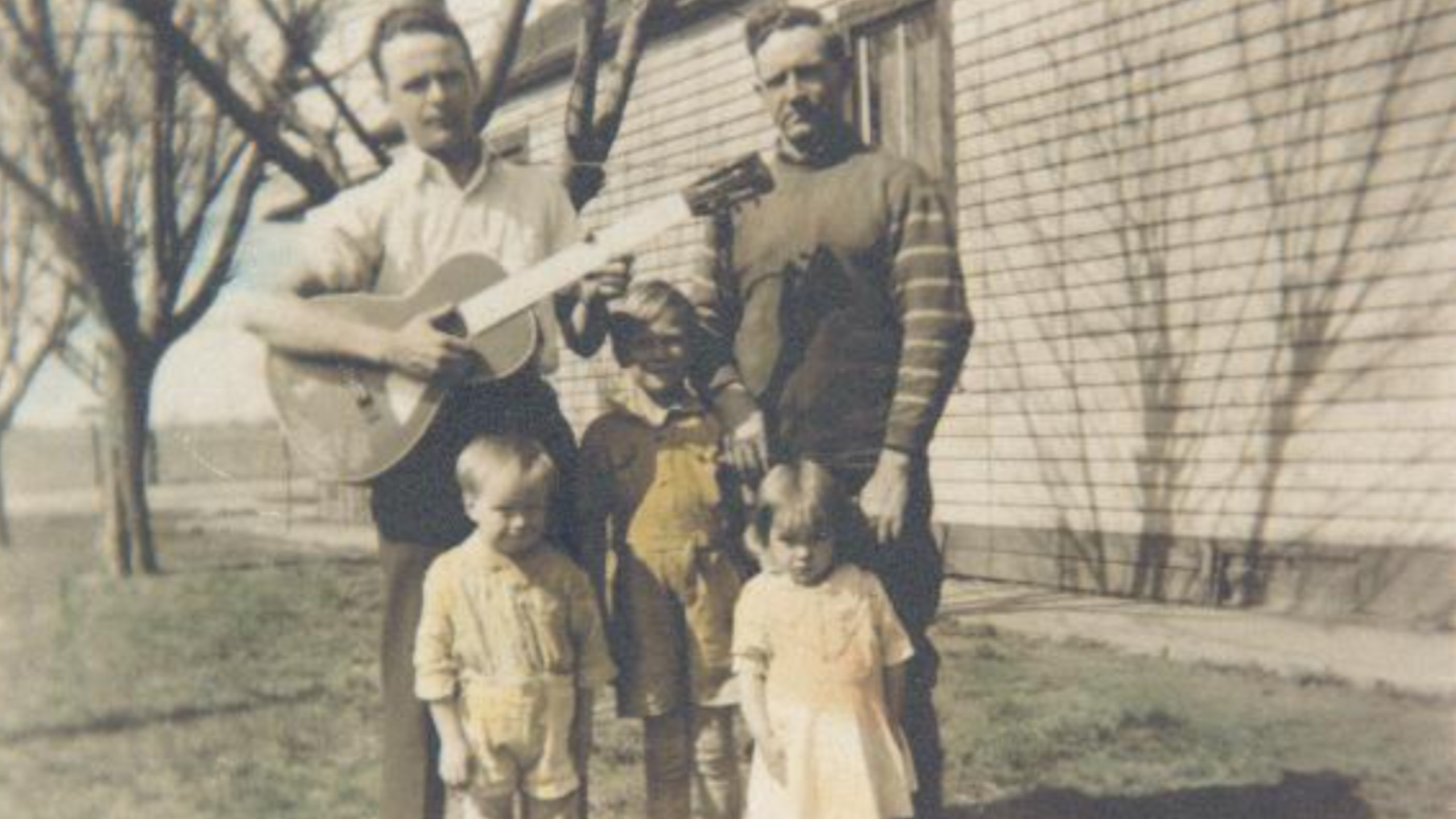
Charles Branham and the Jeffersonville Liquor Network: The Records William Branham Tried to Erase
Historical newspapers, court records, and William Branham’s own admissions establish that Charles Branham was repeatedly arrested and incarcerated for operating illegal whiskey stills connected to Jeffersonville’s Prohibition-era liquor economy. This documented history stands in direct tension with the later stage-persona narrative that reframed family hardship as early fatherlessness and obscured the criminal context that shaped William Branham’s youth.
Historical records place Charles Branham, William Branham's father, squarely within the Prohibition-era liquor economy operating in and around Jeffersonville, Indiana. During the early 1920s, Jeffersonville functioned as a strategic node for illegal alcohol production and transport, supplying regional distribution routes connected to larger urban centers. Within this environment, Charles Branham was not a peripheral figure but an active participant. Newspaper coverage documents that law enforcement officers raided the Branham property in March 1924 and discovered a concealed whiskey still, mash, and finished moonshine. Charles Branham admitted his involvement and was arrested for manufacturing intoxicating liquor [1]. This is an event that William Branham also admitted.
Later we moved to Indiana and Father went to work for a man, Mr. Wathen, a rich man. He owns the Wathen Distilleries. And he owned a great shares; he's a multimillionaire, and the Louisville Colonels, and—and baseball, and so forth. And then we lived near there. And Dad being a poor man, yet he could not do without his drinking, so he—he went to making whiskey in a—in a still. And then it worked a hardship on me because I was the oldest of the children. I had to come and pack water to this still, to keep those coils cool while they were making the whiskey. Then he got to selling it, and then he got two or three of those stills. Now, that's the part I don't like to tell, but it's the truth.
- Wililam Branham, Apr 4 1959. My Life Story
Further reporting establishes that Branham's activity intersected with the operations of Otto H. Wathen and the Wathen distilling interests, which were repeatedly named in federal and regional reporting concerning liquor supplied to organized crime networks in Cincinnati and Chicago. Court and newspaper accounts show that Otto Wathen posted bail and stayed fines on Charles Branham's behalf following his conviction, demonstrating a direct financial and logistical connection rather than a coincidental association [2]. These details situate Charles Branham within a broader, well-documented liquor network rather than an isolated case of rural moonshining.
William Branham later acknowledged his father's employment relationship with Wathen and openly admitted that the family's income depended on illegal whiskey production. In his own recorded testimony, William Branham stated that he was required to assist directly by carrying water to cool the still coils while liquor was being produced and later sold in increasing quantities. This admission confirms that the Branham household functioned as part of a sustained illegal enterprise rather than a brief or accidental violation [3].
Arrests, Convictions, and Incarceration During Prohibition
The criminal record of Charles Branham during the Prohibition era reflects repeated and escalating encounters with law enforcement rather than a single, isolated offense. Contemporary newspaper reporting documents that in early March 1924, Jeffersonville police raided the Branham property and uncovered a functioning whiskey still, mash, and finished moonshine. Charles Branham was arrested at the scene and admitted that he was engaged in the manufacture of intoxicating liquor, placing him squarely within the scope of state and federal prohibition statutes [4]. This arrest was not dismissed as a minor infraction; it proceeded through the courts and resulted in a conviction.
Subsequent reporting shows that Branham pleaded guilty and was sentenced to jail time, with arrangements made for him to work nights while incarcerated. In addition to confinement, he was fined $100 plus court costs, a substantial financial penalty for a working-class household in 1924. Otto H. Wathen intervened directly by staying the fine and costs, although the jail sentence itself could not be suspended [5]. The involvement of Wathen in securing financial relief underscores that Branham's prosecution was embedded within a larger liquor economy rather than an incidental local offense.
The legal consequences extended beyond Charles Branham personally and directly affected the household. A hospital billing notice issued later in March 1924 for William Branham explicitly cited Charles Branham's conviction and incarceration for manufacturing liquor and concluded that "the family is destitute" [6]. This document demonstrates that the arrest and sentencing produced immediate material hardship and were known to civil authorities outside the criminal courts. Rather than vanishing from public view, the Branham family remained visible to law enforcement, medical institutions, and the local press throughout this period, contradicting later portrayals of sudden paternal absence or early death.
Economic and Social Impact on the Branham Household
The repeated arrests and incarceration of Charles Branham produced measurable economic and social consequences for the Branham household that are documented outside of later autobiographical claims. Court-imposed fines, jail sentences, and the disruption of regular income placed the family under sustained financial strain during the mid-1920s. This strain is explicitly recorded in a contemporaneous hospital billing notice issued in March 1924 for William Branham, which linked his medical treatment directly to his father's conviction and incarceration for manufacturing intoxicating liquor and concluded that "the family is destitute" [7]. The language of this notice indicates that civil authorities understood the household's hardship as a consequence of criminal prosecution rather than as the result of paternal death or abandonment.
Newspaper and court records further show that the Branham family remained publicly visible during this period, residing at the same Jeffersonville address that appeared repeatedly in police reports and legal notices. This continuity contradicts later narratives that implied sudden disappearance, isolation, or a retreat into obscurity following Charles Branham's legal troubles. Instead, the household continued to interact with hospitals, courts, and law enforcement agencies, leaving a consistent paper trail that reflects instability under scrutiny rather than erasure from public life [8].
William Branham later reframed these documented hardships into a generalized account of extreme poverty caused by early fatherlessness, collapsing a complex sequence of arrests, fines, incarceration, and temporary economic disruption into a simplified moral narrative. The historical record, however, shows that the household's economic distress was episodic, legally traceable, and publicly documented, rooted in Charles Branham's repeated violations of liquor laws rather than in an early paternal death or long-term abandonment [9].
William Branham's Early Admissions of Participation in Illegal Liquor Activity
William Branham's later attempts to distance himself from his father's criminal activity are contradicted by his own recorded admissions, in which he described direct involvement in the illegal liquor operation conducted by Charles Branham. In multiple life-story accounts, Branham acknowledged that after his father went to work for Otto Wathen and became involved in whiskey production, the responsibility for supporting the operation fell in part on him as the oldest child. He stated that he was required to carry water to the still to cool the coils while whiskey was being manufactured, a task integral to the production process rather than a peripheral or incidental activity [10].
Branham further admitted that the operation expanded beyond a single still, explaining that his father "got two or three of those stills" and began selling liquor in increasing quantities. He emphasized that these details were uncomfortable to recount but insisted that they were factual, stating explicitly that this was "the part I don't like to tell, but it's the truth" [11]. This language is significant, as it demonstrates that Branham understood his statements as confessions of involvement rather than metaphorical or exaggerated storytelling.
These admissions are corroborated by contemporary legal and medical records that describe Charles Branham's conviction for manufacturing intoxicating liquor and the resulting hardship imposed on the household. Taken together, the evidence shows that William Branham was not merely a passive observer of his father's criminal conduct but an active participant in the family's illicit livelihood during his adolescence. This documented participation complicates later portrayals of moral distance from his father's activities and undercuts narratives that present Branham solely as a victim of circumstances created by others [12].
Construction of a Fatherless Childhood Narrative
As William Branham's public ministry developed, he increasingly reframed the documented hardships of his adolescence into a simplified narrative centered on early fatherlessness. In sermons and life-story accounts delivered years after the Prohibition-era arrests of Charles Branham, William repeatedly claimed that his father had died when he was still a boy, leaving him as the oldest child responsible for supporting a widowed mother and numerous siblings. He attributed his limited education and youthful poverty to this alleged early death, stating that he "didn't get a chance to get an education" because he had to care for the family [13].
This portrayal conflicts directly with contemporary records. Census data, court documents, and newspaper reporting place Charles Branham alive, resident in Jeffersonville, and repeatedly interacting with legal authorities well into the mid-1920s. Hospital and court records show that the family's economic hardship stemmed from incarceration, fines, and disrupted income caused by liquor convictions rather than from the permanent absence of a deceased father. Nevertheless, Branham consistently collapsed these documented events into a single explanatory claim of early paternal death, eliminating the criminal context entirely [14].
The fatherless-childhood narrative also functioned rhetorically within Branham's stage persona. By presenting himself as a boy forced prematurely into adult responsibility, Branham established moral credibility, elicited sympathy, and provided a ready explanation for gaps in education or awareness of prominent public figures. This construction did not emerge spontaneously but developed over time as a recurring motif, selectively omitting verifiable records while emphasizing hardship detached from its documented cause. The resulting narrative replaced a complex, traceable family history with a morally streamlined origin story more compatible with Branham's evolving public image [15].
Contradictory Claims About Charles Branham's Death
William Branham's public statements concerning the death of his father shifted repeatedly over the course of his ministry, producing a set of mutually incompatible claims that cannot be reconciled with the historical record. In some accounts, Branham stated that his father died early in his life, an assertion used to explain his lack of education and forced assumption of family responsibility. In other sermons, he asserted that Charles Branham died in his arms when William was already an adult, variously attributing the cause of death to alcoholism, a heart attack, or medical malpractice involving an overdose of strychnine [16].
These claims conflict not only with one another but also with official documentation. Charles Branham's death certificate records that he died in 1936 from rheumatic heart disease, not alcohol poisoning or physician error. The certificate places William Branham at an age inconsistent with claims of early childhood bereavement, directly contradicting the narrative that his father died when he was still a boy responsible for supporting a widowed household [17]. The documented cause of death further undermines Branham's repeated insistence that drinking "killed" his father or that a doctor administered a fatal dose of medicine.
The variability of these accounts is significant because they were not casual remarks but recurring elements woven into Branham's sermons, testimonies, and life stories. By alternately presenting his father as an early casualty of poverty, a victim of alcohol, or the subject of a tragic medical error, Branham adapted the circumstances of Charles Branham's death to serve different rhetorical purposes. The cumulative effect was to obscure the verifiable timeline of his father's life and to detach the narrative of hardship from the documented realities of Prohibition-era crime, arrest, and incarceration that shaped the Branham household [18].
Kentucky Childhood Claims Versus Census and Court Records
William Branham's descriptions of a childhood spent in the mountains of Kentucky, raised in extreme poverty after the early death of his father, stand in direct conflict with federal census data and contemporaneous court records. In multiple sermons, Branham described a log-cabin upbringing marked by isolation, makeshift shelter, and improvised survival practices, presenting these conditions as formative experiences from his earliest years. These accounts consistently framed Kentucky as the primary setting of his childhood and implied prolonged residence there following his father's alleged death [19].
Well, we was raised up in the mountains of Kentucky. And my grandpa used to hunt raccoons. And he would take the grease, and render it up, and make some kind of a little lard out of it. And mama used to keep that raccoon grease setting around, when us kiddies got cold in our eyes, sleeping in an old house with clapboard shingles on it, and a piece of canvas over the top of the bed, keep the snow and rain off of us. No floor, just a stump sawed off at the top for a table, a little old bed with a fence rail around it and a piece of canvas tacked on it and shucks for a bed... Don't know what hard times is... And our eyes would get cold in them, and they'd shut up, swell shut. And little, mama called it, "matter" would get in our eyes. And she'd go get this old bowl of coon grease, and grease up our eyes and make them soft, so that we could open our eyes and see daylight again.
- William Branham, July 22, 1951
Federal census records from 1910, 1920, and 1930 contradict this portrayal. Each enumeration places the Branham family in Clark County, Indiana, with Charles Branham listed as head of household well into William Branham's adolescence. The censuses show continuity of residence, stable household composition, and repeated interaction with civil authorities, undermining claims of disappearance, displacement, or prolonged residence in rural Kentucky. Court records and newspaper reports from the same period further anchor the family in Jeffersonville, documenting arrests, fines, incarceration, and hospital interactions tied to a consistent address [20].
The divergence between Branham's Kentucky narratives and the census record is significant because it demonstrates not a minor embellishment but a systematic relocation of childhood memory. By shifting his formative years to an isolated Kentucky setting, Branham detached his early life from the documented Prohibition-era criminal activity, legal scrutiny, and public visibility of his family in Indiana. The resulting narrative replaced verifiable records with an internally consistent but historically unsupported setting, reinforcing a stage persona built on deprivation and obscurity rather than one grounded in traceable public history [21].