
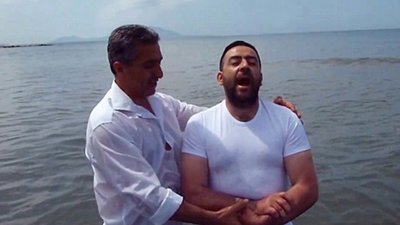
Antonio Montella: The Mobster, the Message, and the YouTube Video That Exposed It All
Italian authorities captured fugitive mob figure Antonio Montella after discovering a YouTube video showing his baptism into the William Branham “Message” movement, which provided investigators with enough geographic and contextual clues to locate his hiding place. His arrest unfolded amid a major ‘Ndrangheta drug-trafficking crackdown, highlighting an unusual intersection between organized crime and a controversial religious sect.
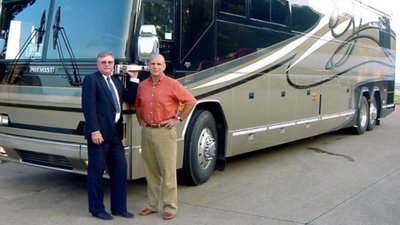
Billy D. Collins: "The Mellow Dynamo" of Tucson Business
Billy D. Collins—son of Willard Collins, former pastor of the Branham Tabernacle in Jeffersonville, Indiana, and father of William (Bill) David Collins—was profiled as a driven Tucson businessman who combined aggressive real-estate/hotel investing with occasional political activism. The 1980 Arizona Daily Star piece portrays him as intensely private yet fast-moving, managing far-flung distressed-property turnarounds while remaining remembered locally for his role in a 1976 property-tax protest and support of an anti-incumbent county supervisor campaign.
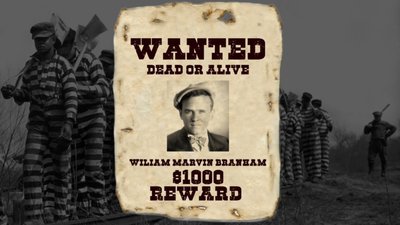
Change of Identity or Stage Persona? What the Records Show About William Branham
Contemporary newspapers, court records, census data, and federal draft registration demonstrate that William Branham’s identity remained stable and publicly traceable through the Prohibition era and into adulthood, despite significant criminal activity and instability within his family. Later name variations—most notably the use of “Henry Branham” and the shift from Marvin to Marrion—align with the construction of a revival-stage persona rather than an attempt to evade law enforcement or conceal his past.
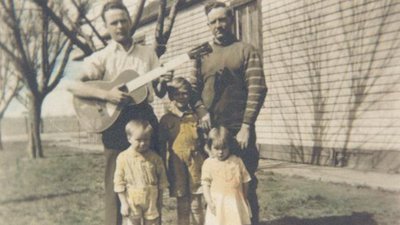
Charles Branham and the Jeffersonville Liquor Network: The Records William Branham Tried to Erase
Historical newspapers, court records, and William Branham’s own admissions establish that Charles Branham was repeatedly arrested and incarcerated for operating illegal whiskey stills connected to Jeffersonville’s Prohibition-era liquor economy. This documented history stands in direct tension with the later stage-persona narrative that reframed family hardship as early fatherlessness and obscured the criminal context that shaped William Branham’s youth.
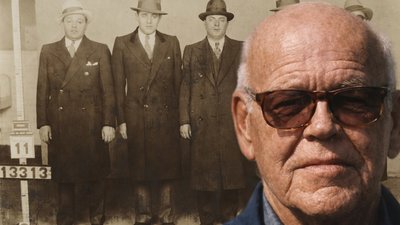
Dub Hagin: The Ex-Gangster Testimony That Fueled the Word of Faith Revival
Dub Hagin rose to prominence within Word of Faith and Full Gospel circles as an itinerant speaker whose authority rested almost entirely on claims of a dramatic criminal past, amplified by his relationship to Kenneth Hagin and revival-era testimonial culture. This examination traces how Hagin’s underworld narrative was promoted, escalated, and sustained within charismatic networks that rewarded sensational conversion stories over historical verification.
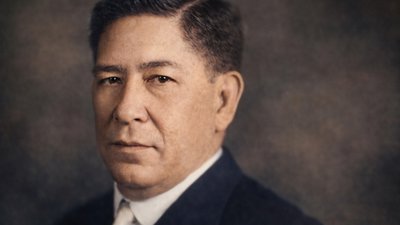
Grover C. Lout
Rev. Grover Cleveland Lout was a Pentecostal leader from Shreveport Louisana and the father-in-law of Rev. Jack Moore,[1] William Branham's close associate and business manager.[2] In 1927 Lout organized the first Pentecostal Assembly[3] in Shreveport, the "Pentecostal Christian Church" later named "Faith Tabernacle"[4] as well as other Pentecostal churches in Louisiana.[5] Lout was the secretary of state for the Pentecostals in Louisiana,[6] and held Pentecostal revivals as far as Fort Worth, Texas.[7]
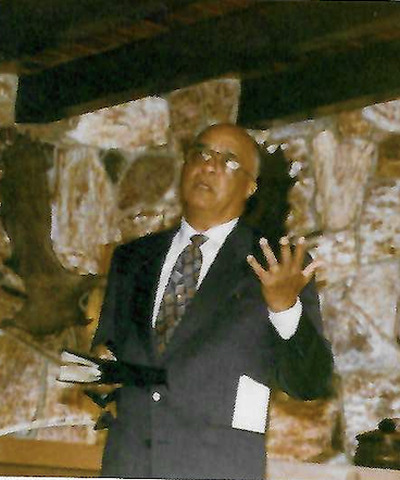
Joseph Coleman
Joseph Coleman was a pastor and strong supporter of William Branham, and a close associate of Pat Tyler. In 2010 Coleman's son Joseph Jonathan Coleman pled guilty to a securities fraud scheme that involved several ranking members of Coleman's church. Coleman was a leader of the Seven Thunders splinter group of the "Message" cult, and deeply involved with Branham's sons and son-in-law George Smith. It was Coleman who dedicated the opening of the Den, the museum in Tucson.
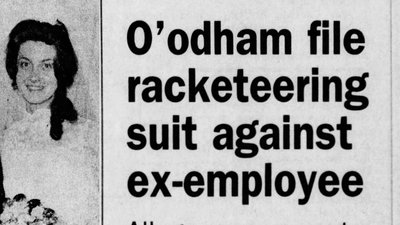
Madelyn Evans
Madelyn Wheeler Evans, daughter of William Branham associate Carl Wheeler, became connected to one of the major financial scandals involving Voice of God Recordings after she and her husband Wayne Evans were implicated in litigation and criminal proceedings over funds embezzled from the Tohono O'odham Nation. Federal allegations described Wayne Evans as secretly controlling Huntington Construction and diverting approximately $1.597 million in tribal funds, with Voice of God Recordings accused in a related racketeering suit before settling for $820,000. Wayne Evans later pleaded guilty to embezzlement and filing a false tax return, while Madelyn Evans fought efforts to question her individually about Wayne's actions, taking the matter as far as the United States Supreme Court.
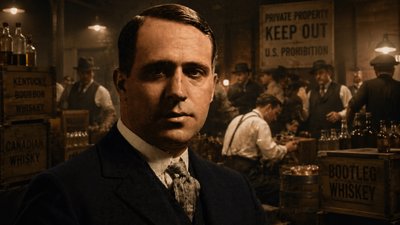
Otto H. Wathen
Otto H. Wathen (1881-1964), was the brother of R. E. Wathen[1] (President of the R. E. Wathen Distilleries). He lived slightly east of Jeffersonville on Utica Pike in the Duffy-Wathen mansion known at the time as "Riverview Farms"[2] and was the secretary of the distilleries.
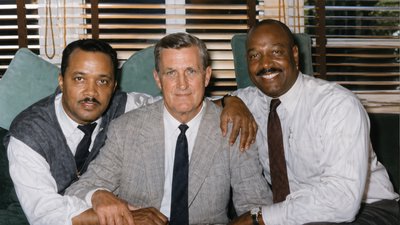
Pat Tyler
Pat Tyler was described by William Branham as a converted gangster and professional gunman who attended Branham's meetings and became part of the wider network of men associated with Branham's ministry. Though the surviving details are limited, Branham publicly identified Tyler among people he personally recognized in his audience, presenting him as an example of criminal conversion within the revival movement. Tyler's later association with Joseph Coleman, whose church was exposed in connection with a Ponzi scheme, places him within the broader orbit of Branhamite figures whose ministries and networks were often marked by controversy, criminality, or financial scandal.
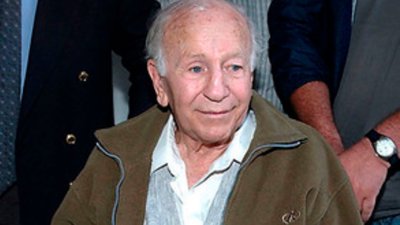
Paul Schafer Schneider
Paul Schafer Schneider was the founder of Colonia Dignidad, a German Pentecostal-Message splinter commune in Chile that outwardly resembled a conservative religious settlement but became a system of authoritarian control, child sexual abuse, torture, weapons production, sarin gas possession, right-wing intelligence activity, and international crime; recruited into William Branham's Message orbit during Branham's 1955 German meetings and later influenced by Branham's end-time prophecy, misogyny, Manifested Sons of God authority, and claims of exclusive truth, Schafer used Branham-like doctrines of spiritual elitism, female inferiority, obedience, and divine authority to dominate followers, while later Ewald Frank's Branhamite influence helped pull many former Colonia Dignidad members into another Message-based sectarian framework.
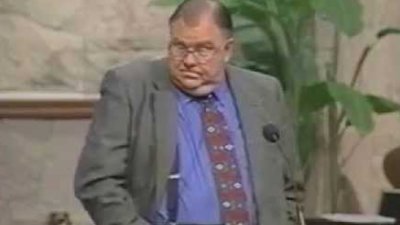
Pearry Green
Rev. Pearry Green was a devoted William Branham supporter, Tucson Tabernacle pastor, and one of the key figures responsible for spreading Branham's "Message" after sponsoring meetings, building Branhamite networks, and promoting Branham's teachings through preaching, publications, outreach, and his book Acts of the Prophet. His close association with Branham in Texas, Jeffersonville, and Tucson helped transform Branham's sermons and personal mythology into a global religious movement followed by millions. Green's legacy, however, is also marked by legal controversy, including numerous civil and criminal lawsuits, allegations involving the movement of property within Branhamite circles, a later conviction for stealing government property, and his inclusion in Gerald Lee Walker's Intent to Sue documentation prepared for Sarah Branham.
R. E. Wathen Distilleries
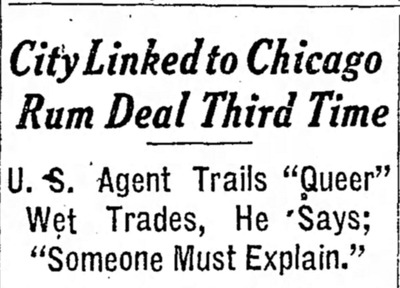
Louisville and Southern Indiana are home of some of the largest Kentucky bourbon distilleries. During prohibition, Otto Wathen was the secretary of the R. E. Wathen Distilleries, the company named after his brother. During prohibition, the R. E. Wathen Distilleries supplied Old Grand Dad whiskey to the Cincinnati and Chicago[1] mobs. During this time, William Branham alleges that his father, Charles Branham, was a driver for Wathen.[2]
Racketeering
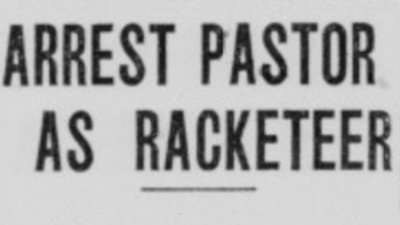
Racketeering describes organized criminal schemes built around coercion, fraud, extortion, or other illegal methods of obtaining money, and several figures or institutions connected to William Branham's movement were accused of such activity. Roy E. Davis, who became an early influence on Branham, was already facing charges for "religious racketeering" when Branham joined with him, while decades later Wayne Evans and Voice of God Recordings were named in a racketeering lawsuit by the Tohono O'odham Nation over funds allegedly diverted through a construction company to support Branham sermon distribution. Related Branhamite splinter movements also faced racketeering allegations, including claims against Berniece Hicks involving fraudulent religious representations and financial injury through tithing, showing how Branham-connected networks repeatedly intersected with accusations of organized religious fraud and financial exploitation.
Robert Gumbura
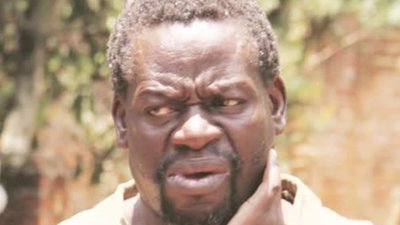
Robert Martin Gumbura was a Zimbabwean End Time Message preacher who transformed William Branham's authoritarian theology into a system of cultic control, sexual exploitation, and social domination. By presenting himself as the exclusive voice of God, surrounding his ministry with Branham's imagery and teachings, and sanctifying polygamy through Message doctrine, Gumbura conditioned followers to equate obedience to him with obedience to God, making dissent, refusal, or resistance appear spiritually dangerous. His abuse of women, coercive sexual practices, economic control over congregants, and later prison-based efforts to preserve influence and allegedly extend Message control into political and financial institutions reveal how Branhamite prophetic authority, when localized through Gumbura's leadership, became a mechanism for systemic spiritual, sexual, and institutional abuse.
Vinworth Dayal
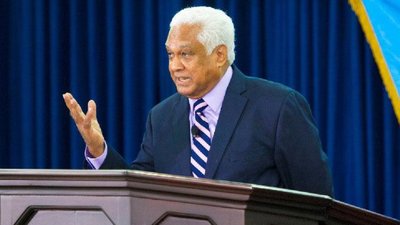
Vinworth A. Dayal, pastor of Third Exodus Assembly in Longdenville, Trinidad & Tobago, is a prominent William Branham "Message" minister whose teachings preserve Branham's Latter Rain and Manifested Sons of God themes through a prophetic restoration framework centered on the "former rain," "teaching rain," and "harvest rain." His ministry became the subject of major public scrutiny after Trinidad and Tobago authorities seized more than $28 million in old $100 bills during the country's currency changeover, later discovering additional funds connected to Dayal's home and church while investigating the source of the money under the Proceeds of Crime Act. Dayal's refusal to participate in a Central Bank interview, his claim that the money was personal rather than church property, and his 2021 money-laundering charge placed his Branhamite ministry at the center of one of the most significant financial controversies associated with the "Message" movement in the Caribbean.
Wayne Evans
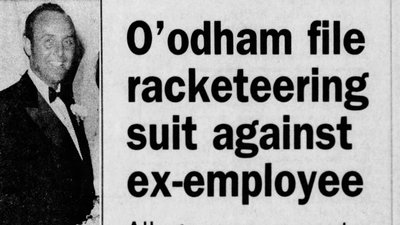
Wayne Evans, a member of a Branham-connected family network through his father Welch Evans and his marriage to Madelyn Wheeler Evans, became central to a major financial scandal involving Voice of God Recordings, the organization that distributes William Branham's sermons and transcripts. Federal allegations stated that Evans secretly controlled Huntington Construction and diverted approximately $1.597 million from the Tohono O'odham Nation, with the funds allegedly used in connection with Voice of God Recordings, which had already been named in a racketeering suit before settling for $820,000. Evans later pleaded guilty to embezzling $1.6 million and filing a false income tax return, while his wife Madelyn fought questioning related to his actions in a matter that reached the United States Supreme Court, further tying the Evans family and Voice of God Recordings to one of the most significant financial controversies in the Branham "Message" movement.
No records found.