
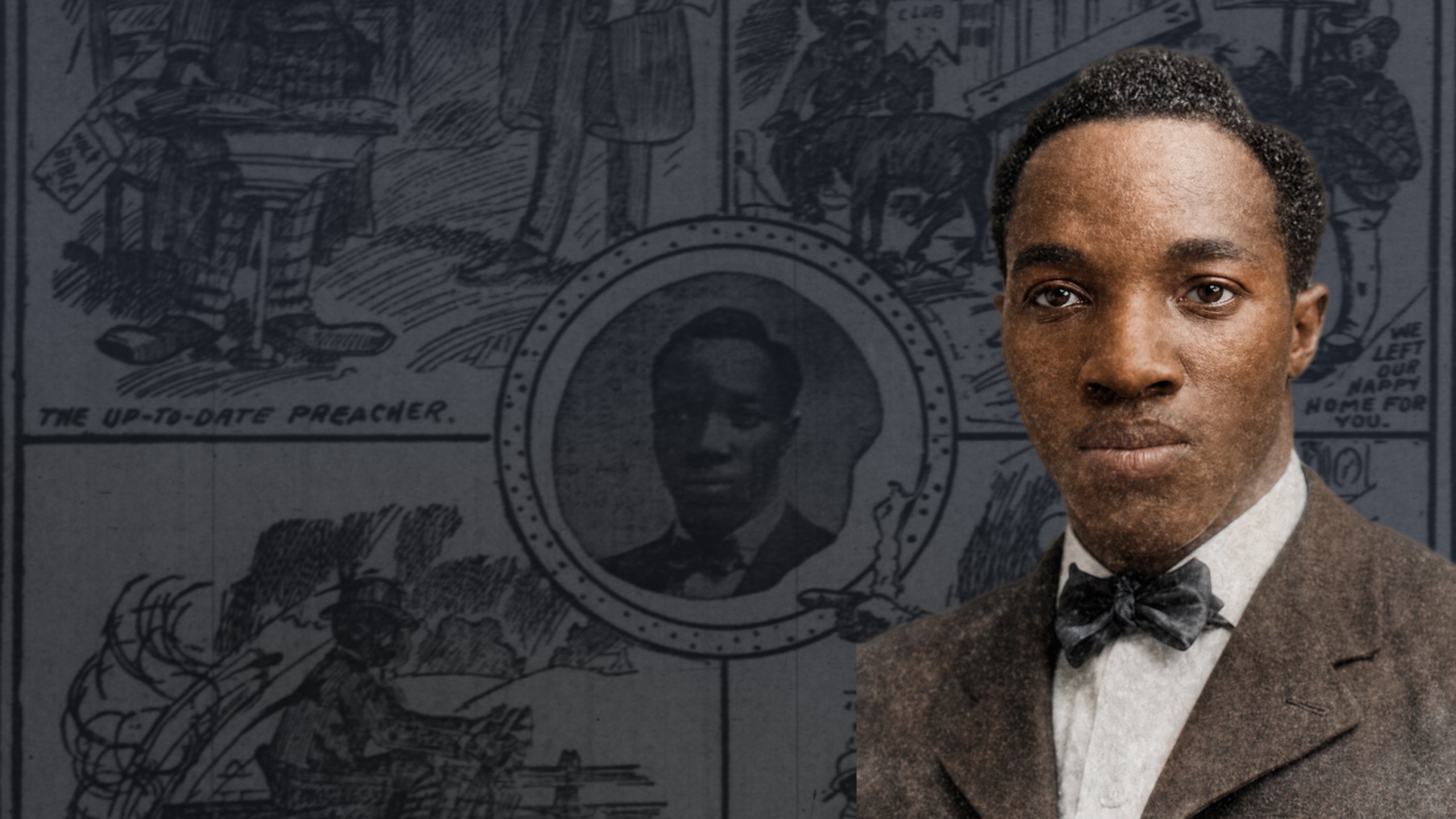
Garfield T. Haywood
Rev. Garfield T. Haywood was a Black Indianapolis Pentecostal leader, hymn writer, presiding bishop in the Pentecostal Assemblies of the World, and one of the most important early voices of Oneness Pentecostalism, helping make Indianapolis a major center for Jesus Name baptism while ministering through intense racial and religious persecution during the rise of the Indiana Ku Klux Klan; his interracial congregation, tract "Victim of the Flaming Sword," and hymn "The Waterway" stood in sharp contrast to the white supremacist religious networks around Roy E. Davis and William Branham, whose later movements absorbed, obscured, or reinterpreted elements of Haywood's Oneness influence while presenting themselves as the true source of restored baptismal truth.
Rev. Garfield T. Haywood was a black Pentecostal preacher in Indianapolis who was one of the early founders and presiding bishops of the Pentecostal Assemblies of the World.[1] During the reign of the Indiana Ku Klux Klan in the 1920s, Haywood was persecuted for both his religion,[2] his skin color, and his interracial services.[3] As much as forty percent of his congregation was white,[4] and Haywood held revivals all across Indiana.
Haywood was one of the early adherents of the "Jesus Name" doctrine, the belief that converts to Christianity should be baptized in the name of "Jesus" instead of the "Father, Son, and Holy Spirit" as is practiced in Trinitarian churches. Haywood was a founding member of and one of the strongest advocates for "Oneness Pentecostalism".[5] As a result, Indianapolis became a major international center for adherents of Oneness Pentecostalism and many Pentecostals around the globe abandoned the doctrine of the Trinity.[6]
In January of 1923, Garfield Haywood published his tract entitled "Victim of the Flaming Sword". The religious tract focused upon the third chapter of the Book of Genesis from the Old Testament which described mankind being driven out of the Garden of Eden never to return due to "a flaming sword that turned every way to guard the way to the tree of life." Symbolically, this could easily be applied to the heavily persecuted black Christians of the era. Haywood's tract declared that Jesus Christ made a way around the "flaming sword" which Christians would find "in the last day".
In the heat of the struggle He cried, "I thirst," and as darkness settled upon Him the lamentable cry, "My God, my God, why hast thou forsaken me," brought the terrible conflict to an end. And when He cried with a loud voice, "It is finished," He gave up the ghost and entered into paradise. Thus he braved the flaming sword and gained for us a right to the tree of life in the midst of the paradise of God. (Revelation 2:7, 22:14). Whether we live or die, that life is for us and He shall raise us up in the last day. (John 6:54; Revelation 2:10.) [7]
The white supremacy answer to Haywood's tract was formed just months after "Victim of the Flaming Sword" was published. Col. William Joseph Simmons, founder of the 1915 Ku Klux Klan,[8] and his second in command,[9] Roy E. Davis organized a white supremacy group named "The Knights of the Flaming Sword"[10] and held their first meeting in February of 1924. Though the group did not last very long due to financial issues, Roy E. Davis, a Baptist minister, continued the mission and invaded Indiana Pentecostalism by posing as a Pentecostal and founding a Pentecostal sect. In Jeffersonville, Indiana, Davis organized the headquarters for the "Pentecostal Baptist Church of God" which eventually transitioned into the "Billy Branham Pentecostal Tabernacle" and was later renamed "Branham Tabernacle".
"The Waterway", a hymn frequently heard in William Branham's revival and later in churches associated with William Branham's cult of personality was penned by G. T. Haywood.[11] While distracting listeners from Haywood's work and claiming to have been "God's Voice" to bring the "correct baptism" to the world, William Branham used Haywood's song as inspiration.
As the late minister of the Gospel, when the pentecostal message first started falling, the late Dr. Haywood, just before...He, I guess, didn't...Maybe when he was in his best, one day when the Spirit struck him. He was a poet, besides a preacher. He grabbed his pen and penned it. "It shall be Light in the evening time,The path of glory you will surely find;In the water way is the Light today,Buried in the precious Name of Jesus. Young and old, repent of all your sin, And the Holy Ghost will surely enter in;For the evening Lights have come,It is a fact that God and Christ are one."[12]
Even today, many of William Branham's converts believe that William Branham is the reason that churches around the world abandoned the Trinitarian baptism to become "Jesus Only".