
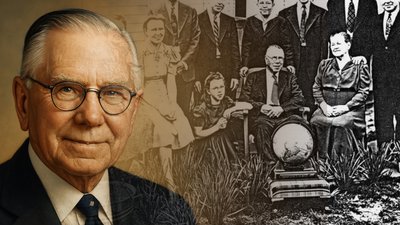
A. J. Tomlinson: Architect of a Theocratic Pentecostal Empire
Here is a clear, tight two-sentence summary of the entire passage: A. J. Tomlinson, a former Quaker turned Pentecostal leader, transformed the Church of God (Cleveland, TN) into a major Pentecostal denomination, but his authoritarian governance and financial controversies led to his 1923 removal and a lasting schism that reshaped the movement. The fallout opened the door for white supremacist influence through figures like Roy E. Davis, while Tomlinson’s son Homer later extended his father’s theocratic ambitions into politics—founding the Theocratic Party, declaring himself “King of the World,” and blending Pentecostalism with British Israelism and dominionist aspirations.
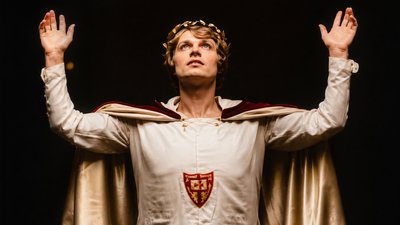
Aimee Semple McPherson: The Scandalous Rise of Pentecostalism’s First Superstar
Aimee Semple McPherson was the founder of the Foursquare Church and Angelus Temple, one of America's earliest megachurch figures, and a formative force behind the Pentecostal networks that later intersected with William Branham, Latter Rain, Christian Identity-adjacent figures, and the postwar healing revival; her career combined spectacular faith-healing claims, media mastery, racial-equality symbolism, relationships with figures tied to white supremacist networks, the 1926 kidnapping scandal, alleged real-estate fraud, and a powerful Los Angeles revival institution that trained or influenced key Branham-linked figures such as LeRoy Kopp, Herrick Holt, Wesley Swift, and Gerald Winrod, making her Angelus Temple a crucial bridge between early Pentecostal celebrity, revival spectacle, Foursquare expansion, and later charismatic movements.
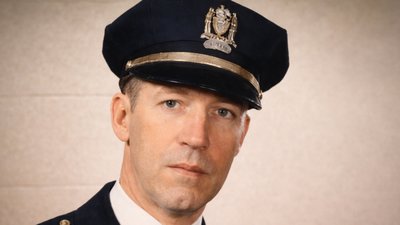
Albert E. Farrar: Policeman to Pentecostal
Albert E. Farrar, a long-serving police captain in Tacoma, Washington[1], emerged as an unexpected yet influential figure in mid-century Pentecostal evangelism[2]. His religious conversion, though not precisely dated, was widely publicized in revivalist circles throughout the 1940s and 1950s[3]. Known to many in the Pacific Northwest as a no-nonsense lawman[4], Farrar became a staple testimonial figure in Pentecostal publications and advertisements[5], often introduced as the “Converted Tacoma Policeman”[6]. His appearances at revival meetings—such as those held by W. J. Ern Baxter at the Evangelistic Tabernacle[7]—were framed to signal divine transformation, presenting Farrar as a man of both worldly authority and spiritual renewal[8]. The narrative surrounding his faith journey reinforced the idea that even the most hardened public servants could experience radical salvation and become vessels for moral leadership.
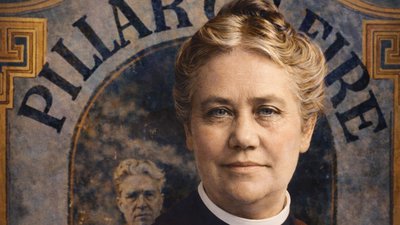
Alma White, the Holy Jumpers, and the Racial Politics Behind Early Holiness Rituals
The Pillar of Fire gained increasing public scrutiny in 1926 when newspapers labeled the “Holy Jumpers” a cult after 22-year-old Ruth Marshall joined the sect and refused to return to her family. Reporters emphasized her intense devotion, noting that her “eyes burn[ed] with a religious zeal,” which reinforced concerns about the group’s influence and controversial practices.
Azusa Street in Flames: Earthquake, Ecstasy, and the Birth of Pentecostal Chaos
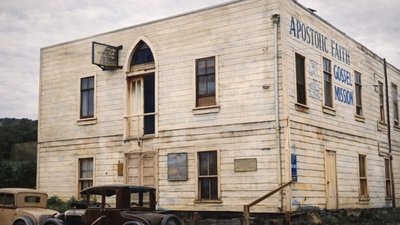
In the aftermath of the 1906 San Francisco earthquake, the Azusa Street Revival in Los Angeles emerges as a racially charged, chaotic experiment in Holiness ecstasy that even contemporary newspapers depicted as fanatical, irreverent, and socially destabilizing. Drawing on reports from the Los Angeles Times, critics like Nettie Harwood, and Charles Fox Parham’s own disgust at interracial worship, the narrative traces how a confused mixture of Holiness practices, occult phenomena, and apocalyptic fervor produced “pilgrims” who carried this volatile spirituality into early Pentecostal denominations and later healing revivalists such as F. F. Bosworth.
Bosworth Brothers Campaigns: The Business of Revival
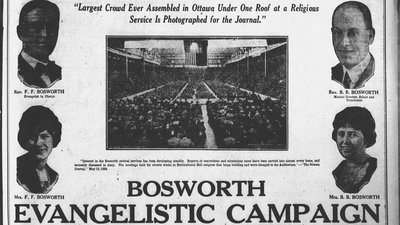
F. F. and B. B. Bosworth helped transform early twentieth-century revivalism into a polished, large-scale public program that blended music, disciplined preaching, and highly publicized healing services, often buoyed by unusually favorable newspaper coverage. Their campaigns grew from multi-day Alliance meetings into "mammoth tent" spectacles and month-long series, but the movement’s credibility faced sharper scrutiny when widely reported healings—especially the James Buck episode in Altoona—raised questions about claims, reporting, and accountability.
Brainwashing: How Spiritual Authority Becomes Social Control
Coercive persuasion in religious settings often works by narrowing what feels safe to question, reshaping trust, and attaching emotional consequences to agreement or dissent. These patterns are not universal across Pentecostal, Charismatic, or NAR-adjacent groups, but they appear frequently enough in high-control environments that they can be identified through consistent outcomes like fear of leaving, isolation, and "us versus them" framing.
British Israelism and Its Hidden Influence on Early Pentecostal Theology
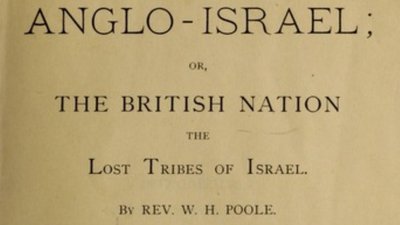
British Israelism emerged as a nineteenth-century pseudoarchaeological theology that reimagined Anglo-Saxon nations as the covenant heirs of biblical Israel. Through revival networks and healing movements, its themes of prophetic destiny and eschatology influenced early Pentecostal leaders and later provided a foundation for more radical doctrines adopted by figures such as William Branham.
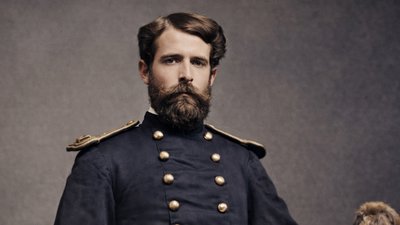
C. A. L. Totten and the American Rise of British Israelism
Charles Adiel Lewis Totten was a Yale military science professor turned apocalyptic theorist whose writings helped establish British Israelism in the United States and popularized mathematically calculated end-times prophecy. His fusion of pyramidology, numerology, and imperial theology influenced later doomsday movements and shaped ideas that flowed into early Pentecostalism and Christian Identity thought.
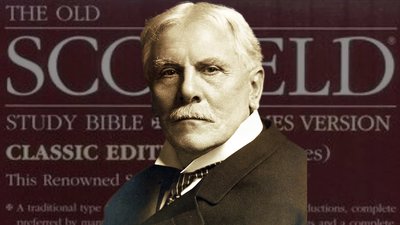
C. I. Scofield: From Forgery Charges to the Scofield Reference Bible
C. I. Scofield, best known for the influential Scofield Reference Bible, rose to prominence after a career marked by political corruption, financial fraud, and criminal convictions for forgery. His later theological authority, heavily indebted to John Nelson Darby’s dispensationalism, profoundly shaped Fundamentalist, Pentecostal, and Latter Rain movements, including ideas used to legitimize modern prophetic and angelic claims.
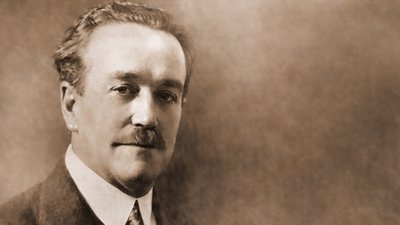
Charles Fox Parham: Fraud, Racism, and the Dark Origins of Pentecostalism
Charles Fox Parham, often credited as a founding figure of Pentecostalism, was deeply entangled with fraud schemes, racial ideology, and extremist theology that shaped both his ministry and his legacy. His promotion of British Israelism, segregation, and apocalyptic communal experiments reveals a movement rooted not only in revivalism but also in white supremacy and exploitation.
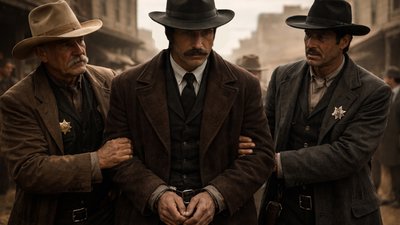
Charles Parham’s 1907 Arrest: The Case Pentecostal History Tried to Forget
Recently digitized newspaper records from San Antonio allow the reconstruction of Charles Fox Parham’s 1907 arrest and prosecution, long obscured by euphemistic reporting and denominational silence. Contemporary accounts document the charges, evidence, and Parham’s own courtroom testimony, challenging later portrayals that minimized or dismissed the case.

Charles Sanson and the Collapse of Zion: Free Love, Prophecy, and Polygamy
After the decline of John Alexander Dowie, Zion City became a breeding ground for rival prophets, none more controversial than Charles Sanson, leader of the Adam and Eve Free Love Cult. Sanson’s rejection of civil marriage, embrace of sexual communalism, and repeated clashes with the courts reveal how Zion’s authoritarian religious structure collapsed into sectarian extremism and legal intervention.
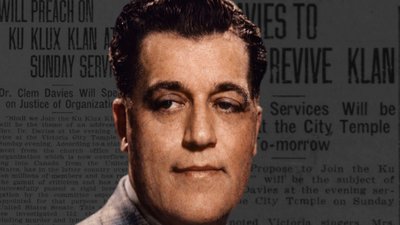
Clem Davies: The White Supremacist Preacher Behind Revivalist Networks
Clem Davies was a transnational revivalist figure whose ministry fused white supremacy, British-Israelism, and apocalyptic prophecy with mass revival techniques decades before the rise of postwar healing movements. His networks, teachings, and organizational methods formed an ideological and structural pipeline that carried racialized theology into later Pentecostal, Latter Rain, and charismatic revival contexts.
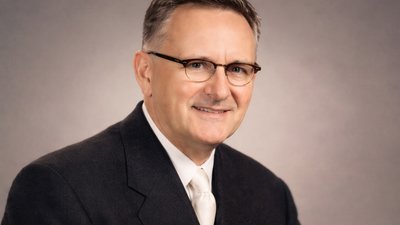
David du Plessis and the Hidden Architecture of Charismatic Power
David du Plessis, widely known as “Mr. Pentecost,” played a decisive role in transforming early Pentecostal revivalism into a trans-denominational charismatic movement built on relational authority, networks, and institutional access. Through documented collaborations with William Branham, Gordon Lindsay, healing revival leaders, ecumenical councils, and political mobilizations, his ministry helped establish the structural and cultural foundations later formalized within the New Apostolic Reformation.
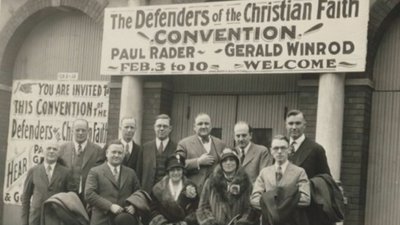
Defenders of the Christian Faith: How Fundamentalism Fueled Fascism in America
The Defenders of the Christian Faith emerged in the 1920s as a fundamentalist movement that fused biblical literalism with political radicalism, eventually aligning itself with fascist and antisemitic ideology. Under the leadership of Gerald Burton Winrod, the organization played a significant role in spreading Nazi propaganda in the United States and was ultimately named as a co-conspirator in the Great Sedition Trial of 1944.
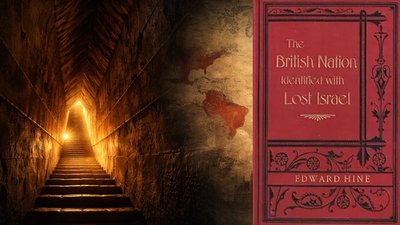
Edward Hine and the Secret Racial Roots of British Israelism
Edward Hine was a central figure in transforming British Israelism from a fringe theological theory into a racialized ideological system. His teachings blended pseudo-science, prophecy, and imperial politics, laying foundations that later influenced extremist identity movements.
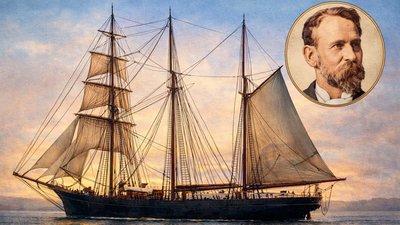
Frank Sandford: The Floating Utopia of Starvation That Shaped Pentecostal History
This account examines the rise of Frank Sandford, a Maine-based cult leader who claimed to be the prophet Elijah and led his followers into starvation, abuse, and death through apocalyptic theology and absolute control. From a land-based commune at Shiloh to a disastrous missionary voyage at sea, the narrative traces how selective biblical interpretation and charismatic authority produced one of the deadliest religious experiments of early twentieth-century America.
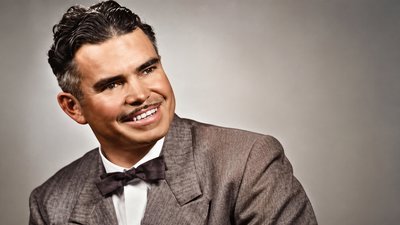
Franklin Hall
Franklin Hall was a Pentecostal healing evangelist whose 1946 book Atomic Power with God through Fasting and Prayer became one of the major catalysts for the Latter Rain and Voice of Healing revivals, promoting fasting as a source of supernatural power, healing, resurrection faith, and end-time victory; while his teachings influenced figures such as William Branham and other revivalists during the movement's rise, Hall's fasting theology grew increasingly extreme, producing reports of physical and mental harm among followers, alienating other evangelists, and eventually leading him to form the Deliverance Foundation, where his gospel of fasting, child-preacher spectacle, and body-centered salvation claims continued in a more isolated cultic form.
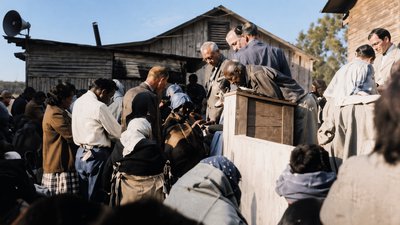
From Pentecost to Pentecostalism: The Biblical Invitation Versus the Modern Altar Call
William Branham's condemnation of altar calls reveals a striking contradiction between his anti-revivalist rhetoric and his own revival practice, since he denounced altar calls as unbiblical, emotionally manipulative, and merely Methodist in origin while continuing to use them from the earliest surviving recordings through the final weeks of his ministry; by claiming that his attack on altar calls came under "anointing," then defending the statement after backlash while still calling people forward in increasingly harsh and rebuking appeals, Branham exposed the tension between his desire to reject broader Pentecostal and revivalist tradition and his continued dependence on the very ritual machinery that sustained his healing campaigns and shaped the religious experience of his followers.
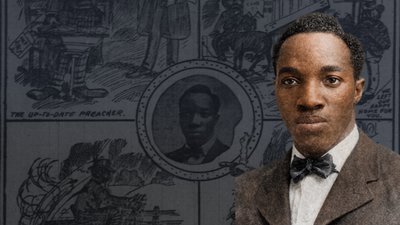
Garfield T. Haywood
Rev. Garfield T. Haywood was a Black Indianapolis Pentecostal leader, hymn writer, presiding bishop in the Pentecostal Assemblies of the World, and one of the most important early voices of Oneness Pentecostalism, helping make Indianapolis a major center for Jesus Name baptism while ministering through intense racial and religious persecution during the rise of the Indiana Ku Klux Klan; his interracial congregation, tract "Victim of the Flaming Sword," and hymn "The Waterway" stood in sharp contrast to the white supremacist religious networks around Roy E. Davis and William Branham, whose later movements absorbed, obscured, or reinterpreted elements of Haywood's Oneness influence while presenting themselves as the true source of restored baptismal truth.
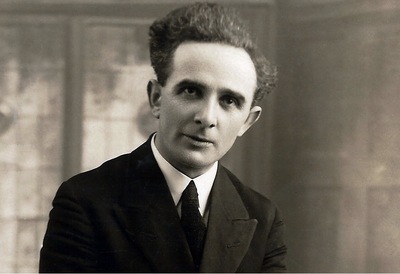
George Jeffreys
George Jeffreys was a Pentecostal minister and founder of the Elim Foursquare Gospel Alliance. Jeffreys was a Welsh Congregational Church minister who converted to Christianity in the Welsh Revival of 1904.[1] When the Welsh Revival ended and Pentecostalism began to spread into Wales, George and his brother Stephen were converted to the Pentecostal faith.[2] The timing of his conversion coincided with the First World War; Jeffreys was ordained as a minister in 1913 and therefore exempt from military conscription when war broke out in 1914.[3]
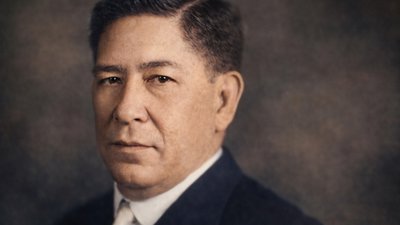
Grover C. Lout
Rev. Grover Cleveland Lout was a Pentecostal leader from Shreveport Louisana and the father-in-law of Rev. Jack Moore,[1] William Branham's close associate and business manager.[2] In 1927 Lout organized the first Pentecostal Assembly[3] in Shreveport, the "Pentecostal Christian Church" later named "Faith Tabernacle"[4] as well as other Pentecostal churches in Louisiana.[5] Lout was the secretary of state for the Pentecostals in Louisiana,[6] and held Pentecostal revivals as far as Fort Worth, Texas.[7]
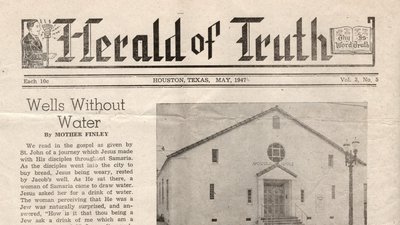
Herald of Truth
The Herald of Truth was W. E. Kidson's Pentecostal publication and a key early platform for William Branham, listing Branham as associate editor as early as 1947, advertising his healing campaigns, publishing his revival schedule, and using the phrase "The Voice of Healing" before Branham later launched a competing magazine under that name; the May 1947 issue is especially important because it places Branham inside UPC-connected publishing and revival networks, contradicts later claims that he was merely Baptist, uneducated, or illiterate, and preserves evidence of missing campaign stops from the year Branham's healing ministry was being organized, marketed, and mythologized.
No records found.