
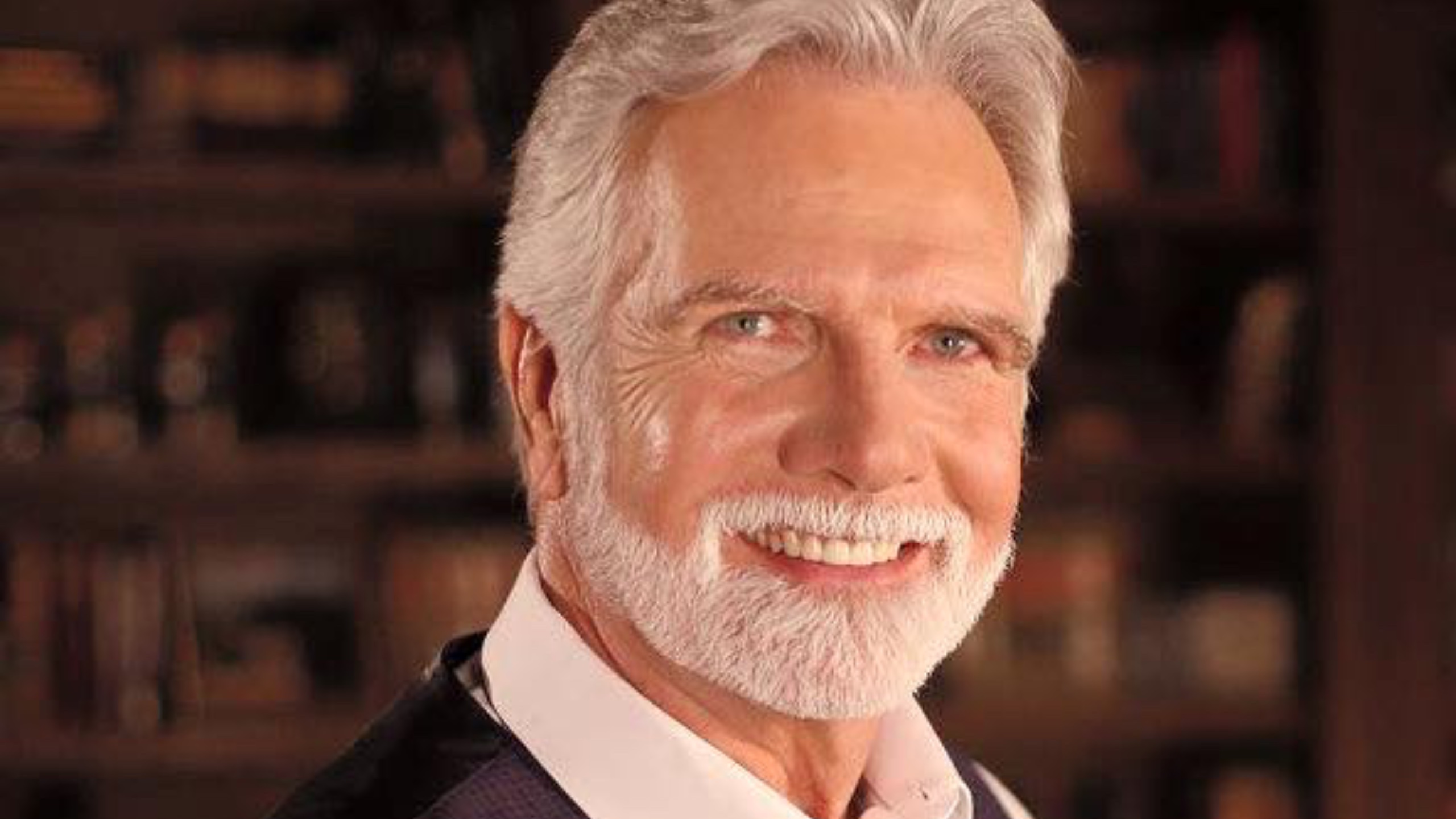
John Paul Jackson
John Paul Jackson was a major prophetic teacher in the charismatic and New Apostolic Reformation orbit whose ministry centered on dreams, visions, prophecy, and supernatural interpretation, but his influence was deeply tied to the controversial Kansas City Prophets, Mike Bickle, Paul Cain, Bob Jones, and John Wimber. Through Streams Ministries, Christian television appearances, and international training courses, Jackson helped popularize dream interpretation as a prophetic practice while promoting a model in which believers were expected to submit to prophetic authority and practice "instant obedience to the prophets." His reputation, however, was shadowed by failed predictions, including claims about the Westlake Hardware Store building, a major 1988 financial collapse, and an anticipated 1990 revival in Britain, all of which raised serious questions about the reliability of his prophetic authority and the broader system of spiritual control built around the Kansas City prophetic movement.
John Paul Jackson was an influential American author, teacher, and founder of Streams Ministries International. He is widely recognized for his focus on supernatural topics such as dreams, visions, and biblical dream interpretation. Born in Midland, Texas, Jackson's spiritual journey began at a young age when he allegedly experienced vivid dreams and supernatural encounters that shaped his calling into prophetic ministry.[1] He developed numerous prophetic training courses that aimed to equip believers with the ability to interpret dreams and understand divine visions.
Jackson's early ministry saw him serving as the senior pastor of two churches, where he honed his teaching and leadership skills. His position as assistant pastor with the Vineyard Movement's Christian Fellowship in Anaheim, California,[2] introduced him to evangelist and so-called NAR prophet Paul Cain, who had worked closely with William Branham during the Latter Rain Movement. In late 1988, Cain visited the Anaheim Vineyard to deliver a prophetic message to the group. During his visit, a 6.9 earthquake flattened Soviet Armenia, news of which had not yet reached the United States. Cain claimed that God had informed him via prophecy that a large earthquake would occur to announce his arrival, as well as one that would occur soon after he departed from Anaheim.[3] The claim was made that an earthquake in Pasadena — a city that often experiences more quakes in a year than there are days[4] — was the fulfillment of his alleged prediction. Leadership at Vineyard associated the Armenian quake with Cain's so-called prophecy, not realizing that the quake had happened during his visit. Soon after, Jackson joined Mike Bickle, Paul Cain, and John Wimber at Metro Christian Fellowship in Kansas City, Missouri, and became an established prophetic voice within the charismatic community.
A prolific author and conference speaker, Jackson's influence extended beyond church walls. He was a regular guest on various Christian television programs, including "The 700 Club," "Sid Roth's It's Supernatural," Benny Hinn's "This Is Your Day," and "Joni Lamb's Table Talk,"[5] where he shared his insights on dreams and prophecy with a broader audience. His own television program, "Dreams & Mysteries with John Paul Jackson," aired on Daystar, further establishing his presence in the Christian media landscape.
Jackson's ministry was not without controversy, particularly during his time with the Kansas City Prophets, a group known for its prophetic ministry and the controversies that surrounded its practices and doctrines. Jackson and the so-called prophets sought to reform the modern church through questionable prophetic practices and their own interpretation of so-called spiritual dreams. Jackson carried the legacy forward, offering courses and training programs across six continents, which attracted thousands of students eager to learn from his experiences and teachings. Jackson's position within the NAR as a prophet became so solidified that even his failed predictions could not shake his influence, and he remains a crucial figure in NAR history.
John Paul Jackson's collaboration with Mike Bickle marked a pivotal chapter in his prophetic ministry. Their partnership began in the mid-1980s when Jackson joined the Kansas City Fellowship, a group led by Bickle that was gaining prominence for its focus on prophetic ministry. Jackson quickly emerged as a key figure within the Kansas City Prophets,[6] a group of ministers who claimed that God was forming a spiritual army to battle the forces of evil and bring a final revival before the impending End of Days. Bob Jones, Paul Cain, and John Paul Jackson all proclaimed that this alleged revival would break out in Britain in 1990 and that it would spread across England and Scotland, leading to a massive revival across Europe. To promote John Wimber's meetings in East London in October of that year, Cain predicted that the revival would be launched in London during Wimber's mission at the Docklands Conference Centre.[7]
Jackson's role within this group was significant. The Kansas City Prophets believed that Jackson had deep spiritual insights and that his ability to articulate complex prophetic messages appealed to the developing new wave of Charismatics. As a result, Jackson played a crucial role in establishing the group's agenda. He collaborated with Bickle to develop a church growth strategy that involved a prophetic awakening within the church. Converts to the movement were led to believe that the so-called apostles and prophets, through their prophetic revelations, could guide and prepare the church for a significant move of God. Furthermore, as the singular authorities on those alleged revelations, they claimed the right to redefine the structure and doctrine of the Christian church. Jackson declared that those in the new order must practice "instant obedience to the prophets."[8] The Kansas City Prophets were creating what would become a new breed of Christian, a militant version that placed more emphasis on prophecy than on the Gospel of Jesus Christ.
Working with others in the Kansas City Fellowship, Jackson's ministry transitioned to emphasize spiritual dreams and their interpretations. He developed a structured approach to understanding and interpreting dreams and taught that God communicated with His people through their dreams. The other so-called prophets recognized the power of that strategy since many people have dreams when they sleep. At the same time, it gave the so-called prophets insight into the minds of their converts. Jackson encouraged converts to record their dreams so that he could teach them their "personal dream alphabet."[9] According to Jackson, "We can learn to interpret 99% to 100% of our dreams by recording them."
Claiming to have the ability to understand the dream sequences of converts posed little risk. Since converts had no way to prove whether or not the alleged interpretations of those dreams were correct, Jackson had free rein in determining the so-called dream alphabets. However, when Jackson broadened his approach to include prophecy, and his prophecies began to fail, people were suddenly faced with an uncomfortable truth. While he claimed to have received spiritual insight from God, each failed prophecy suggested that Jackson's "god" was clueless about future events.
Such was the case with Jackson's 1988 prophecy concerning the Westlake Hardware Store building. In the summer of 1986, Jackson predicted that two congregations taken over by the fellowship would merge and occupy the hardware store by December. Apparently, plans that had spawned the so-called prophecy fell through, and the two congregations did not merge until the spring of the following year.
On January 16, 1987, I met one-on-one with Wes Adams to discuss many of the topics contained in this letter. In mid-February, several of us men from Olathe Fellowship met with the leadership of KCF. The most often used response to our questions was to ‘trust me,'--don't question, because we had heard from God. "Sometime in the summer or fall of 1986, John Paul Jackson prophesied that the vacant Westlake Hardware Store building was ours. Leadership announced that the two congregations would occupy it together in December, 1986. John Paul even led us in a march around the property and anointed the corners with oil. Leadership pursued a lease with the building owner. A period of confusion followed, with a general lack of information regarding the Westlake Building. Finally on 2-18-87, Bob Scott of KCF informed us that we would get the building. He explained that John Paul should have said that we would be in this building sometime in the future. John Paul Jackson lost credibility that night as a spokesman for God, at least in my eyes. Also, contrary to the prophecy, the two bodies did not merge until spring of 1987.[10]
- Testimony Letter
Jackson's so-called prophecies were often predictions based on a series of known events. After the stock market plunge in 1987, for example, Jackson predicted that a severe financial collapse would occur in 1988. He described the event as "another shaking, another severe shaking that will lead to a fall." Though other financial declines would occur from time to time, Jackson predicted that they would be "nothing like 1988 will bring."[11] Jackson's prediction was more of a guess than it was God speaking through him to the church; nothing that even resembled a financial collapse occurred in 1988. The stock market remained relatively stable, and the financial disaster that Jackson had foreseen did not materialize. This failure had a substantial impact on Jackson's credibility and the reputation of the Kansas City Prophets. Critics and skeptics seized upon the inaccurate prophecy as evidence of the group's fallibility and questioned the validity of their prophetic gifts.
Jackson's failed predictions created tensions within the Kansas City Fellowship. Mike Bickle, as the leader of the fellowship, faced the difficult task of addressing the failed prophecy and its implications. According to Rev. Ernie Gruen's extensive report, "Aberrant Practices and Teachings of Kansas City Fellowship,"[12] Bickle had to navigate the delicate balance of maintaining the integrity of the fellowship while dealing with the disillusionment of their followers and the public.
Bickle's response to the failed prophecy involved a re-evaluation of the group's prophetic practices and a decision to distance the fellowship from Jackson. This decision was not taken lightly, as Jackson had been a key figure in the formation and development of the Kansas City Prophets. However, the need to restore credibility and address the criticisms required decisive action. Bickle's move to distance Jackson from the fellowship marked a turning point in their relationship and the direction of the Kansas City Prophets.