
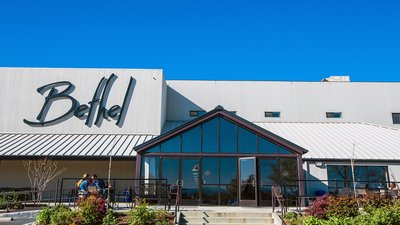
Bethel Church: From Full Gospel to the NAR
Bethel Church’s history reveals a consistent alignment with Latter Rain theology, beginning with mid-twentieth-century revivalism and continuing through modern charismatic movements such as the Toronto Blessing and the New Apostolic Reformation. Leadership transitions repeatedly shifted the congregation away from Assemblies of God oversight and toward faith healing, prophetic authority, and explicit admiration for William Branham’s legacy.
Bob Jones and the Kansas City Prophets: The Blueprint Behind IHOPKC
Bob Jones rose within the Kansas City Prophets and helped shape IHOPKC by promoting dramatic testimony, “technicolor” visions, angel-visit narratives, and end-times claims that echoed earlier Latter Rain patterns associated with William Branham. The through-line is that repeated prophetic failures and escalating dominion-focused timelines were treated as legitimizing “revelation,” creating a template for modern charismatic prophetic authority that continued to influence the NAR and related movements.

Brainwashing: How Spiritual Authority Becomes Social Control
Coercive persuasion in religious settings often works by narrowing what feels safe to question, reshaping trust, and attaching emotional consequences to agreement or dissent. These patterns are not universal across Pentecostal, Charismatic, or NAR-adjacent groups, but they appear frequently enough in high-control environments that they can be identified through consistent outcomes like fear of leaving, isolation, and "us versus them" framing.
C. Peter Wagner, Fuller Seminary, and the Roots of the New Apostolic Reformation
C. Peter Wagner was a central figure in the Church Growth Movement at Fuller Theological Seminary, where he worked alongside John Wimber and helped shape theological currents that later became known as the New Apostolic Reformation. His legacy is marked not only by influence over modern charismatic networks, but also by deeply controversial positions on race, church authority, and social integration that continue to draw criticism from scholars and apologists.
Cal Pierce, Bethel Church, and the Revival of John G. Lake’s Healing Rooms
Cal Pierce, a former businessman and leader within Bethel Church and the Full Gospel Business Men International, played a central role in reviving John G. Lake’s Healing Rooms and transforming them into a global faith-healing network aligned with the New Apostolic Reformation. By restoring and promoting Lake’s legacy—despite Lake’s documented fraud and controversial practices—Pierce helped reinforce NAR theology emphasizing supernatural healing, transferred anointing, and revivalist continuity.

Celestial Beings and the Hidden Roots of Charismatic Theology
This presentation traces the doctrine of celestial beings from British Israelism and Christian Identity movements into the Latter Rain revival through figures such as William Branham and Gordon Lindsay. By examining sermons, historical records, and theological claims, it reveals how pre-existence and celestial body teachings quietly reshaped modern Charismatic Christianity.
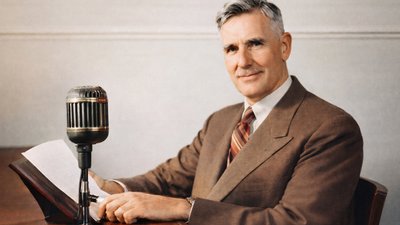
Charles Fuller and the Political Foundations of Modern Evangelical Media
Charles Fuller emerged as a powerful radio evangelist whose ministry blended revivalism, political activism, and prophetic rhetoric during a period of intense religious and cultural upheaval in the United States. His associations with figures such as Gerald B. Winrod, Paul Rader, and William Branham, along with the founding of Fuller Theological Seminary, positioned him as a key transitional figure linking early fundamentalism to later charismatic and Third Wave movements.
David du Plessis and the Hidden Architecture of Charismatic Power
David du Plessis, widely known as “Mr. Pentecost,” played a decisive role in transforming early Pentecostal revivalism into a trans-denominational charismatic movement built on relational authority, networks, and institutional access. Through documented collaborations with William Branham, Gordon Lindsay, healing revival leaders, ecumenical councils, and political mobilizations, his ministry helped establish the structural and cultural foundations later formalized within the New Apostolic Reformation.
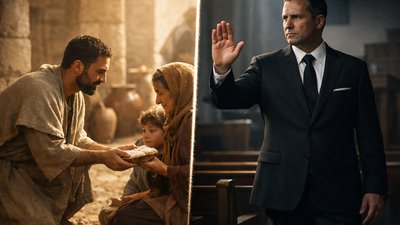
Deacons as Servants or Enforcers? Scripture Versus Branham’s Church Order
The New Testament presents deacons as servants entrusted with practical care and moral integrity, not as enforcers of authority or discipline. This study contrasts that biblical role with William Branham’s authoritarian redefinition of deacons as church “police,” exposing a fundamental shift from service-oriented ministry to control-based governance.
Derek Prince and the Roots of Deliverance Theology
Derek Prince played a formative role in shaping modern Charismatic theology through his teachings on deliverance, spiritual warfare, and prayer, while maintaining close ties to influential networks surrounding William Branham and the Full Gospel Business Men’s Fellowship. His legacy—cemented through the Shepherding Movement and overlapping with Latter Rain and prosperity teachings—helped lay the groundwork for the authoritarian apostolic structures later embraced by the New Apostolic Reformation.
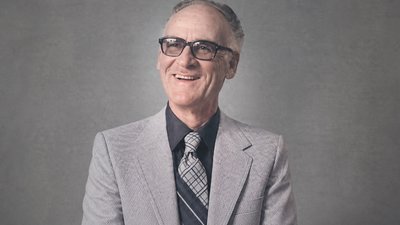
Ern Baxter
Ern Baxter was a Canadian Pentecostal minister, Bible teacher, and William Branham campaign manager whose work in the Baxter-Branham campaigns helped shape the postwar healing revival, Latter Rain theology, and later charismatic authority structures, especially through his role in explaining, defending, and managing Branham's supernatural stage persona before eventually separating over Branham's increasingly dangerous doctrine; Baxter's later leadership in the Shepherding Movement carried forward the authoritarian currents already present in Latter Rain, while his public reflections on Branham exposed the healing revival's deeper problems of exaggerated miracle claims, lack of accountability, doctrinal instability, celebrity ministry, and the danger of gifted leaders operating outside responsible plurality and biblical community.
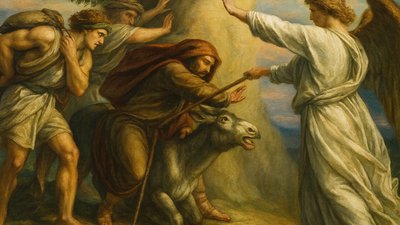
From Balaam to the New Apostolic Reformation: The Normalization of Prophetic Error
William Branham repeatedly used Balaam as a theological model to argue that genuine prophetic anointing and supernatural accuracy can coexist with doctrinal error, moral compromise, and destructive teaching, a framework he applied to the Latter Rain, the postwar Healing Revival, and later Charismatic and NAR movements. While this Balaam typology allowed Branham to critique revival excesses without denying supernatural experience, it also reshaped the biblical narrative in ways that insulated prophetic authority from accountability and helped normalize permissive theology under the language of unity, gifting, and success.
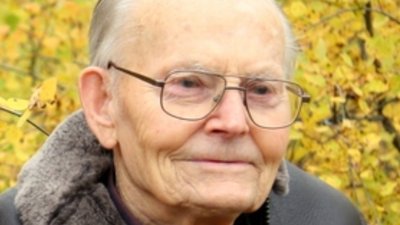
George Warnock
George Warnock was a key Latter Rain figure whose work as Ern Baxter's secretary placed him near William Branham's healing-revival network before he joined the Sharon Orphanage and helped systematize the movement's restorationist theology. His 1951 book, The Feast of Tabernacles, framed Israel's feasts as a prophetic pattern for church history culminating in the Manifested Sons of God, a doctrine teaching that end-time "overcomers" would come into unity, embody Christ's mind, and establish God's kingdom on earth. Although Warnock is often credited with creating the doctrine, the timeline suggests that Branham had already been teaching core concepts of supernatural manifestation and "sons of God" before Warnock's formal involvement at Sharon, making Warnock less the originator than the theological organizer of ideas already circulating through Branham's ministry and the early Latter Rain movement.
How William Branham and Latter Rain Rewrote the Five-Fold Ministry
This work examines the biblical foundation of the so-called five-fold ministry and traces how restorationist movements transformed ministry gifts into hierarchical authority structures. By following the doctrine from Ephesians 4 through Latter Rain theology, William Branham, and modern charismatic networks, it demonstrates how authoritarian control and spiritual abuse emerged as consistent fruit.
International House of Prayer
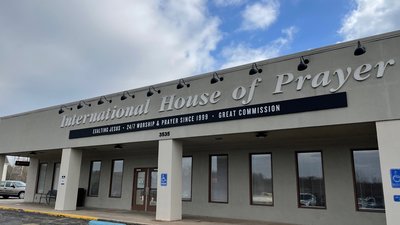
The International House of Prayer (IHOPKC), an organization in Kansas City established in 1999 by Mike Bickle, is a very influential part of the New Apostolic Reformation's (NAR) apostolic network. IHOPKC is known for its 24/7 prayer and worship services and its emphasis on prophetic and apostolic authority. The organization is frequently under fire for its lack of accountability, especially after former members began claiming that members of the leadership were grooming them for sex.[1]
Joel's Army
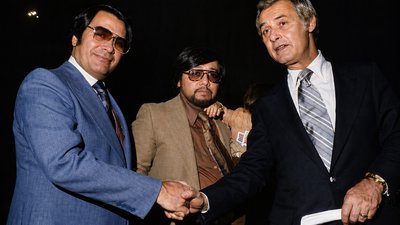
The postwar healing revival and Latter Rain movement emerged from Cold War fear, anti-communist prophecy, divine-healing spectacle, and restorationist claims that God was raising new apostles, prophets, and spiritually elite leaders whose spoken words carried scriptural authority, and within that environment William Branham's Manifested Sons of God theology taught that the believer, and especially the end-time prophet, could become a living manifestation of God with power to create, heal, judge, and supersede previous biblical revelation; Jim Jones carried this framework into Peoples Temple, using Branham-like language of the Spoken Word, Joel's Army, divine manifestation, prophetic authority, and "ye are gods" theology to present himself as the highest manifestation of God, replace Scripture with his own voice, demand absolute loyalty, and ultimately frame the Jonestown deaths as the final testimony of a rejected manifested son and his followers.
John Paul Jackson
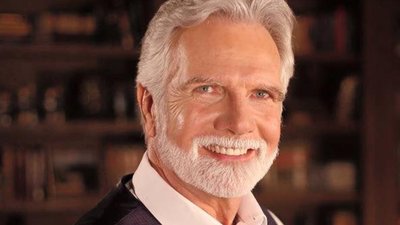
John Paul Jackson was a major prophetic teacher in the charismatic and New Apostolic Reformation orbit whose ministry centered on dreams, visions, prophecy, and supernatural interpretation, but his influence was deeply tied to the controversial Kansas City Prophets, Mike Bickle, Paul Cain, Bob Jones, and John Wimber. Through Streams Ministries, Christian television appearances, and international training courses, Jackson helped popularize dream interpretation as a prophetic practice while promoting a model in which believers were expected to submit to prophetic authority and practice "instant obedience to the prophets." His reputation, however, was shadowed by failed predictions, including claims about the Westlake Hardware Store building, a major 1988 financial collapse, and an anticipated 1990 revival in Britain, all of which raised serious questions about the reliability of his prophetic authority and the broader system of spiritual control built around the Kansas City prophetic movement.
John Wimber
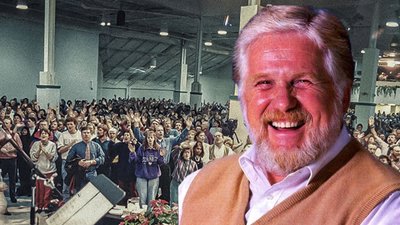
John Wimber was a major architect of late twentieth-century charismatic renewal through the Vineyard Movement, Fuller Seminary, and his collaboration with C. Peter Wagner, promoting "Power Evangelism," signs and wonders, healing, prophecy, spiritual warfare, and present-tense Kingdom theology in ways that helped bridge evangelicalism with Third Wave charismatic practice and later New Apostolic Reformation-adjacent networks; while Wimber framed his theology in an "already/not yet" model rather than explicit dominionism, his platforming of the Kansas City Prophets, connection to Paul Cain and Branham-influenced prophetic streams, engagement with Shepherding and restorationist circles, militarized "army" language, and proximity to the Toronto Blessing made his legacy both highly influential and deeply contested in debates over discernment, authority, prophecy, revival expectation, and the normalization of supernatural experience in modern charismatic Christianity.
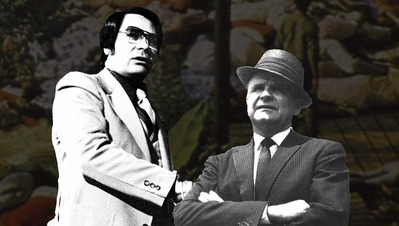
Manifest Sons Of God
William Branham was one of the main catalysts for, promoted by, and strongly affiliated with key individuals in the Latter Rain sect of Pentecostalism. This strange sect gave birth to various sub-sects, one of which was the “Manifest Sons of God” sect, or cult, of Pentecostalism. Like its parent sect of Latter Rain, the Manifest Sons of God sect was based upon doctrines that William Branham himself used as themes in his sermons.[1] Within the Manifest Sons of God sect, there were two major groups: The Walk led by John Robert Stevens and the Body of Christ.
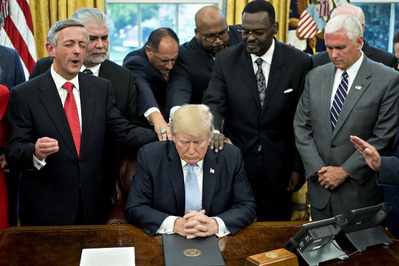
National Association of Evangelicals
The National Association of Evangelicals (NAE) was formed in April 1942.[1] A group of 150 men and women met in St. Louis to establish an organization initially named "National Association of Evangelicals for United Action" after a national conference called "United Action Among Evangelicals." That "action" was to preserve Christian Fundamentalism in the United States and oppose the more liberal views of the Federal Council of Churches. The group's first vote was a move against affiliation with the Federal Council of Churches and the American Council of Christian Churches.[2]
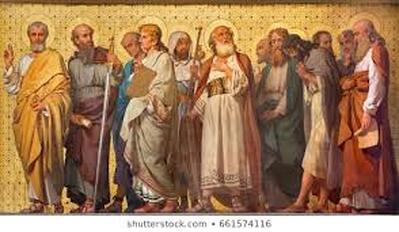
New Apostolic Reformation
The New Apostolic Reformation (NAR) is a religious sect seeking to establish themselves as a new breed of Christianity while labeling all other branches as apostate. As a result, a majority of churches in the sect consider themselves to be "independent" or "non-denominational". It differs from the broader Protestant tradition in its view on the nature of church leadership, specifically the Latter Rain doctrine of Five Fold Ministry, which is based upon a non-traditional interpretation of Ephesians 4:11. Leaders in the NAR empower themselves by advancing the offices of "prophet" and "apostle" of the Five Fold Ministry doctrine, and central figures of religious cults in the NAR sect allege that they, themselves, fill those offices. The movement is referred to by some as the "Christian Taliban".
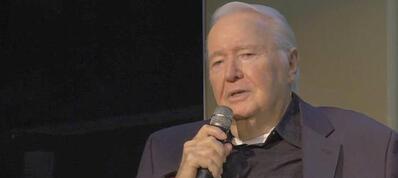
Paul Cain
Paul Cain was a member of William Branham's "Message" cult of personality from as early as 1951[1] until his death in 2019.[2] He was very active in spreading Branham's Manifested Sons of God theology throughout the United States and abroad. He was also instrumental in the formation of neo-Pentecostal sects including the Kansas City Prophets,[3] the Vinyard Movement,[4] the British Evangelical Alliance,[5] International House of Prayer,[6] and more. Cain was connected with and "ministered to" key political figures, including President Clinton, Saddam Hussein,[7] and Prime Minister Netanyahu.[8]

Prophecy
William Branham was a self-proclaimed prophet, claiming to see visions and prophesy. Some versions of his stage persona were that of a humble prophet among other prophets, while later versions of his stage persona were that of a deity, or prophet-god. His claim of prophet focused upon the stage persona and not the prophecy itself; vindication was claimed for his alleged prophecies by his alleged gift of healing rather than the accuracy of the prophecies themselves.
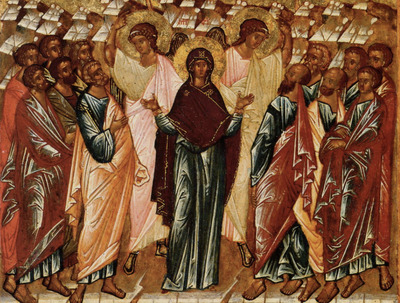
Prophet-God
According to William Branham's Latter Rain "Manifest Sons of God" theology, God was allegedly restoring the offices of Apostles, Prophets, Evangelists, Pastors, and Teachers in the current and last "age". This notion was common among the Latter Rain movement but in the Manifest Sons of God extremist sect of Latter Rain, the office of "Prophet" was empowered as a "son of god". In Branham's specific version of Manifest Sons of God, there was also a "God-Prophet", which he himself claimed to be. Not a man but God, God made flesh.
No records found.