
Paul Rader
Paul Rader was an influential early twentieth-century evangelist, pastor, missionary leader, and former president of the Christian and Missionary Alliance who helped shape American revivalism through his emphasis on conversion, divine healing, missions, radio ministry, prophetic expectation, and practical evangelism, making him an important bridge between holiness, evangelical, fundamentalist, and healing-oriented streams that later influenced parts of Pentecostal and charismatic revival culture.
Paul Rader was a gospel evangelist well-known in Pentecostal Circles for his staunch fundamentalist stance. He was an associate and contemporary of Aimee Semple McPherson, founder of the Pentecostal Foursquare Church Cult. When McPherson's health was failing, McPherson named Rader as her replacement to lead her cult of personality in the Angelus Temple in Los Angeles, California. Rader was a member of Gerald Burton Winrod's "Defenders of the Christian Faith",[1] a movement that caused the Great Sedition Trial of 1944.[2]
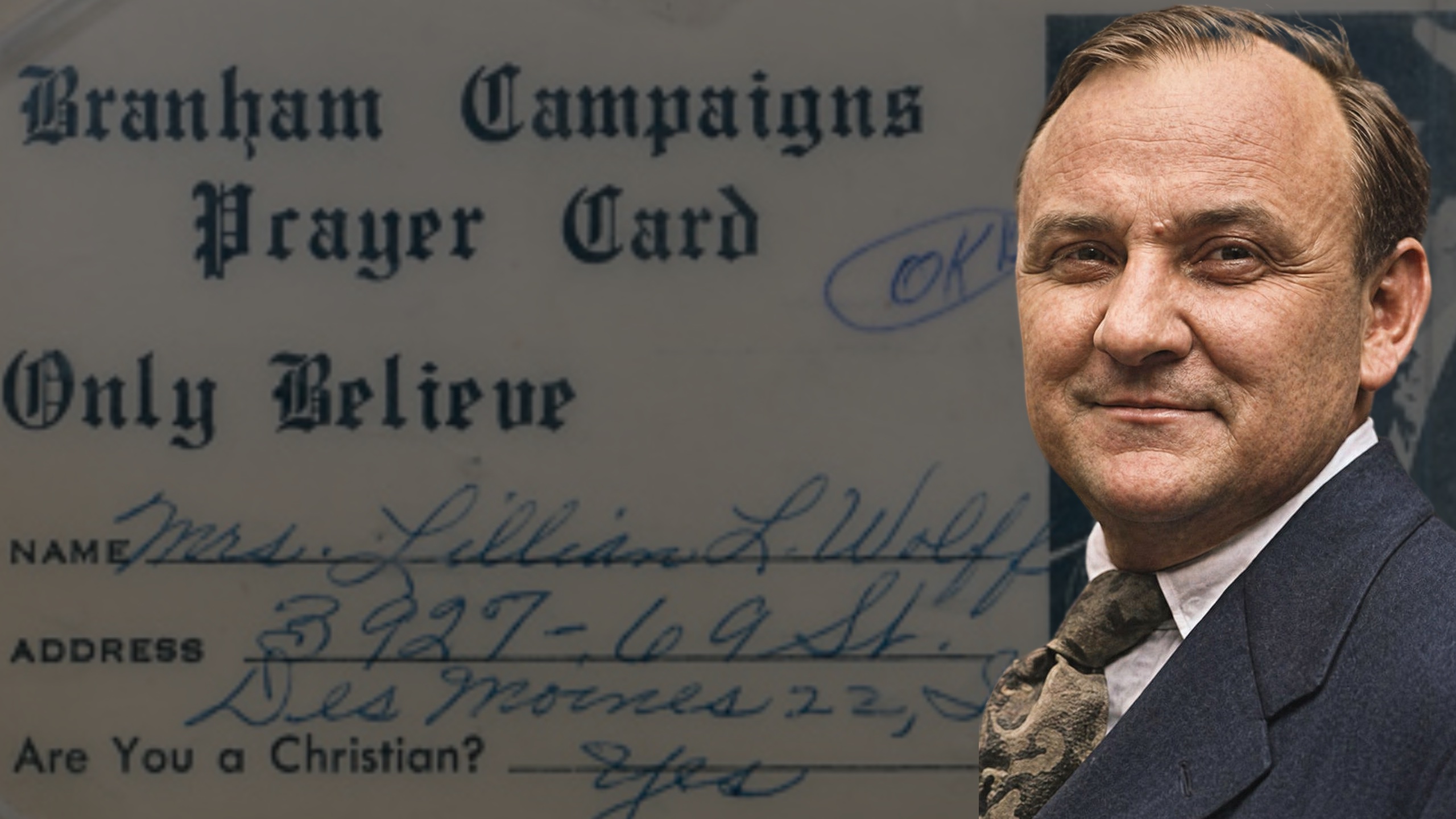
But Rader was better known for his radio broadcasts, evangelistic campaigns, and leadership of the Moody Church in Chicago, IL. Paul Rader was a name many in the nation were familiar with, and his name was one that William Branham often dropped in a sermon. But Branham's connection to Paul Rader appears to be much deeper than he let his congregations know. When one examines the Rader family history, it is difficult not to ask the question: Why did William Branham never mention the rest of the Rader family? Was he avoiding the truth behind his theme song, "Only Believe?"
During this time, in 1921, Paul Rader wrote the song "Only Believe." By this time, Paul Rader was the president of the Christian and Missionary Allicance, and had learned the power of the beat used in American Jazz music. According to Paul, ragtime and jazz were very effective on "converting heathens" to Christianity, and therefore he began stressing that it be used in the missionary field. A hundred missionaries were armed with the jazz beat by 1923, and Paul Rader said that the rocky jazz beat "delighted" the savages when he put sacred words to a jazz beat. Ironically, those in the cult following of William Branham are often scolded by their pastors for listening to any sort of music with a beat -- the pastors claim that this type of music "came from heathens." It would be comical if a person studied in the history of Chrisitan music heard such a statement in a sermon that followed the singing of "Only Believe," especially when it had enough beat to inspire Elvis Presley to sing it during his days as the "King of Rock and Roll."
Interestingly, "Only Believe" was also the theme song for the Smith Wigglesworth campaigns. Wigglesworth also used a banner of "Jesus Christ the Same Yesterday, Today, and Forever" as Branham did.