William D. Upshaw
William D. Upshaw was a former congressman, prohibitionist, Southern Baptist evangelist, Klan defender, and later healing-revival promoter whose career connected temperance politics, fundamentalist revivalism, fraternal secrecy, white supremacist networks, and Pentecostal healing culture; from his public defense of the Ku Klux Klan and association with Roy E. Davis to his later claims of healing under Wilbur Ogilvie, William Branham, and O. L. Jaggers, Upshaw became a symbolic bridge between early twentieth-century Protestant political activism, Klan-aligned religion, anti-liquor crusading, revival celebrity, and the staged miracle culture that helped legitimize Branham's postwar healing campaigns.
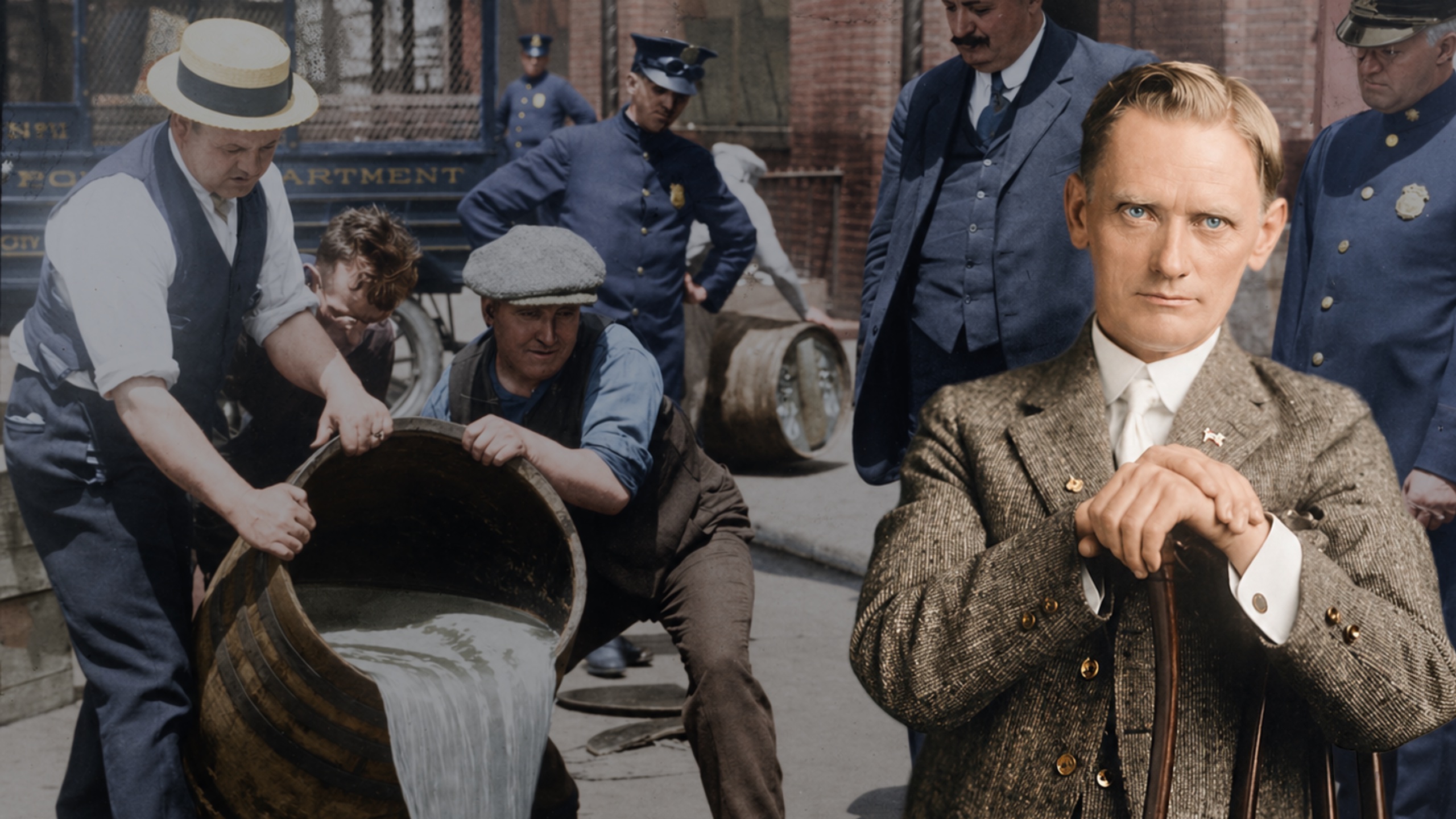
William D. Upshaw was a United States Congressman that served from March 4, 1919 to March 3, 1927. He was known as the "Driest of the Dries" for his work as the vice president of the Georgia Anti-Saloon League where he played a major role in Georgia's prohibition in 1907. With Upshaw's help, Georgia became the first dry state in the South. [1] He was also known as the "Billie Sunday of Congress" [2] for his work as a Christian evangelist and two-time vice president of the Southern Baptist Convention. He was part of the original Stamps quartet, singing with Klan members Roy E. Davis and Caleb A. Ridley, as well as William Jennings Bryan.[3] In 1932, Upshaw ran for President of the United States under the Prohibition ticket. [4]
During the rise of the 1915 Ku Klux Klan, at the time that the Anti-Saloon League and Women's Temperance joined forces against both Catholicism and alcohol[5], Upshaw and the Anti-Saloon League helped to fuel the rise of the Klan due to their similar agendas.[6] Many people began to suspect that William D. Upshaw was a secret member of the Ku Klux Klan. When the Klan was called before the Rules Committee in Congress, it was Upshaw who defended the group. [7] Before the committee, Upshaw declared his allegiance to the Klan's founder, William Joseph Simmons, as "one of the knightliest, most patriotic men I have ever known." [8]. In a legal strategy that would save the Klan from a government shutdown, Upshaw declared that if Congress continued to investigate the Ku Klux Klan, they must also investigate all secretive fraternal organizations. [9] Whether due to the alleged membership of other United States government officials in such organizations or not, the strategy was successful. Upshaw continued to support Simmons and the Ku Klux Klan until Simmons was overthrown from power, during which time Roy E. Davis was an official spokesperson. [10] In 1921, it was discovered that Upshaw was a member of the Ku Klux Klan. [11]
Upshaw spent most of his childhood in rural Cobb County. His father was a veteran from the Civil War who worked long hours as a school teacher, shop keeper, and farmer after moving his family away from the city limits of Atlanta.[12] Learning from his father, Upshaw became interested in education and literature at a very early age, and even became a contributor for articles in the Atlanta newspaper. He was left severely crippled until around 1895 [13] after an accident injured his spine.[14] A member of one of his literary clubs helped to create an apparatus which allowed him to ride in carriages, and he began traveling as a lecturer. [15]
The name of 'Earnest Willie' was given me when I was on bed for seven years dictating letters for the papers, and it stayed by me for a while nearly twenty years ago when I used to lecture from a rolling chair, but now I am a man -- the editor of one paper, the husband of one wife and the daddy of a red-headed baby girl and I guess it is time for me to be called the husband of Mrs. William D. Upshaw."
Congressman William D. Upshaw, The Times, Sat May 8, 1915.
During the early 1930s when William Branham began working with Roy E. Davis in Davis' Pentecostal church, [16] Upshaw was a recognized name in Louisville and Southern Indiana where a concentration of Kentucky Bourbon distilleries were situated. [17] Upshaw became the leader of the prohibitionist party in the years leading up to his 1932 Presidential campaign, and continued to battle the distilleries in the years after. Upshaw's "Bluegrass Flying Squadron" held speaking engagements protesting the production and usage of alcohol, and fought to support government officials supportive of his cause. [18] Interestingly, William Branham claimed to have never heard of the very famous prohibitionist leader.[19]
How did Mr. Upshaw... I never seen him in my life. I knowed nothing of him. How'd I know he was a congressman and who he was? But the Holy Spirit revealed it here at the platform. See? He revealed it. His... Makes His secrets known... Now, that's nothing to do with me. See? I... Just happened to be that I was born for that purpose. See?
Branham, 51-0505 - My Commission
During the mid-1940s, shortly before Roy E. Davis began his rise to Imperial Grand Dragon of the Original Knights of the Ku Klux Klan, [20] William D. Upshaw and his future wife and president of the Women's Christian Temperance Union, Lily Galloway, found themselves at the center of a criminal investigation. Upshaw[21] and Galloway [22] assisted Roy Davis in posing as an agent for the Federal Bureau of Investigation [23] to gather support for a children's orphanage caught swindling [24] several thousand dollars from unsuspecting donors. Upshaw was the head of the "department of Americanization" for the Ussher-Davis Children's Orphanage. [25] Witnesses claimed that Upshaw himself told them that Davis was a federal agent.[26]
Upshaw's stance against alcohol seems to have been directed towards the political and social issues rather than the substance itself. Before his 1932 Presidential campaign, Upshaw became a spokesperson for Sargon, [27] an alcoholic medicinal gimmick[28] falsely claiming to produce age-defying results. His role in proclaiming the benefits of Sargon was short-lived. By 1933, the F.D.A. declared the alcoholic 'patent medicine' to be misbranded due to false claims.
During the Latter Rain movement of the late 1940s and early 1950s, William D. Upshaw shifted his attention of healing from alcoholic 'patent medicine' to the Post WWII Healing Revival. He first claimed to have been healed by cancer in the meetings held by Wilbur Ogilvie.
Former Congressman Upshaw Reports on Ogilvie L. A. Meetings
By William D. Upshaw
2524 14th St., Santa Monica Calif.
Great and gracious blessings came to me during the recent Ogilvie meetings in Faith Tabernacle. I was impressed with the cordial fraternal spirit of Brother Ogilvie. He threw his arms around me saying, "Brother Upshaw, you inspired me when you spoke to the high school when I was a student." I was also impressed by the manner in which he called sinners to accept Christ as their personal Savior. First salvation for the soul, then healing for the body.
My wife and I were thrilled beyond words to witness the blind made to see, the lame to walk, the deaf to hear, and many other miracles of healing -- too many to be described in detail. I personally rejoiced in the healing touch of the Great Physician. For many years I have suffered from a cancerous growth on the side of my head. Twice it has been burned off by radium. But it was getting ugly and painful again. Brother Ogilvie prayed for me, commanding the cancer devil to come out in the Name of Jesus, the Great Physician. Then with assuring faith that dear young man touched the cancer and said, "It will dry up next week." And thank God it is gone!
Upshaw, William D. 1949 July. Former Congressman Upshaw Reports on Ogilvie L. A. Meetings
Two years later, in 1951, William D. Upshaw - who had been very mobile since 1915 - entered William Branham's faith healing campaigns allegedly confined to a wheelchair, [29] and according to Branham had been for sixty-six years.[30] According to William Branham, Upshaw had been sent by Branham's former mentor and Upshaw's former business partner Roy E. Davis [31] for healing. Upshaw claimed to have been healed in Branham's meeting, [32] though he later admitted that he had been walking without crutches prior to the "healing"[33] and had been caught physically running on the floor of Congress.[34]
In 1953, William D. Upshaw shifted his focus to Voice of Healing revivalist O. L. Jaggers. According to Upshaw, Rev. Jaggers was a powerful prophet of God.
O. L. Jaggers is the man of consecrated culture and personal charm, and one of the finest evangelists I have ever heard. I rejoice to hear that America hears this poised and powerful prophet of God!
- William Upshaw.[35]