Billy Graham: From Youth for Christ to National Power
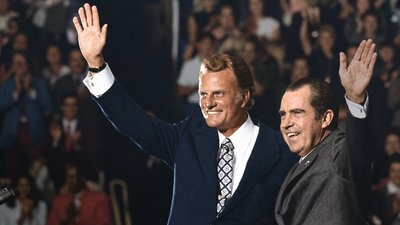
Billy Graham’s city-wide crusade model—built on interdenominational cooperation, centralized planning, and campaign-style evangelism—helped normalize a scalable parachurch ecosystem while also becoming a symbolic benchmark that adjacent revival networks (including figures like Branham and environments like Peoples Temple promotions) could invoke for legitimacy. Your excerpt then traces Graham’s visible proximity to Cold War political power through declassified references and public civic spectacle, and concludes by contrasting his public reputation on race with later-documented private antisemitic remarks and their fallout.
Mordecai Ham
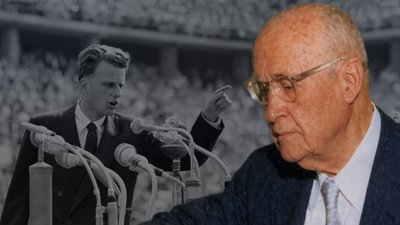
Mordecai Ham was a fundamentalist Baptist revivalist best known for the 1934 revival where Billy Graham converted, but his ministry also reflected the darker currents of early twentieth-century American revivalism, including militant anti-Catholicism, antisemitic conspiracy theories, British Israel influence, Klan-friendly rhetoric, and a self-presentation as a prophetic voice against national moral decline; his connection to William Branham places him within the wider ecosystem of interdenominational revivalism, Full Gospel networks, Christian Identity-adjacent ideas, and apocalyptic preaching that helped shape the religious environment surrounding Branham, Latter Rain, and later charismatic movements.
Philip E. J. Monson
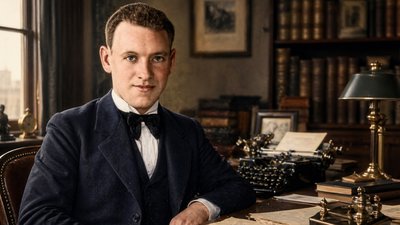
Philip E. J. Monson was a British Israelite organizer, founder of Covenant Evangelistic Association, Kingdom Bible College, and Zion Press, and a key West Coast promoter of Anglo-Israelism through Howard Rand's Anglo-Saxon Federation of America, using Bible classes, publishing, and institutional networks to spread racialized prophecy teaching; his 1928 "two-seed" thesis, which linked Cain to Satan and Abel to a supposedly pure bloodline, became an important precursor to later Christian Identity and Serpent's Seed doctrine, influencing figures such as Wesley Swift and forming part of the ideological stream that later overlapped with William Branham's Latter Rain-era Serpent's Seed teaching.
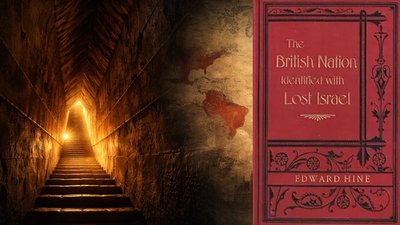
Edward Hine and the Secret Racial Roots of British Israelism
Edward Hine was a central figure in transforming British Israelism from a fringe theological theory into a racialized ideological system. His teachings blended pseudo-science, prophecy, and imperial politics, laying foundations that later influenced extremist identity movements.
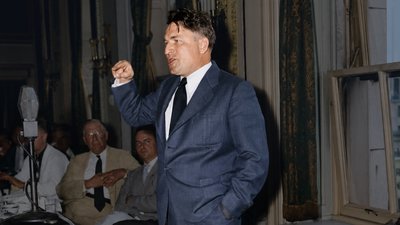
Gerald L. K. Smith
Rev. Gerald L. K. Smith was a minister from Wisconsin known for his mixture of religion and politics to spread the white supremacy agenda. He was instrumental in transforming British Israelism into the Christian Identity movement of the 1940s and 1950s. When the Americanized version of British Israelism began to develop themes of antisemitism and white supremacy, Smith was the leading ultra-right-wing figure[1] organizing movements that fueled the change.
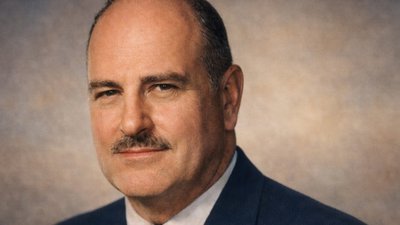
Gordon Winrod: From Defenders of the Faith to States’ Rights Politics
Gordon Winrod did not emerge from the fringes but from a religious ecosystem that had already normalized antisemitic and racialized theology through revivalist platforms and institutional protection. By tracing the connections between Gerald B. Winrod, Aimee Semple McPherson, Gordon Lindsay, and the healing revival infrastructure, this research demonstrates how extremist ideology migrated seamlessly from prophecy preaching into organized political activism.
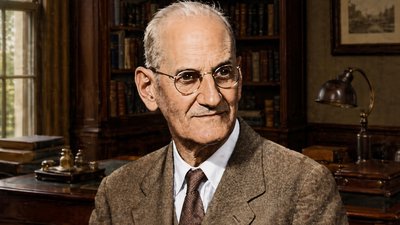
Howard Rand
Howard Benjamin Rand was an attorney, Prohibition Party figure, founder of the Anglo-Saxon Federation of America, and one of the most important American organizers of British Israelism, blending pyramidology, prophecy, racialized identity, anti-Roosevelt politics, antisemitic propaganda, and claims that Anglo-Saxons descended from biblical Israel into a system that helped move British Israel teaching toward Christian Identity; through figures such as William J. Cameron, Gerald Winrod, Gordon Lindsay, and later William Branham's Serpent's Seed theology, Rand's network became part of the ideological background connecting fundamentalist politics, white supremacy, Latter Rain revivalism, and later Pentecostal and charismatic restorationist movements.
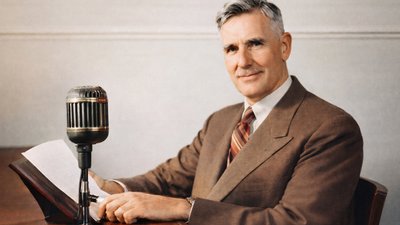
Charles Fuller and the Political Foundations of Modern Evangelical Media
Charles Fuller emerged as a powerful radio evangelist whose ministry blended revivalism, political activism, and prophetic rhetoric during a period of intense religious and cultural upheaval in the United States. His associations with figures such as Gerald B. Winrod, Paul Rader, and William Branham, along with the founding of Fuller Theological Seminary, positioned him as a key transitional figure linking early fundamentalism to later charismatic and Third Wave movements.
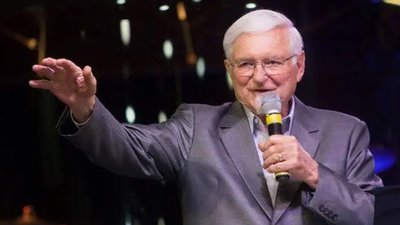
C. Peter Wagner, Fuller Seminary, and the Roots of the New Apostolic Reformation
C. Peter Wagner was a central figure in the Church Growth Movement at Fuller Theological Seminary, where he worked alongside John Wimber and helped shape theological currents that later became known as the New Apostolic Reformation. His legacy is marked not only by influence over modern charismatic networks, but also by deeply controversial positions on race, church authority, and social integration that continue to draw criticism from scholars and apologists.
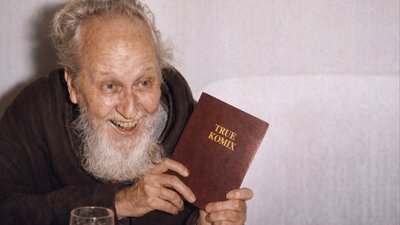
David Berg and William Branham: The Prophetic Roots of the Children of God
David Berg, founder of the Children of God cult, repeatedly credited William Branham and the Latter Rain movement as decisive influences on his theology, prophetic worldview, and rejection of denominational Christianity. This analysis traces how Branham’s prophecies, eschatology, angelology, and racial doctrines were absorbed, adapted, and radicalized within Berg’s movement, contributing to its apocalyptic ideology and abusive practices.
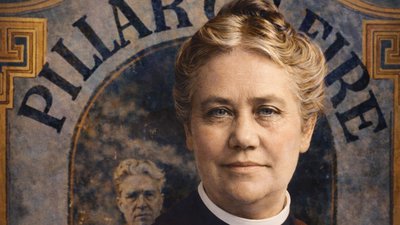
Alma White, the Holy Jumpers, and the Racial Politics Behind Early Holiness Rituals
The Pillar of Fire gained increasing public scrutiny in 1926 when newspapers labeled the “Holy Jumpers” a cult after 22-year-old Ruth Marshall joined the sect and refused to return to her family. Reporters emphasized her intense devotion, noting that her “eyes burn[ed] with a religious zeal,” which reinforced concerns about the group’s influence and controversial practices.
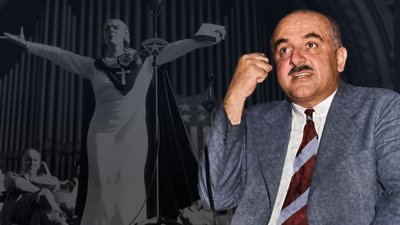
Gerald Burton Winrod
Gerald Burton Winrod was a fundamentalist preacher, publisher, political agitator, and Christian-fascist organizer whose antisemitic, anti-Catholic, British Israelite, anti-Roosevelt, and pro-Nazi propaganda helped shape the ideological world that later fed Christian Identity, Serpent's Seed theology, and parts of the radical revivalist atmosphere surrounding the postwar healing movement; through his Defenders of the Christian Faith, Capitol News and Feature Service, promotion of the Protocols of the Elders of Zion, ties to William J. Cameron, William D. Upshaw, Roy E. Davis, Paul Rader, F. F. Bosworth, Gordon Lindsay, and other fundamentalist and Pentecostal figures, Winrod functioned as a bridge between far-right religious politics, racialized prophecy, anti-communist conspiracy, British Israelism, and the networks that later overlapped with William Branham, Latter Rain, and the Voice of Healing revival world.
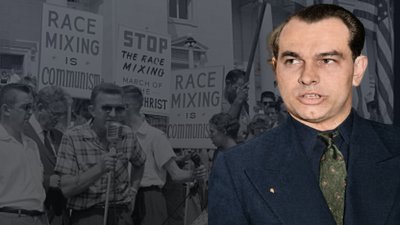
Wesley A. Swift
Wesley A. Swift was a central figure in the development of racist and antisemitic Christian Identity theology, drawing from British Israelism, Philip E. J. Monson's two-seed teaching, Gerald Winrod's far-right religious propaganda, and Anglo-Saxon Federation networks to promote a militant racial theology that identified white Anglo-Saxons as God's chosen people and nonwhite peoples and Jews as spiritually corrupted enemies; through his ties to Angelus Temple, LeRoy Kopp, Gerald L. K. Smith, Klan revival efforts in California, and later extremist groups such as Aryan Nations, Swift became a major bridge between British Israelism, Christian Identity, segregationist politics, white supremacy, and the Serpent's Seed doctrine later popularized by William Branham within Latter Rain and healing revival circles.
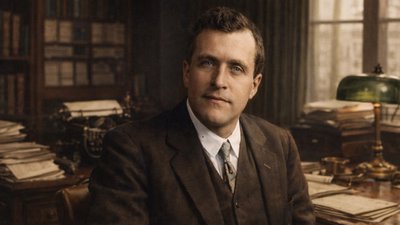
Caleb A. Ridley: The Klan Chaplain Linked to William Branham and Roy E. Davis
Caleb A. Ridley, an Imperial Kludd of the 1915 Ku Klux Klan, played a significant role in early twentieth-century religious and political networks that intersected with Roy E. Davis and William Branham. His participation in revivals, prohibition activism, and Klan organizing sheds new light on the racial and ideological context surrounding the formative years of Branham’s ministry.
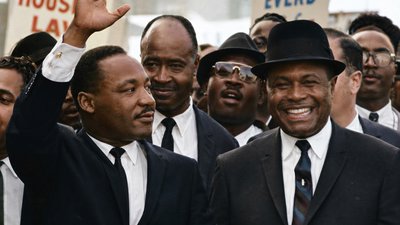
C. L. Franklin: Civil Rights to Branham's Stolen Sermon
Rev. C. L. Franklin’s famous sermon “The Eagle Stirreth Her Nest,” rooted in the African American Baptist tradition and popularized through recordings in the 1950s, became a defining message of spiritual maturity and struggle long before William Branham reused its title and imagery. Branham’s later adaptation not only ignored its historical and cultural origins but also built upon a demonstrably incorrect reading of Leviticus, turning the eagle metaphor into a central pillar of his cult theology.
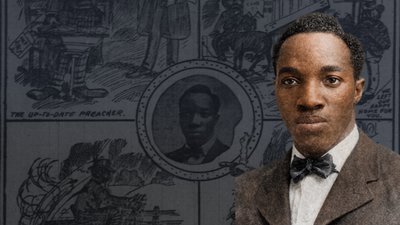
Garfield T. Haywood
Rev. Garfield T. Haywood was a Black Indianapolis Pentecostal leader, hymn writer, presiding bishop in the Pentecostal Assemblies of the World, and one of the most important early voices of Oneness Pentecostalism, helping make Indianapolis a major center for Jesus Name baptism while ministering through intense racial and religious persecution during the rise of the Indiana Ku Klux Klan; his interracial congregation, tract "Victim of the Flaming Sword," and hymn "The Waterway" stood in sharp contrast to the white supremacist religious networks around Roy E. Davis and William Branham, whose later movements absorbed, obscured, or reinterpreted elements of Haywood's Oneness influence while presenting themselves as the true source of restored baptismal truth.
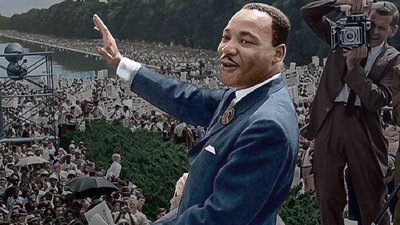
Martin Luther King
Martin Luther King Jr. was an American Christian minister and activist who became the most visible spokesperson and leader in the Civil Rights Movement from 1955 until his assassination in 1968. As the outspoken leader of the movement, King was a public enemy of white supremacy groups such as the Ku Klux Klan. The Klan began spreading propaganda as character assassination, during which time some of the themes made its way into William Branham's sermons.
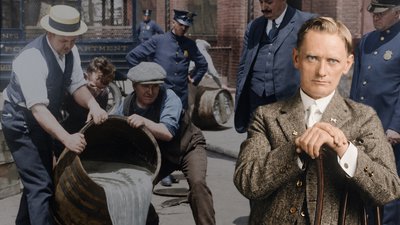
William D. Upshaw
William D. Upshaw was a former congressman, prohibitionist, Southern Baptist evangelist, Klan defender, and later healing-revival promoter whose career connected temperance politics, fundamentalist revivalism, fraternal secrecy, white supremacist networks, and Pentecostal healing culture; from his public defense of the Ku Klux Klan and association with Roy E. Davis to his later claims of healing under Wilbur Ogilvie, William Branham, and O. L. Jaggers, Upshaw became a symbolic bridge between early twentieth-century Protestant political activism, Klan-aligned religion, anti-liquor crusading, revival celebrity, and the staged miracle culture that helped legitimize Branham's postwar healing campaigns.
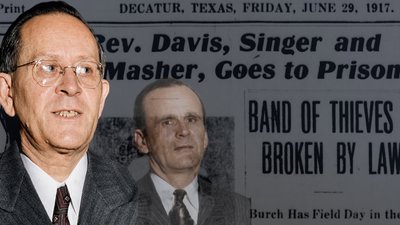
Roy E. Davis
Rev. Roy E. Davis Sr. was a Baptist and Pentecostal preacher, founder of the Pentecostal Baptist Church of God, mentor and ordaining pastor of William Branham, and a lifelong organizer in white supremacist movements, serving under William Joseph Simmons in the reborn Ku Klux Klan, helping form the Knights of the Flaming Sword, and later becoming a nationally recognized leader of the Original Knights of the Ku Klux Klan; his career connected criminal scandal, religious fraud, gospel music, fundamentalist revivalism, Pentecostal sect-building, orphanage fundraising schemes, Klan reorganization, and Branham's early ministry, making Davis one of the clearest links between Branham's origins, Pentecostal restorationism, Christian nationalism, and organized white supremacy.
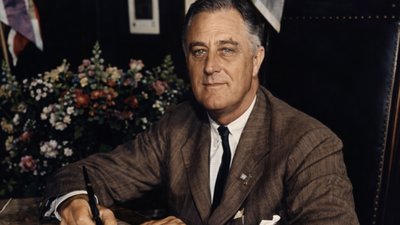
Franklin D. Roosevelt and William Branham’s Failed World War Prophecy
William Branham later claimed that a vision from 1932 or 1933 foretold Franklin D. Roosevelt leading the world into war, but his own recorded statements reveal shifting dates, expanding details, and retrospective framing. By comparing Branham’s evolving claims with the actual chronology of World War II, the narrative shows why the Roosevelt prophecy fails historical scrutiny.
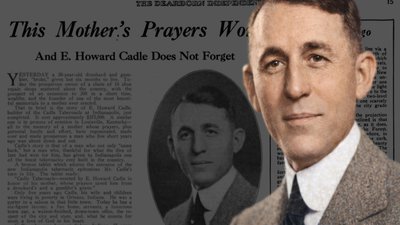
E. Howard Cadle: Revivalist, Power Broker, and the Church That Became Klan Headquarters
E. Howard Cadle rose from gambling and saloon culture to national religious prominence through wealth, revivalism, and the construction of the massive Cadle Tabernacle in Indianapolis. This study traces how that building became a center for political power, Ku Klux Klan activity, and later revival mythology, revealing how religious infrastructure can be repurposed to legitimize ideology, authority, and collective memory.
Dan S. Davis: How the Davis Brothers, the Klan, and Pentecostal Revival Shaped William Branham
William Branham’s early ministry did not emerge in isolation but developed within a tightly connected network of Pentecostal churches, revival infrastructure, and influential figures linked to both organized religion and extremist movements. By tracing the roles of Dan S. Davis, Roy E. Davis, and Caleb Ridley, this study documents how institutional control, shared worship spaces, and overlapping political-religious networks created the environment that produced Branham.
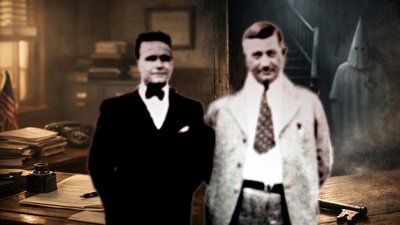
Charles Brumbach: William Branham’s Father-in-Law and the Ku Klux Klan
Charles Brumbach, William Branham’s father-in-law, occupied a position of local political influence while maintaining documented access to Ku Klux Klan infrastructure in Jeffersonville during the 1920s. A comparison of contemporary records with William Branham’s repeated personal accounts demonstrates how elements of the Brumbach household were altered or omitted to sustain a narrative of moral stability and spiritual legitimacy.
Anglo Saxon Christian World: The Vancouver Movement and the Making of Christian Identity
Anglo-Saxonism and its North American expression in the Anglo-Saxon Christian World fused British Israelism, apocalyptic rhetoric, militarism, and white supremacist ideology to construct a theologically sanctioned vision of a divinely chosen Anglo-Saxon race. Through figures such as J. G. Wright, Clem Davies, Gordon Lindsay, and Herbert W. Armstrong, the movement became an influential conduit linking early Christian Identity, the Latter Rain revival, and emerging forms of televangelism.
No records found.