Hobart Freeman
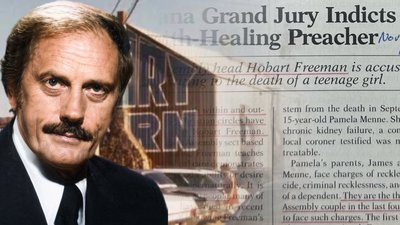
Hobart Freeman was a controversial "faith healer" from Kentucky and Southern Indiana who convinced members of his cult of personality to refuse medical care. Several members of his cult died as a result of his anti-medication doctrines.

Lost Your Healing
William Branham's healing ministry relied on a self-protecting system in which alleged successes were promoted as proof of divine power while failures were blamed on the supposed sins, doubts, or disobedience of the person seeking healing. Working alongside F. F. Bosworth, Branham helped popularize the idea that people could "lose" or fail to "keep" their healing for reasons unrelated to the healer, allowing failed outcomes to be reinterpreted as moral or spiritual failure. Examples such as the boy whose missing eye was blamed on reading comic books, Walker Beck's failed healing being blamed on tobacco, and revival claims surrounding Ronnie Coyne's prosthetic eye illustrate how Branham's movement used spectacle, victim-blaming, and unverifiable healing testimonies to preserve the reputation of the healer even when promised miracles did not occur.

Poison or Cure? Branham’s Anti-Medical Theology in Historical Perspective
William Branham’s teaching consistently framed modern medicine as spiritually dangerous and physically harmful, warning followers that pharmaceuticals were poisonous and that those who relied on them risked their own deaths. By portraying divine healing as the only faithful and truly effective alternative, Branham reinforced a theological system that discouraged medical treatment and elevated his own authority as the sole legitimate mediator of healing.
The Freeman Files
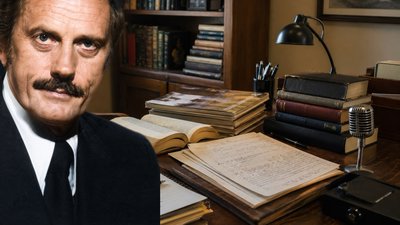
A large research collection containing more than one thousand files from the office of Hobart Freeman, founder of the Faith Assembly sect. The archive includes handwritten notes, sermon and teaching outlines, radio broadcast outlines, Bible study materials, seminary coursework and homework, research notes, correspondence-style materials, newspaper and magazine clippings, and other documents connected to Freeman’s ministry, teachings, and organizational activity.
No records found.